Last updated: August 30, 2026
Teaching nouns in upper elementary doesn’t have to feel repetitive or dry. This lesson focuses on teaching nouns through clear examples, simple explanations, and hands‑on practice that helps students identify nouns, sort them into categories, and use them effectively in their writing.
Jump to
Teaching Nouns — Why This Skill Matters
Nouns are the foundation of every sentence students write. When students can identify nouns and sort them into categories, they write stronger sentences, clearer descriptions, and more confidently across all subjects.
Mini-Lesson Overview
This short lesson helps students identify nouns and understand how they function in sentences. It takes about 10 minutes and works well before any writing activity.
Step 1Introduce the Rule
A noun is a person, place, thing, or idea. Nouns name the people and objects in a sentence, and students need to recognize them before they can write clearly.
Step 2Show a Quick Example
Ask students to look at this sentence:
The puppy chased the ball across the yard.
Have them identify the nouns:
- puppy
- ball
- yard
Explain that each noun names something in the sentence.
Step 3Try It Together
Write this sentence on the board:
The teacher read a story to the class.
Ask students:
- What nouns do you see?
- Which ones are people?
- Which ones are things?
Guide them to sort the nouns into categories.
Step 4Independent Practice
Give students a short sentence and ask them to:
- Circle the nouns
- Sort them into categories (person, place, thing, idea)
Example:
The artist painted a mural on the wall.
Step 5Connect to Writing
Ask students to revise a sentence from their journal by:
- adding one new noun
- replacing a vague noun with a specific one
I saw a bird → I saw a cardinal
This helps students strengthen their writing immediately.
Teaching Video with Organizer
This video is a great overview of several rules about nouns. It includes definitions and examples for the following:
- concrete and abstract
- common and proper
- plural and singular
- possessive

The lesson pairs with a provided graphic organizer. Students listen to the first part of the video to hear the definition of interjections. When instructed to do so, students pause the video and complete their organizers. Finally, students watch the remainder of the video to check their answers.
Download free posters, the video organizer, and classroom handouts here.
Teaching Nouns Activities
Activity #1 – Posters

You can obtain the noun posters using the handout link provided.
Teaching Tip:
Use the posters as guides with a “Noun Sort” activity. Provide sentence strips and have students sort nouns by type, such as concrete, abstract, proper, etc.
Activity #2 – Guess the Location
Have students think of a place they like to visit. On a piece of paper, students list things they would see, hear, taste, touch, or smell at this place. The list needs to contain all nouns. For example, if the location was the beach, the student might list sand, sunshine, shells, wind, umbrella, towel, castle, shovel, bucket, and salt.
Once the lists are made, have students divide into small groups to share them. After a student reads their nouns, the group tries to guess the location.
Activity #3 – Elimination Noun Game
Setting up the Game:
You will need three sets of popsicle sticks.
#1 ~Write each student’s name on one stick.
#2 ~ Write the letters of the alphabet.
#3 ~ Write specific types of nouns such as singular, plural, collective, proper, abstract, concrete, etc.
The Object of the Game
To be the last student standing
Playing up the Game:
Have all students stand up. Draw one stick from each set. You may draw ~ Megan ~ A ~ Proper Noun. Megan has to quickly give you a proper noun that begins with the letter A. For example, Alaska, Atlanta, Alice, etc. If she cannot, she must sit down. Place these sticks aside and draw three more [one from each set] for the next turn. Once you run out of sticks in one set, you can dump the “used” sticks back into the draw piles.
Students must sit down if they give an incorrect answer or repeat any nouns already used during the game. Students must answer promptly. You may wish to start slowly, then increase the speed after students understand the game’s rules. If students hesitate, they must sit down and be eliminated from the game.
Activity #4 – Mini Noun Book
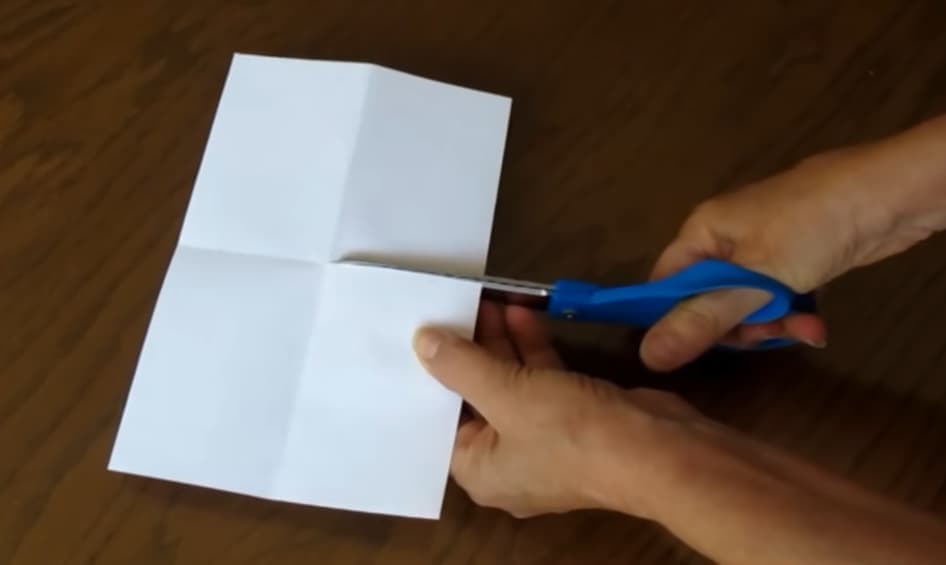
Mini Noun Book
Create a mini-book. Follow the demonstration on the YouTube video to fold a single 8 1/2 by 11-inch piece of paper to form a mini-book. Have students create a book on nouns.
Page Setup
- Title
- Definition
- Proper Nouns
- Abstract Nouns
- Concrete Nouns
- Plural Nouns
- Singular Nouns
- Collective Nouns
Activity #5 – Schoolhouse Rock – “A Noun is a Person, Place, or Thing”
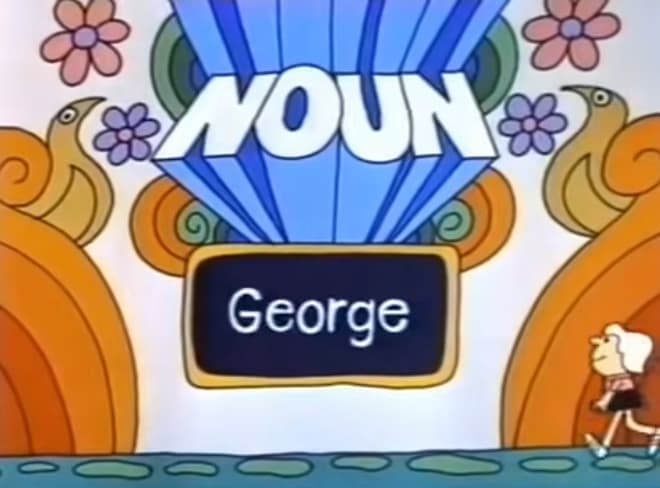
Bring music into grammar instruction with the classic Schoolhouse Rock song “A Noun is a Person, Place, or Thing.” It’s catchy, packed with examples, and perfect for auditory learners.
Teaching Tip:
Have students write their own “Noun Song” using nouns from their writing journals. Perform them in small groups or record as a class podcast.
Teacher Section
Common Misconceptions
- Students often equate “noun” with “something you can touch or see,” which trips them up on abstract nouns like courage, freedom, or idea.
- Many students associate a word with its most familiar job. They’ll say race “isn’t a noun” in “The race was exciting” because they think of it as an action.
- Students sometimes think a proper noun just means “capitalized” or “important,” without grasping that it specifically names one particular person, place, or thing.
Differentiation Tips
- Beginning: Stick to concrete, everyday nouns (dog, chair, park) before introducing abstract ones. Physical objects in the room make a good first practice round.
- Advanced: Push into abstract nouns and words that shift jobs depending on context — dance as a noun (“The dance was fun”) versus a verb (“They dance every day”).
- Multilingual learners: Some students’ first languages don’t mark plural nouns the way English does. Pair noun-identification practice with plural-formation practice rather than assuming it’s automatic.
- Movement-based learners: The Elimination Noun Game and Guess the Location activities offer speaking and movement practice instead of relying only on worksheets.
Where This Shows Up in Student Writing
Watch for strings of vague nouns — stuff, thing, place — in narrative writing. That’s a clear signal a student is ready for the “replace a vague noun with a specific one” revision from the mini-lesson (I saw a bird → I saw a cardinal). In early writers or multilingual learners, also watch for nouns dropped into a sentence without articles (“dog ran yard”) — that points to a need for practice with how nouns function inside a full sentence, not just spotting them in isolation.
Quick Formative Check
Give students a sentence they haven’t seen: “The scientist tested her theory in the lab.” Ask them to circle every noun and label each as a person, place, thing, or idea. If they catch theory along with the concrete nouns, they’ve moved past the “nouns are physical objects” misconception.
How It Shows Up on Tests
Standardized tests often test nouns two ways: direct identification (“Which word in this sentence is a noun?”) and functional understanding, where students choose between a noun and verb form of the same word (“The team will ______ the trophy” vs. “Their ______ was impressive”). The second type catches students who’ve memorized the definition but haven’t internalized how a word’s job shifts with context.
If you missed it earlier, here is the handout link for nouns.
See the product that inspired this post.

Looking for a hands-on way to reinforce grammar rules? My Interactive Grammar Organizers cover all eight parts of speech with foldables, flaps, and mini-books that make grammar visual and memorable. Originally part of my Charlie and the Chocolate Factory unit, this abridged version focuses purely on grammar—no novel study required.


2 comments
I am LOVING all of your parts of speech posts and am pinning them like crazy. THANK YOU for putting together such fabulous resources.
Author
Thank you!!