The United Nations
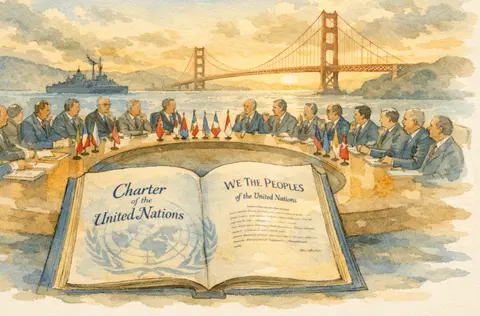
Fast Facts: The United Nations
A New Organization for Peace
- Founded: 1945
- Location: San Francisco Conference
- Members at Start: 50 nations
- Purpose: Prevent future wars
- Key Document: United Nations Charter
The UN at a Glance
- The League of Nations failed due to lack of power.
- Leaders from the U.S., China, England, and Russia planned a new group.
- 50 nations met in San Francisco in April 1945.
- The UN Charter was signed June 26, 1945.
- The UN works to solve world problems peacefully.
The League of Nations Fails
After World War I, the League of Nations was created to help countries talk about problems before fighting. However, the League had no real power. When Italy invaded Ethiopia, the League could not stop the attack. This failure showed the world that a stronger organization was needed.
Planning a New Organization
In October 1943, leaders from the United States, China, England, and Russia met to discuss forming a new group after the war. They wanted an organization that could help nations solve problems peacefully and prevent future wars.
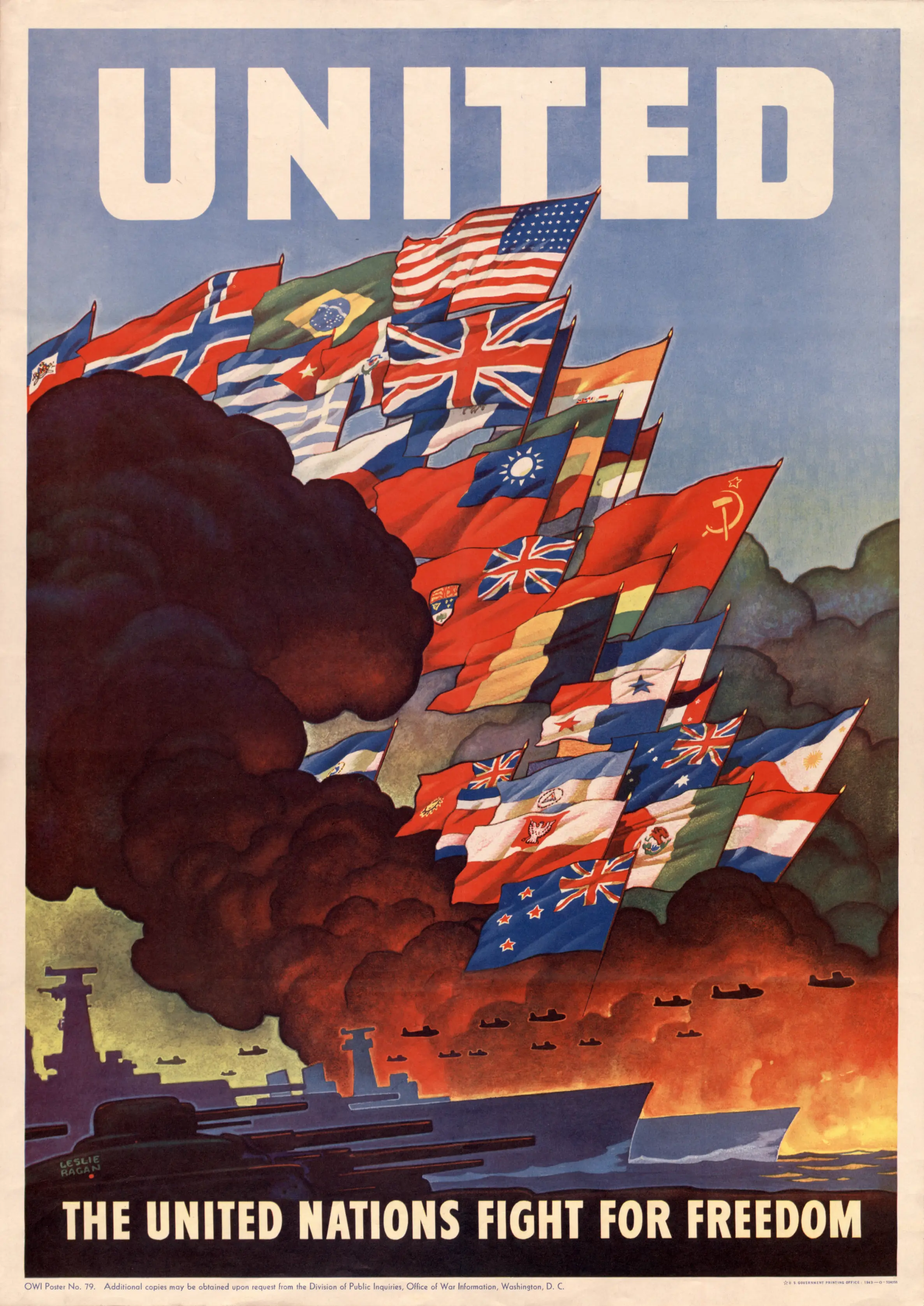
The San Francisco Conference
On April 25, 1945, representatives from 50 nations met in San Francisco to create the United Nations. They wrote the United Nations Charter, which explained how the organization would work. President Truman and representatives from 49 nations signed the Charter on June 26, 1945.
How the United Nations Works
The United Nations studies world problems and suggests peaceful solutions. When most members agree, they pass a resolution. The UN is made up of several important parts, each with a different job.
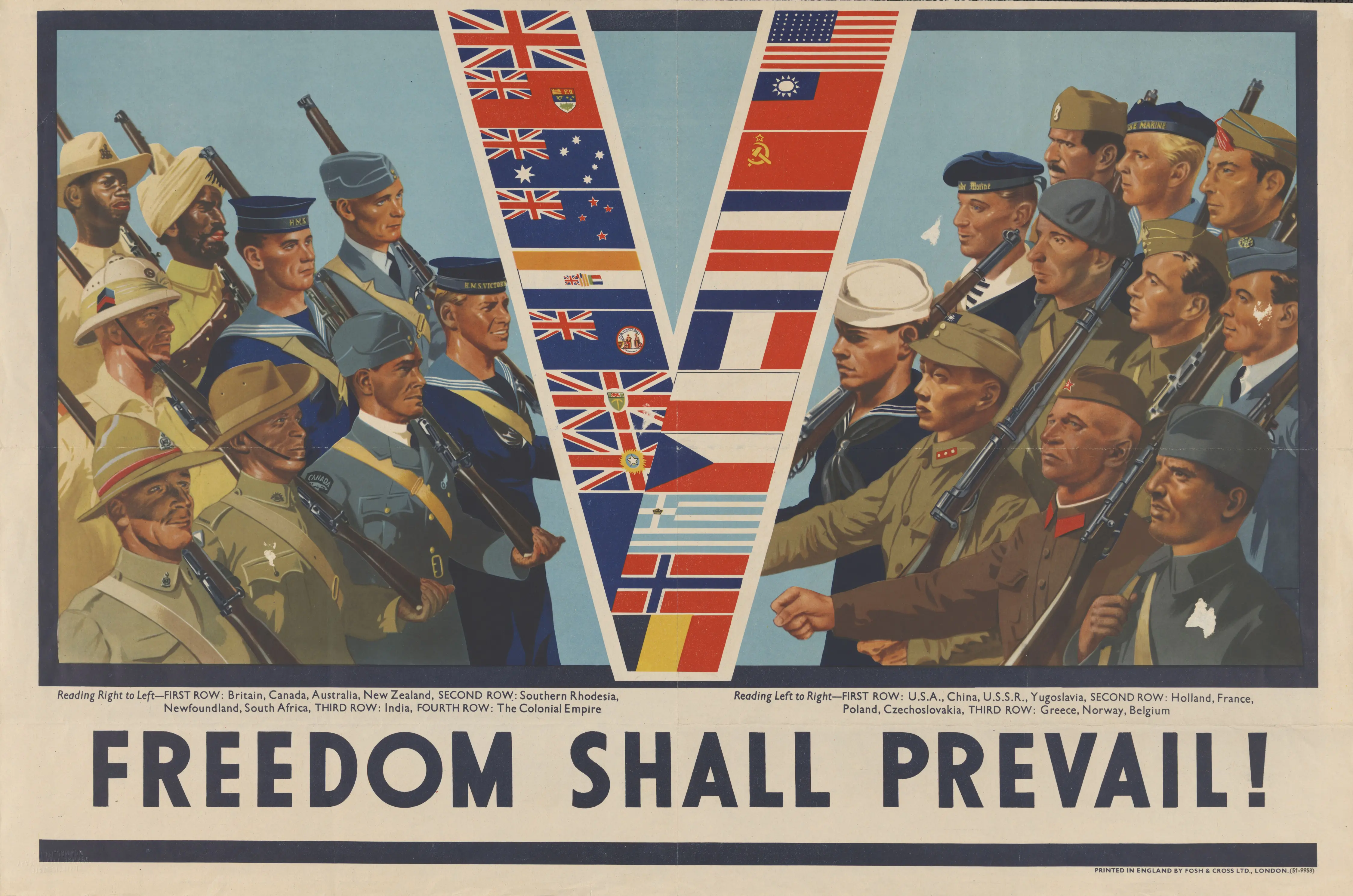
Main Parts of the UN
General Assembly: Like a world parliament — each country gets one vote.
Security Council: Works to keep peace; includes 15 members, with 5 permanent ones:
China, France, Russia, the United Kingdom, and the United States.
Secretariat: Handles daily work and is led by the Secretary‑General.
International Court of Justice: Settles legal disputes between nations.
Economic and Social Council: Works on health, education, and economic issues.
Trusteeship Council: Helped territories become independent.
Word Match
Drag the vocabulary words to their correct definitions!
Vocabulary Words
Definitions
Lesson 9 — The United Nations Quiz
Activities & Extensions
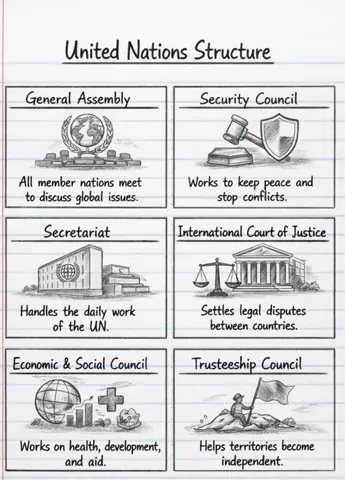
Students create a simple diagram showing the main parts of the United Nations and what each one does. This helps them understand how the UN works to keep peace and solve world problems.
How to Do It:
Students divide a notebook page into six labeled boxes:
- General Assembly
- Security Council
- Secretariat
- International Court of Justice
- Economic & Social Council
- Trusteeship Council
In each box, students draw a simple symbol (gavel, globe, building, etc.) and write a one‑sentence explanation of that part’s job.
Materials: notebook, pencil, colored pencils (optional)
Optional Extension: Students add arrows showing how the parts work together to promote peace.
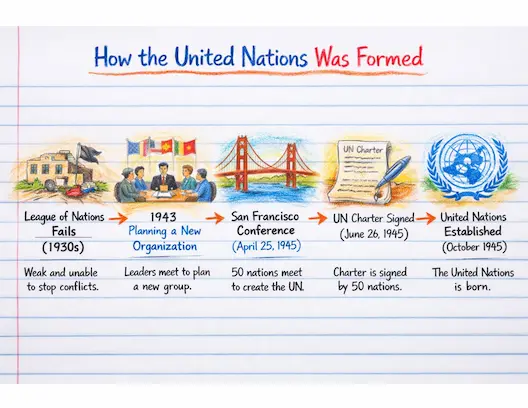
Students create a timeline showing the key events that led to the creation of the United Nations. This helps them see how world leaders responded to the failures of the League of Nations.
How to Do It:
Students draw a horizontal timeline and label these events:
- League of Nations fails (1930s)
- Leaders meet to plan a new organization (1943)
- San Francisco Conference begins (April 25, 1945)
- UN Charter signed (June 26, 1945)
- United Nations officially established (October 1945)
Students add a small sketch or symbol for each event and write a short caption explaining why it mattered.
Materials: Notebook, pencil
Optional Extension: Students add a final box titled “Why the UN Matters Today” and write one modern example of UN work (health, education, peacekeeping, etc.).
World War 2 Navigation
Explore the Full Great Depression Unit
This complete history unit includes research passages, organizers, writing tasks, quizzes, activities, and website research — all in printable and digital formats. Everything you need to teach The Great Depression and World War 2 with confidence.
View the Full Unit on TPT