The Axis Powers
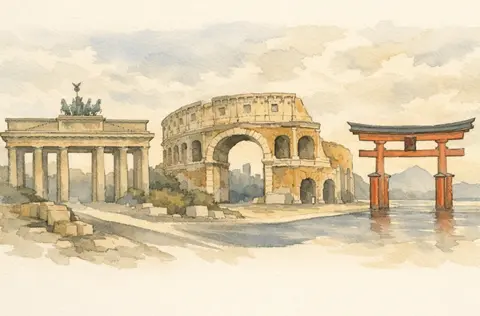
Fast Facts: The Axis Powers
Germany, Italy, and Japan
- Main Members: Germany, Italy, Japan
- Goal: Expand territory and gain world power
- Key Event: Axis treaty signed in 1936
- Conflict: Attacked neighboring nations
- Outcome: Their aggression led to World War II.
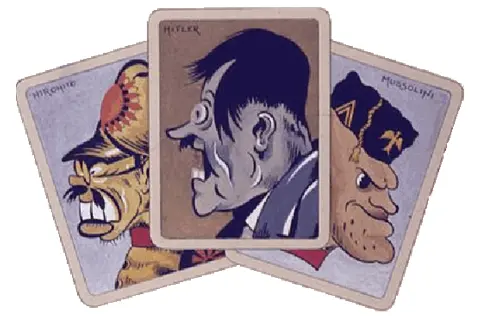
The Axis at a Glance
- Germany expanded into Austria and Czechoslovakia.
- Italy invaded Ethiopia and supported Franco in Spain.
- Japan took large parts of China.
- Appeasement allowed Hitler to gain more land.
- Germany and Russia signed a non‑aggression pact in 1939.
Growing Aggression in Europe and Asia
Germany, Italy, and Japan wanted more land and power. Italy took Ethiopia, Germany expanded into neighboring countries, and Japan captured much of China. These nations formed the Axis Powers in 1936, agreeing to help one another in wartime. In the United States, Congress passed the Neutrality Acts, which said the U.S. could not sell weapons to nations at war.
The Spanish Civil War
In 1936, Spain faced a civil war. General Francisco Franco tried to overthrow the Communist‑supported government. Germany and Italy helped Franco, using the war to test their new weapons. After three years of fighting, Franco took control of Spain.
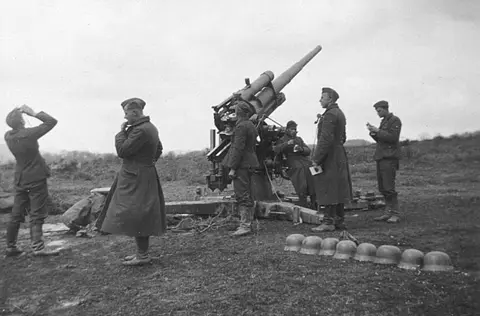
Hitler Expands Into Europe
In 1938, Hitler sent troops into Austria. Other European nations did not stop him because they wanted to avoid another war. Hitler then demanded the Sudetenland, a region of Czechoslovakia. England and France met with Hitler in Munich and allowed him to take the land, hoping to keep peace.
Appeasement Fails
Hitler broke his promise and took the rest of Czechoslovakia within six months. Italy invaded Albania, and Japan continued expanding in China. In August 1939, Germany and Russia signed a treaty agreeing not to fight each other. Soon after, Hitler began attacking nations in Western Europe.
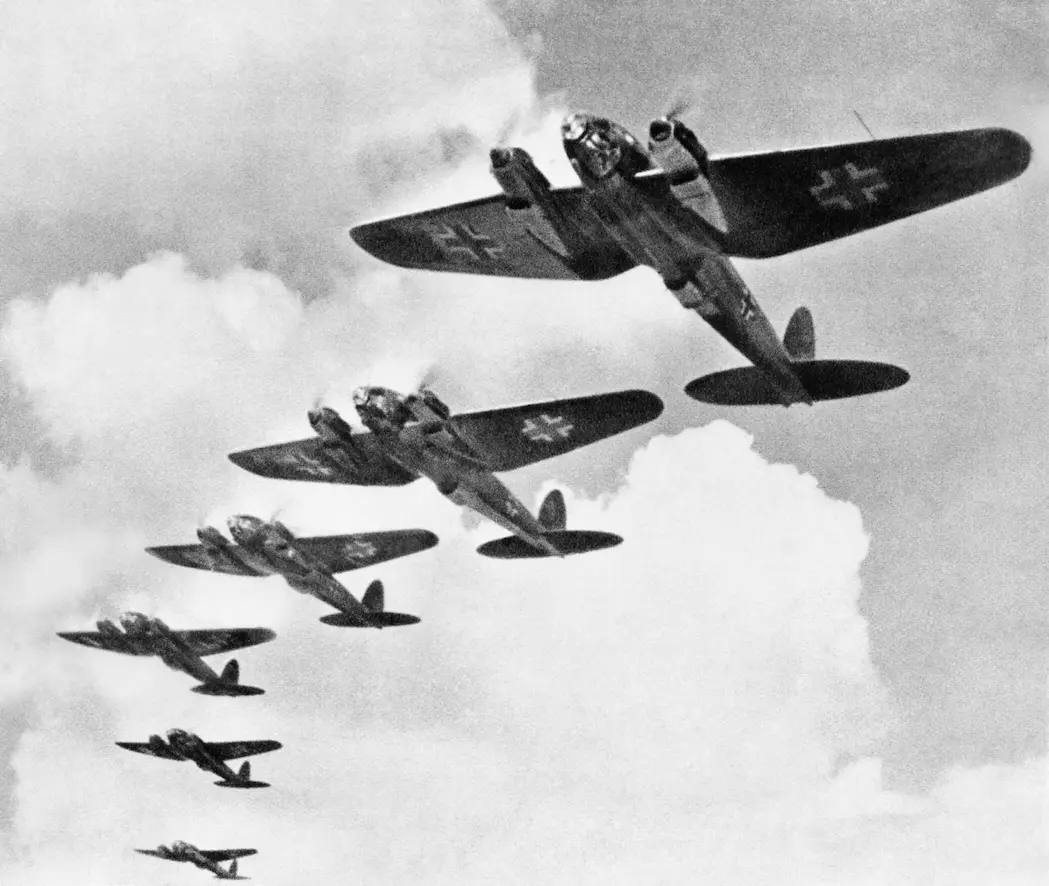
The World Moves Toward War
By 1939, the Axis Powers had taken large areas of Europe, Africa, and Asia. Their aggressive actions and broken promises pushed the world closer to World War II.
Word Match
Drag the vocabulary words to their correct definitions!
Vocabulary Words
Definitions
Lesson 3 — The Axis Powers Quiz
Activities & Extensions
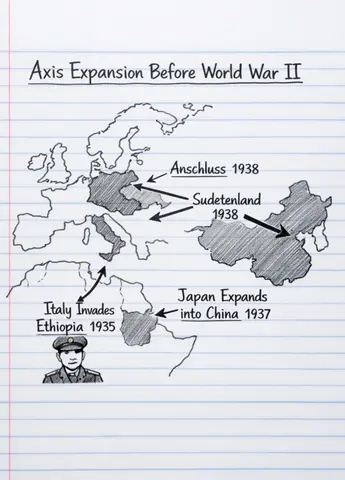
Students create a simple shaded map showing how Germany, Italy, and Japan expanded before World War 2. This helps them visualize why other nations grew worried and how appeasement encouraged further aggression.
How to Do It:
Students draw a quick outline map of Europe and Asia (or you display one on the board). They shade regions based on the lesson:
- Germany takes Austria (Anschluss)
- Germany demands the Sudetenland
- Italy conquers Ethiopia
- Japan expands into China
Students add arrows or labels showing the direction of expansion.
Materials: notebook, pencil, colored pencils (optional)
Optional Extension: Students add a final label explaining how appeasement at the Munich Conference encouraged Hitler to take more land.
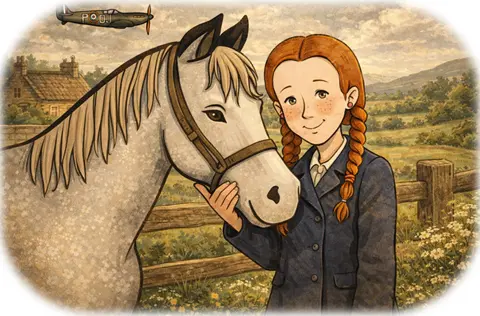
Students explore the British home front and the psychological reality of Operation Pied Piper—the massive evacuation of urban children to rural estates. This activity links literary themes of trauma, isolation, and resilience to the physical, practical logistics of wartime displacement.
How to Do It: Read Chapters 1–4 of The War That Saved My Life by Kimberly Brubaker Bradley (or Chapter 1 of The Lion, the Witch and the Wardrobe), focusing on the packing restrictions and the emotional departure at the train station. Students use small, clean gift boxes or folded brown paper to construct a miniature "Evacuee Suitcase." They attach a string-tied replica "British Evacuation Tag" bearing their character's name and registration number. Inside the suitcase, they place 5 symbolic, hand-drawn or crafted artifacts representing the essential items a child would pack, accompanied by a diary entry detailing their first night away from home.
Materials:
- small cardboard gift boxes or heavy brown cardstock
- twine or yarn and manila shipping tags
- scraps of fabric, construction paper, and miniature craft items
- fine-tip black pens and colored pencils
Optional Extension: Students interview a family member or write a modern reflection comparing what they would pack today under emergency evacuation guidelines versus what children packed in 1939.
World War 2 Navigation
Explore the Full Great Depression Unit
This complete history unit includes research passages, organizers, writing tasks, quizzes, activities, and website research — all in printable and digital formats. Everything you need to teach The Great Depression and World War 2 with confidence.
View the Full Unit on TPT