The War in the Pacific
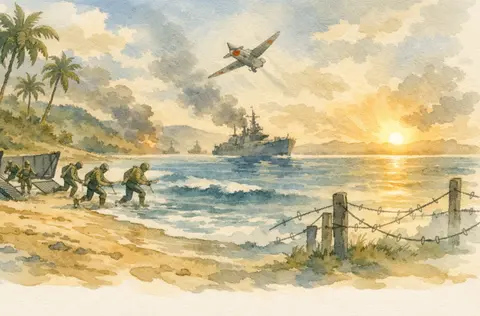
Fast Facts: The Pacific Front
Battles Across the Pacific
- Main U.S. Commander: General Douglas MacArthur
- Key Strategy: Island‑hopping
- Major Battles: Midway, Guadalcanal, Iwo Jima, Okinawa
- New Threat: Kamikaze pilots
- Outcome: Japan surrenders September 2, 1945
The Pacific at a Glance
- Japan captured American outposts early in the war.
- U.S. Marines won a major victory at Guadalcanal.
- MacArthur returned to liberate the Philippines.
- Kamikaze attacks increased in 1945.
- Atomic bombs were dropped on Hiroshima and Nagasaki.
Japan Advances Across the Pacific
While the Allies fought in Europe, Japan captured American outposts such as Corregidor in the Philippines. Prisoners were forced on long “death marches” to prison camps. General Douglas MacArthur created a plan to defeat Japan by retaking the Philippines, cutting Japan off from its empire, and finally attacking Japan itself.
Turning the Tide
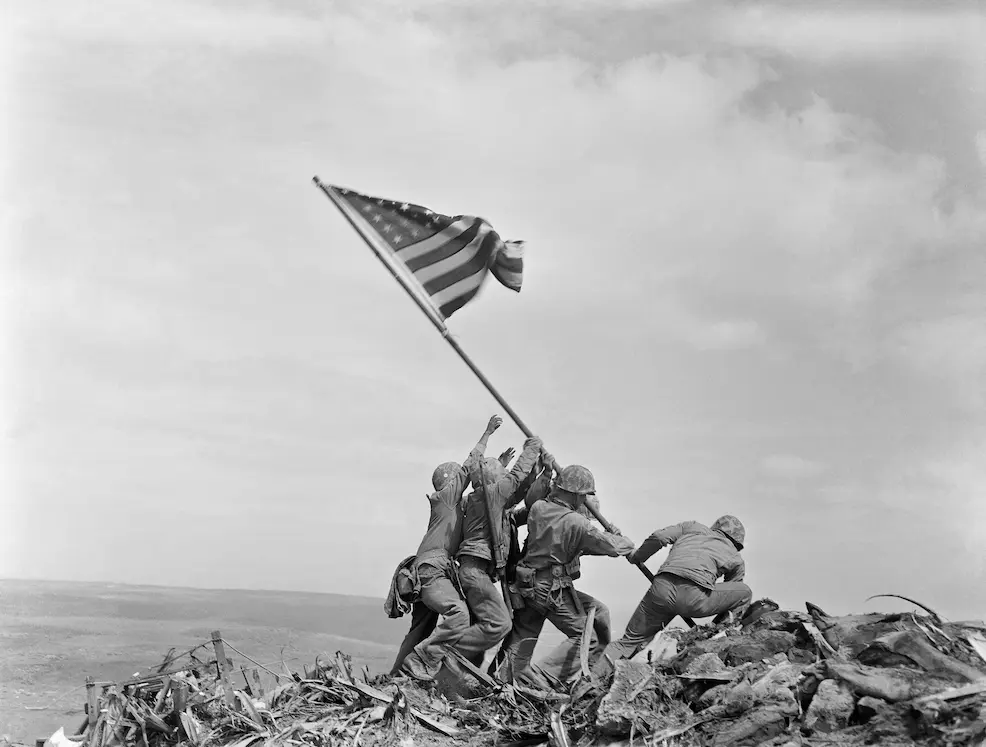
The Americans built a major base on Midway Island. In August 1942, U.S. Marines attacked Guadalcanal. After six months of fighting, the Americans won their first major land victory against Japan. For the next year and a half, U.S. forces moved steadily toward Japan using an island‑hopping strategy.
MacArthur Returns
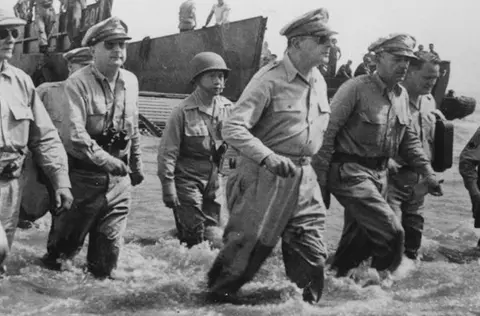
By December 1944, General MacArthur fulfilled his promise to return to the Philippines. In early 1945, the U.S. captured Iwo Jima and Okinawa. During these battles, Japan used kamikaze pilots who purposely crashed planes loaded with explosives into American ships.
The Atomic Bomb
On July 16, 1945, the United States tested the first atomic bomb as part of a secret program called the Manhattan Project. President Truman warned Japan to surrender, but Japan refused. On August 6, 1945, the U.S. dropped an atomic bomb on Hiroshima, killing more than 70,000 people. Japan still refused to surrender.
Japan Surrenders
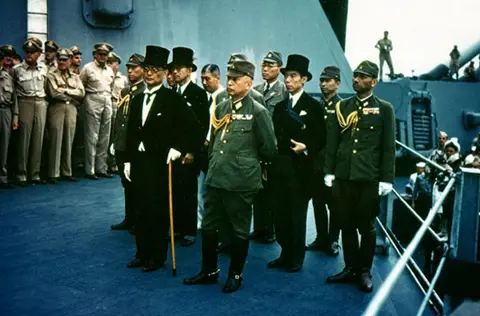
On August 9, a second atomic bomb was dropped on Nagasaki. Japan finally agreed to surrender. The official surrender papers were signed aboard the USS Missouri on September 2, 1945. This day became known as V‑J Day, or “Victory over Japan Day,” and it marked the end of World War II.
Word Match
Drag the vocabulary words to their correct definitions!
Vocabulary Words
Definitions
Lesson 7 — The War in the Pacific Quiz
Activities & Extensions
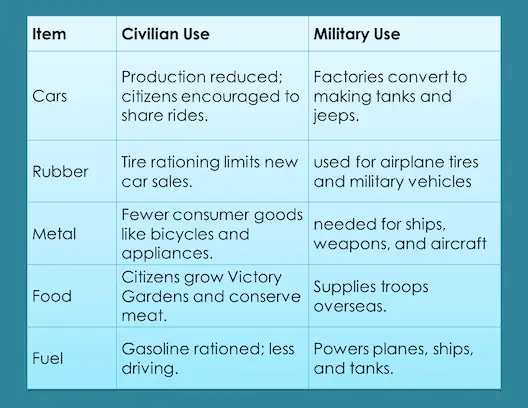
Students take on the role of the War Production Board (WPB) and decide how to allocate limited resources to support the war effort. This helps them understand how factories shifted from consumer goods to military supplies.
How to Do It:
Students draw a simple chart with three columns labeled:
- Item (cars, rubber, metal, food, fuel)
- Civilian Use
- Military Use
Students decide which items should be reduced for civilians and increased for the military. They write a one‑sentence explanation for each choice.
Materials: notebook, pencil
Optional Extension: Students design a simple “Rosie the Riveter‑style” slogan encouraging Americans to conserve resources.
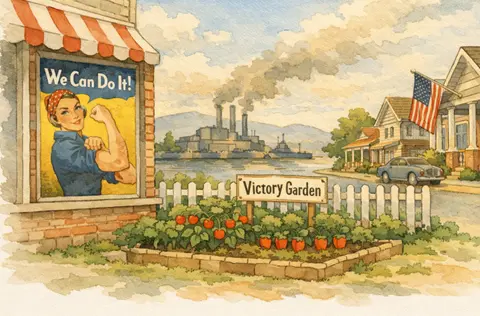
Students create three quick sketch‑posters inspired by real World War 2 home‑front campaigns. This helps them understand how propaganda encouraged Americans to support the war effort.
How to Do It:
Students divide a notebook page into three boxes labeled:
- Victory Gardens — growing food at home
- War Bonds — raising money for the military
- Civil Defense — protecting communities
In each box, students sketch a simple poster and add a short slogan such as: “Grow More for Victory,” “Buy a Bond, Back a Soldier,” or “Be Ready, Stay Safe.”
Materials: notebook, pencil, colored pencils (optional)
Optional Extension: Students choose their favorite poster and write a short explanation of how it might influence Americans during wartime.
World War 2 Navigation
Explore the Full Great Depression Unit
This complete history unit includes research passages, organizers, writing tasks, quizzes, activities, and website research — all in printable and digital formats. Everything you need to teach The Great Depression and World War 2 with confidence.
View the Full Unit on TPT