Italy and the Rise of Mussolini
Fast Facts: Fascist Italy
Mussolini’s Fascist Government
- Leader: Benito Mussolini
- Government: Fascism (dictatorship)
- Key Group: Black Shirts
- Major Event: March on Rome (1922)
- Outcome: Italy becomes a dictatorship
Italy at a Glance
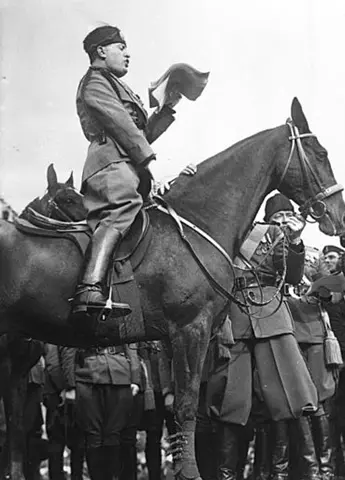
- Mussolini formed the Fascist Party after World War I.
- The Black Shirts used violence to silence opponents.
- In 1922, Mussolini took control of the government.
- Italy invaded Ethiopia in 1935.
- Italy later joined Germany and Japan to form the Axis Powers.
Mussolini Takes Control
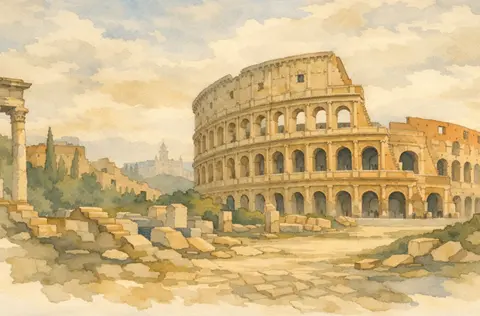
After World War I, Italy faced economic problems and political unrest. Benito Mussolini formed the Fascist Party, promising to restore order and bring back the greatness of ancient Rome. His followers, called the Black Shirts, marched through the streets and used violence against anyone who disagreed with them.
The March on Rome
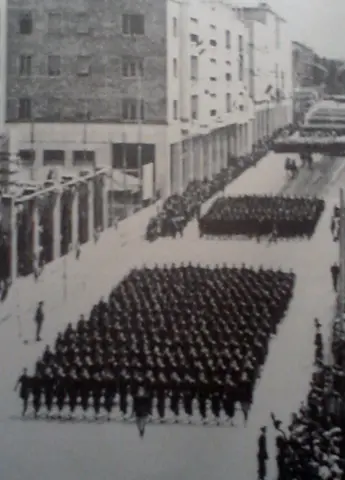
In 1922, Mussolini and thousands of Black Shirts marched on Rome. Fearing a civil war, the king appointed Mussolini as prime minister. Once in power, Mussolini created a dictatorship. The Black Shirts became a secret police force that threatened or harmed anyone who spoke out against him.
Italy Expands Its Empire
Mussolini wanted Italy to become a powerful empire. In 1935, he invaded Ethiopia. The League of Nations tried to stop Italy by placing trade restrictions, but these sanctions were weak and did not work. Italy then left the League. Mussolini’s aggressive actions encouraged other dictators in Europe.
The Axis Powers Form

In 1936, Italy grew closer to Germany. Later that year, Germany, Italy, and Japan signed an agreement promising to help one another in wartime. These nations became known as the Axis Powers, setting the stage for World War II.
A Dangerous Alliance
Italy’s partnership with Germany and Japan helped strengthen the Axis Powers. Mussolini’s dictatorship and military expansion played a major role in the events that led to World War II.
Word Match
Drag the vocabulary words to their correct definitions!
Vocabulary Words
Definitions
Lesson 2 — Italy and the Rise of Mussolini Quiz
Activities & Extensions
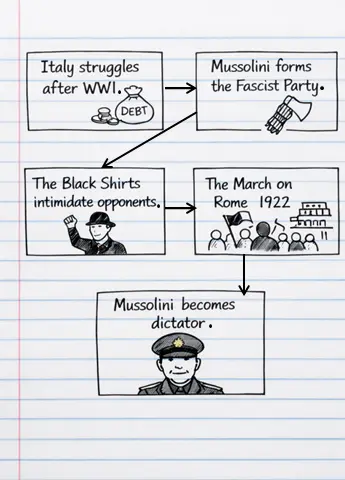
Students create a simple timeline showing how Mussolini rose to power in Italy. This helps them visualize the sequence of events that transformed Italy into a fascist dictatorship.
How to Do It:
Students draw four or five connected boxes in their notebooks. In each box, they write one major event from the lesson and add a small sketch or symbol.
- Italy struggles after World War I.
- Mussolini forms the Fascist Party.
- The Black Shirts intimidate opponents.
- The March on Rome (1922).
- Mussolini becomes dictator.
Students add arrows to show how one event led to the next.
Materials: notebook, pencil
Optional Extension: Students add a final box explaining how Mussolini’s dictatorship influenced other leaders in Europe.
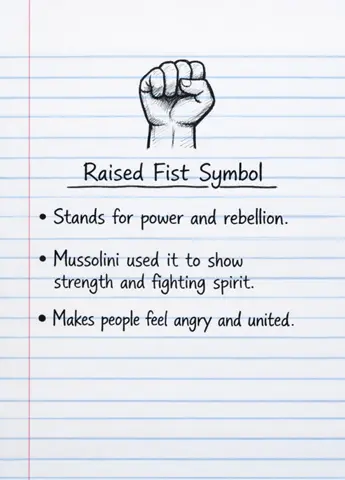
Students analyze symbols connected to Mussolini’s fascist government to better understand how leaders use imagery to influence public opinion and create a sense of power.
How to Do It:
Display or draw three simple symbols on the board:
- a bundle of sticks (fasces)
- a raised fist
- a marching boot or soldier silhouette
Students choose one symbol and write a short explanation of:
- what the symbol represents
- how Mussolini used symbols to gain support
- why symbols are powerful in politics
Materials: notebook, pencil
Optional Extension: Students design a new symbol that could represent resistance to fascism and explain its meaning.
World War 2 Navigation
Explore the Full Great Depression Unit

This complete history unit includes research passages, organizers, writing tasks, quizzes, activities, and website research — all in printable and digital formats. Everything you need to teach The Great Depression and World War 2 with confidence.
View the Full Unit on TPT