The War in Europe
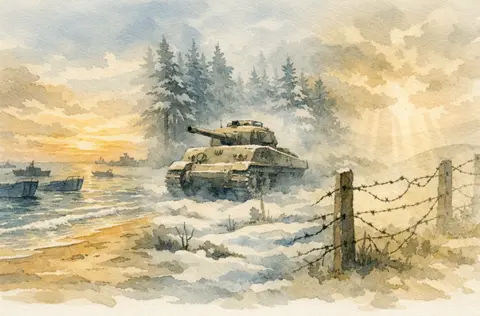
Fast Facts: The European Front
Allied Victory in Europe
- Main Allies: U.S., Great Britain, France, 46 others
- Key Strategy: Defeat Germany first
- Major Event: D‑Day (June 6, 1944)
- Turning Point: Allies push Germans back to Germany
- Outcome: Germany surrenders May 7, 1945
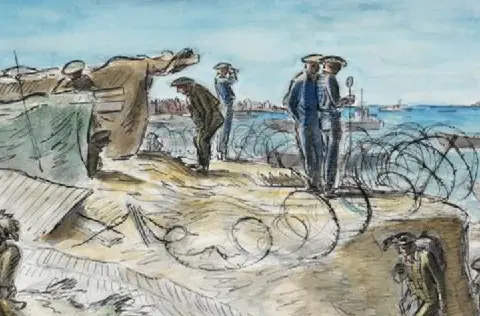
Europe at a Glance
- The U.S. joined the Allies to fight the Axis Powers.
- Allies captured Italy in April 1944.
- D‑Day began the liberation of France.
- Russians pushed from the east as Allies pushed from the west.
- Germany surrendered in May 1945.
The Allies Join Forces
The United States joined Great Britain, France, and 46 other nations to form the Allies. President Roosevelt decided to focus on defeating Germany first, while sending smaller forces to slow Japan in the Pacific. In April 1944, the Allies captured Italy, weakening Germany’s support.
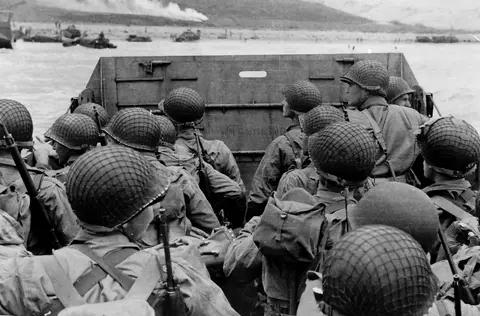
D‑Day: The Turning Point
On June 6, 1944, known as D‑Day, Allied troops crossed the English Channel and landed on the beaches of Normandy, France. Under General Eisenhower, they fought their way inland and pushed the Germans back across France. By September, the Allies had forced the Germans all the way back to their own country.
Germany Strikes Back
Germany used a new weapon called the V‑2 rocket, which could fly without a pilot and strike cities with little warning. Hundreds of these rockets hit British cities, but they did not stop the Allied advance.
The War Nears Its End
While the Americans and British pushed from the west, the Russians pushed from the east. In April 1945, Russian troops reached Berlin. On April 12, 1945, President Roosevelt died, and Vice President Harry Truman became president. On May 7, 1945, Germany surrendered.
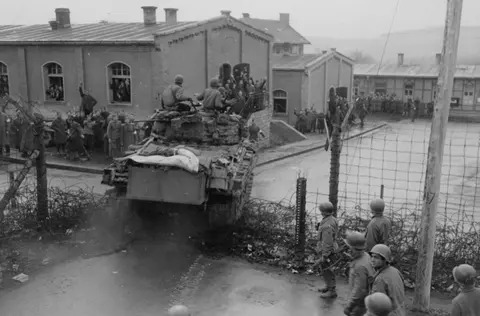
The Holocaust Revealed
As Allied troops moved through Germany, they discovered concentration camps where hundreds of thousands of people—mostly Jews—had been killed. The Allies freed the survivors and documented the horrors they found.
Word Match
Drag the vocabulary words to their correct definitions!
Vocabulary Words
Definitions
Lesson 6 — The War in Europe Quiz
Activities & Extensions
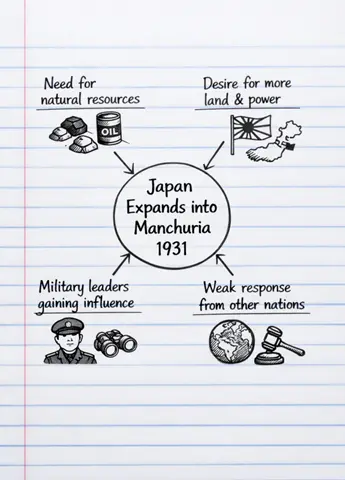
Students create a cause‑and‑effect web showing how Japanese imperialism led to the invasion of Manchuria and eventually to conflict with the United States. This helps them understand the chain of events that pushed the Pacific region toward war.
How to Do It:
Students draw a circle in the center of a notebook page labeled Japan Expands into Manchuria (1931). Around it, they draw four branches labeled:
- need for natural resources
- desire for more land and power
- military leaders gaining influence
- weak response from other nations
Students add one sentence to each branch explaining how it contributed to Japan’s expansion.
Materials: notebook, pencil
Optional Extension: Students add a second layer showing how Japan’s actions affected the United States and the Pacific Fleet.

Students explore the Pacific Theater of war, linking naval blockades (from The Cay) and civilian surrounding struggles to the ultimate post-war atomic aftermath in Hiroshima. This activity helps students synthesize international conflict with the universal post-war pursuit of peace.
How to Do It: Read Eleanor Coerr's Sadako and the Thousand Paper Cranes, focusing on the long-term, post-1945 human cost of World War II in Japan. Students master basic Japanese paper-folding methods to craft colorful origami cranes (Senbazuru). Inside the wings of each crane, students write a brief, key historical fact about the Pacific theater on one side, and a personal hope, wish, or lesson regarding international peace on the other. The finished cranes are strung together on fishing lines and suspended from the classroom ceiling to form a collaborative "Canopy of Hope."
Materials:
- colorful, double-sided origami folding paper squares
- detailed, step-by-step paper folding instruction charts
- needles, fishing line, and small plastic separator beads
- fine-tip permanent ink writing pens
Optional Extension: Students map the islands of Hiroshima and the Caribbean locations mentioned in The Cay, analyzing the geographic expanse of conflicts fought throughout the Pacific and Atlantic.
World War 2 Navigation
Explore the Full Great Depression Unit
This complete history unit includes research passages, organizers, writing tasks, quizzes, activities, and website research — all in printable and digital formats. Everything you need to teach The Great Depression and World War 2 with confidence.
View the Full Unit on TPT