The Great Depression
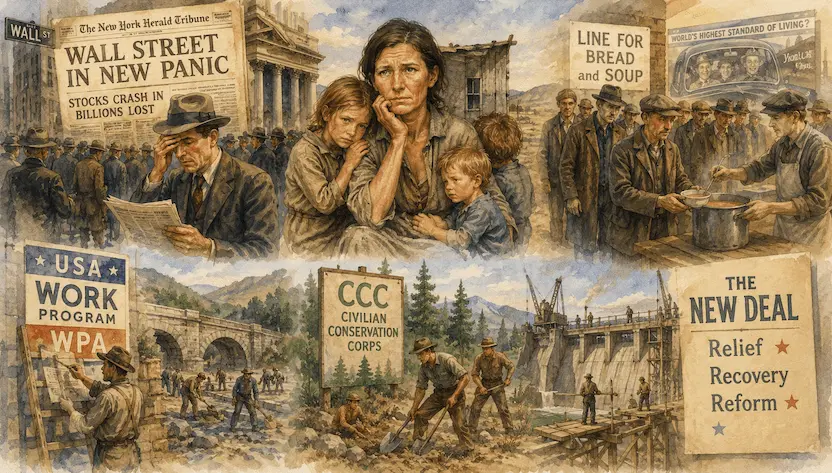
The Great Depression was one of the hardest times in American history. After the Stock Market Crash of 1929, families across the country faced job loss, bank failures, drought, and daily uncertainty.
Students will explore how the crisis began, what life was like for people in cities and on farms, and how President Franklin D. Roosevelt’s New Deal programs brought hope and lasting change.
Great Depression Lessons
These lessons guide students through the causes, hardships, and government responses of the Great Depression. From the Stock Market Crash to the New Deal, this unit provides clear, engaging resources for grades 3–6.
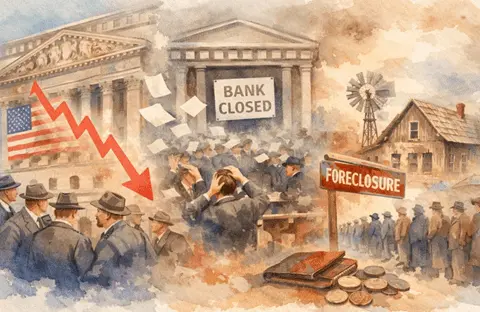
The Stock Market Crash
Learn how risky investments, falling stock prices, and bank failures helped trigger the Great Depression.
View Lesson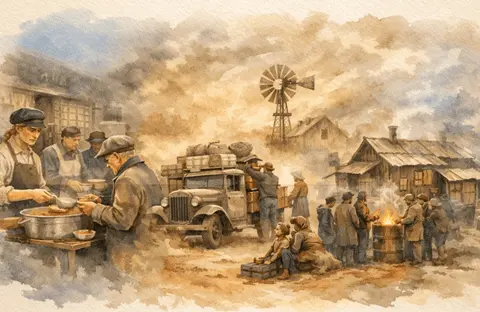
Life During the Great Depression
Explore how families survived unemployment, the Dust Bowl, Hoovervilles, and the hardships of daily life.
View Lesson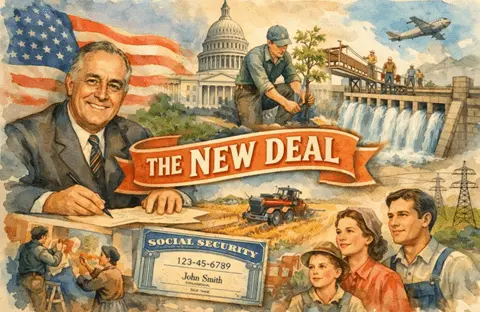
The New Deal
Discover how Franklin D. Roosevelt’s New Deal programs brought relief, recovery, and reform to the nation.
View LessonFun Facts About the Great Depression
Movies Became an Escape
Even during hard times, millions of Americans went to the movies each week. Films like The Wizard of Oz and Snow White gave people a break from their worries and brought color and music into daily life.
The Empire State Building Opened
One of the most famous skyscrapers in the world was completed in 1931, right in the middle of the Depression. It was so empty at first that people joked it was the “Empty State Building.”
Monopoly Became a Hit
The board game Monopoly became popular during the 1930s. Families loved playing a game about buying property and becoming rich at a time when real life felt very different.
Route 66 Helped Families Move West
Known as the “Mother Road,” Route 66 became a major path for families leaving the Dust Bowl. It stretched from Chicago to California and carried thousands of people searching for new opportunities.
Black Tuesday Changed Everything
On October 29, 1929, known as Black Tuesday, the stock market crashed. Investors lost an estimated $14 billion in one day. During the crash week, losses reached about $30 billion — worth hundreds of billions of dollars in today’s money.
A Photograph Became Famous
Photographer Dorothea Lange captured powerful images of struggling families during the Depression. Her photograph called Migrant Mother became one of the most recognized images of the era.
Gangsters Became Celebrities
During the 1930s, famous gangsters like Bonnie and Clyde, John Dillinger, and Al Capone often appeared in newspapers. Many Americans followed their stories the way people follow celebrities today.
People Looked for Ways to Save Money
Families searched for small ways to cut costs during the Depression. Even clothing changed as zippers became more popular because they were cheaper than buttons.
Explore the Full Great Depression & World War 2 Unit
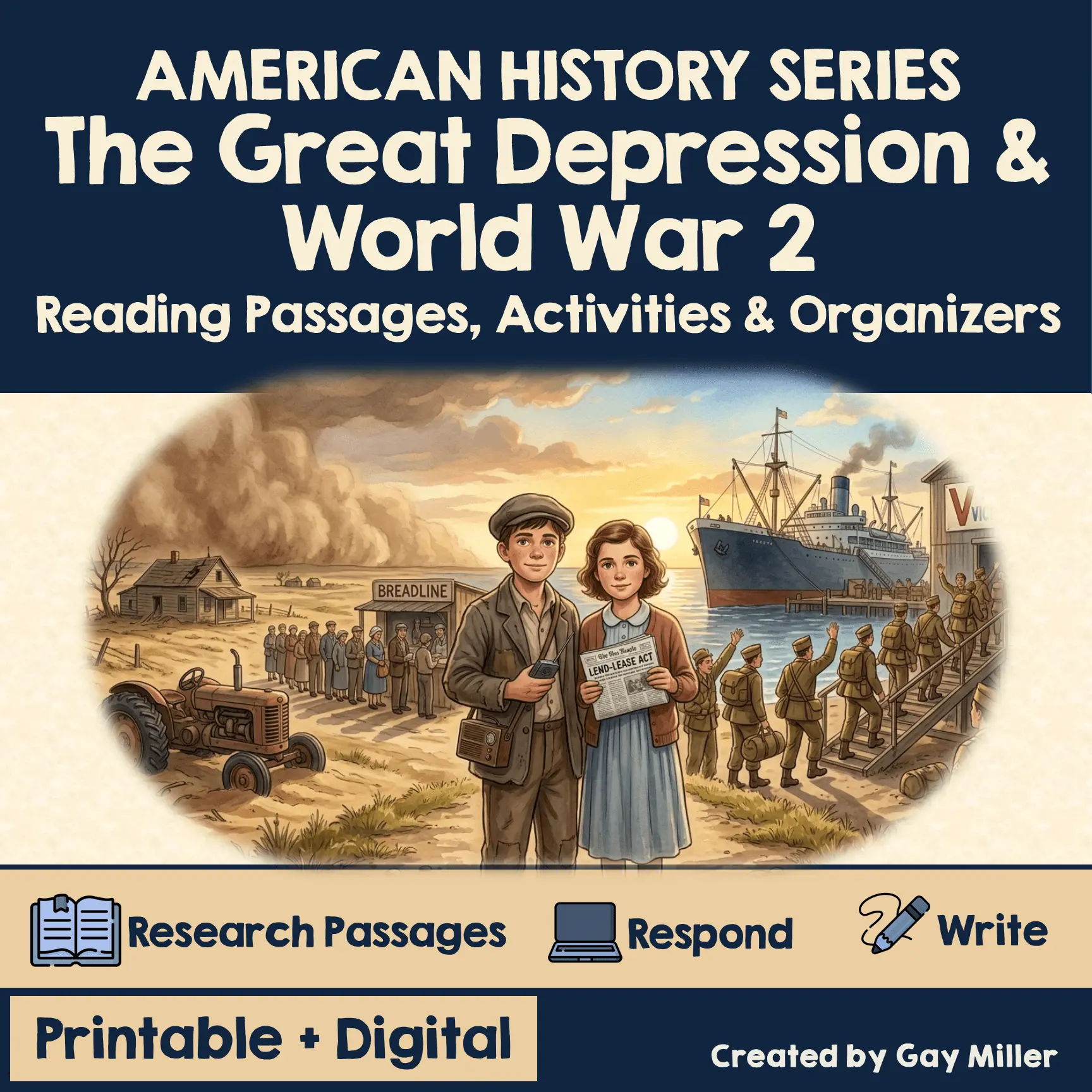
This complete history unit includes research passages, organizers, writing tasks, quizzes, activities, and website research — all in printable and digital formats. Everything you need to teach the Great Depression and World War 2 with confidence.
View the Full Unit on TPT