The Concentration Camps
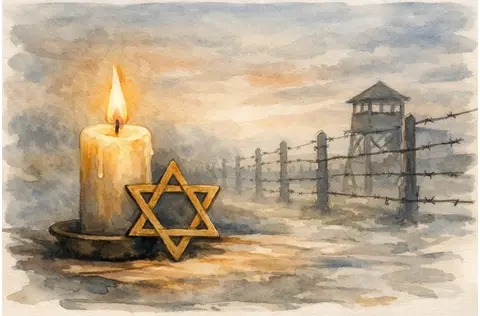
Fast Facts: The Holocaust
Nazi Persecution of Jews
- Belief: Hitler claimed the “Aryan race” was superior.
- Main Target: Jewish people across Europe
- Key Actions: Anti‑Jewish laws, forced identification
- Deportation: Jews sent to concentration camps
- Outcome: Millions killed in the Holocaust

The Holocaust at a Glance
- Jews were banned from teaching and owning property.
- They were forced to wear the Star of David.
- Families were taken to camps in crowded cattle cars.
- Many died from starvation, disease, and hard labor.
- Allied troops freed survivors in 1945.
Nazi Beliefs and Anti‑Jewish Laws
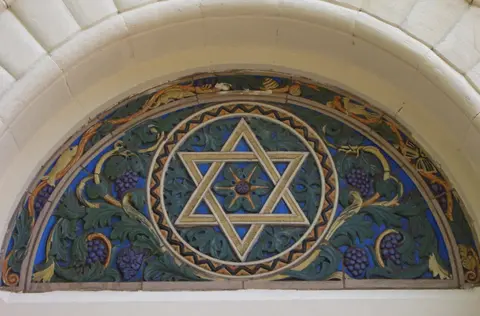
Hitler believed that the Jewish people were responsible for Germany’s problems after World War I. He claimed that Germany should be ruled by a “master race” called the Aryan race. As the Nazis gained power, they passed laws that took away the rights of Jewish people. At the time, about ten million Jews lived in Europe, and many of these laws targeted them as Germany expanded its control. Jews could not teach in schools, do business with non‑Jews, or own property. They were also forced to wear the Star of David on their clothing.
Deportation to Concentration Camps
As Germany took over more countries, Nazi soldiers rounded up Jewish families and sent them to concentration camps. People were transported in crowded cattle cars with little food or water. Once at the camps, many prisoners died from starvation, disease, and exhausting labor.
Mass Killings
In some camps, the Nazis built gas chambers disguised as “shower rooms.” Prisoners were told they were going to wash, but instead poisonous gas was released. Thousands were killed at a time. The Nazis took valuables from the bodies and buried or burned them in large ovens.
The Holocaust Revealed
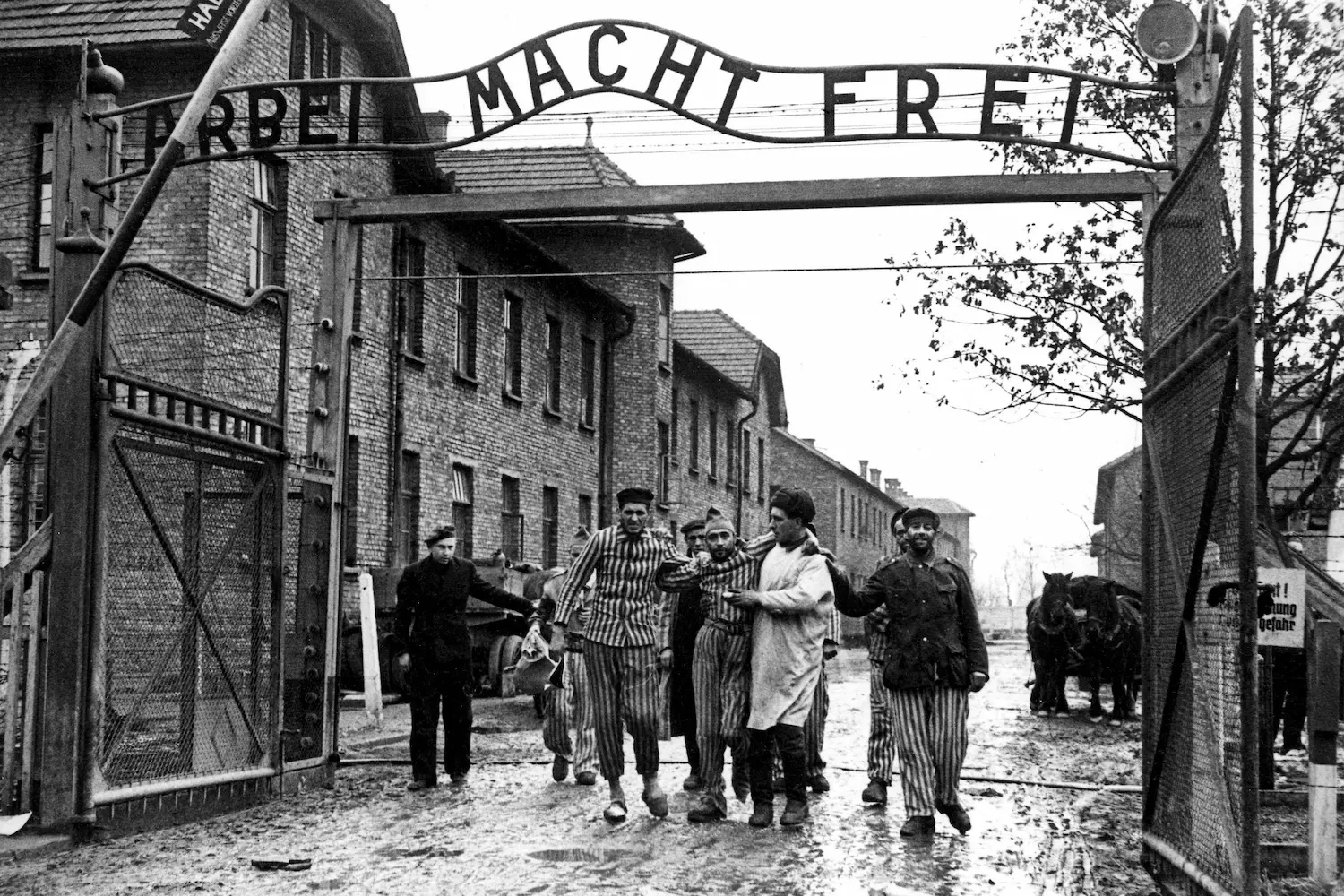
When Allied troops reached Germany in 1945, they discovered the concentration camps. Soldiers found starving prisoners and evidence of mass killings. The release of the survivors and the uncovering of the camps became known as the Holocaust.
A Tragic Chapter in History
The Holocaust remains one of the darkest events in world history. It serves as a reminder of the dangers of hatred, discrimination, and unchecked power.
Word Match
Drag the vocabulary words to their correct definitions!
Vocabulary Words
Definitions
Lesson 8 — The Concentration Camps Quiz
Activities & Extensions

Introduce students to eight remarkable individuals who risked their lives to save Jewish people during the Holocaust. These rescuers—often honored as Righteous Among the Nations—came from different countries and backgrounds but shared extraordinary courage and compassion.
How to Do It:
Students read short biographies of eight Holocaust heroes: Raoul Wallenberg, Giovanni Palatucci, Oskar Schindler, André Trocmé, Irena Sendler, Nicholas Winton, Chiune Sugihara, and Varian Fry.
- Students complete charts comparing each hero’s actions and rescue methods.
- They synthesize information from all eight articles to draw conclusions.
- Students answer compare‑and‑contrast questions following the booklet.
- They complete a printable comparing Henrik from Number the Stars to real Holocaust heroes.
Materials:printable (Click the button below.)
Optional Extension: Students write a reflection explaining which hero they found most inspiring and why.
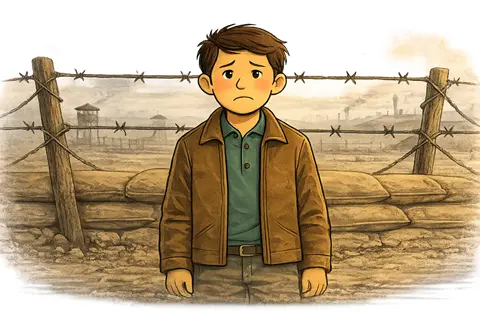
Students confront the horrific, systematic scale of the Nazi concentration camp network. By exploring Yanek's true struggle of surviving 10 different camps, students restore individuality and humanity to victims of the Holocaust.
How to Do It: Read Chapters 9–20 of Prisoner B-3087 by Alan Gratz (based on the life of Jack Gruener), focusing on his struggle to maintain hope and hold onto his name while enduring different concentration camps. Students create a large-scale map plotting the geographic locations of the 10 camps Yanek endured. To honor the millions lost, students select a smooth river stone and paint a small, symbolic icon of hope, light, or growth (e.g., a tiny flower, a candle, or a bird) on its surface using acrylic paint. On the back, they write a meaningful quote about human dignity from the book.
Materials:
- smooth, flat river stones (approx. 2-3 inches wide)
- acrylic craft paints, fine-tip paint pens, and thin brushes
- maps detailing the locations of major Nazi concentration and death camps
- clear acrylic spray sealant or Mod Podge
Optional Extension: Students research a real concentration camp survivor or rescuer using the Yad Vashem database, writing a 1-page biography card to display alongside their painted stone in a classroom exhibit.
World War 2 Navigation
Explore the Full Great Depression Unit
This complete history unit includes research passages, organizers, writing tasks, quizzes, activities, and website research — all in printable and digital formats. Everything you need to teach The Great Depression and World War 2 with confidence.
View the Full Unit on TPT