Germany After World War I
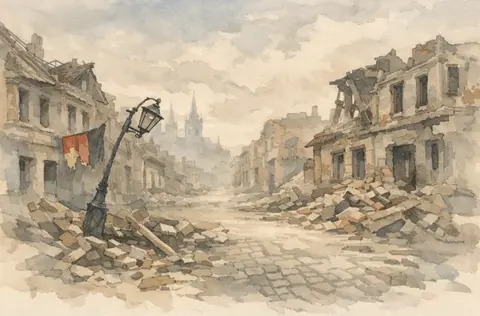
Fast Facts: Germany After World War I
Germany After the Treaty of Versailles
- Era: Years after World War I
- Key Treaty: Treaty of Versailles (1919)
- Main Issue: Germany blamed and punished for the war
- Hardship: Heavy war debts and loss of military power
- Outcome: Anger and unrest helped Hitler rise to power
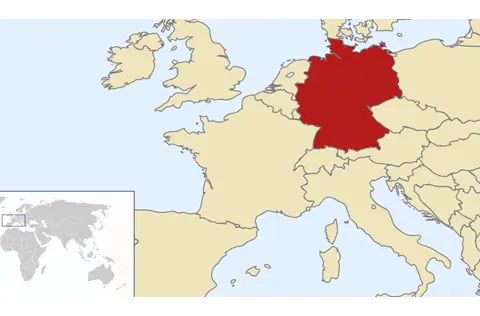
Germany at a Glance
- Germany lost World War I and signed the Treaty of Versailles.
- The treaty forced Germany to accept blame for the war.
- Germany had to pay large amounts of money to the Allies.
- The German army, navy, and air force were sharply limited.
- Economic problems and anger toward the treaty led to unrest.
Germany After the Treaty of Versailles
After World War I, Germany was badly hurt. Millions of soldiers were dead, missing, or prisoners of war. The country was forced to sign the Treaty of Versailles, which blamed Germany for starting the war. Germany had to pay huge sums of money to the Allied nations and promise not to build a large army, navy, or air force again. Many Germans felt the treaty was unfair and humiliating.
Hard Times and Growing Anger
During the 1920s, Germany’s economy grew worse. Inflation made money almost worthless. Prices rose so quickly that a loaf of bread could cost millions of marks. Many people lost their jobs and savings. Germans were angry, scared, and looking for a strong leader who could restore pride and stability to their country.
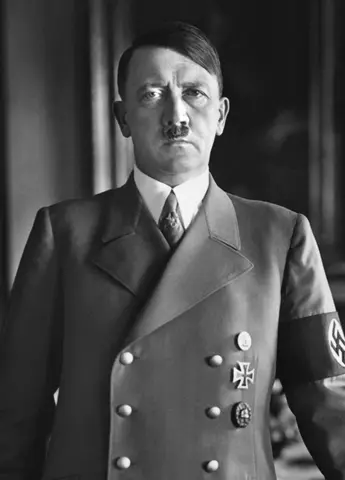
Hitler and the Nazi Party
Adolf Hitler joined a political group that became the National Socialist Party, or Nazi Party. He believed in fascism, a system in which a dictator has total control over the government and people. Hitler gave powerful speeches, promising to tear up the Treaty of Versailles, rebuild the military, and make Germany a great world power again. He blamed Jews, Communists, and others for Germany’s problems, spreading hatred and fear.
A Dictatorship Begins
Hitler formed a private army to threaten and attack anyone who spoke against him. The Nazi Party used violence and intimidation to gain more power. In 1933, Hitler became chancellor of Germany, and by 1934 he had full control of the government. Political opponents were jailed or killed, and freedom of speech disappeared. Germany was now ruled by a dictator, and the stage was set for World War II.
From Defeat to Dangerous Power
The years after World War I changed Germany from a defeated nation into a dangerous dictatorship. Economic hardship, anger over the Treaty of Versailles, and the rise of Adolf Hitler all helped lead the world toward another major conflict. Understanding Germany’s struggles after World War I helps explain how World War II began.
Word Match
Drag the vocabulary words to their correct definitions!
Vocabulary Words
Definitions
Lesson 1 — Germany After World War 1 Quiz
Activities & Extensions
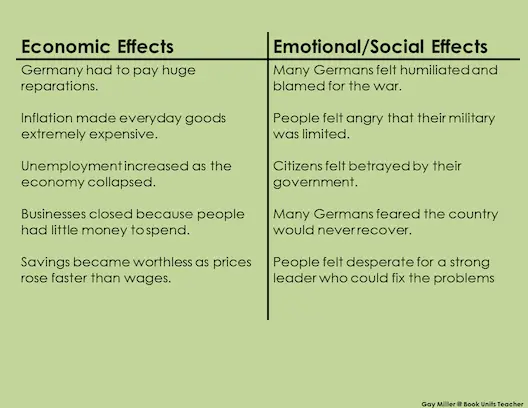
Students sort statements into two categories to better understand how the Treaty of Versailles affected Germany: Economic Effects and Emotional/Social Effects. This helps students visualize how hardship and resentment created conditions that allowed Hitler to rise to power.
How to Do It:
Students draw two columns in their notebooks. You read (or display) statements one at a time, and students decide which column each belongs in.
- Germany had to pay huge reparations.
- Many Germans felt humiliated and blamed for the war.
- Inflation made everyday goods extremely expensive.
- People felt angry that their military was limited.
- Unemployment increased as the economy collapsed.
- Citizens felt betrayed by their government.
Materials: notebook, pencil
Optional Extension: Students write a short paragraph explaining which category they believe had the biggest impact on Germany’s future.

Students analyze the heartbreaking 1939 voyage of the MS St. Louis to bridge the rise of Nazi anti-Semitism with global refugee policies. By researching real passengers alongside Josef's fictional narrative, students gain a deep, empathetic understanding of human rights, immigration quotas, and wartime displacement.
How to Do It: Read the early Josef chapters of Refugee by Alan Gratz, focusing on the "Kristallnacht" attack on his home and his family's tense boarding of the ship. Students construct replica 1930s "German Passport Documents" using tan cardstock. Inside, they write character logs detailing the escalation of the Nuremberg Laws. Next, students map the ship's actual physical route from Hamburg to Cuba, the US, and back to Europe. They cross-reference Josef’s story with actual passenger logs to write a concluding reflection on how global foreign policy directly impacted individual civilian lives.
Materials:
- tan cardstock (folded to mimic passport covers)
- historical passenger manifests and maps of the M.S. St. Louis route
- stamps, ink pads, and vintage-style writing pens
- fine-tip markers and colored pencils
Optional Extension: Students draft a modern "Letter of Appeal" to international consulates from the perspective of a passenger, arguing for sanctuary using arguments based on the later 1948 UN Universal Declaration of Human Rights.
World War 2 Navigation
Explore the Full Great Depression Unit
This complete history unit includes research passages, organizers, writing tasks, quizzes, activities, and website research — all in printable and digital formats. Everything you need to teach The Great Depression and World War 2 with confidence.
View the Full Unit on TPT