America Enters the War
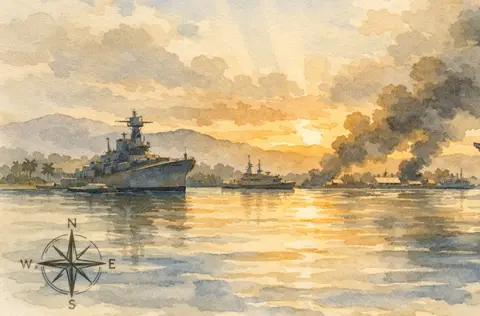
Before the attack on Pearl Harbor, many Americans wanted the United States to stay out of the fighting in Europe and Asia. These people were called Isolationists. They believed the U.S. should avoid getting involved in other nations’ wars.
Even while trying to stay neutral, the United States helped the Allies through the Lend‑Lease Act, which allowed the U.S. to send weapons and supplies to nations fighting the Axis Powers.
Fast Facts: Pearl Harbor & U.S. Mobilization
The Attack on Pearl Harbor
- Date: December 7, 1941
- Location: Pearl Harbor, Hawaii
- Casualties: 2,000+ Americans killed
- Damage: Nearly 200 planes destroyed
- Outcome: U.S. declares war on Japan
America at a Glance
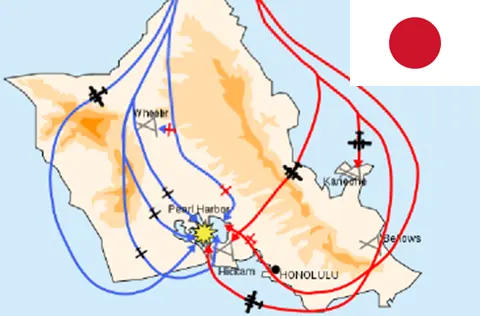
- Japan launched a surprise attack on Pearl Harbor.
- President Roosevelt asked Congress to declare war.
- Germany and Italy declared war on the U.S. three days later.
- Millions of Americans joined the armed forces.
- Women worked in factories and served in support roles.
The Attack on Pearl Harbor
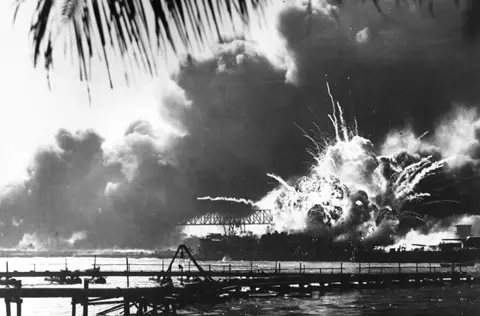
On December 7, 1941, Japan launched a surprise attack on the American naval base at Pearl Harbor in Hawaii. More than 2,000 sailors were killed, over 1,000 were wounded, and nearly 200 American planes were destroyed. The next day, President Roosevelt asked Congress to declare war on Japan.
America Joins the Allies
Three days after the United States declared war on Japan, Germany and Italy declared war on the United States. America now joined the Allies in the fight against the Axis Powers. The country quickly began preparing for war.
Mobilizing for War
The United States added huge amounts of steel, food, weapons, ships, and manpower to the war effort. By 1945, nearly 13 million men were serving in the armed forces. Women worked as nurses, clerks, pilots, and mechanics, and millions worked in factories building tanks and airplanes.

Life on the Home Front
Americans supported the war by rationing food, gasoline, and shoes. Families saved scrap metal, fats, and nylon stockings. The government sold war bonds to raise money. By 1943, more than two million women were working in war factories.
The Attack on Pearl Harbor
After the attack on Pearl Harbor, many Americans feared that Japanese‑Americans might act as spies. Nearly 72,000 Japanese‑Americans were forced to leave their homes and move to internment camps. Many lost their homes and businesses and faced difficult living conditions.
Word Match
Drag the vocabulary words to their correct definitions!
Vocabulary Words
Definitions
Lesson 5 — America Enters the War Quiz
Activities & Extensions
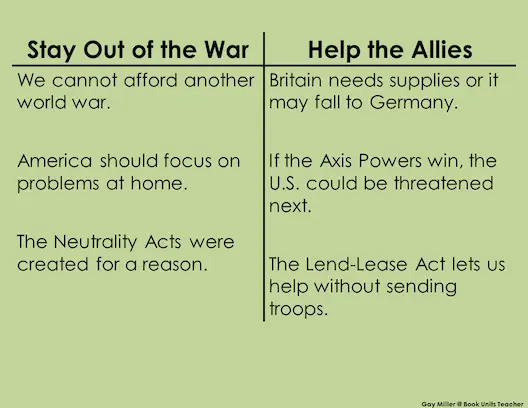
Students explore the debate between isolationists and interventionists by sorting short statements into two categories: Stay Out of the War and Help the Allies. This helps them understand why the U.S. struggled to decide its role before Pearl Harbor.
How to Do It:
Students draw two columns in their notebooks. You read (or display) statements one at a time, and students decide which column each belongs in.
- We cannot afford another world war.
- Britain needs supplies or it may fall to Germany.
- America should focus on problems at home.
- If the Axis Powers win, the U.S. could be threatened next.
- The Neutrality Acts were created for a reason.
- The Lend‑Lease Act lets us help without sending troops.
Materials: notebook, pencil
Optional Extension: Students write a short paragraph explaining which side they would have supported in 1940 and why.
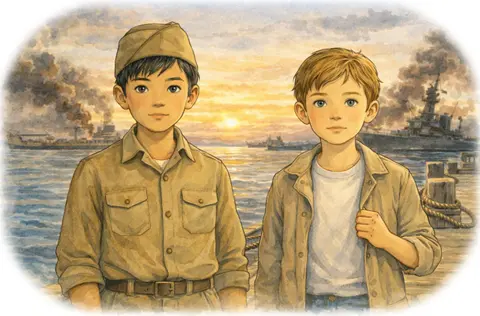
Students trace the rapid, world-altering sequence of events on the morning of December 7, 1941. By pairing the tense, real-time narrative of historical fiction with primary source military logs, students visualize how unexpected the attack was and how it catalyzed America's entry into the war.
How to Do It: Read Chapters 14–22 of Heroes: A Novel of Pearl Harbor by Alan Gratz, focusing on Frank and Stanley’s firsthand experiences during the first and second attack waves. On a long strip of butcher paper or folded cardstock, students create an illustrated timeline marking key moments between 6:00 AM and 10:00 AM (e.g., the radar detection at Opana Point, the sinking of the USS Arizona, and the civilian response). For each timestamp, students write a brief summary of the historical event on top, and a quote or perspective from the novel's characters directly underneath.
Materials:
- long strips of butcher paper or large construction paper
- rulers, colored pencils, and fine-tip markers
- excerpts from actual Pearl Harbor military logs or timelines
- glue and historical photograph printouts (optional)
Optional Extension: Students listen to a recording of President Franklin D. Roosevelt’s "Day of Infamy" speech and highlight phrases that directly match the chaos and resolve described by the characters in the book.
World War 2 Navigation
Explore the Full Great Depression Unit
This complete history unit includes research passages, organizers, writing tasks, quizzes, activities, and website research — all in printable and digital formats. Everything you need to teach The Great Depression and World War 2 with confidence.
View the Full Unit on TPT