Women, African Americans, and Native Americans in the Revolution
Fast Facts: Groups in the Revolution
Roles in the Revolution
- Women: Nurses, spies, home-front support
- African Americans: Fought for both sides
- Native Americans: Divided alliances
- Key Idea: Many groups shaped the war
- Outcome: Mixed results for rights
Contributions at a Glance
- Women ran farms, made supplies, and served as messengers.
- African Americans fought bravely despite limited freedoms.
- Native nations chose sides based on survival and alliances.
- Many hoped the Revolution would bring greater rights.
- Most groups saw little immediate change after the war.
Women Support the War Effort
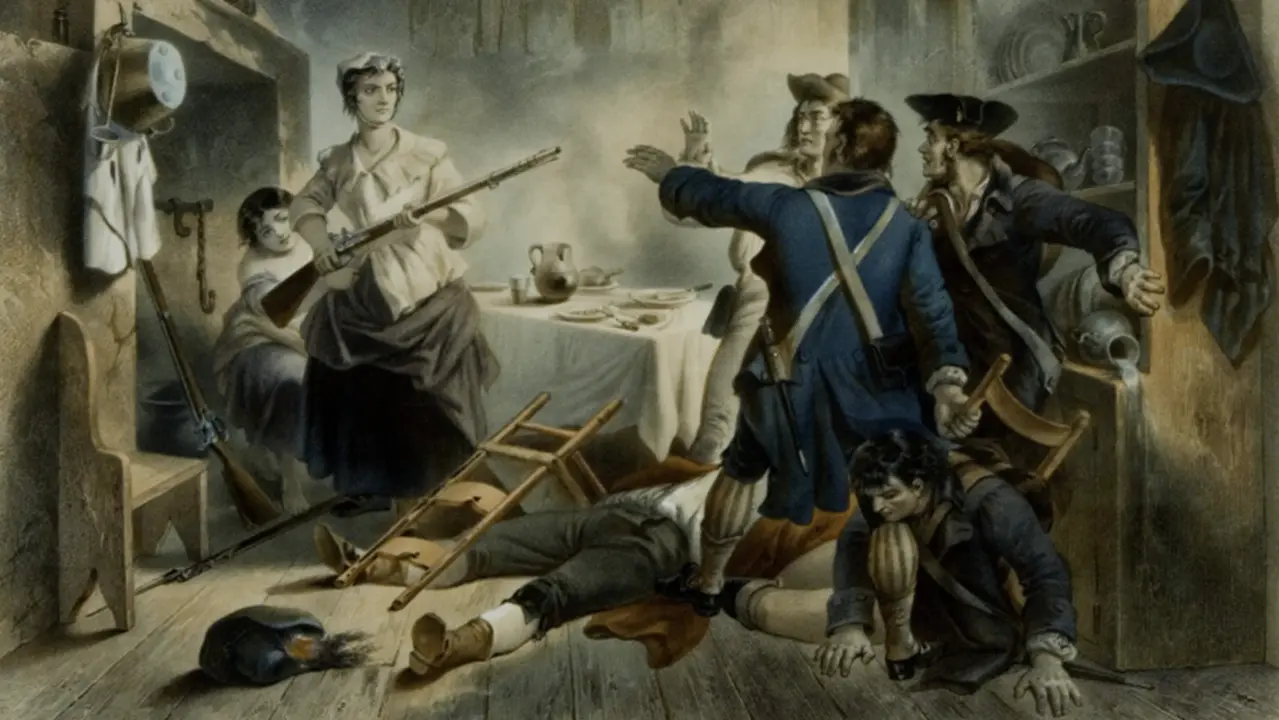
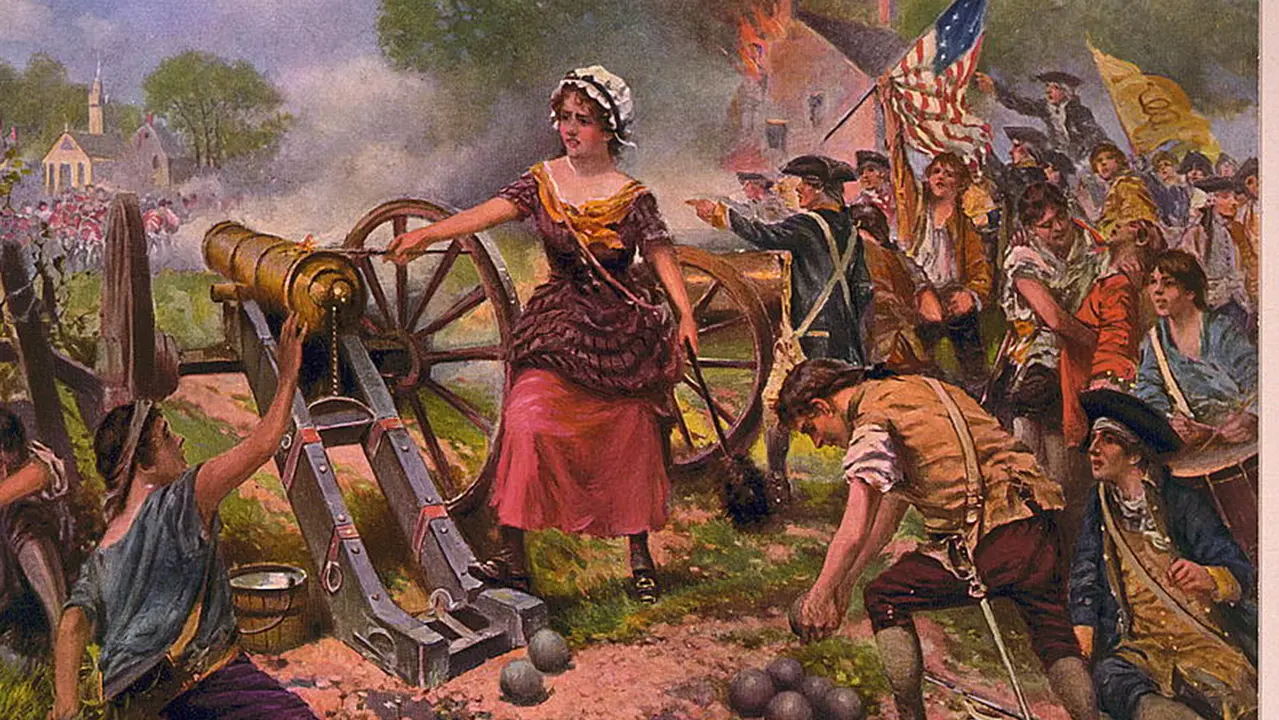
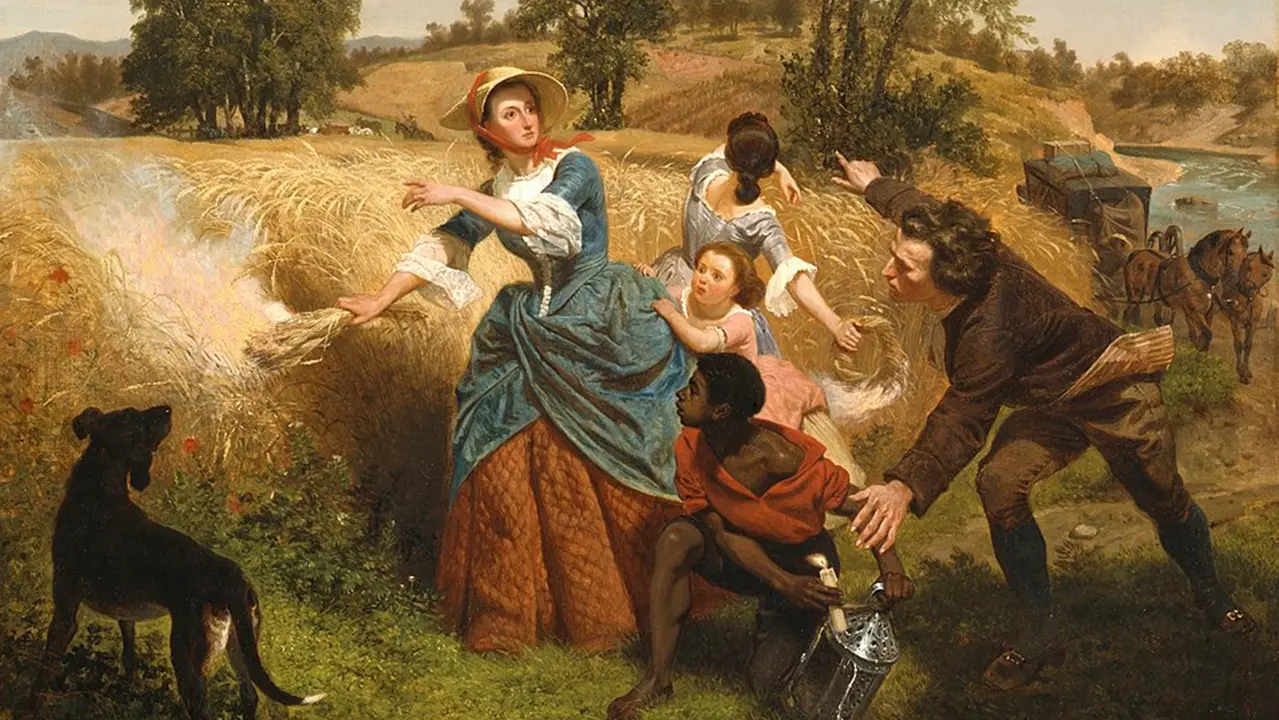
Women played important roles throughout the American Revolution. While men were away fighting, women ran farms, managed shops and businesses, and cared for their families. Their work kept communities strong during difficult times. Even before the war, women supported boycotts by refusing to buy British tea and cloth. In 1774, a group of women in Edenton, North Carolina, signed a pledge to stop buying British tea.
Some women, called camp followers, traveled with the army. They cooked meals, washed clothes, sewed, and nursed sick and wounded soldiers. A few women took on dangerous jobs. They served as spies and messengers, carried secret information, and made supplies such as gunpowder and uniforms. A few women even fought in disguise. Deborah Sampson dressed as a man, joined the Continental Army under the name Robert Shurtleff, and fought for more than a year before she was discovered. Abigail Adams wrote letters to her husband, John Adams, reminding Congress to “remember the ladies” as it made new laws.
African Americans Fight for Freedom
African Americans also played a major role in the Revolution. Both free and enslaved African Americans served as soldiers, sailors, drummers, guides, and laborers. They fought in major battles such as Lexington and Concord, Bunker Hill, and Yorktown. Several thousand served on the Patriot side. Some joined the Continental Army hoping that their service, and the ideals of liberty the Patriots talked about, would lead to greater rights and freedom. The 1st Rhode Island Regiment included many Black soldiers.
Others fought for the British. In November 1775, Lord Dunmore, the royal governor of Virginia, issued Dunmore’s Proclamation. It promised freedom to enslaved people who escaped from Patriot owners and joined the British army. Later, other British leaders made similar promises. Thousands of enslaved people escaped to the British side hoping for freedom, and after the war some left with the British for Canada and other places.
African Americans faced many challenges. Even while serving, they often faced discrimination and were given the hardest jobs. After the war, a few northern states began to end slavery, but most enslaved people remained unfree.
Native American Nations Choose Sides
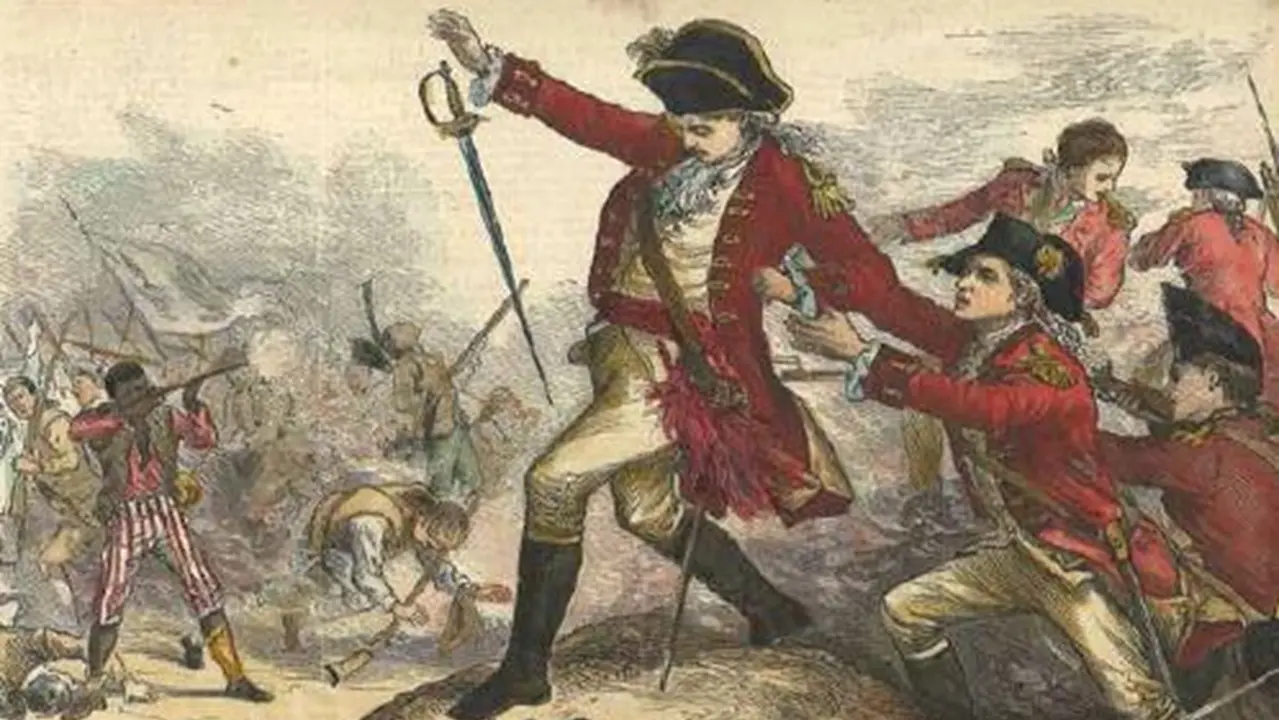
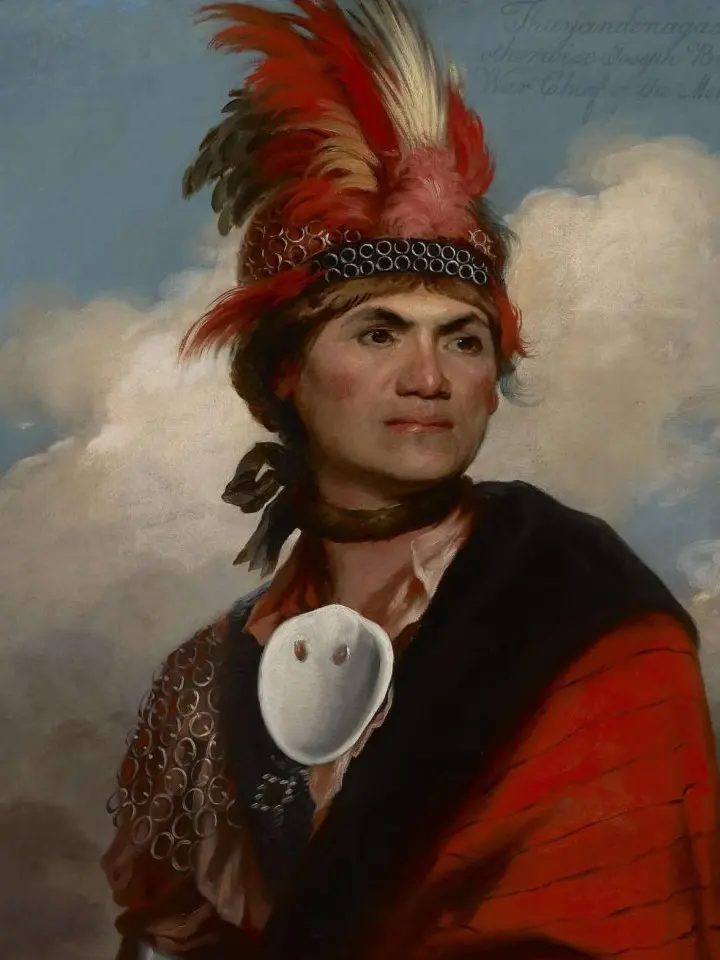
Native American nations faced difficult choices during the Revolution. Many tribes supported the British, believing Britain would limit colonial settlement and better protect their lands. Others supported the colonists, hoping an American victory would lead to stronger alliances and better treatment. Some tried to stay neutral. Native warriors served as fighters, scouts, and guides.
The war even divided the Iroquois Confederacy. Many Mohawk, Seneca, Cayuga, and Onondaga sided with the British, while most Oneida and Tuscarora helped the Americans. For the first time, members of the Confederacy fought against each other.
The war brought great hardship to many Native communities. In 1779, an American army burned dozens of Iroquois villages and crops in New York. Families were displaced, or forced to leave their homes. When Britain and the United States signed the Treaty of Paris in 1783, Native nations were not included, and Britain gave their lands to the new United States. After the war, most Native nations lost land as settlers pushed westward.
Hopes for Change
Many people hoped the Revolution would bring greater rights and freedoms for all. Women wanted more opportunities and a stronger voice in society. African Americans hoped for freedom and equality. Native Americans hoped their lands and rights would be respected.
Although the Declaration of Independence said that “all men are created equal,” those words did not apply to everyone, and most groups saw little immediate change after the war. Women still could not vote and had few property rights. Most enslaved people remained unfree. Native nations lost their lands.
A Lasting Legacy
Women, African Americans, and Native Americans provided labor, supplies, military service, and information that were essential to the war effort. Their courage and sacrifice helped shape the outcome of the war and the founding of the new nation. Their struggles continued long after the war, and their stories laid the groundwork for future movements for justice and equality. The fight for freedom did not end in 1783.
Word Match
Drag the vocabulary words to their correct definitions!
Vocabulary Words
Definitions
Roles of African Americans, Native Americans, and Women Quiz
Activities & Extensions
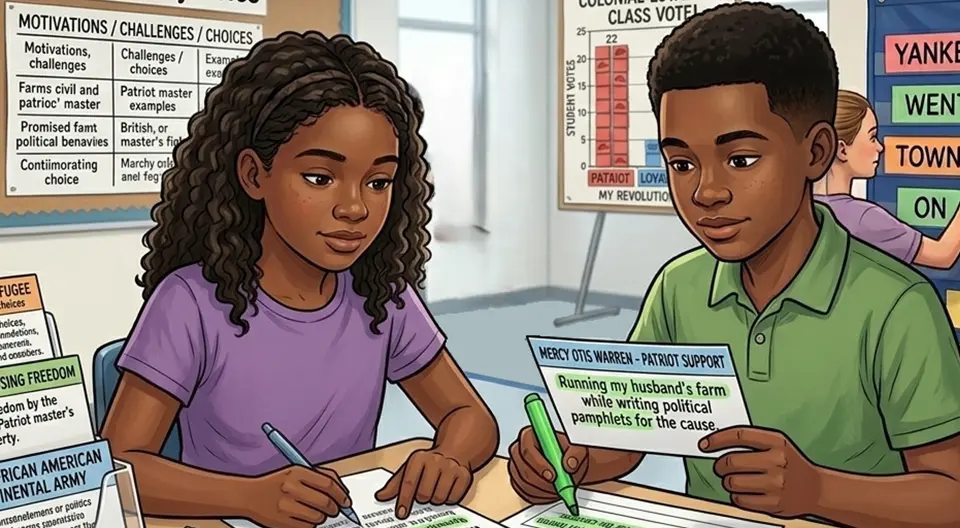
Students receive short role cards representing women, African Americans, and Native Americans during the Revolutionary War. Each card describes the individual’s motivations, challenges, and choices during the conflict.
Suggested Roles:
- A woman running a farm or business while supporting the Patriot cause
- James Armistead Lafayette, an enslaved man who spied for the Patriots and later petitioned for his freedom
- A free African American serving in the Continental Army
- A Native American deciding whether to support the British, the Patriots, or remain neutral
Students highlight key details, share their perspectives in small groups, and compare how different groups experienced the same events.
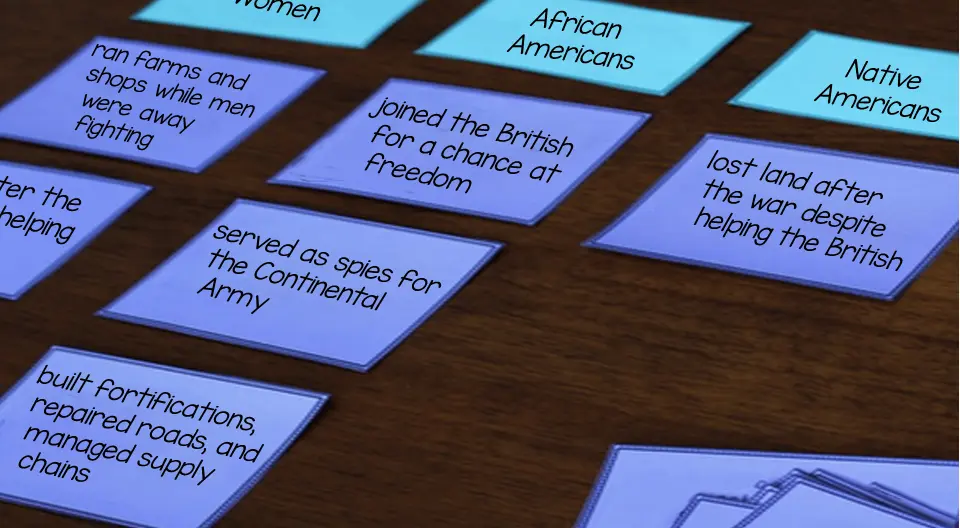
Students sort cards describing contributions, challenges, and historical details into three categories: Women, African Americans, and Native Americans. This helps students visually organize the roles each group played in the Revolution.
Download the sorting cards:
Examples of Sorting Cards:
- “served as a spy for the Continental Army”
- “lost land after the war despite helping the British”
- “ran farms and shops while men were away fighting”
- “joined the British for a chance at freedom”
Students may create a three‑column chart or write a short summary explaining the similarities and differences among the groups.
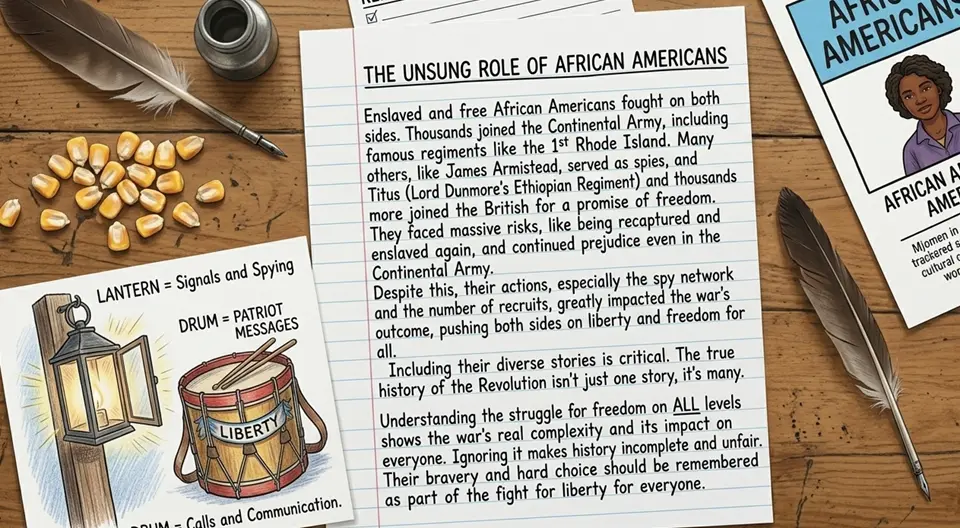
Students choose one of the three groups—women, African Americans, or Native Americans—and write a short paragraph explaining that group’s role in the Revolution, the challenges they faced, and why their story is important to include in history.
Reflection Prompts:
- What role did this group play in the Revolution?
- What challenges or risks did they face?
- Why is it important to include their story when learning about the Revolution?
Students may illustrate their writing with a symbolic image such as a lantern, drum, quill, or cornfield to deepen their connection to the topic.
American Revolution Navigation
Explore the Full American Revolution Unit
This complete history unit includes research passages, organizers, writing tasks, quizzes, activities, and website research — all in printable and digital formats. Everything you need to teach the American Revolution with confidence.
View the Full Unit on TPT