The Intolerable Acts and the First Continental Congress
Fast Facts: Intolerable Acts
Intolerable Acts
- Year: 1774
- Main Purpose: Punish Massachusetts
- Key Actions: Closed Boston Harbor
- British Goal: Restore order
- Colonial Response: First Continental Congress
Acts at a Glance
- Britain punished Boston after the Tea Party.
- Boston Harbor was closed until the tea was repaid.
- Town meetings were limited and British control increased.
- Colonists united and formed the First Continental Congress.
- These actions pushed the colonies closer to war.
Britain Punishes Boston
After the Boston Tea Party, British leaders were determined to regain control of the colonies. Some colonists, including Benjamin Franklin, thought the Tea Party went too far and even offered to pay for the tea. But King George III and Parliament wanted to punish Boston. In 1774, Parliament passed a series of laws called the Coercive Acts. Colonists called them the Intolerable Acts. These laws were designed to punish Massachusetts, especially the city of Boston.
Closing Boston Harbor
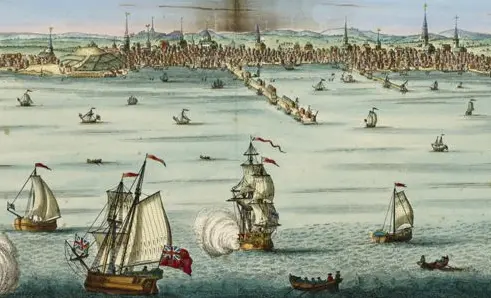
One of the harshest laws closed Boston Harbor until the colonists paid for the destroyed tea. No ships could enter or leave the harbor. Boston depended heavily on trade, so the closing caused immediate problems. Merchants lost business, workers lost their jobs, and families struggled to buy food and everyday goods. The closing of the harbor hurt everyone in Boston, not just the men who had taken part in the Tea Party.
More British Control
The Intolerable Acts also changed the government of Massachusetts. Town meetings, which had long been an important part of local self-government, were limited to one meeting a year unless the royal governor gave permission. Colonists could no longer gather freely to discuss local issues and make decisions. In addition, British officials accused of crimes could be sent to another colony or to Britain for trial. Many colonists believed this would allow officials to escape punishment. General Thomas Gage, the commander of the British Army in North America, was made the new governor of Massachusetts.
Quartering Act Expanded
Another part of the Intolerable Acts expanded the Quartering Act. British officers could now house soldiers in empty buildings, barns, and other unoccupied buildings in town, and colonists had to provide supplies for them. Many colonists felt this was an invasion of their privacy and another sign that Britain did not respect their rights.
Colonies Unite
Instead of scaring the colonies into obedience, the Intolerable Acts had the opposite effect. Colonies from near and far sent food, money, and supplies to Boston. Wagons filled with grain, livestock, and clothing traveled hundreds of miles from places like Pennsylvania, and South Carolina sent rice. Committees of Correspondence spread news quickly from colony to colony. Colonists began to see Boston’s struggle as a shared fight for freedom. Many feared that if Britain could do this to Massachusetts, it could pass more laws taking away their freedoms, too. People who had once disagreed about British taxes now began to work together.
The First Continental Congress
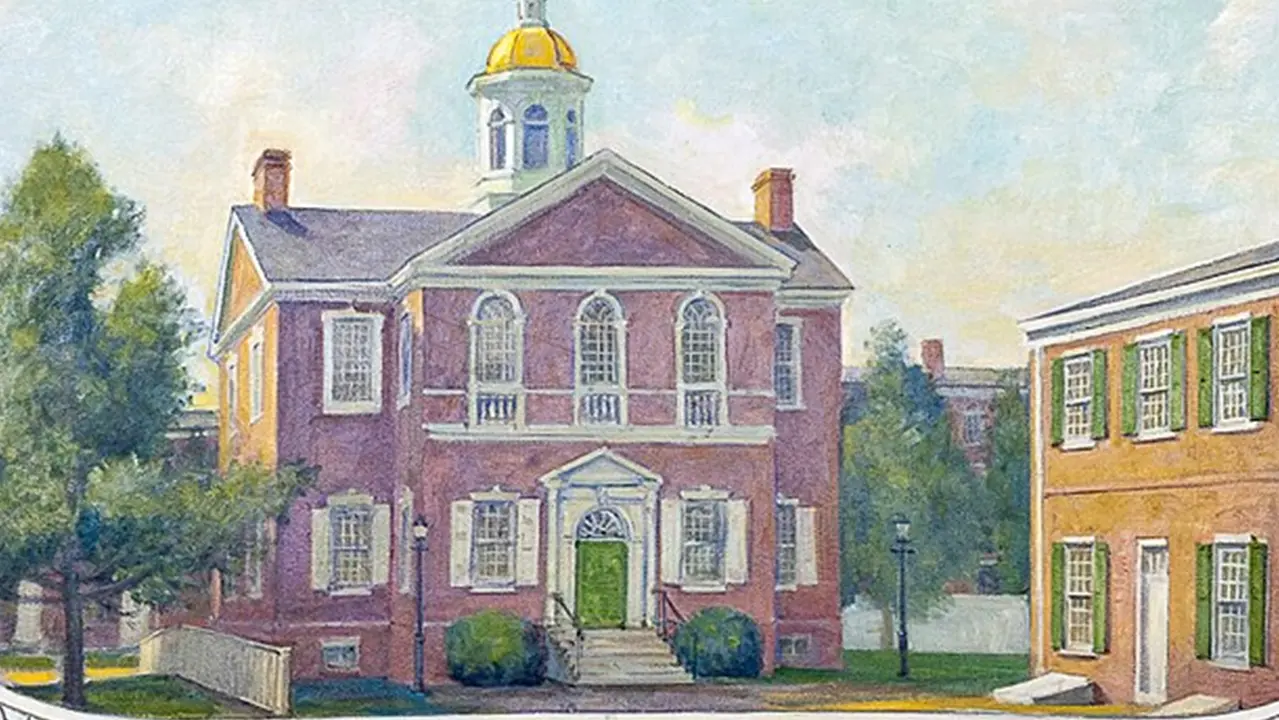
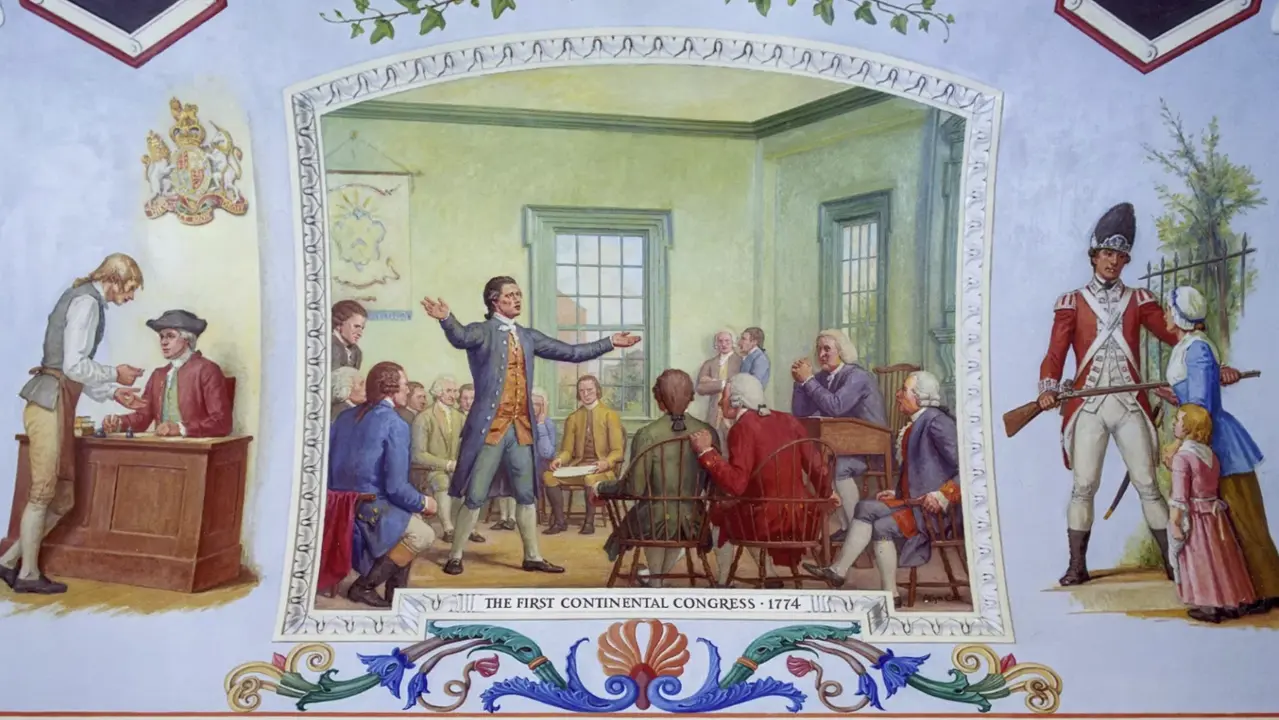
Colonial leaders believed they needed to meet and decide together how to respond. In September 1774, delegates from twelve colonies met at Carpenters’ Hall in Philadelphia. Only Georgia did not send delegates. This meeting became known as the First Continental Congress. The delegates included well-known leaders such as George Washington, John Adams, Samuel Adams, and Patrick Henry.
The delegates debated what to do about the Intolerable Acts. They agreed to stop most trade with Britain until the acts were repealed. They encouraged each colony to train its own militia in case fighting broke out. They also sent a message to King George III explaining their concerns and asking him to protect their rights. Finally, they agreed to meet again in May 1775 if the problems were not solved.
Although the delegates were not yet ready to declare independence, they made it clear that the colonies would stand together. The First Continental Congress was a major step toward unity.
A Path Toward War
The Intolerable Acts convinced many colonists that Britain was no longer protecting their rights. Instead, they believed Britain was becoming too controlling and was trying to rule them by force. As delegates returned home, they warned their communities to be ready. Colonists trained minutemen and stored weapons and gunpowder. Both sides prepared for the possibility of war, and the stage was set for the next major events of the American Revolution.
Word Match
Drag the vocabulary words to their correct definitions!
Vocabulary Words
Definitions
Britain Punishes Boston Quiz
Activities & Extensions
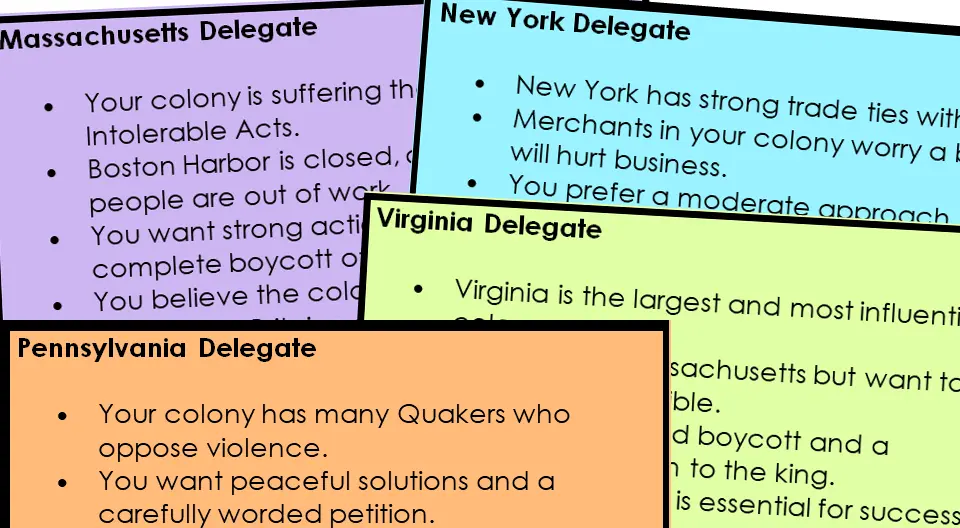
Students take on the roles of delegates from different colonies to reenact the First Continental Congress. Each delegate receives a brief description of their colony’s concerns and goals. Students debate issues such as boycotting British goods, responding to the Intolerable Acts, and presenting a united message to the king.
Download delegate role cards:
This activity helps students understand why unity was difficult and why the Congress was a major step toward cooperation among the colonies.
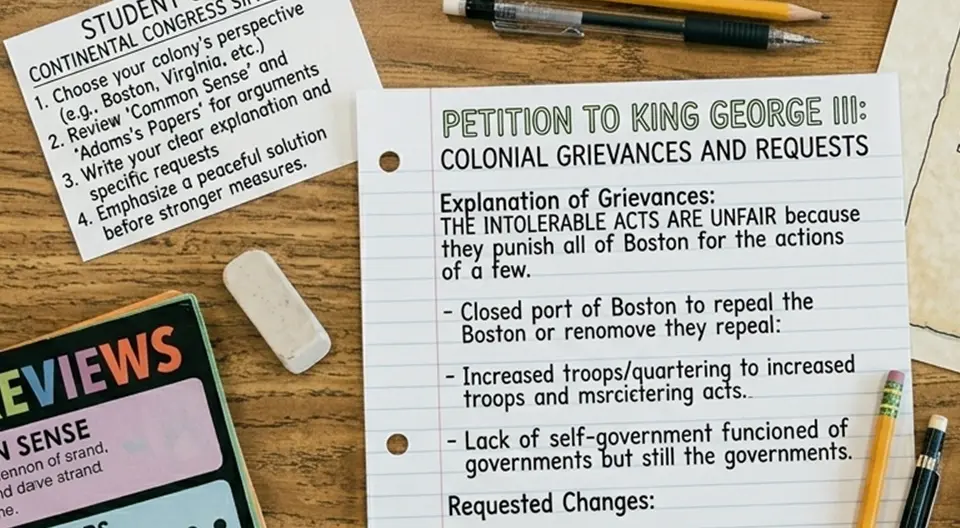
Students write a petition to King George III explaining why the Intolerable Acts are unfair and what changes the colonies are requesting. This mirrors the real actions of the First Continental Congress, which attempted peaceful negotiation before considering stronger measures.
Download the petition template:
This writing activity builds empathy and helps students understand the colonists’ desire to resolve conflicts peacefully before the war began.
American Revolution Navigation
Explore the Full American Revolution Unit
This complete history unit includes research passages, organizers, writing tasks, quizzes, activities, and website research — all in printable and digital formats. Everything you need to teach the American Revolution with confidence.
View the Full Unit on TPT