Major Battles of the Revolutionary War
Fast Facts: Major Battles
Revolutionary War Battles
- Start: 1775
- End: 1783
- Key Battles: Bunker Hill, Saratoga, Yorktown
- Turning Point: Saratoga
- Final Victory: Yorktown
Battles at a Glance
- Bunker Hill showed colonists could stand up to Britain.
- Saratoga convinced France to help the colonies.
- Valley Forge tested the army’s strength and spirit.
- Yorktown ended major fighting in the war.
- The Treaty of Paris recognized American independence.
Who Would Win the War?
After the battles of Lexington and Concord, the colonies prepared for a long struggle. When the war began, most people expected Britain to win easily.
- British strengths: one of the strongest armies in the world, the most powerful navy, plenty of money, experienced officers, German soldiers hired to fight for them (called Hessians), and the support of many Loyalists.
- British weaknesses: fighting 3,000 miles from home, so soldiers and supplies had to be shipped across the ocean; a huge area to control; and some people in Britain who did not support the war.
- American strengths: fighting at home on land they knew well, strong leaders such as George Washington, soldiers who believed in their cause, and, later, help from France.
- American weaknesses: no real national government yet, very little money, few experienced officers, poorly trained citizen-soldiers who often signed up for short periods, and almost no navy.
Early battles showed that the war would be long and difficult for both sides.
Fort Ticonderoga (May 10, 1775)
Less than a month after Lexington and Concord, Ethan Allen and a group of soldiers from Vermont called the Green Mountain Boys, along with Benedict Arnold, surprised the small British force at Fort Ticonderoga near Lake Champlain in New York. The fort surrendered without a battle. The Americans captured dozens of cannons. That winter, Henry Knox and his men hauled about 60 cannons nearly 300 miles over snow and ice to the army outside Boston.
The Battle of Bunker Hill (June 17, 1775)
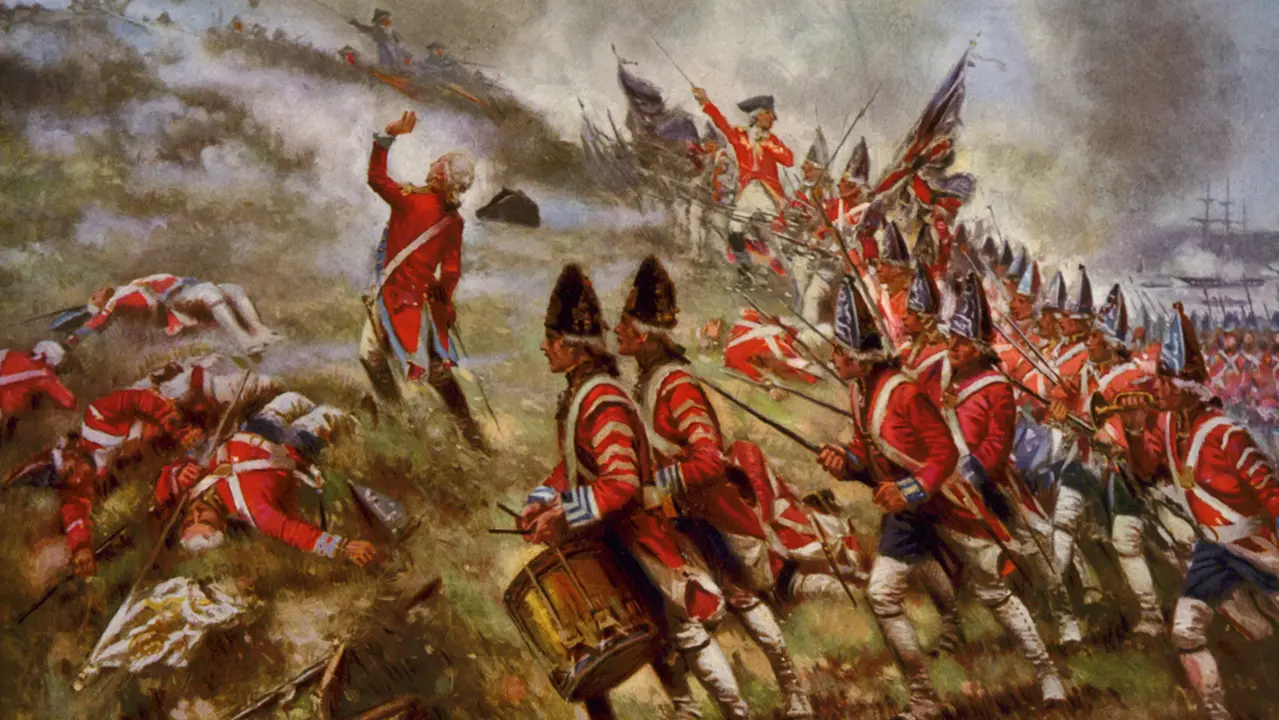
In June 1775, colonial forces built defenses on Breed’s Hill near Boston. They had meant to fortify nearby Bunker Hill, which is why the battle got its name. British troops marched up the steep slopes and were driven back by colonial gunfire twice. On the third attack, the colonists ran out of gunpowder and had to retreat, and the British took the hill. Although the British won, more than 1,000 British soldiers were killed or wounded, about twice as many as the Americans. The battle proved that the colonists could stand up to trained British soldiers, and it made British commanders more cautious.
The Invasion of Canada (1775)
In late 1775, American armies led by Richard Montgomery and Benedict Arnold marched into Canada, hoping Canadians would join their side. The Americans captured Montreal in November. But on December 31, 1775, their attack on the walled city of Quebec failed during a snowstorm. Montgomery was killed, and Arnold was wounded. By the spring of 1776, the Americans had retreated, and Canada remained a British base for attacks on New York and New England.
Dorchester Heights (March 1776)
On the night of March 4, 1776, Washington’s soldiers quietly dragged the cannons from Fort Ticonderoga up Dorchester Heights, a set of hills overlooking Boston Harbor. Working through the night, about 2,000 men used ready-made wooden frames to build defenses. When the British awoke and saw the cannons aimed at their ships and soldiers, they realized they could not hold the city. On March 17, 1776, the British army sailed out of Boston without a fight.
Defeat in New York (1776)
In the summer of 1776, Britain sent the largest force it had ever sent overseas, more than 30,000 soldiers and sailors, to capture New York City. Washington’s army of about 20,000 men was made up mostly of new recruits. In August 1776, the British defeated the Americans at the Battle of Long Island. Washington’s army escaped at night across the East River, then retreated through New Jersey and into Pennsylvania. By the end of 1776, many soldiers had quit, and the Patriot cause seemed close to failing.
Trenton and Princeton (December 1776 – January 1777)
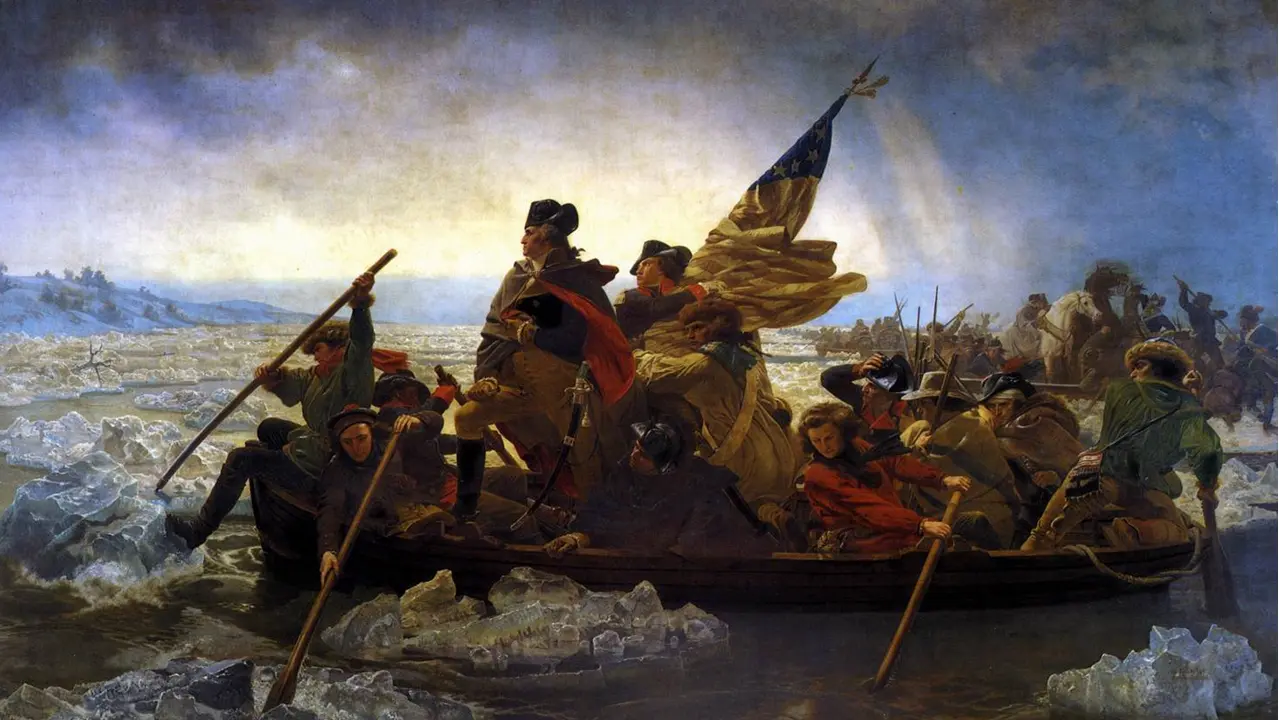
Washington needed a victory. On Christmas night, December 25, 1776, his army crossed the icy Delaware River during a storm. Early on the morning of December 26, they surprised the Hessian soldiers guarding Trenton, New Jersey. In less than two hours, the Americans captured about 900 Hessians along with their weapons and supplies. About a week later, on January 3, 1777, Washington won another surprise victory at Princeton, New Jersey. These two small victories gave Americans new hope and encouraged soldiers to keep fighting.
The Turning Point: Saratoga (1777)
In 1777, British General John Burgoyne planned to cut New England off from the rest of the colonies by marching his army south from Canada along Lake Champlain and the Hudson River. His army was slowed by thick forests, roads blocked by fallen trees, destroyed bridges, and Patriot attacks. Near Saratoga, New York, American forces led by General Horatio Gates and Benedict Arnold defeated the British in two battles. The Americans surrounded Burgoyne’s army, and on October 17, 1777, he surrendered about 6,000 soldiers.
Saratoga was the turning point of the war. The victory ended Britain’s plan to split the colonies and convinced France that the Americans could win. In 1778, France officially joined the war as an ally, sending money, weapons, soldiers, and a powerful navy. France was also glad for a chance to defeat its old enemy, Britain. Spain later joined the war against Britain as well.
Hardship at Valley Forge (Winter 1777–1778)
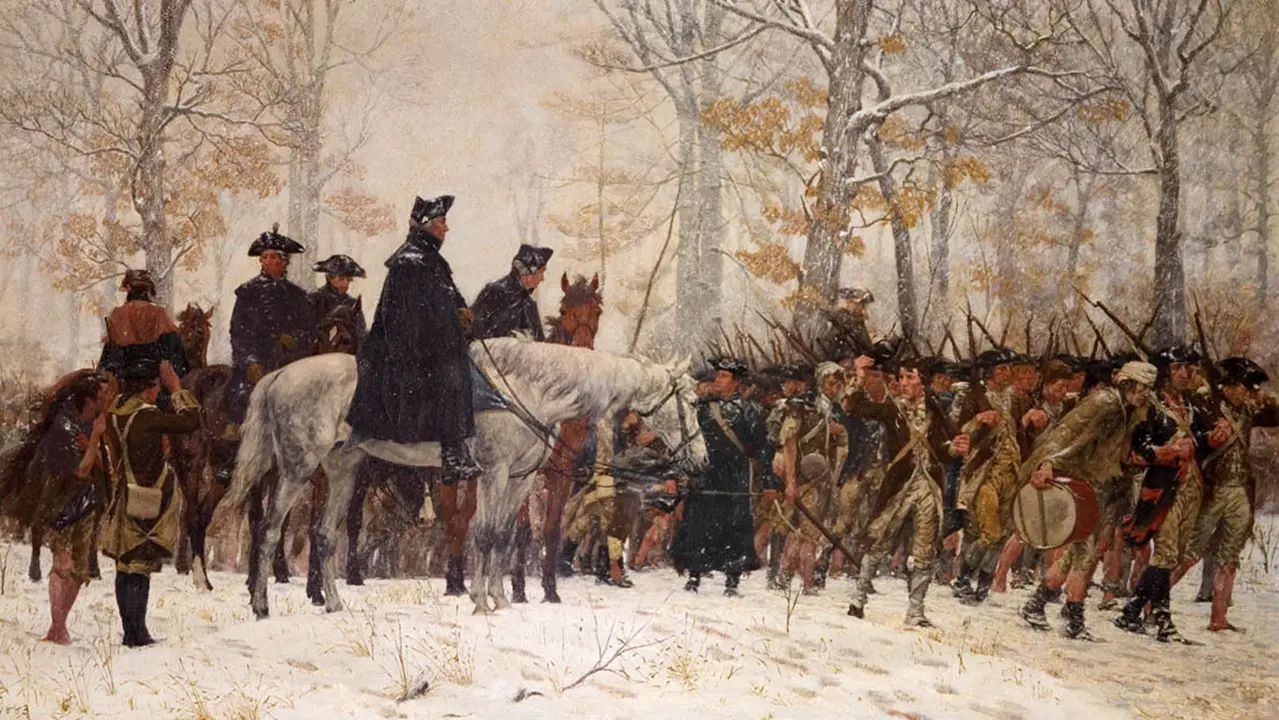
While the British army spent the winter comfortably in Philadelphia, Washington’s army of about 12,000 soldiers camped at Valley Forge, about 18 miles away. From December 1777 to June 1778, the soldiers faced freezing weather, hunger, and disease. Many had no shoes, blankets, or warm clothing, and some left bloody footprints in the snow. Diseases such as typhus and smallpox spread through the crowded camp, and about 2,000 soldiers died. Some soldiers deserted. Despite the hardships, the army did not give up.
In February 1778, Baron von Steuben, a Prussian army officer, arrived at Valley Forge. He drilled the soldiers every day, teaching them to march, load their muskets quickly, and use bayonets. He also improved discipline and camp cleanliness. By spring, the Continental Army was stronger, better trained, and more confident.
War at Sea: Bonhomme Richard vs. Serapis (1779)
The American navy was small, but it had bold captains. On September 23, 1779, Captain John Paul Jones commanded the Bonhomme Richard in a battle with the British warship Serapis off the coast of England. Early in the fight, two of Jones’s big guns exploded. When the British captain asked if he was ready to surrender, Jones is remembered as answering, “I have not yet begun to fight!” After more than three hours of fighting, the Serapis surrendered. The Bonhomme Richard was so badly damaged that it sank, so Jones and his crew took over the British ship.
The War Moves South (1778–1781)
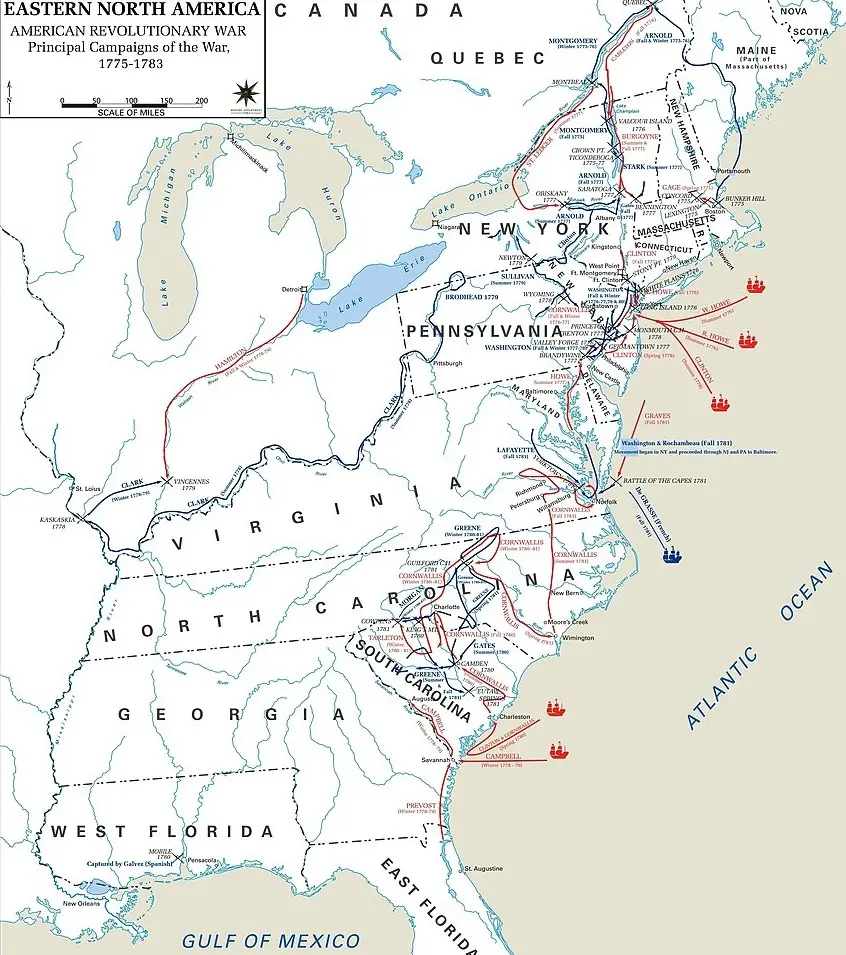
After Saratoga, Britain shifted its focus to the southern colonies, where leaders believed many Loyalists would help them. British forces captured Savannah, Georgia, in December 1778. In the spring of 1780, British ships and about 8,500 soldiers surrounded Charleston, South Carolina. On May 12, 1780, more than 5,000 American soldiers surrendered, the worst American defeat of the war. In August 1780, the British defeated General Gates at the Battle of Camden, South Carolina, where Gates fled the battlefield.
Fighting in the South took place in swamps, forests, and small towns. American leaders such as General Nathanael Greene and Francis Marion, nicknamed the “Swamp Fox,” used hit-and-run tactics. Small groups made quick surprise attacks and then disappeared into the woods and swamps before the British could strike back. Using their knowledge of the land, they slowly wore down the British army. On January 17, 1781, at the Battle of Cowpens in South Carolina, General Daniel Morgan set a clever trap and won a major victory. Most of the British force was killed or captured.
The Final Battle: Yorktown (1781)
In 1781, British General Cornwallis moved his army to Yorktown, Virginia, on the coast, expecting British ships to bring supplies. American and French armies surrounded the town by land, while the French navy blocked the harbor. Cornwallis realized he could not escape and surrendered on October 19, 1781. The victory at Yorktown ended major fighting in the war. (You will learn more in Lesson 10.)
The Treaty of Paris
Although major fighting ended in 1781, the war officially ended in 1783 with the Treaty of Paris. Britain recognized the independence of the United States and agreed to new borders. The colonies had won their freedom and begun the journey of building a new nation.
Word Match
Drag the vocabulary words to their correct definitions!
Vocabulary Words
Definitions
Major Battles of the Revolutionary War Quiz
Activities & Extensions
Students watch short, accurate videos from the American Battlefield Trust to learn about key battles of the Revolutionary War. These videos provide clear explanations, maps, and visuals that help students understand the strategies and turning points of the war.
Recommended Videos:
Teachers may choose a single video or several depending on the battles emphasized in the lesson. Students can take notes, complete a chart, or compare British and American strategies.
Students watch Part 1 of the popular OverSimplified series on the American Revolution. This humorous, fast‑paced video provides an engaging overview of the causes and early battles of the war. While comedic, it helps students remember key events and the sequence of major battles.
Watch:
This option works well as a hook, review, or reward activity. Teachers may pause the video to discuss accuracy, clarify exaggerations, or compare it to the more factual American Battlefield Trust videos.
American Revolution Navigation
Explore the Full American Revolution Unit

This complete history unit includes research passages, organizers, writing tasks, quizzes, activities, and website research — all in printable and digital formats. Everything you need to teach the American Revolution with confidence.
View the Full Unit on TPT