Key Ideas in the Declaration of Independence
Fast Facts: Declaration Ideas
Declaration Ideas
- Main Author: Thomas Jefferson
- Key Belief: Natural rights
- Government Purpose: Protect rights
- People’s Power: Change unfair government
- Audience: The world
Ideas at a Glance
- All people have rights that cannot be taken away.
- Governments get power from the people.
- People can change a government that abuses power.
- The king violated the colonists’ rights.
- The colonies declared themselves free states.
A Document for the World
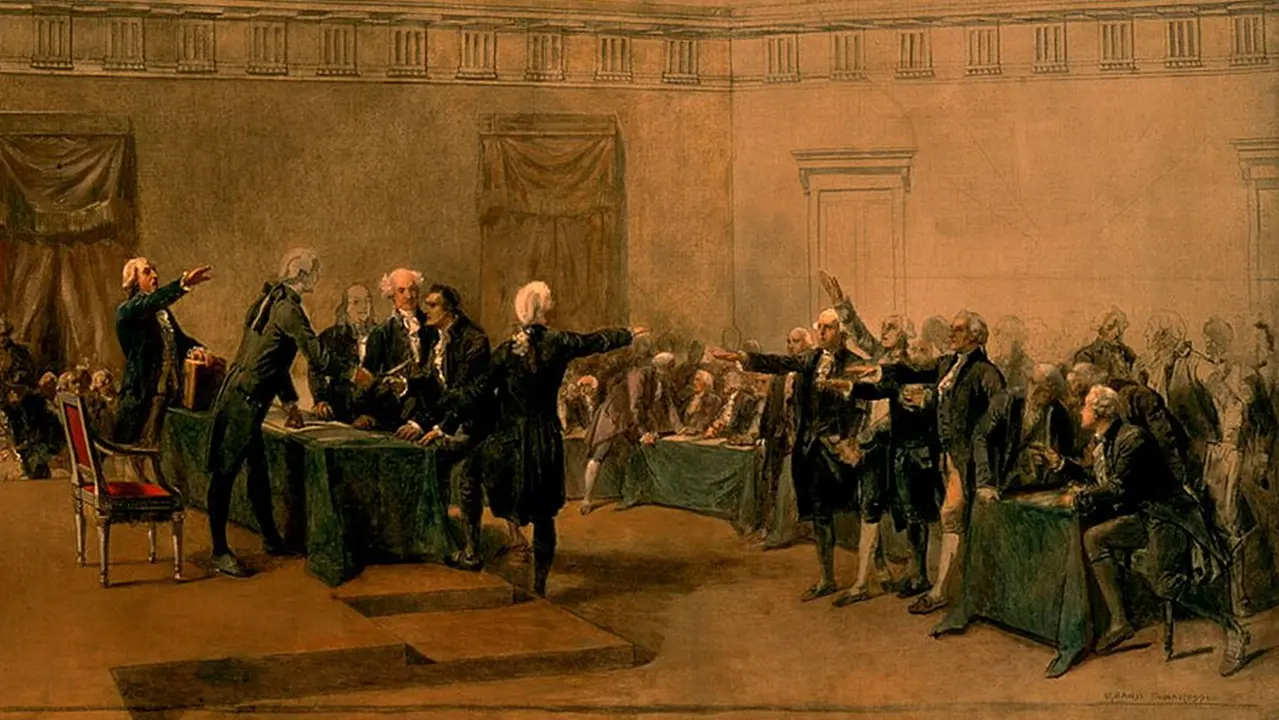
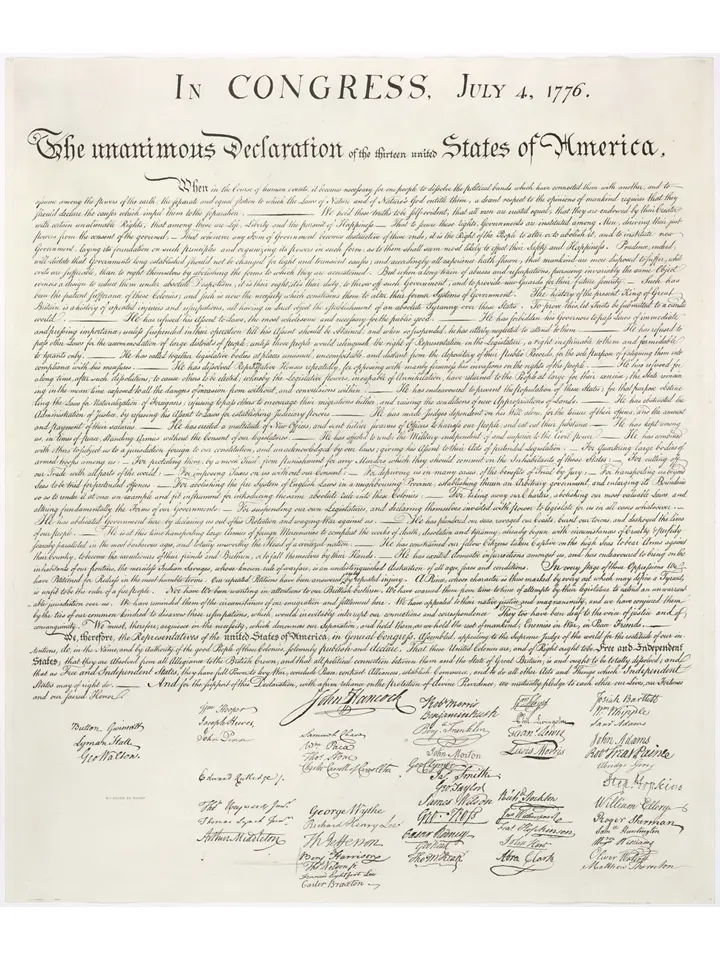
When the Second Continental Congress approved the Declaration of Independence on July 4, 1776, the delegates were not only announcing freedom from Britain. They were also explaining their reasons to the entire world. The colonies knew they could not easily defeat the powerful British military alone. They hoped that if other nations, such as France and Spain, saw that their cause was fair and reasonable, those nations might send money, soldiers, and ships to help.
The Declaration is organized into parts. It begins with an introduction explaining why the colonies must give their reasons. Next, it describes the colonists’ beliefs about rights and government. Then it lists the colonists’ grievances, or complaints, against the king. It ends by declaring the colonies free and independent states.
Natural Rights
Thomas Jefferson, who wrote most of the Declaration, used ideas from thinkers of the Enlightenment, especially the English writer John Locke. The most famous sentence in the Declaration says: “We hold these truths to be self-evident, that all men are created equal, that they are endowed by their Creator with certain unalienable Rights, that among these are Life, Liberty and the pursuit of Happiness.”
These rights are called natural rights. They do not come from a king or a government. They belong to every person simply because they are human. Jefferson called them “unalienable,” which means they cannot be taken away. The words “all men are created equal” express the idea of equality, the belief that all people are born with the same basic worth and rights. At the time, however, these words did not apply to everyone. Enslaved people, women, and Native Americans did not receive equal rights.
The Purpose of Government
According to the Declaration, the main purpose of government is to protect people’s natural rights. Governments get their “just powers from the consent of the governed.” This idea, called consent of the governed, means a government’s power comes from the people it rules, not from a ruler. This was very different from the belief that kings received their power from God. Jefferson argued that a government must serve its people, not rule over them unfairly.
Changing an Unfair Government
The Declaration states that if a government abuses its power or fails to protect people’s rights, the people have the right to change or replace it. This should not happen for small or temporary problems. But when there is “a long train of abuses,” meaning serious harms repeated over and over, and the government refuses to listen to peaceful requests for change, the people may choose a new government that will protect their freedoms. The colonists believed Britain had failed to protect their rights.
Complaints Against the King
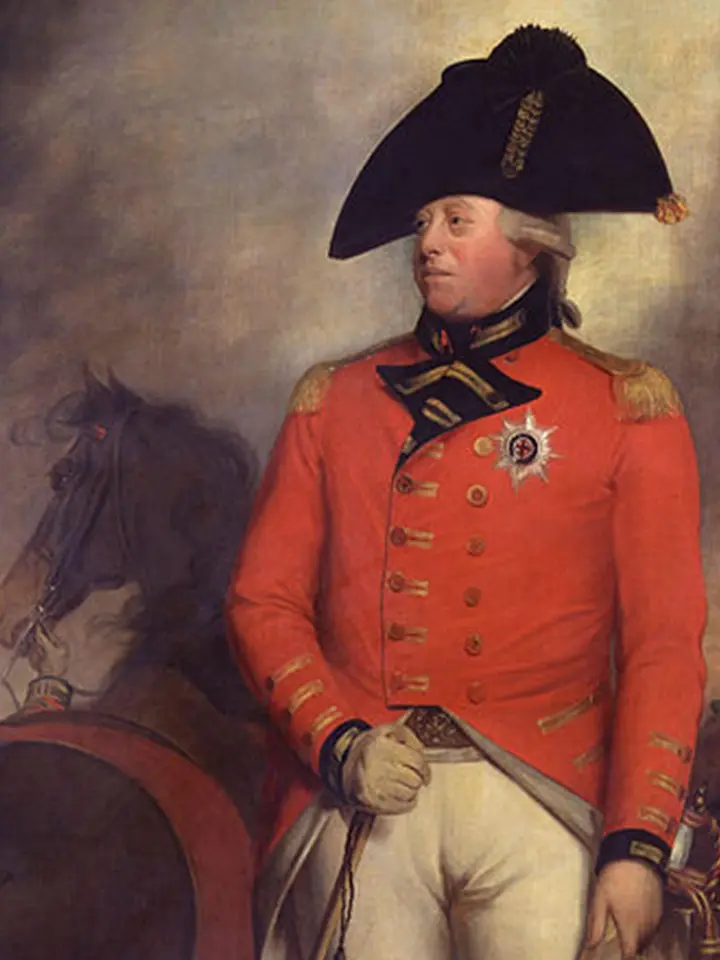
Jefferson listed 27 grievances to show how King George III had treated the colonies unfairly. He wrote that the king had:
- passed laws without the colonists’ consent
- taxed the colonies without their consent, or without representation
- kept soldiers in the colonies in times of peace and forced colonists to house them
- limited or shut down colonial governments and assemblies
- cut off the colonies’ trade with other parts of the world
- taken away the right to a trial by jury in many cases
- ignored the colonists’ petitions and attempts to solve problems peacefully
These complaints showed that the king had broken his responsibility to protect the colonists’ rights, and that independence was justified.
Announcing Independence
After explaining their beliefs and listing their complaints, the delegates declared that the colonies were free and independent states. They stated that the colonies now had the power to make their own laws, wage war, make peace, form alliances, and trade with other nations. Declaring independence was bold and risky, because Britain saw it as an act of rebellion against a powerful empire. After the Declaration was read in public, celebrations spread throughout the colonies. In New York City, a crowd pulled down a statue of King George III.
A Lasting Message
The ideas in the Declaration of Independence have inspired people around the world for centuries. Its message about rights, freedom, equality, and the power of the people continues to shape governments today. Later Americans, including those who fought to end slavery and to win voting rights for women, used its words to demand that “all men are created equal” include everyone. The Declaration is not only a founding document of the United States. It is a symbol of hope for anyone seeking liberty.
Word Match
Drag the vocabulary words to their correct definitions!
Vocabulary Words
Definitions
Key Ideas in the Declaration of Independence Quiz
Activities & Extensions
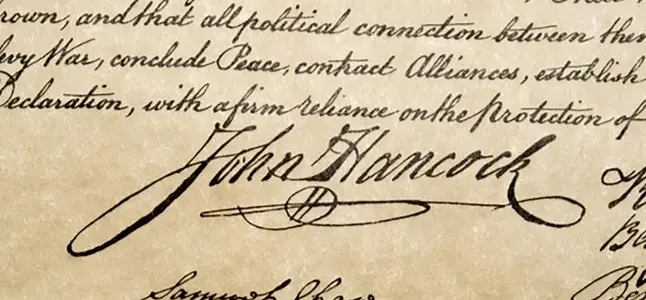
Students examine a copy of the Declaration of Independence and discuss the boldness of John Hancock’s signature. They explore why signing the document was dangerous and why Hancock chose to sign so prominently.
Students then create their own dramatic “John Hancock” signatures, experimenting with size, flourish, and style to reflect the courage required to sign the Declaration.
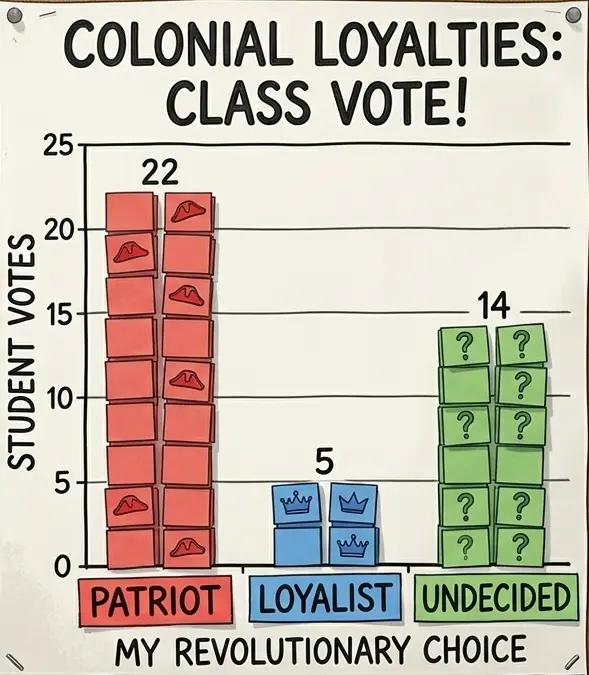
Students vote on whether they would have been a Patriot, a Loyalist, or remained undecided during the American Revolution. Their choices are recorded on a class bar graph to visualize the distribution of opinions.
This activity helps students understand the divided loyalties among colonists and the difficult decisions people faced during the push for independence.
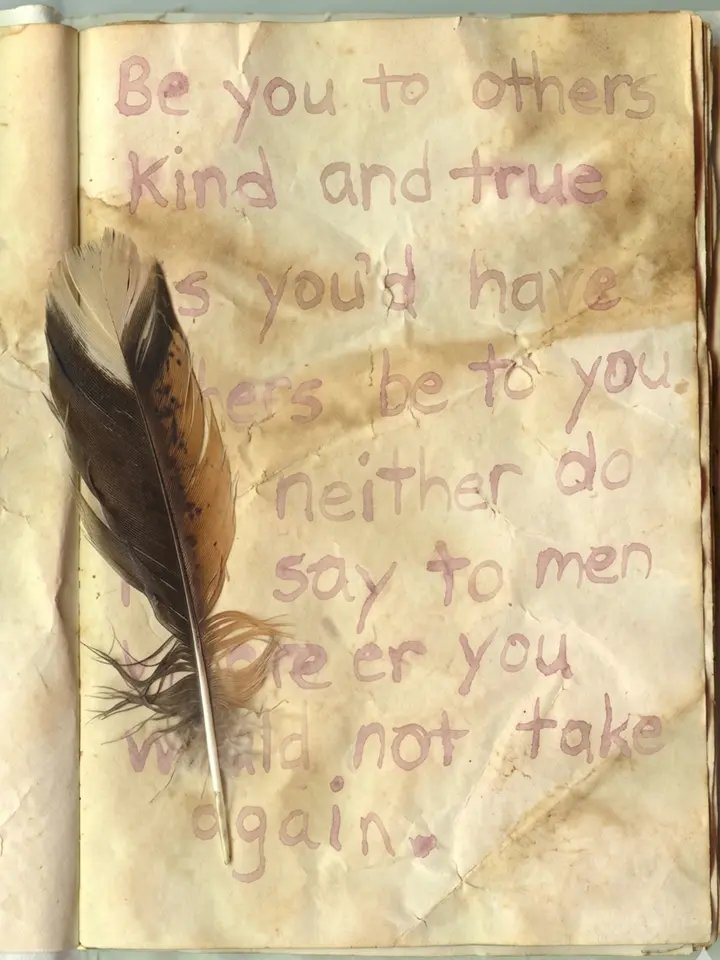
Students create their own quill pens using long feathers. After soaking the quill in warm, soapy water, they trim the tip, clean the inside, and cut a small slit to allow ink flow.
Once prepared, students dip their quills into ink and practice writing their names or short phrases. This hands‑on activity connects directly to the signing of the Declaration and the tools used by colonial leaders.
American Revolution Navigation
Explore the Full American Revolution Unit
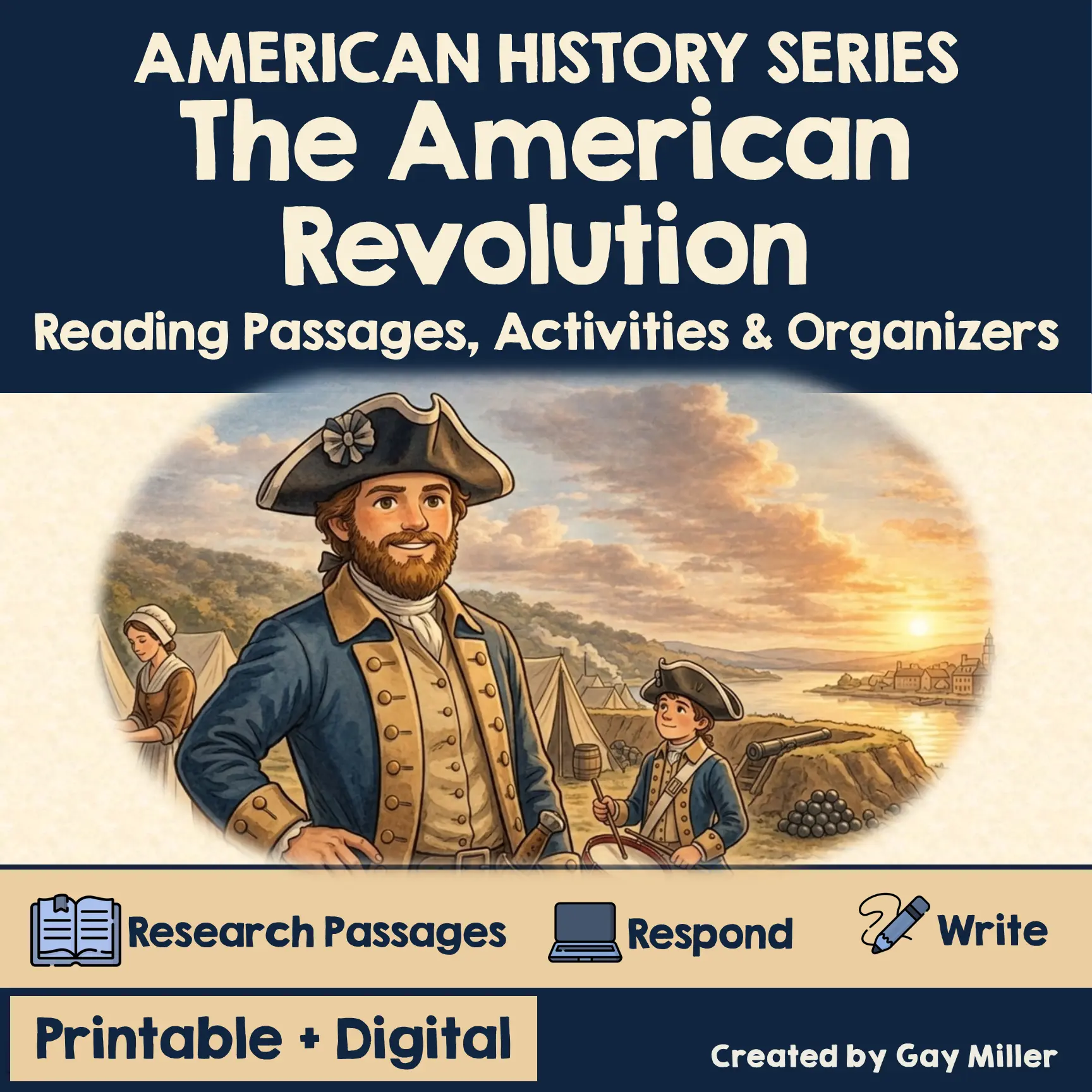
This complete history unit includes research passages, organizers, writing tasks, quizzes, activities, and website research — all in printable and digital formats. Everything you need to teach the American Revolution with confidence.
View the Full Unit on TPT