The End of the War and the Treaty of Paris
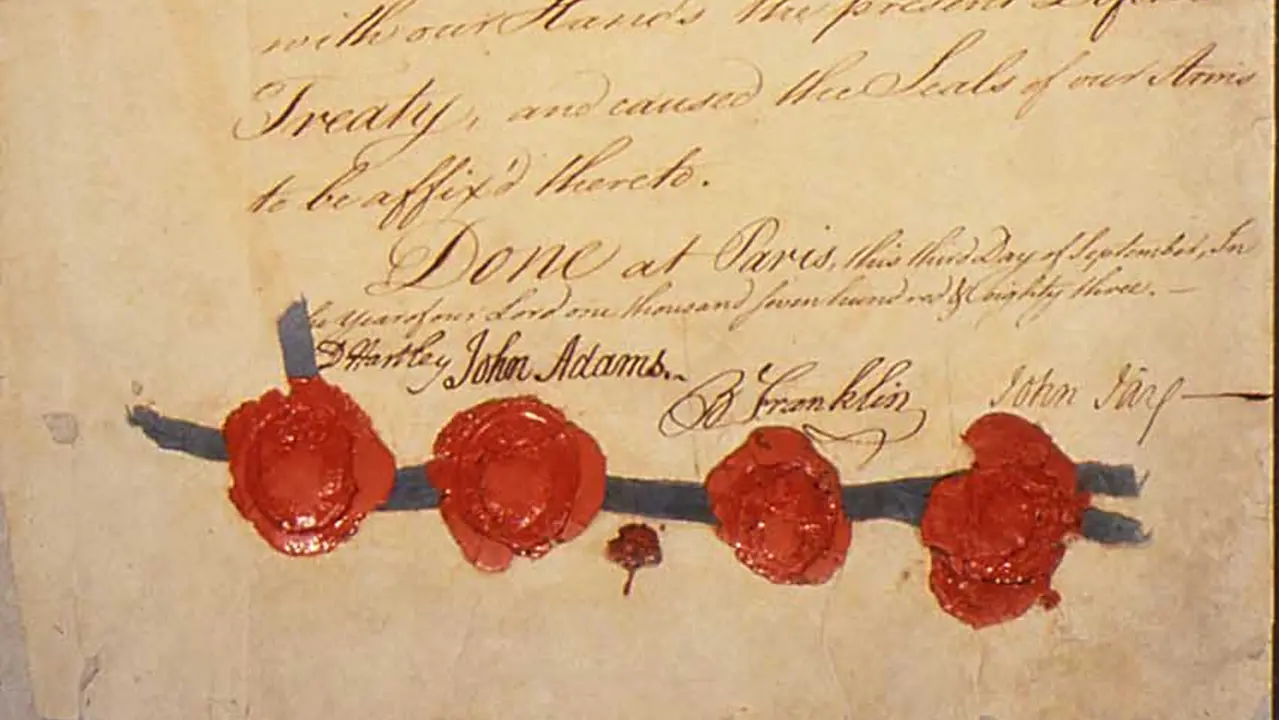
Fast Facts: War’s End
Treaty of Paris
- Final Battle: Yorktown (1781)
- Treaty Signed: 1783
- U.S. Borders: Atlantic to Mississippi River
- British Recognition: U.S. independence
- Key Leaders: Franklin, Adams, Jay
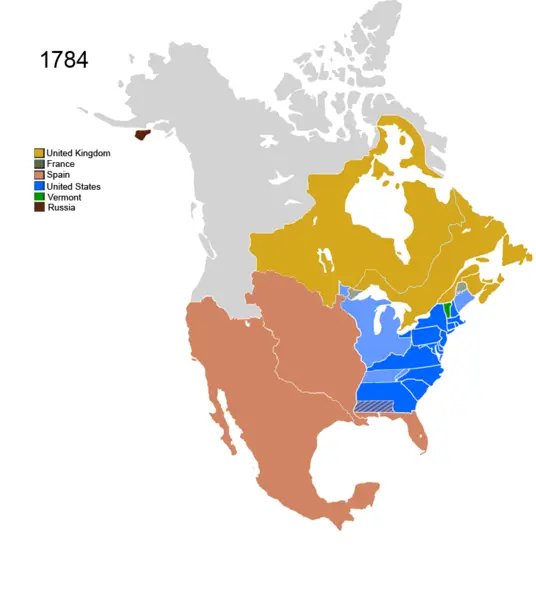
End of War at a Glance
- Yorktown ended major fighting.
- Peace talks began in Europe.
- Britain recognized U.S. independence.
- New borders expanded westward.
- The war officially ended in 1783.
The Road to Yorktown
After the American victory at Saratoga and France’s decision to join the war, Britain shifted its focus to the southern colonies. British leaders hoped to find more Loyalist support there. The British captured Savannah and Charleston, but American leaders such as Nathanael Greene and Francis Marion used quick, surprise attacks that slowly weakened the British. After losses at Cowpens and other battles in the Carolinas, British General Charles Cornwallis moved his army north into Virginia in 1781. There he chased a small American army led by the Marquis de Lafayette.
That summer, Cornwallis moved his troops to Yorktown, Virginia, on the coast of the Chesapeake Bay. He hoped to rest his tired soldiers and receive supplies. He believed the British Navy would protect him and could bring supplies or carry his army away by sea.
Victory at Yorktown
George Washington saw a chance to trap Cornwallis. Washington and the French general Rochambeau marched their armies about 450 miles south from New York to Virginia. At the same time, a French fleet led by Admiral de Grasse sailed into the Chesapeake Bay. In September 1781, the French navy defeated a British fleet and blocked the harbor, cutting off Cornwallis’s escape and supplies by sea.
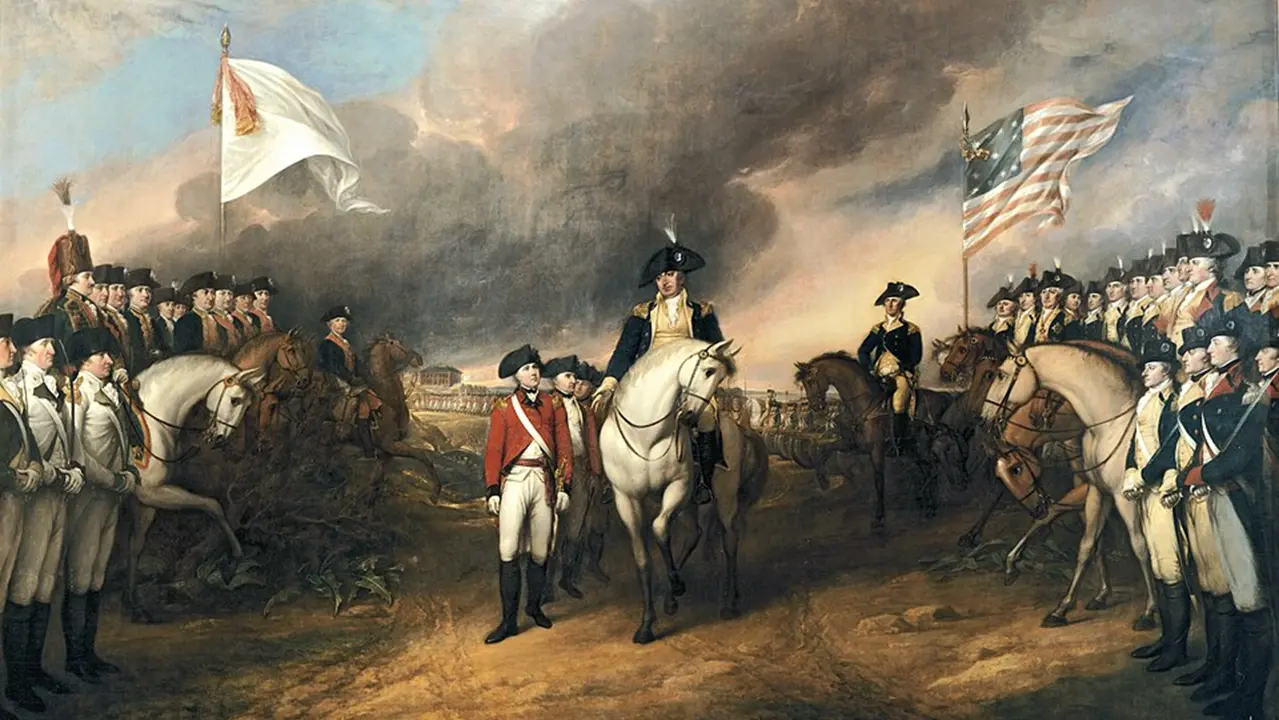
About 17,000 American and French soldiers then surrounded Yorktown on land and began a siege. For weeks, their cannons pounded the British defenses. On October 19, 1781, Cornwallis surrendered his army of about 8,000 soldiers. The victory at Yorktown ended major fighting in the war. When news reached London, British leaders realized the war could not be won and that it had become too expensive to continue.
Beginning Peace Talks
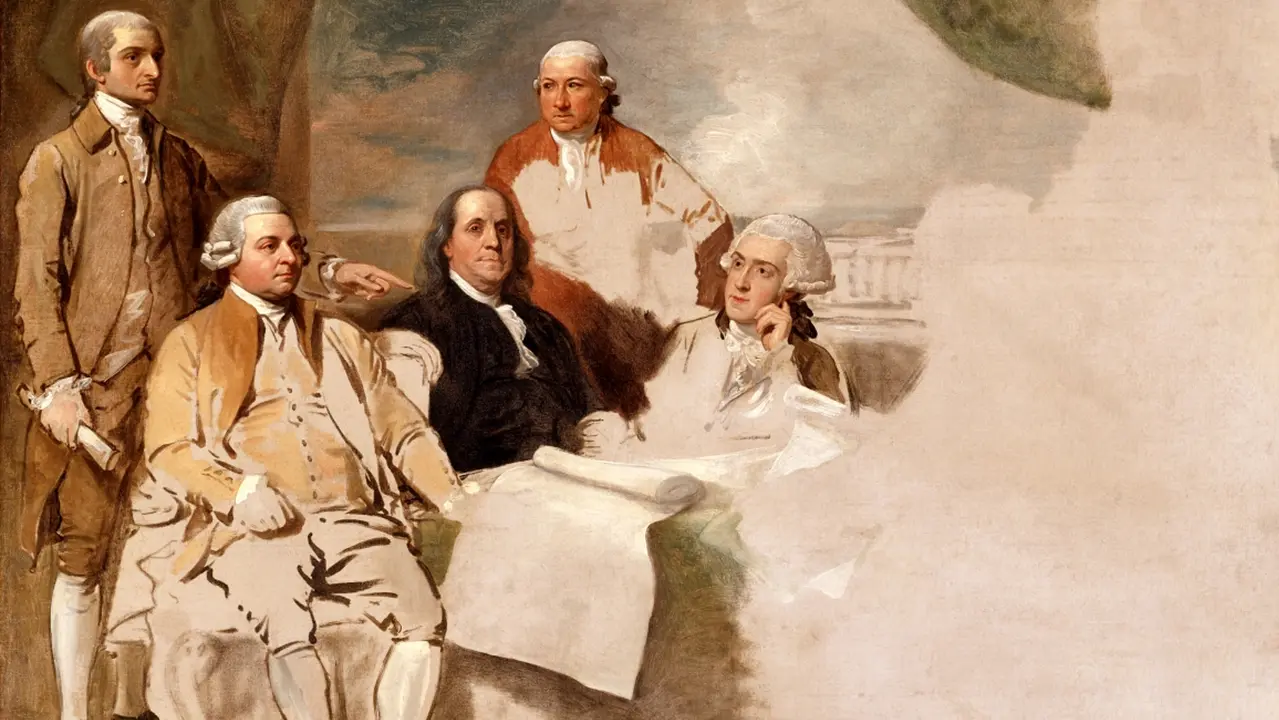
Even though the fighting stopped after Yorktown, the war was not officially over. In 1782, leaders from the United States and Great Britain began peace talks in Paris, France. The American team included Benjamin Franklin, John Adams, and John Jay. Their goal was to gain independence and secure fair borders for the new nation. The negotiations took months because both sides wanted favorable terms. They had to agree on borders, fishing rights, debts, and what would happen to the Loyalists. The Americans also had to consider their allies, France and Spain, and messages between America and Europe took weeks to cross the ocean by ship.
The Treaty of Paris
The Treaty of Paris was signed on September 3, 1783. Britain recognized the United States as a free and independent nation. The treaty also set new borders. The United States now stretched from the Atlantic Ocean to the Mississippi River and from Canada to Spanish Florida. Britain returned Florida to Spain in a separate agreement.
Promises in the Treaty
The treaty included several important promises. Britain agreed to remove its troops from American territory. Americans were allowed to keep fishing off the coast of Canada. The United States agreed that Congress would ask the states to return property taken from Loyalists, the colonists who had supported Britain, and that debts owed to British merchants would be paid. Both sides promised to respect the new borders. Native American nations, many of whom had fought in the war, were not part of the treaty.
A New Nation Begins
With the signing of the Treaty of Paris, the American Revolution officially ended. The thirteen colonies became the United States of America. In December 1783, George Washington resigned as commander of the army and returned home, showing that the army would serve the people and not rule them. Americans celebrated their freedom, but the new nation faced many challenges. It had to create a government that could unite the states, pay off war debts, rebuild after years of destruction, and unite people with different ideas and backgrounds. In 1787, leaders would write the United States Constitution to create a stronger national government.
Legacy of the Revolution
The American Revolution showed that ordinary people could fight for their rights and govern themselves. Its ideas about liberty, equality, and government by the people inspired movements for freedom around the world, including revolutions in France and Haiti and independence movements in Latin America. The Revolution shaped the future of the United States and remains an important part of the nation’s story.
Word Match
Drag the vocabulary words to their correct definitions!
Vocabulary Words
Definitions
The End of the War and the Treaty of Paris Quiz
Activities & Extensions
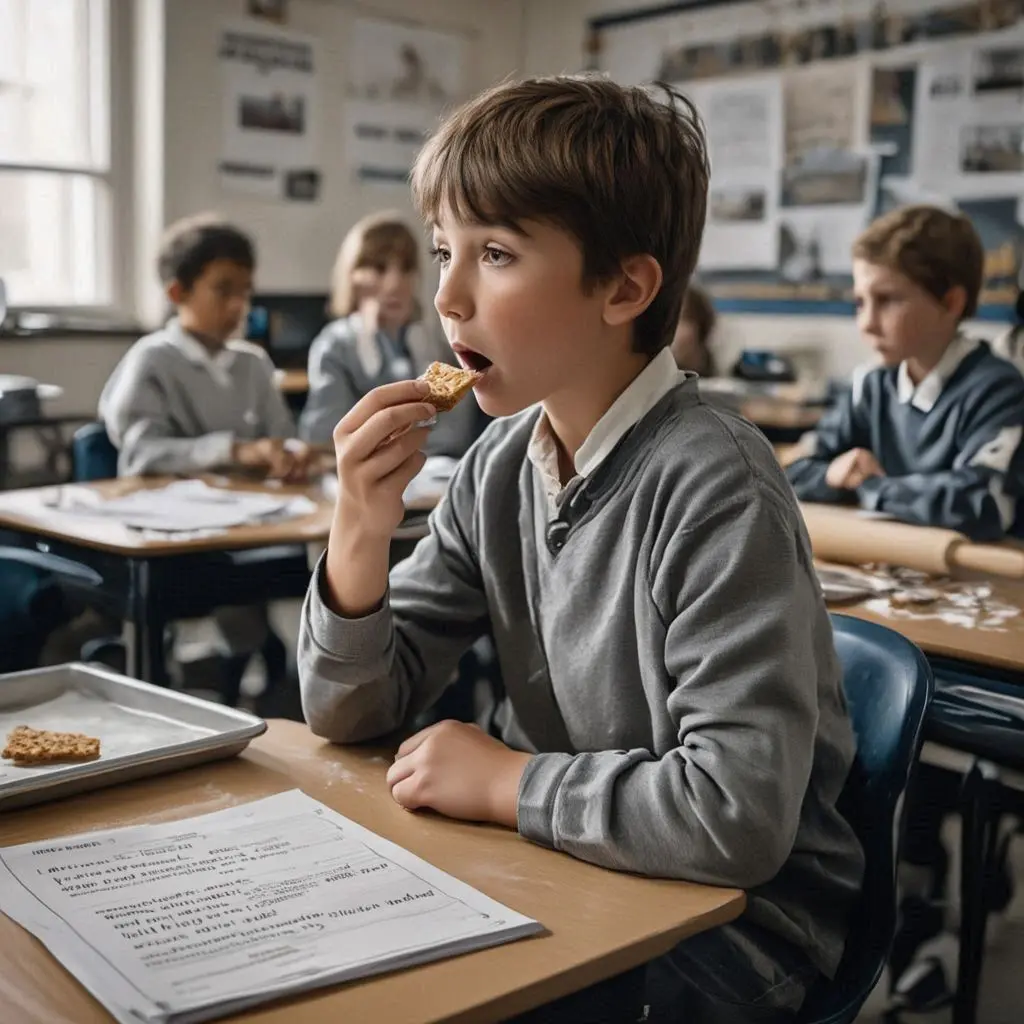
Students learn about the harsh conditions soldiers faced by making a simple flour-and-water bread. At Valley Forge, hungry soldiers often had little more than flour and water, which they baked into “firecake” on hot stones. Hardtack, a similar hard cracker that lasted a long time, was carried by soldiers and sailors.
Ingredients: Flour and water
Directions:
- Mix flour and water to form a soft dough.
- Knead for about 10 minutes until elastic.
- Roll to ½‑inch thickness and cut with a biscuit cutter.
- Prick each biscuit with a fork.
- Bake at 375°F for about 30 minutes, flip, and bake about 30 minutes more until hard and dry.
Students compare the texture and taste to modern foods and reflect on what it would be like to eat hardtack daily during the war.
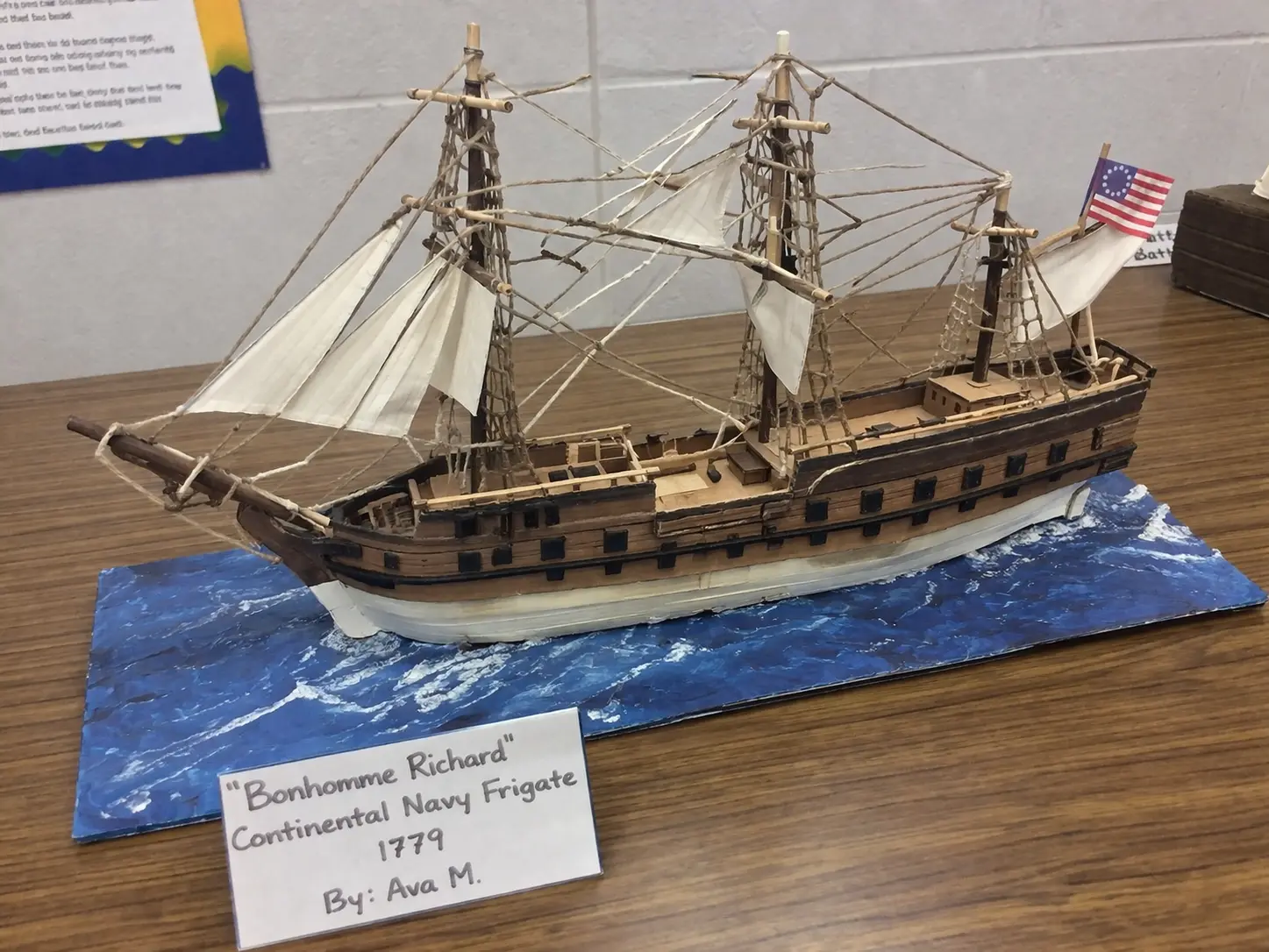
Students learn more about John Paul Jones, one of the most famous naval commanders of the American Revolution, remembered for his bold reply, “I have not yet begun to fight!”
After reading or watching a short biography, students create a model of the Bonhomme Richard using cardboard, craft sticks, clay, or other materials.
Students may label key parts of the ship or create a display card describing its role in the war and its battle with the HMS Serapis.
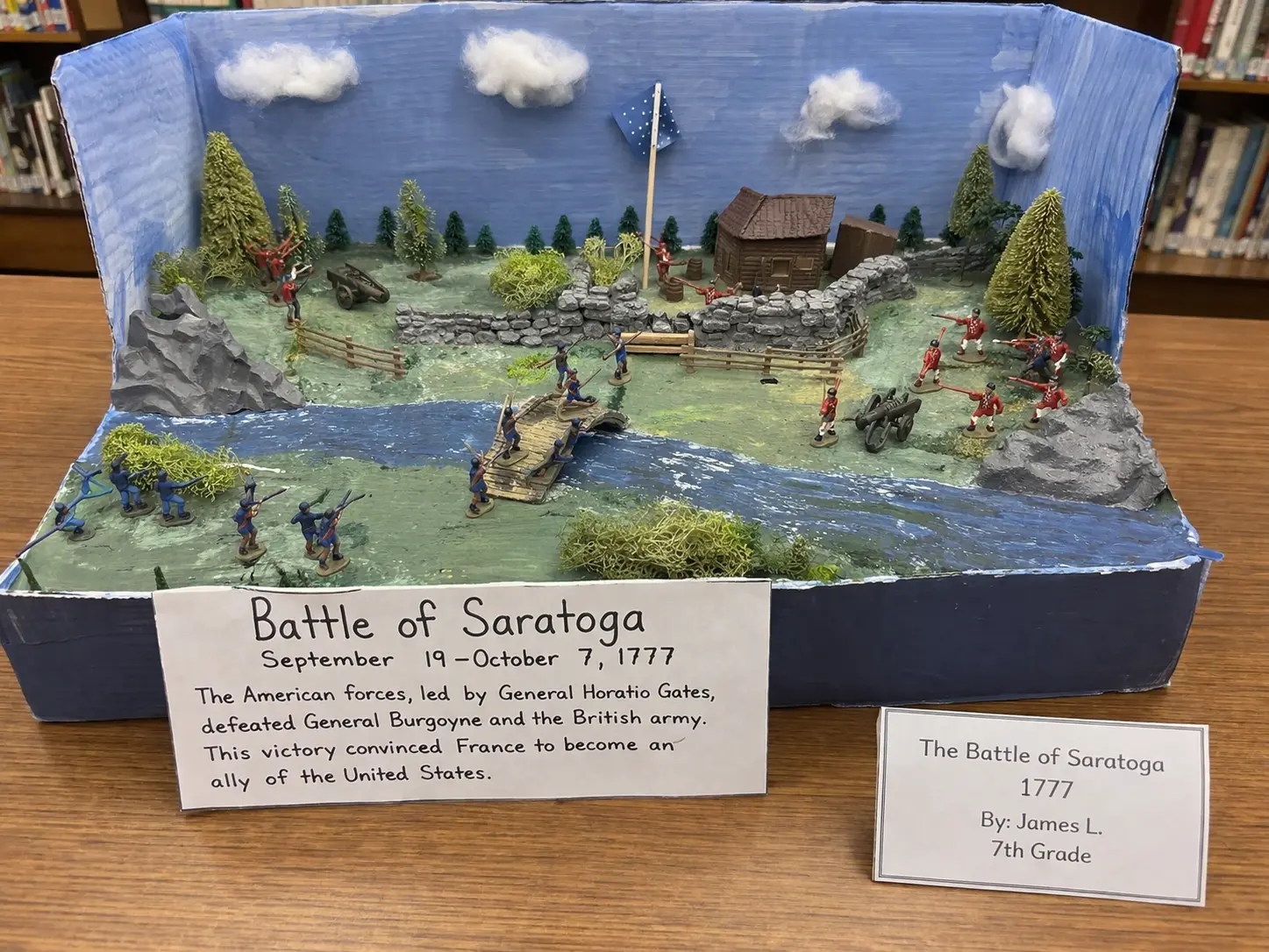
Students choose a major battle from the Revolutionary War—such as Yorktown, Saratoga, Trenton, or Cowpens—and create a shoebox diorama showing key elements of the battle.
Suggested elements:
- Terrain features (rivers, hills, fortifications)
- Uniformed soldiers or figures
- Flags or markers for troop positions
- A short written explanation of the battle’s significance
This project helps students visualize the strategies and turning points that led to the Treaty of Paris and the end of the war.
American Revolution Navigation
Explore the Full American Revolution Unit
This complete history unit includes research passages, organizers, writing tasks, quizzes, activities, and website research — all in printable and digital formats. Everything you need to teach the American Revolution with confidence.
View the Full Unit on TPT