Trouble in Boston
Fast Facts: Boston Tensions
Boston Unrest
- Main Events: Boston Massacre & Tea Party
- Location: Boston, Massachusetts
- Key Issues: Taxes & British soldiers
- Colonial Response: Protests & destruction of tea
- British Reaction: Stricter laws (Intolerable Acts)
Boston at a Glance
- British soldiers were sent to Boston to enforce tax laws.
- Arguments between colonists and soldiers grew more common.
- The Boston Massacre left five colonists dead.
- The Boston Tea Party destroyed an entire shipment of tea.
- These events pushed Britain to punish Massachusetts.
British Soldiers in Boston
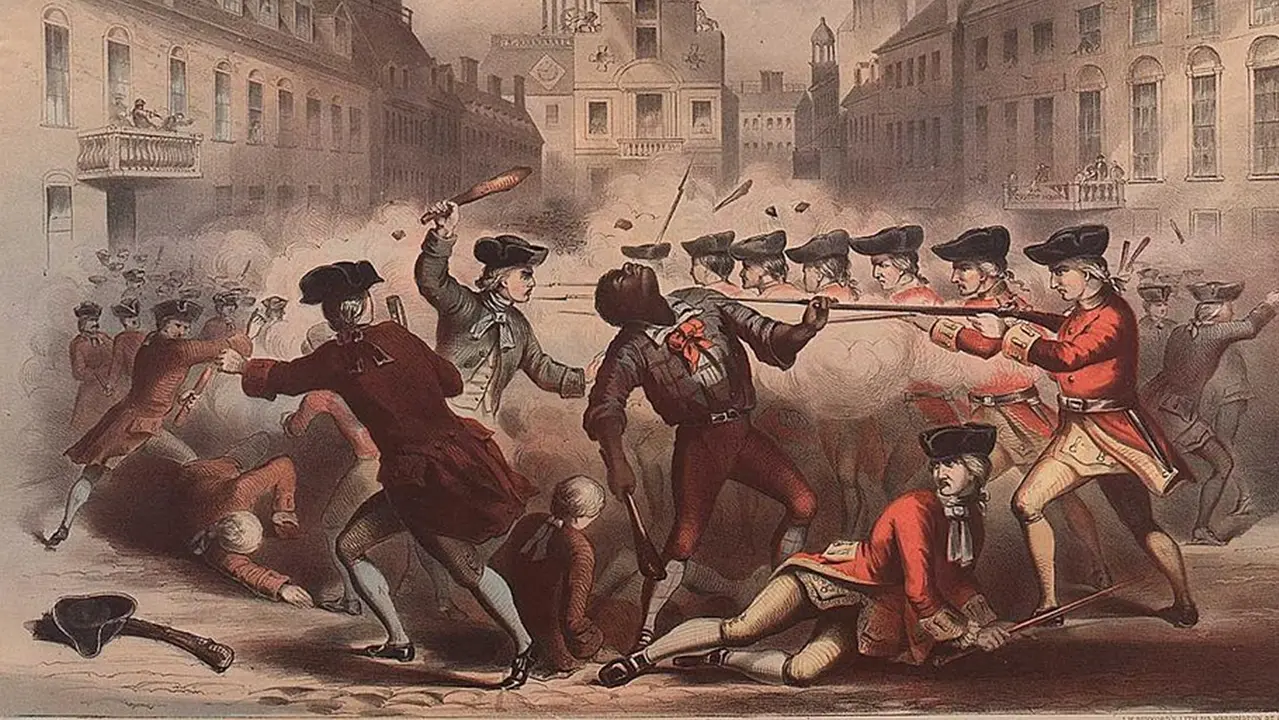
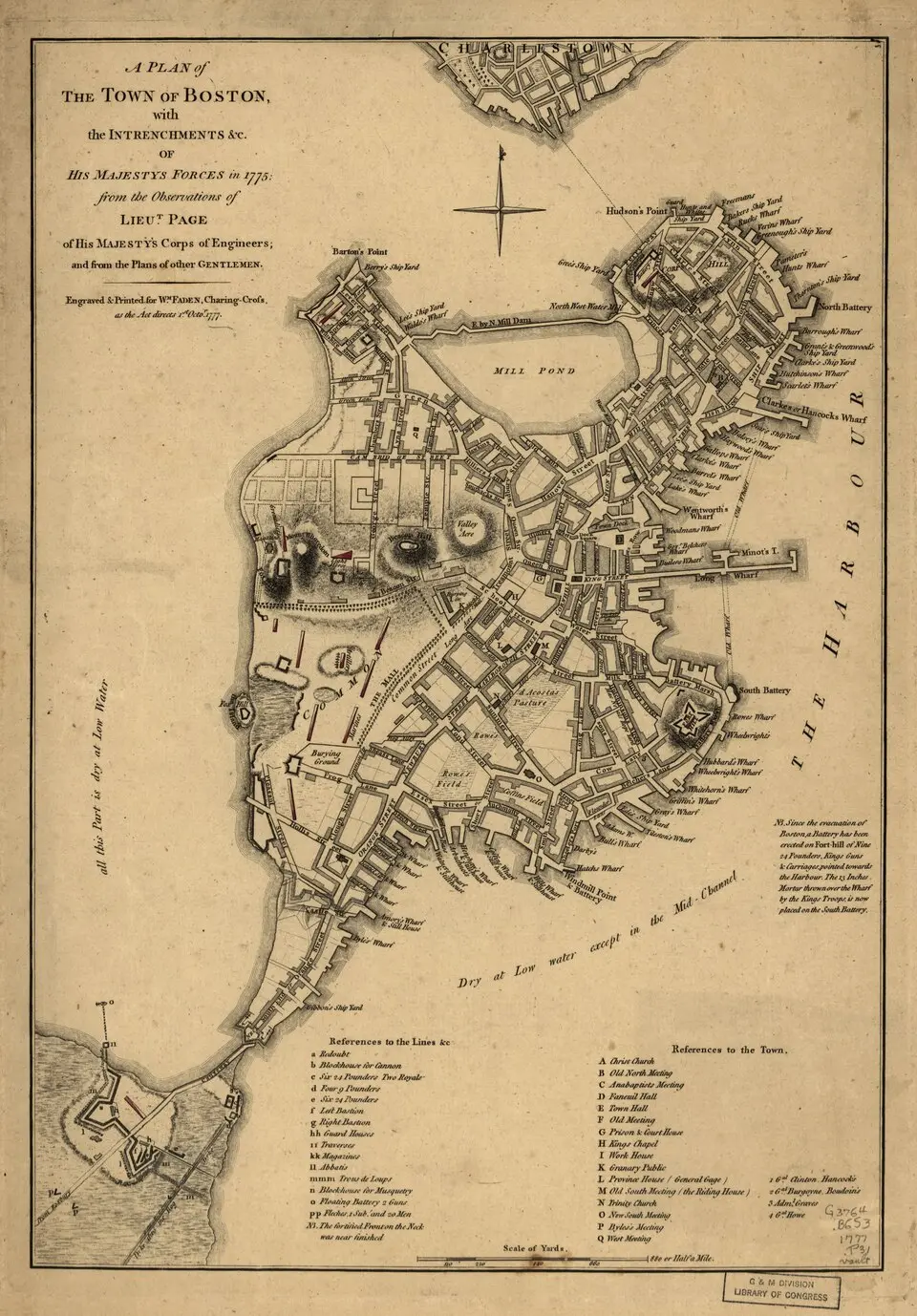
By the late 1760s, Boston had become a center of protest against British taxes. Merchants and shopkeepers joined boycotts, and crowds gathered to speak out against Parliament’s laws. Britain worried that the unrest would spread. In 1768, British troops marched into Boston to enforce the tax laws and keep order. Over time, about 4,000 soldiers were stationed in a town of roughly 16,000 people. Red-coated troops set up camps, guarded buildings, and patrolled the streets. Many colonists felt shocked and insulted. To them, the soldiers seemed like an occupying army sent to watch and control them, not to protect them.
Growing Tension
As time passed, arguments between colonists and soldiers became common. Some colonists shouted insults or threw snowballs, mud, and trash at the troops. The soldiers, far from home and often treated poorly, grew frustrated as well. Some soldiers also took part-time jobs, which angered Boston workers who needed the work. Boston’s narrow, crowded streets made it easy for small disagreements to turn into larger conflicts. The city felt like a powder keg, ready to explode.
The Boston Massacre
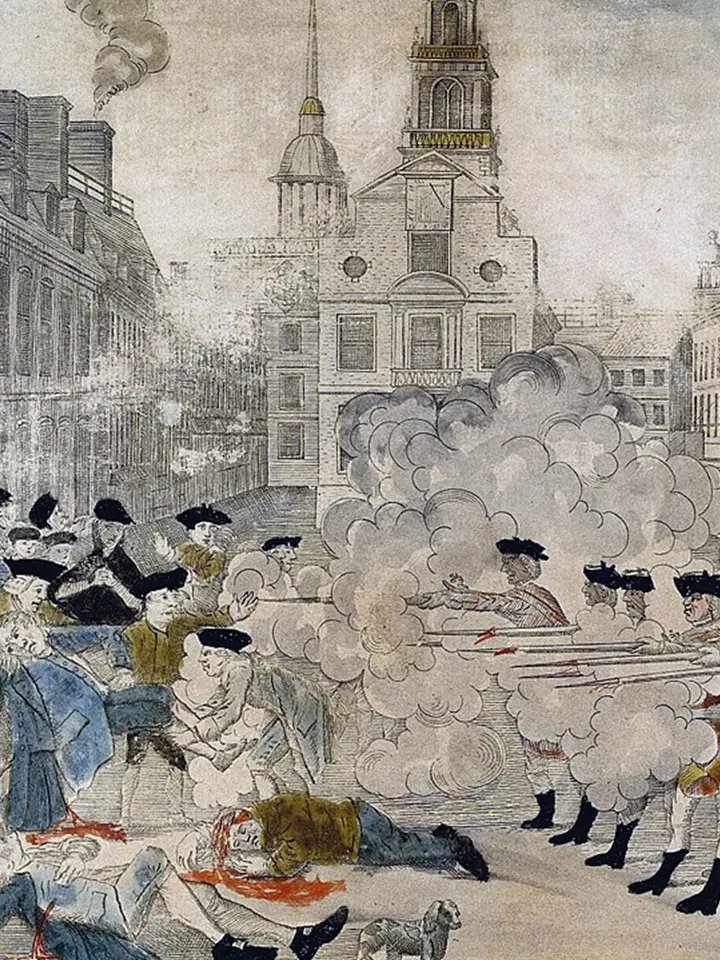
On the night of March 5, 1770, a crowd of colonists gathered around a British guard outside the Custom House in Boston and began yelling at him. More colonists joined in, throwing snowballs, ice, and rocks. When more soldiers arrived to help, the crowd grew louder. In the confusion, the soldiers fired their guns into the crowd. Five colonists were killed, including Crispus Attucks, a sailor of African and Native American descent. Attucks is often remembered as the first person to die in the struggle for independence.
Colonial leaders quickly called the event the “Boston Massacre,” even though five people died. They wanted colonists to see the shooting as proof that Britain was willing to use violence to control them. Paul Revere made an engraving that showed British soldiers firing in a neat line into a calm, peaceful crowd. The picture was not completely accurate, but it was printed and spread throughout the colonies and turned many colonists against Britain.
Later, the soldiers were put on trial. John Adams, a Boston lawyer who supported colonial rights, defended them because he believed everyone deserved a fair trial. Most of the soldiers were found not guilty. Two were found guilty of manslaughter and were punished by having their thumbs branded.
Calm Before the Next Storm
After the Boston Massacre, things became calmer for a short time. Parliament repealed most of the Townshend Acts, the hated taxes on everyday goods such as glass, paint, and paper, but it kept a small tax on tea to show it still had the right to tax the colonies. Many colonists continued to boycott British tea, believing the tax was a sign that Parliament still claimed the right to rule over them. Between 1770 and 1773, there were only a few acts of violence. In 1772, colonists in Rhode Island burned a British customs ship called the Gaspee. That same year, Samuel Adams helped start Committees of Correspondence, groups that wrote letters to share news and plans between towns and colonies.
The Tea Act
In 1773, Parliament passed the Tea Act. This law gave the British East India Company a monopoly, which meant it was the only company allowed to sell tea in the colonies, and it could sell the tea directly to the colonies at a lower price. However, the tax on tea remained. British leaders hoped colonists would be happy to buy cheaper tea. Instead, many colonists saw the Tea Act as a trick to make them accept the tea tax. Colonial merchants were also angry because the monopoly hurt their businesses.
The Boston Tea Party
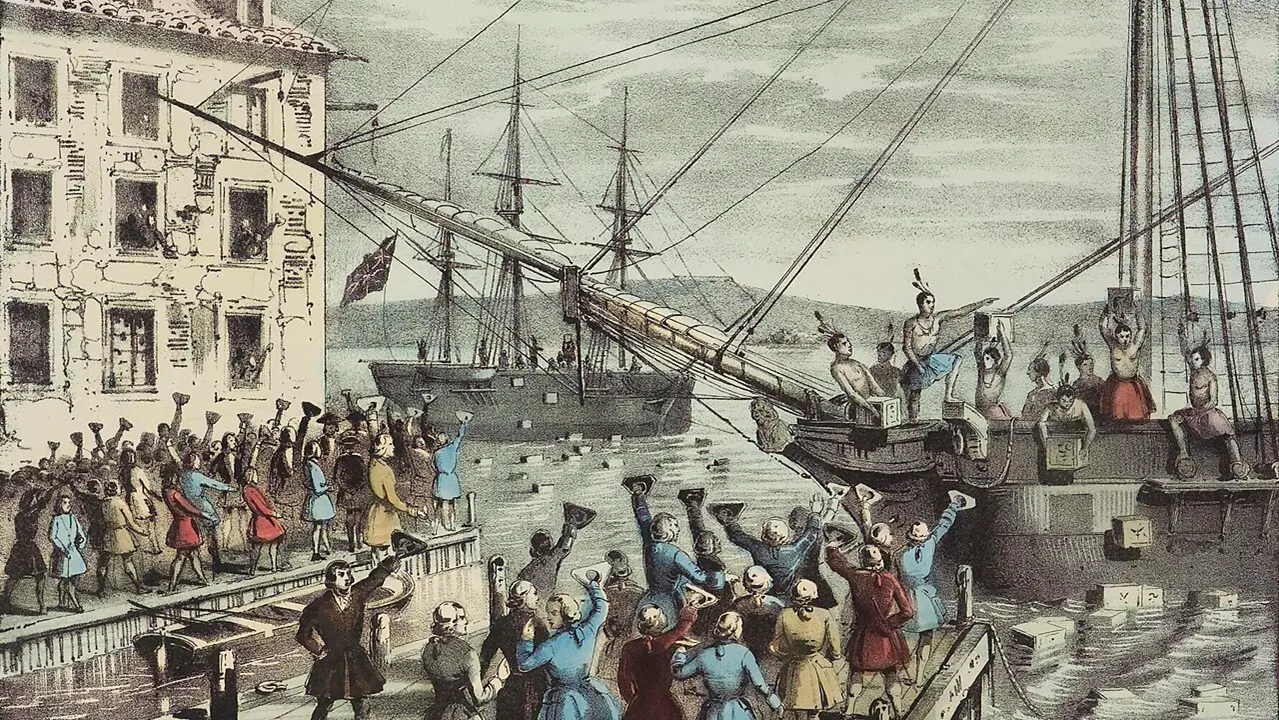
In late 1773, three ships loaded with tea arrived in Boston Harbor. Colonists demanded that the tea be sent back to Britain, but the royal governor, Thomas Hutchinson, refused. On the night of December 16, 1773, members of the Sons of Liberty, some disguised as Mohawk people, boarded the ships. Working quickly and quietly, they broke open 342 chests of tea and dumped them into the harbor. The tea would be worth more than a million dollars today. Paul Revere is believed to have been one of the men who took part. [The disguise was a symbol of an American identity separate from Britain, and it also helped hide who they were. Mohawk people were not involved.]
Britain Reacts
British leaders were shocked and angry about the Boston Tea Party. They believed the colonists had destroyed valuable property and openly challenged British authority. In response, Parliament passed a series of harsh laws in 1774 to punish Massachusetts. These laws closed Boston Harbor and limited town meetings. Colonists called them the Intolerable Acts because they felt the laws were too severe.
Boston Leads the Way
The events in Boston showed how far some colonists were willing to go to resist British rule. The Boston Massacre and the Boston Tea Party convinced many people that the conflict with Britain was becoming more serious. Other colonies sent supplies and messages of support to Boston, and leaders from across the colonies started to work together. This led to the First Continental Congress. Trouble in Boston was no longer just a local problem. It was becoming a shared struggle that would soon lead to revolution.
Word Match
Drag the vocabulary words to their correct definitions!
Vocabulary Words
Definitions
Trouble in Boston Quiz
Activities & Extensions
Download this free printable handout featuring ten fascinating facts about the Revolutionary War. Students can read the facts, highlight surprising details, or use the sheet as a discussion starter.
Download:
This printable works well as an enrichment activity, a warm‑up, or a quick partner discussion. The facts span the entire war, giving students a broader understanding of the era as they begin studying early events in Boston.
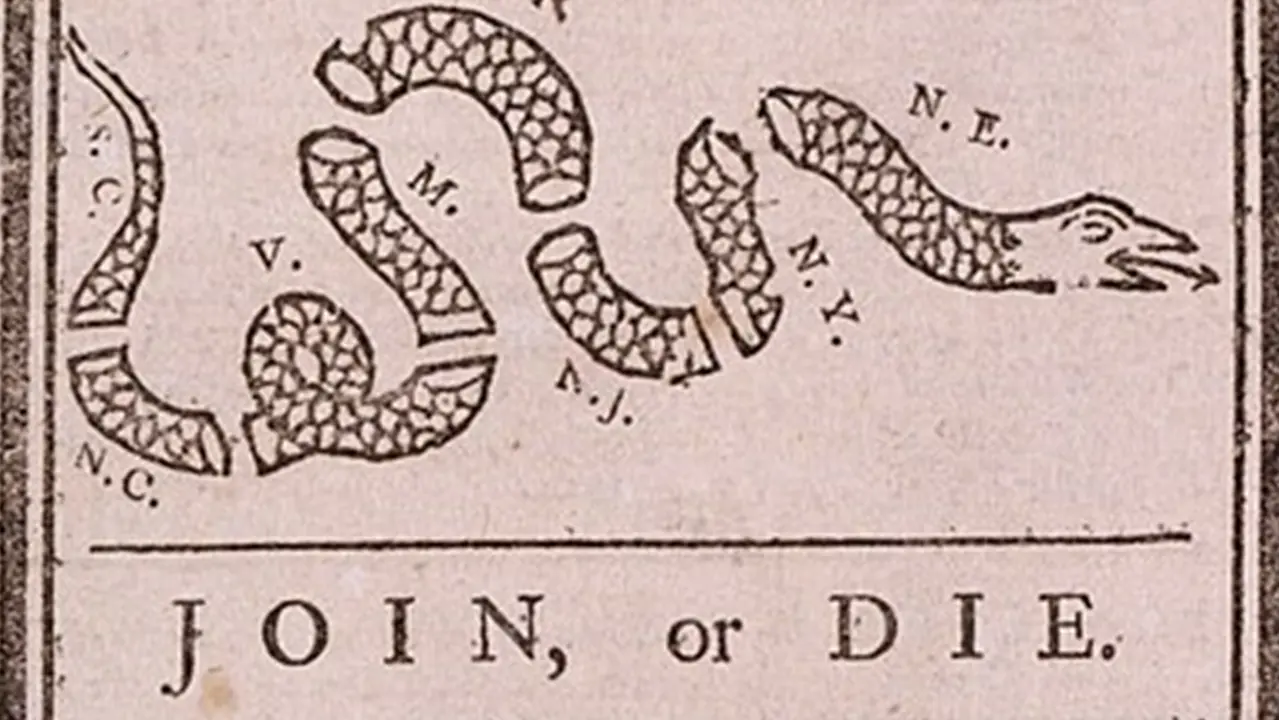
Students examine Benjamin Franklin’s famous “Join or Die” cartoon and then create their own version to represent the motto of the Sons of Liberty. This creative activity helps students understand how colonists used symbols and imagery to inspire unity and protest British actions.
Materials:
- Paper or drawing templates
- Colored pencils or markers
- Optional: digital drawing tools
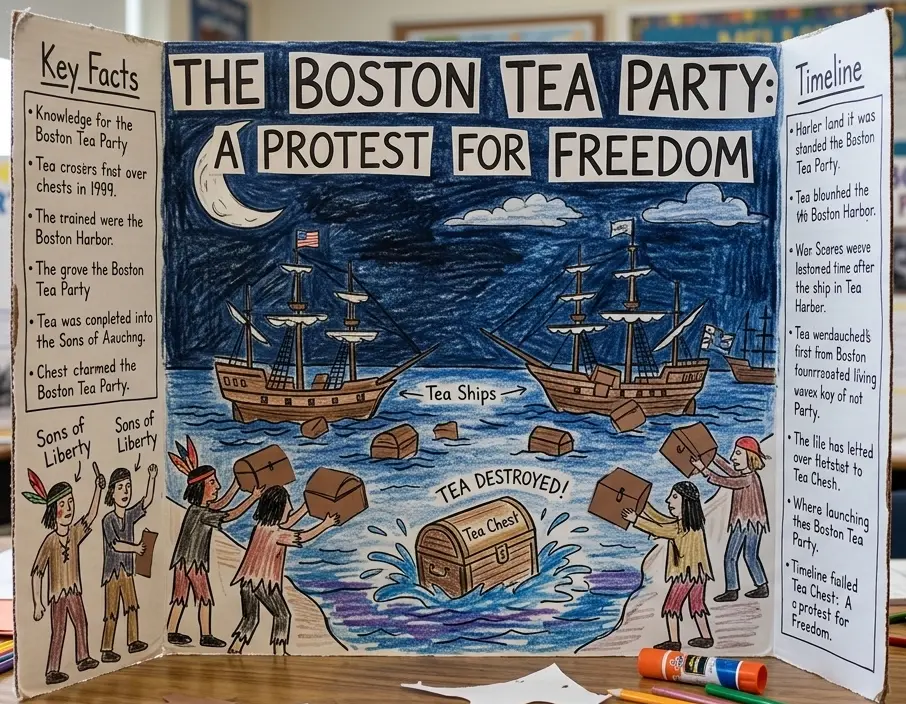
Students create a poster illustrating the events of the Boston Tea Party. Encourage them to show the Sons of Liberty, the tea chests, and the dramatic nighttime setting. This activity helps students visualize one of the most famous protests leading up to the American Revolution.
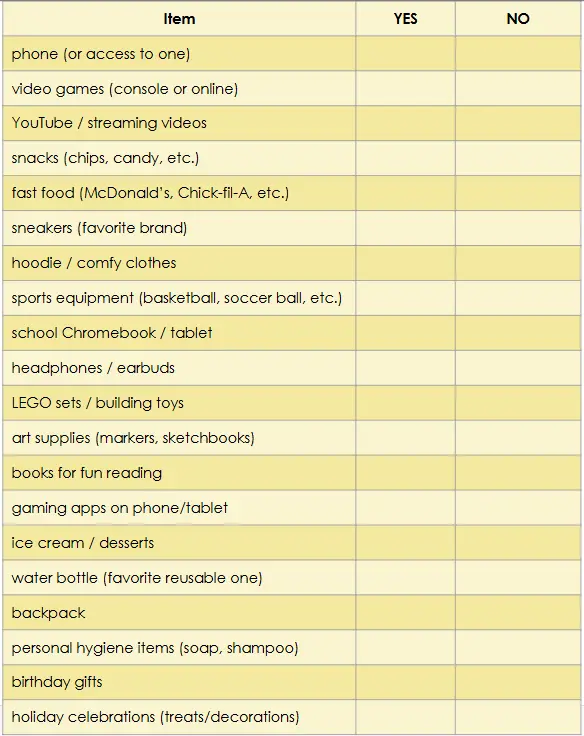
Students vote whether they could live without certain modern items if it went against their principles to pay a tax on them. This helps students understand the sacrifices colonists faced when boycotting British goods.
Download the printable chart:
After voting, discuss which items were hardest to give up and connect this to colonial resistance to the Stamp Act and Tea Act.
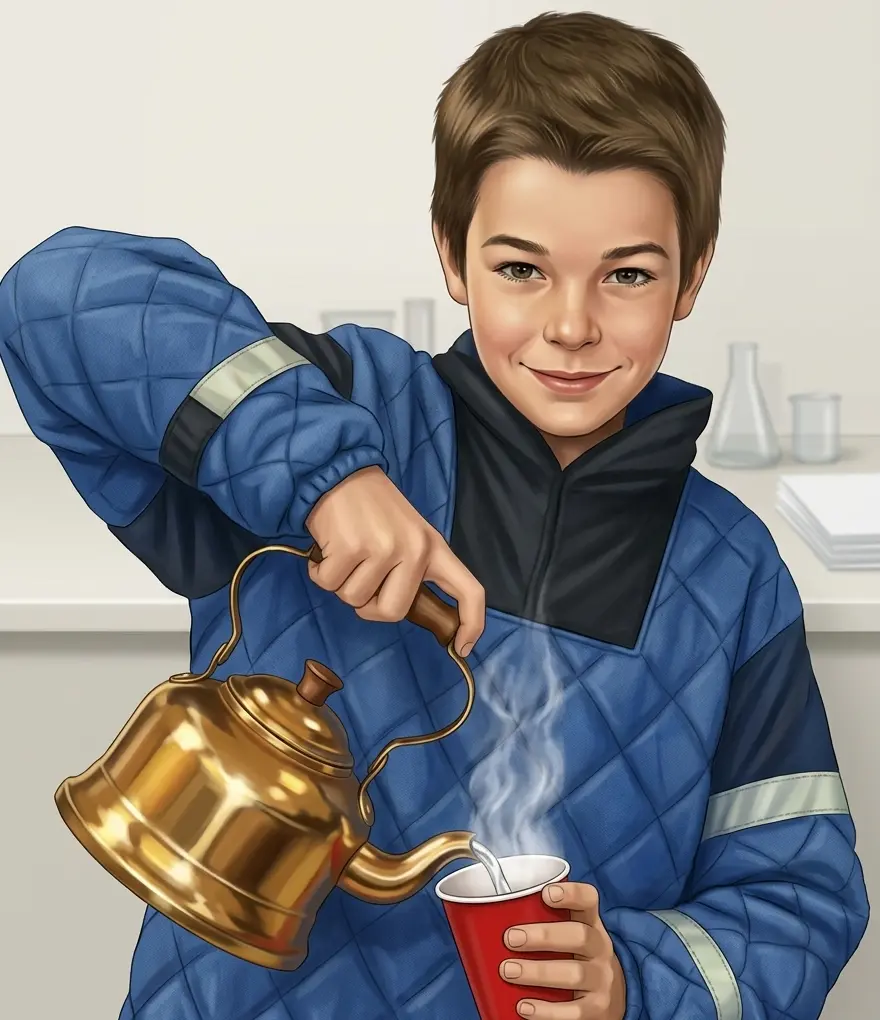
Students sample a variety of teas to understand why tea was such an important part of colonial life. Offer flavors such as lemon, orange, blackberry, raspberry, apple, peppermint, or plain. Add cream and sugar for an authentic experience.
After tasting, students vote for their favorite flavor and create a bar graph showing class results.
Download the bar graph template:
This activity connects directly to the Tea Act and helps students understand why colonists were so frustrated when Parliament refused to remove the tax on tea.
American Revolution Navigation
Explore the Full American Revolution Unit
This complete history unit includes research passages, organizers, writing tasks, quizzes, activities, and website research — all in printable and digital formats. Everything you need to teach the American Revolution with confidence.
View the Full Unit on TPT