Teach Compare and Contrast in Writing with Animated Shorts

Animated Shorts Distracted and Dear Alice

The animated shorts Distracted and Dear Alice deliver powerful messages in just a few short minutes—messages your students will understand, analyze, and connect with immediately. Both tell the story of a young girl longing for a distracted parent’s attention. These emotional, modern-day parables are ideal for introducing compare-and-contrast writing, especially for upper-elementary and middle-grade students.

In this post, you’ll find free printables to help students analyze characters, conflicts, and themes. Through side-by-side graphic organizers and guided Venn diagrams, students will compare the films and reflect on what the stories reveal about technology, attention, and relationships. These activities naturally transition into compare-and-contrast writing, giving students the structure they need to turn their observations into clear, organized paragraphs.

👉 Be sure to get the handout. It includes the printables you need to complete the activities mentioned in the post.

🎬 About the Films

Both films spotlight a young girl trying to connect with her parent—only to be ignored in favor of a smartphone. Each short tells its story in a unique style and structure, but the heart of the message remains the same: sometimes the people who matter most are right in front of us, asking to be seen.

Animated Short Film Distracted
Play Video about Animated Short Film Distracted

📱 Distracted (1:59)

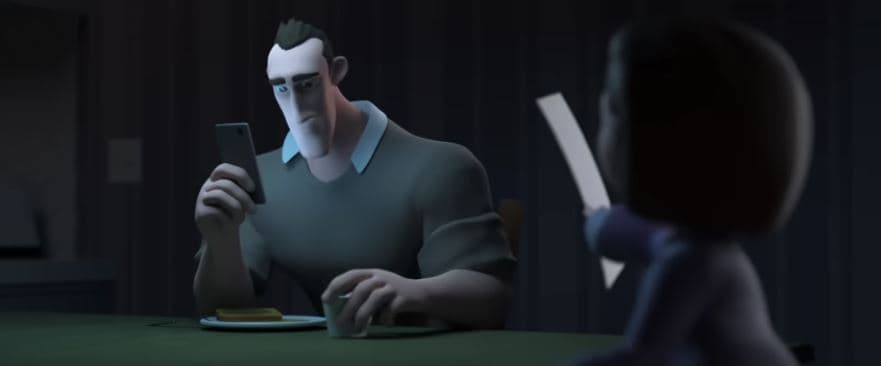
Told from the daughter’s point of view, this short follows a father consumed by his cell phone. As the years pass, we watch the girl grow up—still seeking his attention through small acts and accomplishments. When she finally leaves home as a young adult, the father looks up, but it’s too late.

Animated Short Film Dear Alice
Play Video about Animated Short Film Dear Alice

🎨 Dear Alice (3:40)

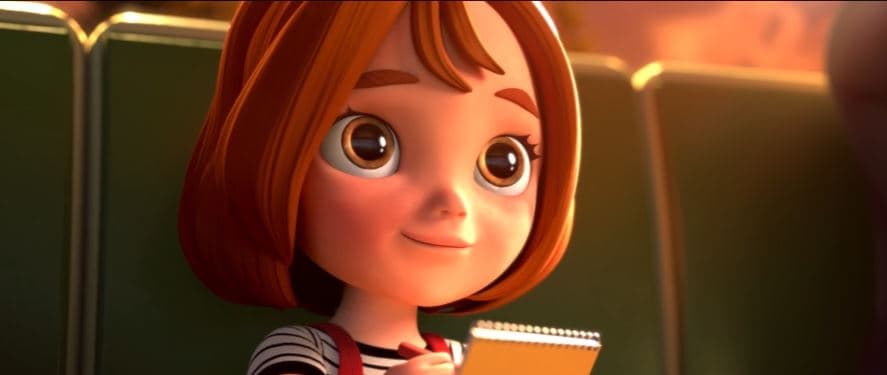
This story unfolds through the eyes of a quiet passenger on a public bus. Alice tries to show her mother a picture, but the mother is locked into a phone call. While ignored, Alice finds a moment of connection with the passenger, who returns her dropped drawing. Alice updates her drawing to include the boy—both smiling. Her mother remains unaware of everything.

✏️ Lesson Plan Overview

Teach Comparing with Animated Shorts with Distracted and Dear Alice

This lesson works well for grades 4–6 and can be completed in 1–2 class periods.

Students will:

  • compare and contrast characters and events using a Venn diagram
  • identify each story’s conflict and resolution
  • analyze perspective and tone
  • reflect on the impact of technology on relationships
  • write about the central messages or themes

Standards alignment: RL.4–6.3, RL.4–6.6, RL.4–6.9, W.4–6.2

📂 What’s in the Handout Pack?

Teach Comparing with Animated Shorts with Distracted and Dear Alice

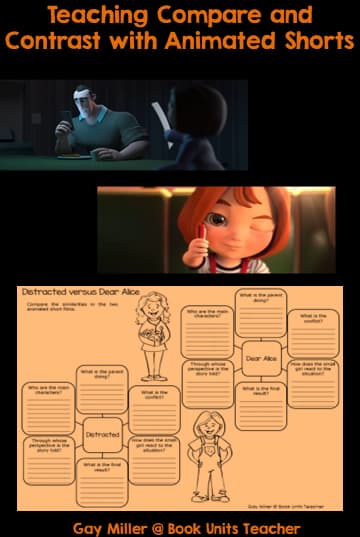
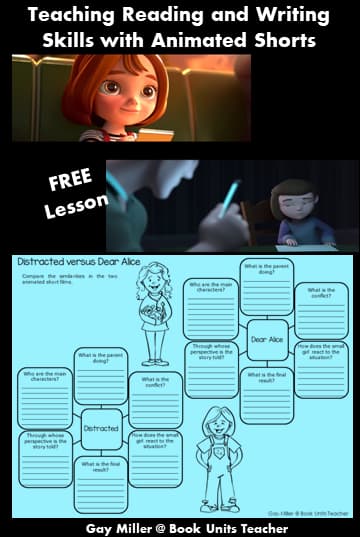
Character Maps – analyze the main characters in both stories

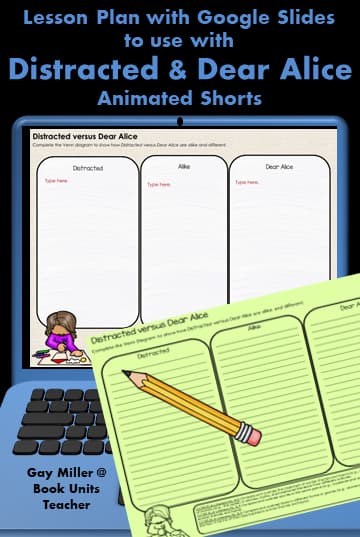
Compare/Contrast Venn Diagram – identify differences and similarities

Perspective Analysis – consider the narrator’s point of view

Theme Reflection Prompts – dig deeper into each film’s message

Answer Keys – support guided instruction or discussion

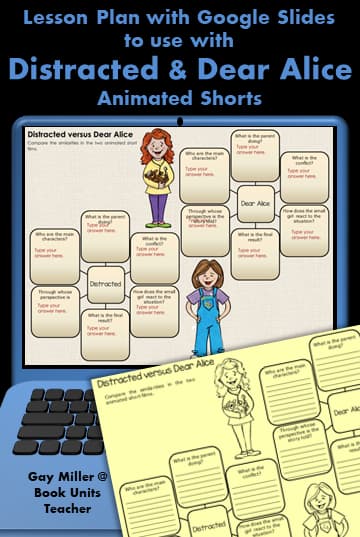
Google Slides Version – great for digital or blended learning

Sample Discussion Starters

  • Why are the stories told from different points of view?
  • How do the characters try to communicate?
  • What role does time play in Distracted that is different from Dear Alice?
  • How does the viewer’s emotional response change between the two stories?


🔍 Classroom Activity Highlights

Teach Comparing with Animated Shorts with Distracted and Dear Alice

1️⃣ Character Maps

Students chart what each main character does, how they respond to conflict, and how their emotions are revealed.

Example:

  • Distracted: The father never speaks. The girl grows up in the shadow of his phone screen.
  • Dear Alice: The mother’s face is never shown. The story is told from a neutral observer who gives Alice a moment of kindness.

2️⃣ Compare & Contrast Venn Diagram

Students track similarities and differences between the two shorts. This organizer is ideal for visually preparing students for compare-and-contrast writing.

Shared themes:

  • In each film, the parent is too absorbed in a phone to notice.
  • Each girl ends up seeking an emotional connection elsewhere
  • Each girl tries to show a drawing to a parent.

3️⃣ Written Reflection Prompt

What message do these films share? What might the creators be trying to tell us about screen time, attention, and family?

Use this as a journal prompt, exit ticket, or small-group discussion question.The

💬 Student-Friendly Writing Prompt

In Distracted and Dear Alice, the main characters want their parents to pay attention to them. How do the girls react when their parents are distracted? How are the stories similar and different? What lesson do these short films teach the viewer?

💡 Extend the Lesson

Pair this activity with a class discussion on screen time. Invite students to reflect on how technology influences their communication and relationships.

Consider showing the two films back-to-back and allowing students to vote on which one they found more emotionally engaging or effective in conveying its message.

📥 Ready to get started?

All activities are included in both printable and Google Slides formats. Click below to access the full resource pack.

You can unsubscribe anytime.
No spam—just helpful ideas and freebies!

See the product that inspired this post.

Teaching Skills with Animated Short Films All-in-One Reading and Writing Mega Bundle

If you are looking to add some high interest activities to your lessons, try using animated shorts to teach reading and writing skills. This packet contains graphic organizers covering many Common Core skills. $Save$ when you purchase this mega bundle which includes all 12 units.  

Gay Miller

Permanent link to this article: https://bookunitsteacher.com/wp/?p=96

1 comment

    • Skye on June 17, 2016 at 10:02 am

    I saw a lot of website but I believe this one has got something extra in it.

Comments have been disabled.