Last updated: August 30, 2026
Jump to Section
⭐ Why Teaching Root Words Matters
- decode multisyllabic words
- infer meaning without a dictionary
- build flexible vocabulary knowledge
- strengthen comprehension
- recognize patterns across content areas
See Root Words in Action
Click a word to see its root highlighted, plus what the root and the whole word mean.
Meaning: necessary for life.
"Water is vital for every living thing."
Meaning: to bring back to life.
"Paramedics worked to revive the patient."
Meaning: medicine that fights living germs.
"The doctor prescribed an antibiotic."
Meaning: to move forward, step by step.
"We made progress on the science project."
Meaning: happening in small steps over time.
"There was a gradual change in the weather."
Meaning: to move up a step or level.
"She got an upgrade on her flight."
Meaning: a structure that leads water somewhere.
"The Romans built aqueducts to carry water into cities."
Meaning: something led forward, or made, through a process.
"This is our newest product."
Meaning: to lead someone toward knowledge.
"Teachers work hard to educate their students."
Meaning: happening now, or a flow that runs.
"The current pulled the boat downstream."
Meaning: a passage people move through.
"Lockers lined the school corridor."
Meaning: something that happens again.
"Doctors watched for a recurrence of the illness."
Meaning: to put something down or in.
"She made a deposit at the bank."
Meaning: the way or place something is put.
"Check your position on the field."
Meaning: to put off until later.
"We had to postpone the field trip."
Meaning: done by hand.
"He read the manual before assembling the desk."
Meaning: to handle or control by hand.
"Scientists manipulate variables in an experiment."
Meaning: a document originally written by hand.
"The author submitted her manuscript to the publisher."
Before & After: Fixing the Misconception
See how student thinking changes once the root gets identified correctly.
"Revive means to re-vibe something."
The student recognized the prefix re- but misheard the root as a familiar-sounding word instead of vit/viv.
re- (again) + viv (life) → revive means to bring back to life.
"Aqueduct means water duck."
The student correctly identified aqua as water, but misheard duct as a familiar animal word instead of the root meaning "lead."
aqua (water) + duct (lead) → aqueduct means a structure that leads water.
The 6-Step Teaching Sequence
Click any step to see how it works — the sequence runs beautifully for upper elementary.
1 Introduce the Root
2 Break Apart a Word Together
- root: vit (life)
- meaning: necessary for life
3 Guided Practice
- root
- meaning
- related words
- sentence
4 Apply to Unfamiliar Words
5 Hands-On Activity
6 Reinforce with Daily Warm-Ups
Lesson Handout
This handout includes all root word activities listed in this post.
Root Word Activities
Activity #1 – Kick Off with a Root Word Tree
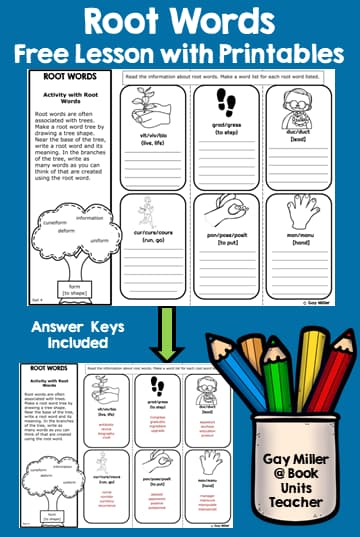
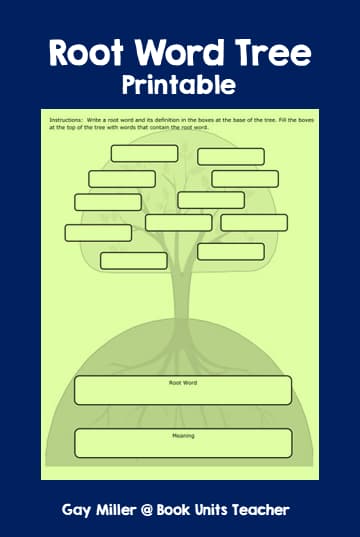
- Draw a tree.
- Write the root at the base.
- Add branches with related words.
- Decorate with leaves, apples, or seasonal shapes.
- vital
- revive
- survival
- vitality
Activity #2 – Watch & Learn: Free Root Word Video Lesson
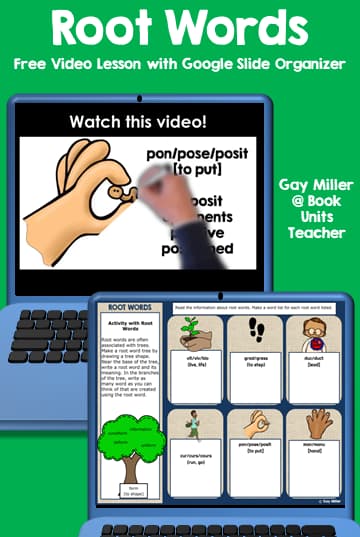
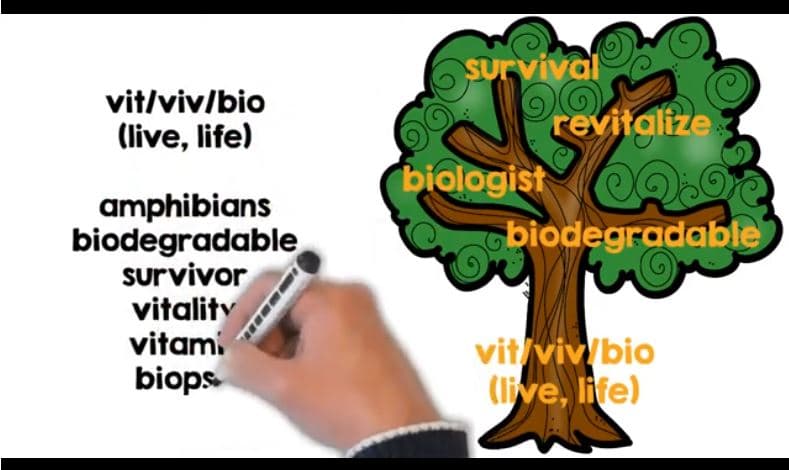
Want to give your students a visual and interactive way to learn root words? This free video lesson introduces six root words and guides students in creating their root word trees:
- vit/viv/bio (live, life) – Examples: antibiotic, revive, vivid
- grad/gress (step) – Examples: Congress, gradually, upgrade
- duc/duct (lead) – Examples: aqueduct, product, education
- cur/curs/cours (run, go) – Examples: corridor, currency, recurrence
- pon/pose/posit (put) – Examples: deposit, positive, postponed
- man/manu (hand) – Examples: manager, manipulate, manuscript
After students watch the video, they can complete the free printable or digital organizer. Afterward, they can compare their answers by continuing the video. This activity makes learning about root words engaging and interactive!
Activity #3 – Vocabulary Craftivity – Root Word Trees with a Twist
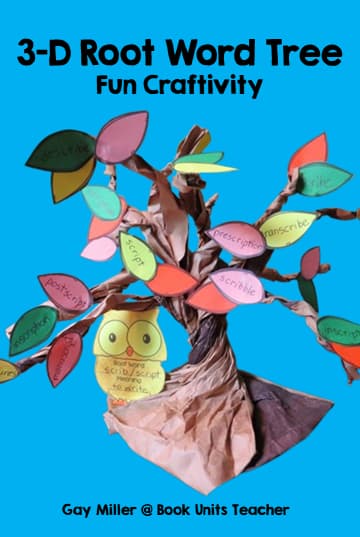
Why not turn your root word tree into an entire craft project? Using grocery bags, students can create larger trees and add apples (or fall leaves!) to represent vocabulary words. On each apple or leaf, they’ll write a root word, its meaning, and a sentence using that word. This hands-on activity is not only a fun break from the usual vocabulary routine but also helps students connect meaning with context.
The handout includes leaf and owl printables to make the craft pictured and several seasonal variations, including apples, ghosts, and bats, which can make it even more engaging!
Activity #4 – Root Word Matching That Actually Sticks
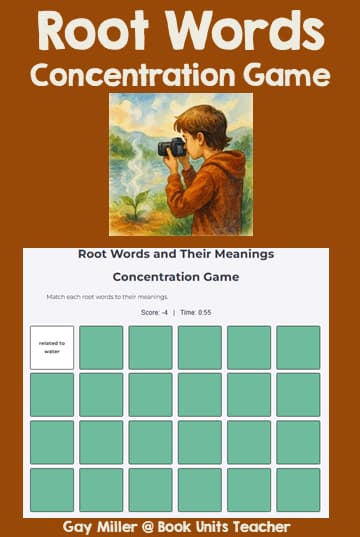
- roots
- meanings
- related vocabulary
Activity #5 — Association Tricks for Root Retention
- equation → equal sides
- equator → divides Earth into equal halves
- equinox → equal day and night
- equilibrium → balance
Teacher Information
⭐ Common Misconceptions
- confuse roots with prefixes
- assume roots always appear at the beginning of words
- decode only the prefix and ignore the root
- misidentify the root in multisyllabic words
- think roots always appear in English words exactly as written
⭐ Differentiation Tips
⭐ Download the Free Root Word Lesson Pack
- root tree templates
- seasonal craft variations
- digital organizer
- matching game link
- video lesson organizer
Be sure to check out the free resources linked throughout this post to get started with your own root word lessons today!
Extend Learning: Greek & Latin Root Word Activities
Looking for even more in-depth practice? My Greek and Latin Root Words Free Sample offers daily activities focused on prefixes, suffixes, and root words, following a routine:
- Monday: Anchor Chart + Practice Page
- Tuesday: Foldable Organizer
- Wednesday: Practice Workbook
- Thursday: Card Deck
- Friday: Hands-on Game
Check out the full resource on Teachers Pay Teachers
See the product that inspired this post.

Prefixes, Suffixes, and Roots contains practice with 90 affixes and root words. This resource contains graphic organizers with accompanying video lessons, games, and printable practice to help students better understand affixes and root words.