Have you ever read a student’s narrative that was one giant paragraph, stretching across the entire page like it was trying to set a world record? For some students, paragraph breaks come naturally—for others, it’s like they never learned where the Enter key is. If you’ve ever wondered when to start a new paragraph in a story, this guide breaks it down into five simple rules your students can actually remember
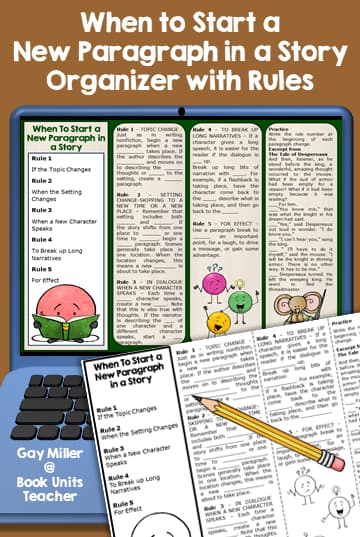
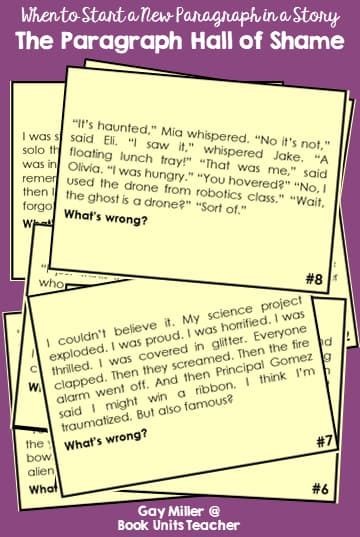
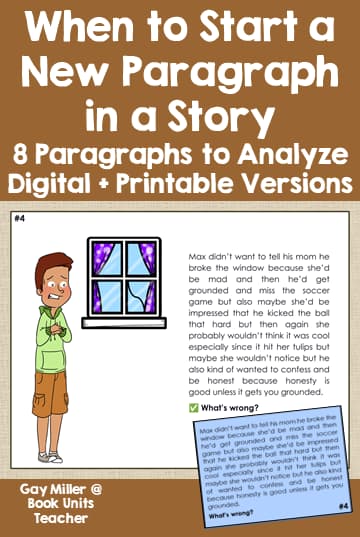
This post covers five clear rules with examples from popular novels your students may already know. You’ll also find an organizer reviewing the five rules and the “Hall of Shame” task cards, which include hilariously bad examples for students to correct.
Grab the Teaching Materials Here
Why Paragraphing Matters in Narrative Writing
Paragraphs help the reader breathe. They guide the eye, separate ideas, and build rhythm. Teach your students to treat paragraphs like scene changes in a movie: new action, new perspective, new break.
The 5 Rules for When to Start a New Paragraph
Understanding when to start a new paragraph in a story helps students organize their thinking and makes their writing clearer from the start.
Rule 1: Start a New Paragraph When the Topic Changes
Just like in nonfiction, a new paragraph is needed when the focus shifts—from setting to character, or from thoughts to action.
Example:
“The garden was overflowing with vegetables. Rows of tomatoes stretched toward the sky.” (setting details)
New Paragraph:
“Mom stood at the kitchen counter, chopping the ripe tomatoes for dinner.” (character actions)
Teaching Tip:
Have students highlight topic changes in mentor texts with different colors before identifying where paragraph breaks should be placed.
Rule 2: Start a New Paragraph When the Setting Changes
The setting includes both time and place—any shift means a new paragraph is needed.
Example:
“Ella raced down the hallway, her footsteps echoing.” (current location)
New Paragraph:
“Outside, the rain poured as she pushed open the door.” (new location)
📌 Teaching Tip:
Encourage students to underline setting clues in books or their own drafts.
Time: “Later that day,” “The next morning,” “A week passed”
Place: “Back at home,” “Across town,” “In the hospital”
Rule 3: Start a New Paragraph When a New Character Speaks
This one is non-negotiable—every time a different character speaks, a new paragraph begins.
✅ Correct Formatting:
“Did you bring the map?” asked Lily.
“No, I thought you had it,” replied Jake.
📌 Teaching Tip:
Have students act out conversations, then format the dialogue correctly in writing.
📥 Be sure to download the handout for a dialogue formatting guide and a fun dialogue scramble activity.
Rule 4: Start a New Paragraph to Break Up Long Narratives
If a character has a long speech or a flashback, break it up! Readers need visual “breathers.” Even better: weave in small present-day actions or observations to ground the reader.
📌 Teaching Tip
Teach flashbacks with interruption points. If a character drifts into a memory, break it up by returning to the present before continuing the flashback.
📚 Teaching Moment
Use Gary Paulsen’s Hatchet as a mentor text. He breaks up emotional memories with brief actions—like the pilot speaking or Brian looking out the window—to keep the pace readable and real.
Rule 5: Start a New Paragraph for Emphasis
A paragraph break can create drama, humor, or impact. One-word paragraphs? Totally legal when used intentionally.
Example
Standard paragraph: “His heart pounded as he reached for the door handle.”
✅ Impactful break
His heart pounded.
📌 Classroom Tip
Show students published stories where short paragraphs create dramatic tension.
For example, Gary Paulsen breaks up these lines in Hatchet:
Divorce.
The Secret.
Final Thoughts
Teaching paragraph structure in narrative writing doesn’t have to feel dry. Once students see the logic and feel the flow, they start to revise on their own, and that’s when the real magic happens.
Start with simple rules.
Let students practice with color-coded examples.
Encourage interactive storytelling activities.
Teaching students when to start a new paragraph in a story gives them a lifelong writing skill they’ll use across every genre.
Get the Teaching Materials Here!
Included in the free download:
- an organizer that goes over the five rules
- mentor text excerpts from Hatchet, Wonder, The Giver, and more to analyze which rules are used
- “Hall of Shame” task cards with hilariously bad examples for students to analyze and/or fix
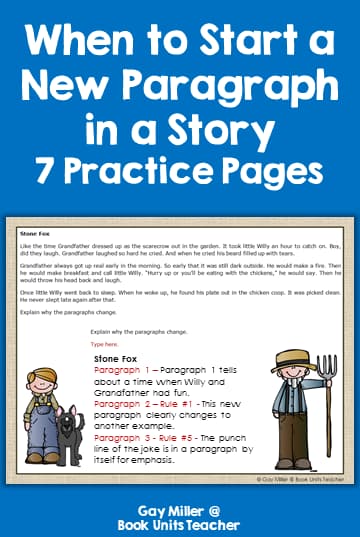
The handout includes a link to a Google Slides version of these activities that you can edit before assigning them to students.
See the product that inspired this post.
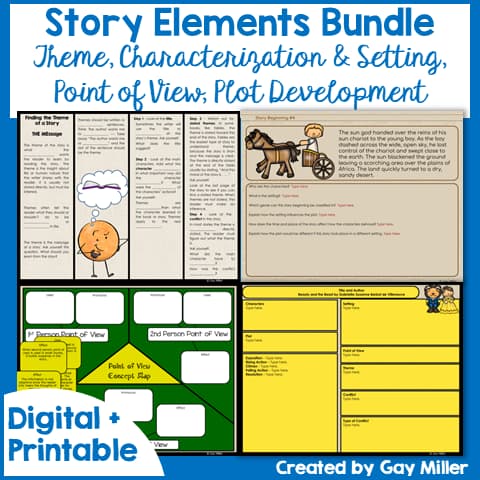
If you’re working on narrative writing skills like paragraph structure, it’s the perfect time to dive deeper into the building blocks of storytelling. The Story Elements Bundle is a flexible, ready-to-use resource that covers everything your students need to understand plot, character, setting, theme, and point of view. With digital and printable materials, engaging video lessons, and hands-on activities for every element, this bundle makes it easy to teach core reading and writing skills—without the extra prep. Whether you’re introducing story elements or reinforcing them through writing, this resource supports meaningful learning across formats and grade levels.