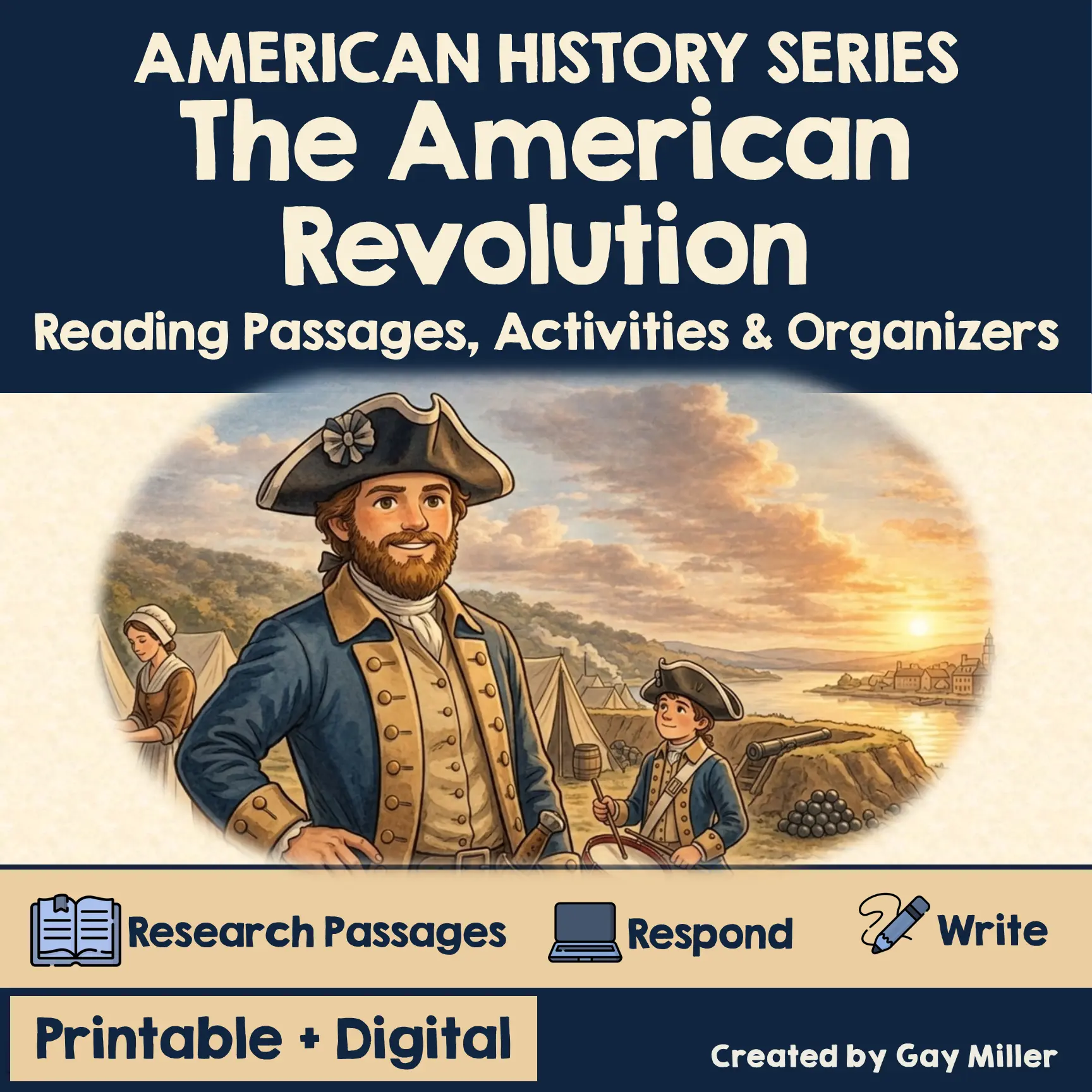
Students love discovering surprising details and interesting facts about the American Revolution. These ten quick facts offer a fun way to introduce the era or review key ideas. At the bottom of the post, you’ll find links to a printable version and a foldable timeline organizer you can use in your classroom.
1. Population in 1775
In 1775, the thirteen colonies had a combined population of about 2.4 million people.
For comparison, London alone had nearly 1 million residents at the same time.
About 20% of colonists remained loyal to Britain during the war. Roughly 100,000 Loyalists fled to Canada, England, or the Bahamas.
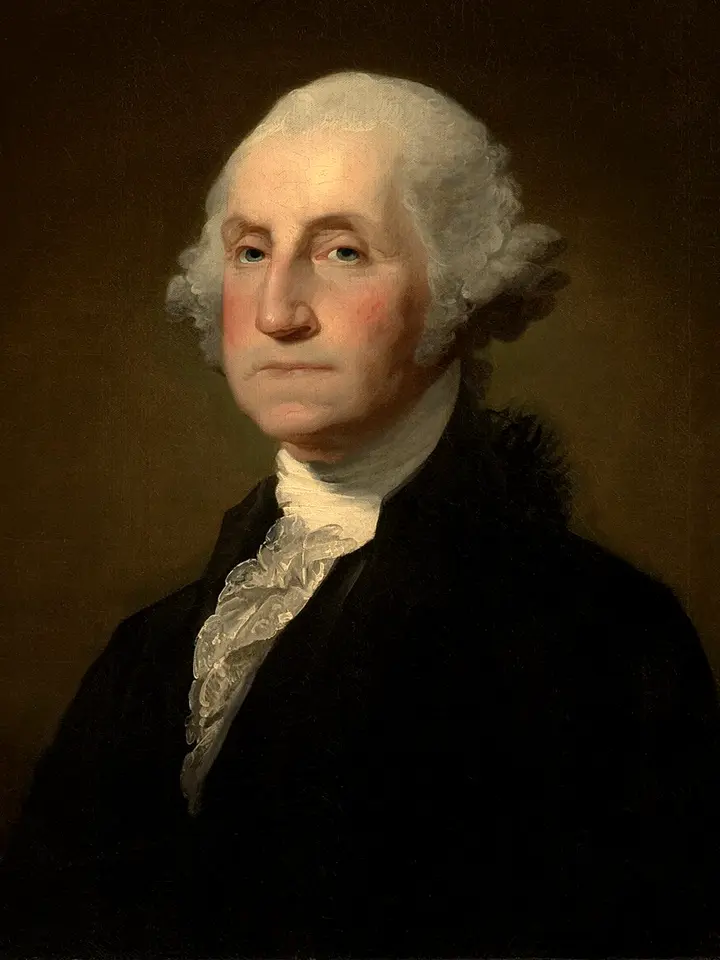
General George Washington never commanded more than 15,000 soldiers at one time.
| Colony | Percentage Enslaved | Number of Enslaved People |
|---|---|---|
| Virginia | 40% | 186,000 |
| New York | 14% | Over 26,000 |
| Connecticut | 8% | Over 15,000 |
| Rhode Island | 6% | Over 3,000 |
2. The Boston Tea Party
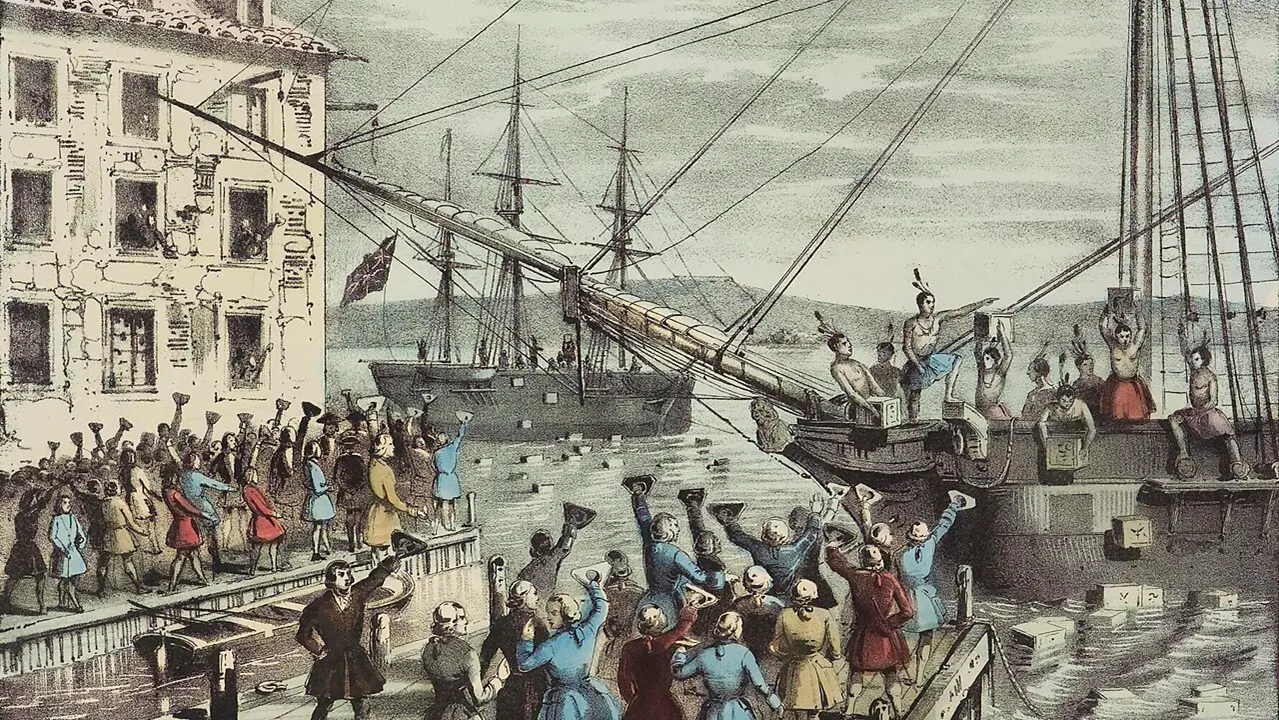
On December 16, 1773, the Sons of Liberty disguised themselves as Mohawk Indians and dumped 342 chests of tea into Boston Harbor to protest the Tea Act.
A second, smaller protest took place on March 7, 1774, when 16 more chests were destroyed.
Altogether, the lost tea would be worth over $3 million today.
3. Borrowing Money for War
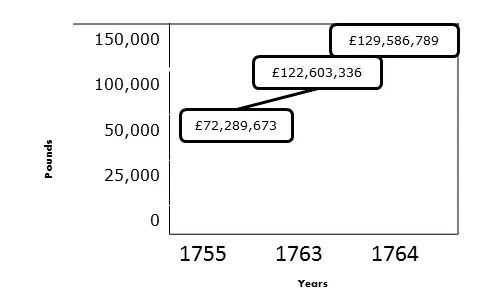
The British government had to borrow enormous sums of money to pay for the war effort.
The cost of transporting troops, supplying the army, and fighting across the Atlantic was staggering.
4. Tar and Feathering
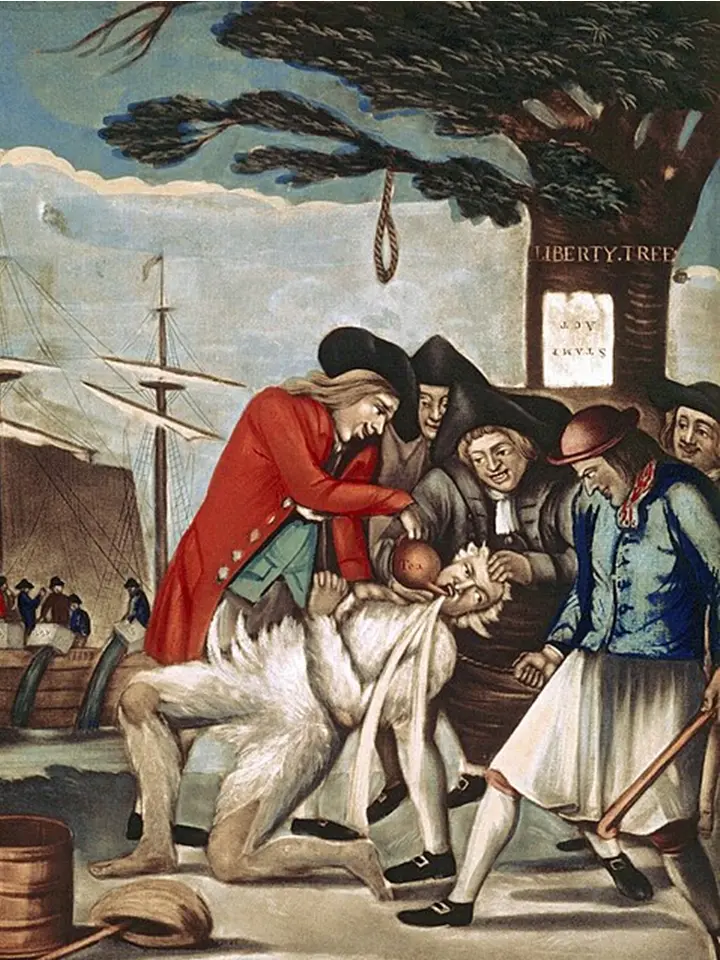
Tar and feathering became a common punishment in New England.
Because tar had to be heated to 140º to pour, the punishment was extremely painful.
The Daughters of Liberty sometimes used molasses and feathers instead — a far less painful version.
5. Invisible Ink
Both sides used invisible ink to send secret messages.
Writers used acidic liquids such as lemon juice, milk, vinegar, or lime juice.
When heated, the weakened paper fibers darkened faster than the rest of the page, revealing the hidden message.
6. Spies and Secret Networks
The most famous American spy was Nathan Hale, executed by the British on September 22, 1776. His reported last words were:
“I only regret that I have but one life to lose for my country.”
George Washington was an excellent spymaster. One of the first large expenses in his account book was $333.33 — paid to a spy sent into Boston.
The British had more spies overall because they had more money to fund espionage.
One of Washington’s most valuable discoveries was that 10,000 British troops were marching toward White Marsh. Because of this intelligence, the Continental Army avoided a major defeat.
7. Benedict Arnold
Before becoming a traitor, Benedict Arnold was one of the Continental Army’s best generals.
He played a key role in the Battle of Saratoga, a turning point that convinced France to join the war.
Arnold later switched sides, partly because he opposed French involvement.
8. Smallpox and the Army
Smallpox was a deadly threat during the war.
After George Washington ordered his troops to be inoculated, the death rate dropped from 17% to just 1%.
9. Casualties
| Category | Number |
|---|---|
| Battle Casualties | 6,824 |
| Americans Wounded | 8,445 |
| Deaths from Disease | Approximately 10,000 |
| Died in British Prisons | 8,500 |
| Americans Captured | 18,152 |
| Casualties from Battle and Disease | 24,000 |
10. The End of the War
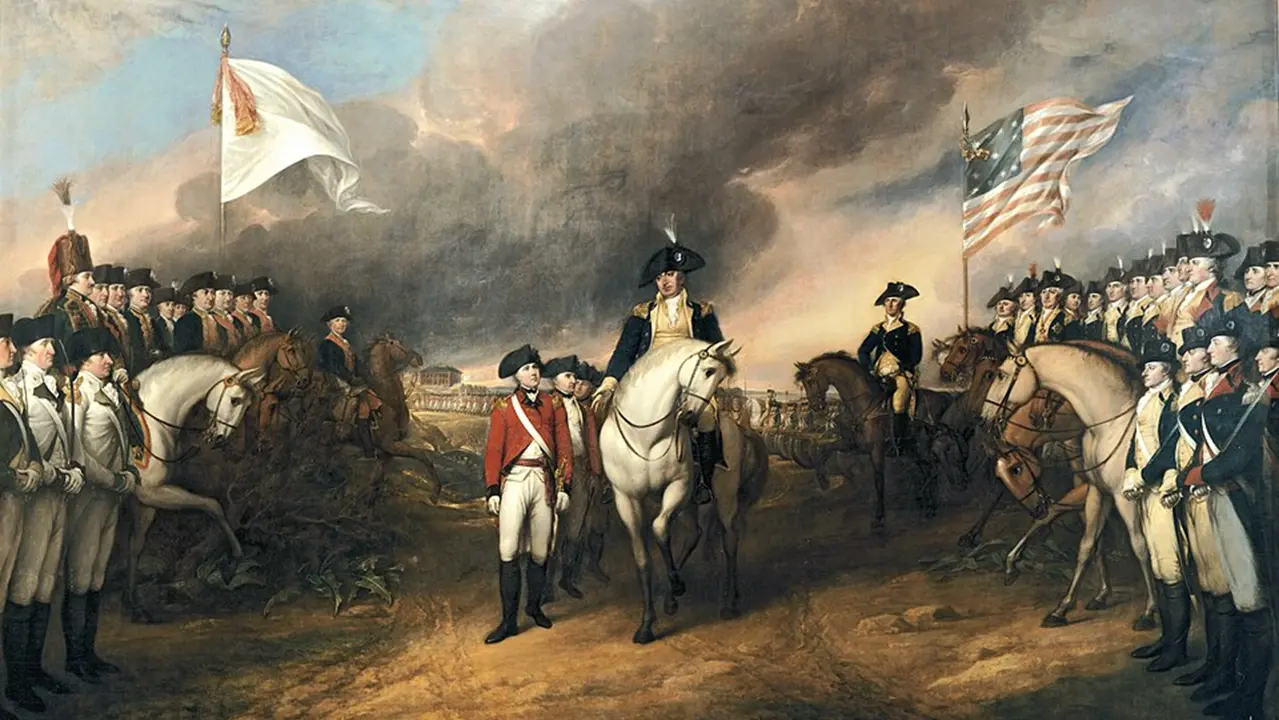
General Cornwallis surrendered at Yorktown in 1781, effectively ending major fighting.
However, the war did not officially end until the Treaty of Paris was signed in 1783
Free Classroom Resources
Explore More American Revolution Resources
Visit the American Revolution pages at Book Units Teacher for articles, organizers, activities, and interactive content, including more interesting facts about the American Revolution to support your lessons.
- Printable Version:
- Download a student‑friendly printable of these ten facts.
- Foldable Timeline Organizer: Use this free organizer to help students visualize key events of the American Revolution.
See the product that inspired this post.
Do you need additional teaching materials for the American Revolution?

2 comments
I like the helpful info you provide in your articles.
I’ll bookmark your weblog and check again here frequently.
I’m quite sure I’ll learn plenty of new stuff right here!
Best of luck for the next!
Great article.