Category: Language Arts and Grammar
Make word study the highlight of your day! This category is packed with playful vocabulary activities, prefix and suffix lessons, and grammar strategies that work for busy classrooms. We move beyond rote memorization to offer interactive ideas—like cipher codes, word wheels, and context clue anchor charts—that help students expand their word consciousness. Whether you are tackling tricky word pairs, teaching root words, or looking for quick five-minute grammar games, these resources will help your students build the foundational language skills necessary for clear and effective writing.
Let’s face it. Some lessons are just more fun for teachers as well as students than others. Students would rather read the next chapter of an exciting cliffhanger, than study skills. So, how do you make teaching capitalization and punctuation fun for students? The answer is to use animated shorts and games. Free Capitalization and …
Continue reading
Permanent link to this article: https://bookunitsteacher.com/wp/?p=3676
Are you tired of the same spelling routine? With this Teaching Spelling with Animated Shorts Series, students will be highly engaged in learning how to spell. With weekly animated shorts and monthly review games, students will be excited for spelling class to begin. Spelling with Animated Shorts – The Routine Here is how it works: …
Continue reading
Permanent link to this article: https://bookunitsteacher.com/wp/?p=1534

Ready to challenge your middle school students with analogies that go beyond simple synonyms and antonyms? This blog post shares five engaging activities that explore a variety of word relationships—perfect for grades 6–8.Each activity is designed to deepen vocabulary knowledge, boost critical thinking, and enhance students’ understanding of analogies using relationships like part to whole, …
Continue reading
Permanent link to this article: https://bookunitsteacher.com/wp/?p=1922

Kids love puzzles, and analogies are word puzzles that sharpen thinking while expanding vocabulary. Teaching Analogies with Synonyms and Antonyms is a powerful way to help your 4th and 5th‑grade students learn new words. In this blog post, you’ll discover engaging, hands‑on activities that introduce analogies using synonyms and antonyms—two of the most common and …
Continue reading
Permanent link to this article: https://bookunitsteacher.com/wp/?p=765
This figurative language lesson on understatements includes a free organizer and digital resources. It’s perfect for 4th, 5th, and 6th graders—curious minds ready to explore language in a new light. And guess what? We’re keeping it engaging and relatable with examples that’ll lighten their eyes! So, let’s get started on this figurative language adventure. Definition …
Continue reading
Permanent link to this article: https://bookunitsteacher.com/wp/?p=8437
This figurative language lesson on sarcasm includes a free organizer and digital resources. It’s perfect for 4th, 5th, and 6th graders. The lesson introduces the definition with kid-friendly examples, plus activities that build vocabulary and comprehension. Definitions of Irony and Sarcasm Irony is the difference or contrast between expectations and reality in a circumstance. Irony …
Continue reading
Permanent link to this article: https://bookunitsteacher.com/wp/?p=8434
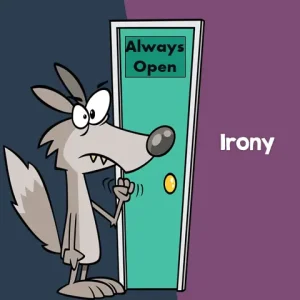
Have you ever explained irony to your students only to be met with blank stares or worse, the dreaded “Oh, like in that song Ironic”? Teaching irony can be tricky because it’s all about the gap between what’s expected and what really happens. But once students get it, they love finding examples in stories, movies, …
Continue reading
Permanent link to this article: https://bookunitsteacher.com/wp/?p=8431

