English Explorers
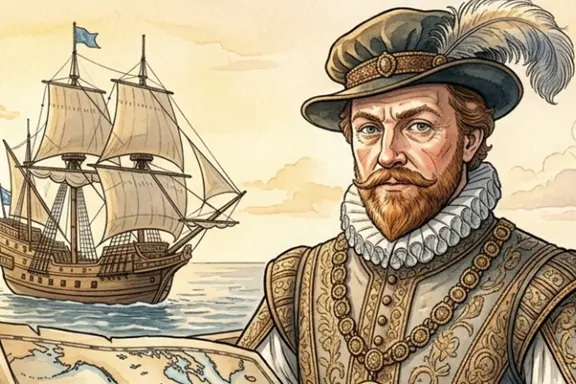
Fast Facts: English Explorers
English Explorers
- Time Period: 1500s–1600s
- Main Purpose: Find a Northwest Passage, claim land, expand trade
- Key Figures: John Cabot, Henry Hudson, Sir Francis Drake
- Regions Explored: North Atlantic, eastern Canada, Hudson River, Pacific Coast
- Result: England began claiming land in North America
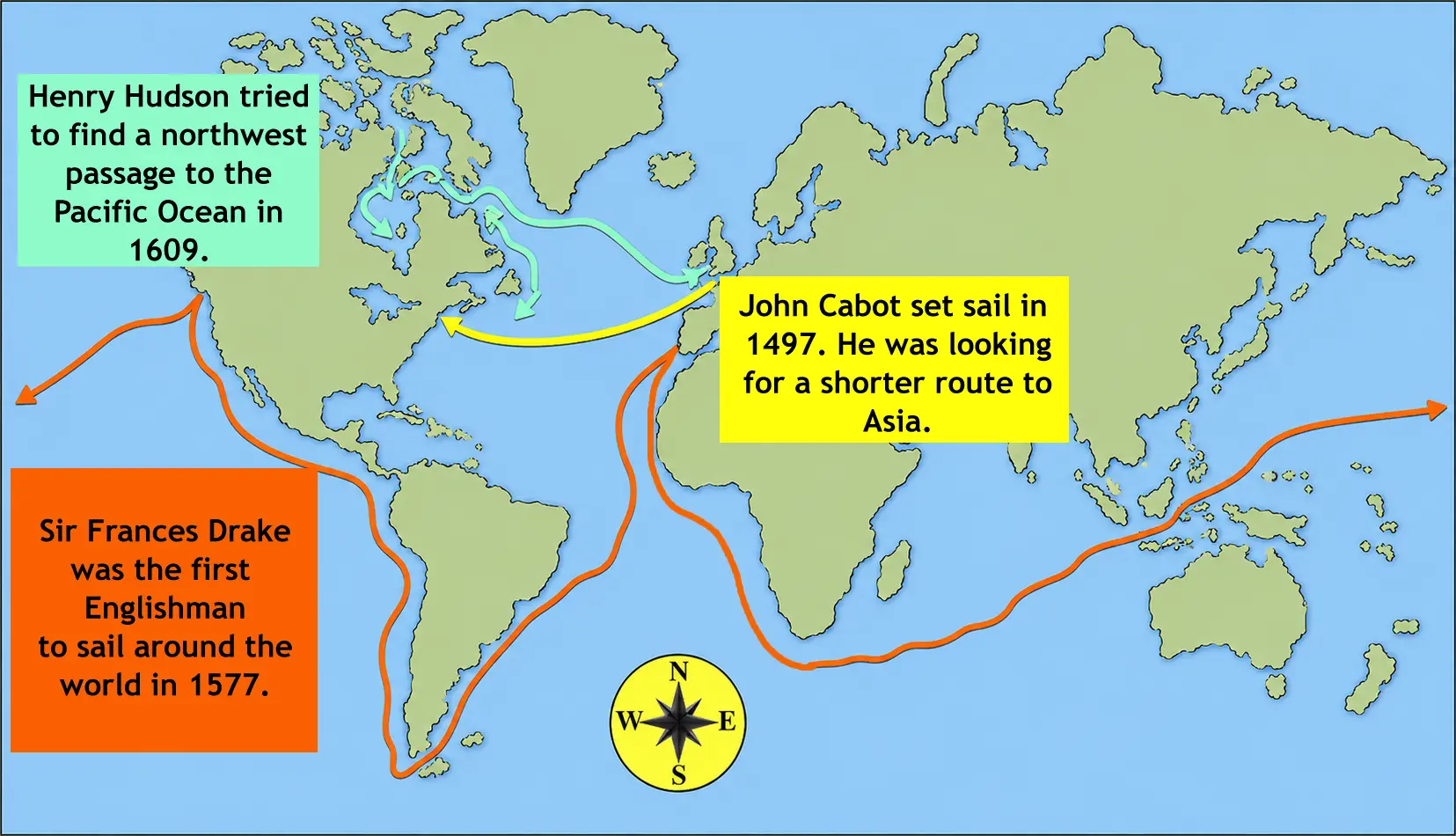
English Explorers at a Glance
- England searched for a Northwest Passage to Asia.
- Cabot explored eastern Canada.
- Hudson explored the Hudson River and Hudson Bay.
- Drake sailed around the world and raided Spanish ships.
- English exploration led to future colonies.
English Explorers
England sent explorers to North America during the late 1400s and 1500s. Their goals were to find a Northwest Passage to Asia, expand trade, and claim land for England. Although the Northwest Passage did not exist, English explorers made important discoveries that helped England begin building its empire in North America.

John Cabot
John Cabot explored the eastern coast of Canada in 1497. He claimed land for England and reported that the waters were rich with fish. Cabot’s voyage gave England its first claim to land in North America and encouraged future exploration.

Henry Hudson
Henry Hudson explored the Hudson River in present‑day New York and later sailed into Hudson Bay in Canada. He searched for a Northwest Passage but never found one. Hudson’s voyages helped England learn more about the geography of northeastern North America. His final crew mutinied, and Hudson was set adrift and never seen again.

Sir Francis Drake
Sir Francis Drake was a skilled sailor, navigator, and privateer. In the late 1500s, he sailed around the world, becoming the first Englishman to circumnavigate the globe. Drake explored the Pacific Coast, raided Spanish ships, and brought great wealth back to England. Queen Elizabeth I rewarded him for his achievements.
Impact of English Exploration
English explorers helped England claim land, expand trade, and gain knowledge of North America’s coastline. Their voyages encouraged England to establish permanent colonies, which later grew into the Thirteen Colonies. English exploration also increased competition with Spain and France for control of the New World.
Word Match
Drag the vocabulary words to their correct definitions!
Vocabulary Words
Definitions
Lesson 9 — English Explorers Quiz
Activities & Extensions
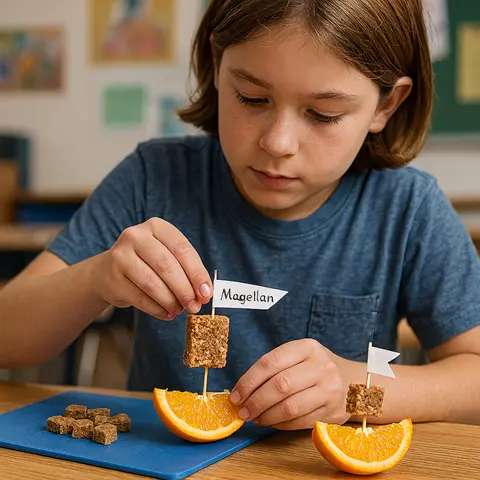
Students build a small edible ship to represent the vessels used by British explorers such as John Cabot, Sir Francis Drake, and Henry Hudson. This simple activity helps students visualize the ships that crossed the Atlantic during the Age of Exploration.
How to Do It: Students slice an orange into wedges to form the hull. They cut a snack bar into small rectangles and thread them onto toothpicks to create sails. Students stick the toothpicks into the orange wedge and decorate the “ship” with small paper flags or explorer names.
Materials:
- Orange slices
- Snack bar or granola bar
- Toothpicks
- Optional: small paper flags
Optional Extension: Students label their ship with the name of a British explorer and write one sentence about his voyage.
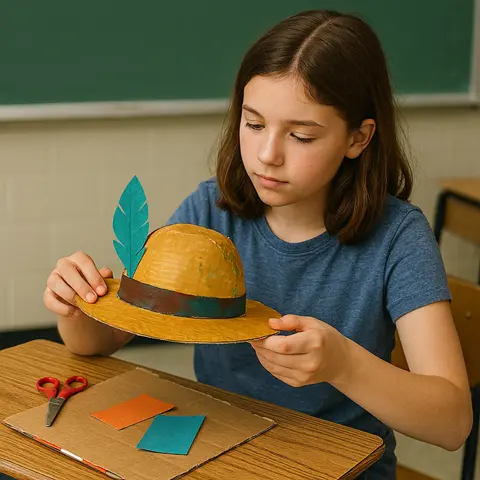
Students create a hat inspired by the wide-brimmed felt hats worn by sailors and explorers during the Age of Exploration. This craft connects students to the clothing and tools used by British explorers.
How to Do It: Students unfold a cereal box and lay it flat with the printed side down. They cut away one narrow side and both flaps. Students draw a wide-brimmed hat shape (oval brim with a rounded crown) on the cardboard and cut it out. They refold the cardboard with the plain side out and decorate it with paint, construction paper, or a paper feather.
Materials:
- Cereal box
- Scissors
- Paint or markers
- Construction paper
Optional Extension: Students add a small paper medallion showing the explorer they chose to represent.
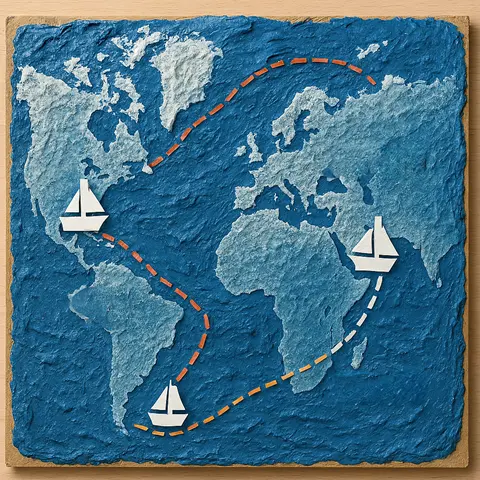
Students create a textured ocean model and add explorer routes to show where British explorers traveled. This activity reinforces geography and helps students visualize the challenges of ocean exploration.
How to Do It: Students pour plaster of Paris onto a thick piece of cardboard. Before it dries, they gently blow across the surface with a straw to form waves. After it dries, they paint the ocean blue and add whitecaps. Students draw or glue on small paper ships and label the routes of Cabot, Drake, and Hudson.
Materials:
- Plaster of Paris
- Thick cardboard
- Straw
- Paint
- Paper for ships
Optional Extension: Students add compass roses, latitude/longitude lines, or labels for the Atlantic Ocean, Newfoundland, and Hudson Bay.
Early European Explorers Navigation
Explore the Full Early European Explorers Unit
This complete history unit includes research passages, organizers, writing tasks, quizzes, activities, and website research — all in printable and digital formats. Everything you need to teach Early European Explorers with confidence.
View the Full Unit on TPT