Did Columbus Really Discover America?
Fast Facts: Did Columbus Really Discover America?
Did Columbus Really Discover America?
- Time Period: Before 1492–1500s
- Key Groups: Native peoples, Vikings, Europeans
- Main Question: Who reached the Americas first?
- Key Idea: Columbus began lasting contact between Europe and the Americas
- Result: Major changes for Native peoples

At a Glance
- Millions of Native peoples lived in the Americas long before Columbus.
- Vikings reached North America around A.D. 1000.
- Columbus did not know he had reached a new continent.
- Europeans believed he “discovered” America because his voyage led to lasting contact.
- His arrival brought major changes for Native peoples.
Did Columbus Really Discover America?
Many people say that Christopher Columbus “discovered” America, but this is not exactly true. Native peoples lived in the Americas for thousands of years before Columbus arrived. They built homes, traded, farmed, and created strong cultures long before Europeans knew the continents existed.
The Vikings Arrive First
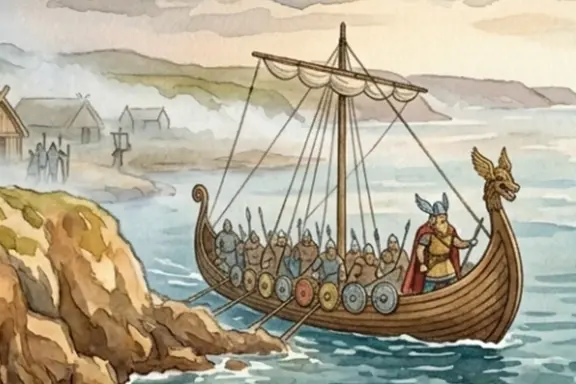
Around A.D. 1000, Vikings from Scandinavia reached North America. A Viking explorer named Leif Erikson landed in what is now Canada and built a small settlement. The Vikings did not stay long, but they arrived nearly 500 years before Columbus.
Columbus Reaches a New World
In 1492, Columbus sailed west across the Atlantic hoping to reach Asia. Instead, he landed in the Caribbean. Columbus believed he was near Asia, but he was actually in a New World. He made four voyages and explored several islands, but he never reached the mainland of North America.
Why Columbus Is Remembered
Columbus was not the first person to reach the Americas, but his voyage was important because it created lasting contact between Europe and the Americas. After his trips, more Europeans began exploring, trading, and settling in the New World.
A Lasting Impact
Columbus’s arrival brought major changes for Native peoples. European diseases killed millions. Conflicts increased, and many Native communities lost land and freedom. His voyages connected two parts of the world that had been separate for thousands of years, but they also began a period of great hardship for Native peoples.
Word Match
Drag the vocabulary words to their correct definitions!
Vocabulary Words
Definitions
Lesson 4 — Did Columbus Really Discover America? Quiz
Activities & Extensions

Students create a small Viking ship to explore the voyages of Leif Erikson and understand why many historians believe the Vikings reached North America long before Columbus.
How to Do It: Students shape a canoe-like boat from modeling clay and form a dragon head at the front. They cut small cardboard circles to represent shields and attach them along the sides. Ice-cream sticks become oars and a mast. Students cut a rectangular paper sail, punch two holes, and slide it onto the mast to complete the ship.
Materials:
- Modeling clay
- Cardboard scraps
- Scissors
- Ice-cream sticks
- Paper
- Hole punch
Optional Extension: Students compare Viking ship design to Columbus’s ships and explain how each was suited to its type of voyage.
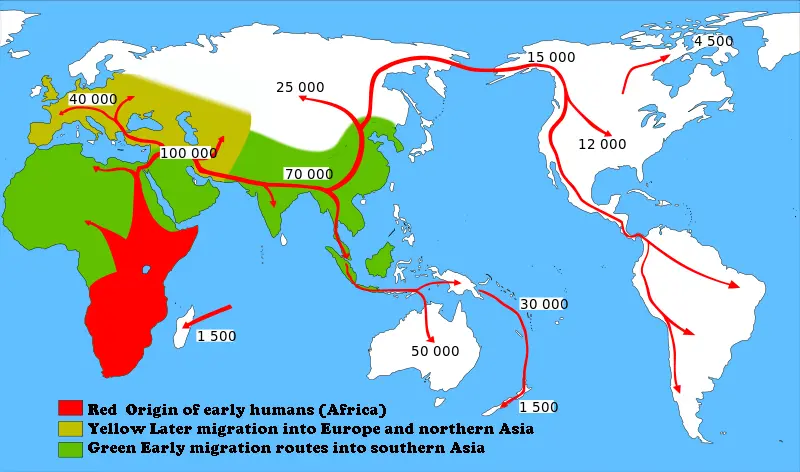
Students use a world map to trace the routes of early explorers and visually compare their journeys.
How to Do It: Students outline Leif Erikson’s route in blue, Columbus’s route in red, and Amerigo Vespucci’s route in green. They label key locations including Iceland, Greenland, Newfoundland, the Atlantic Ocean, Great Britain, South America, and the Great Lakes.
Materials:
- World map (printed or digital)
- Colored pencils or markers
Optional Extension: Students write a short explanation of which explorer they believe had the greatest impact and why.
Early European Explorers Navigation
Explore the Full Early European Explorers Unit
This complete history unit includes research passages, organizers, writing tasks, quizzes, activities, and website research — all in printable and digital formats. Everything you need to teach Early European Explorers with confidence.
View the Full Unit on TPT