Spanish Explorers
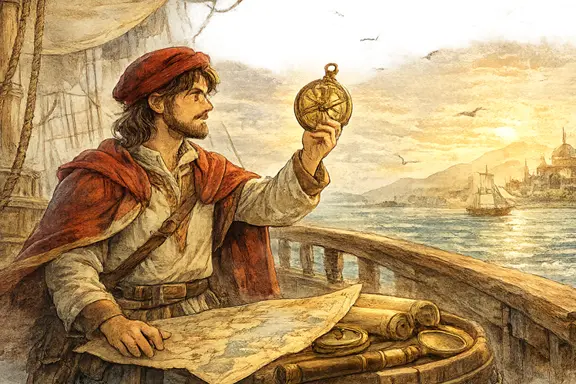
Fast Facts: Spanish Explorers
Spanish Explorers
- Time Period: 1500s
- Main Purpose: Search for wealth, claim land, spread Spanish power
- Key Figures: Ponce de León, Balboa, Cortés, Coronado, Pizarro, De Soto
- Regions Explored: Caribbean, Mexico, Central America, South America, U.S. Southeast & Southwest
- Result: Spain expanded its empire across the Americas
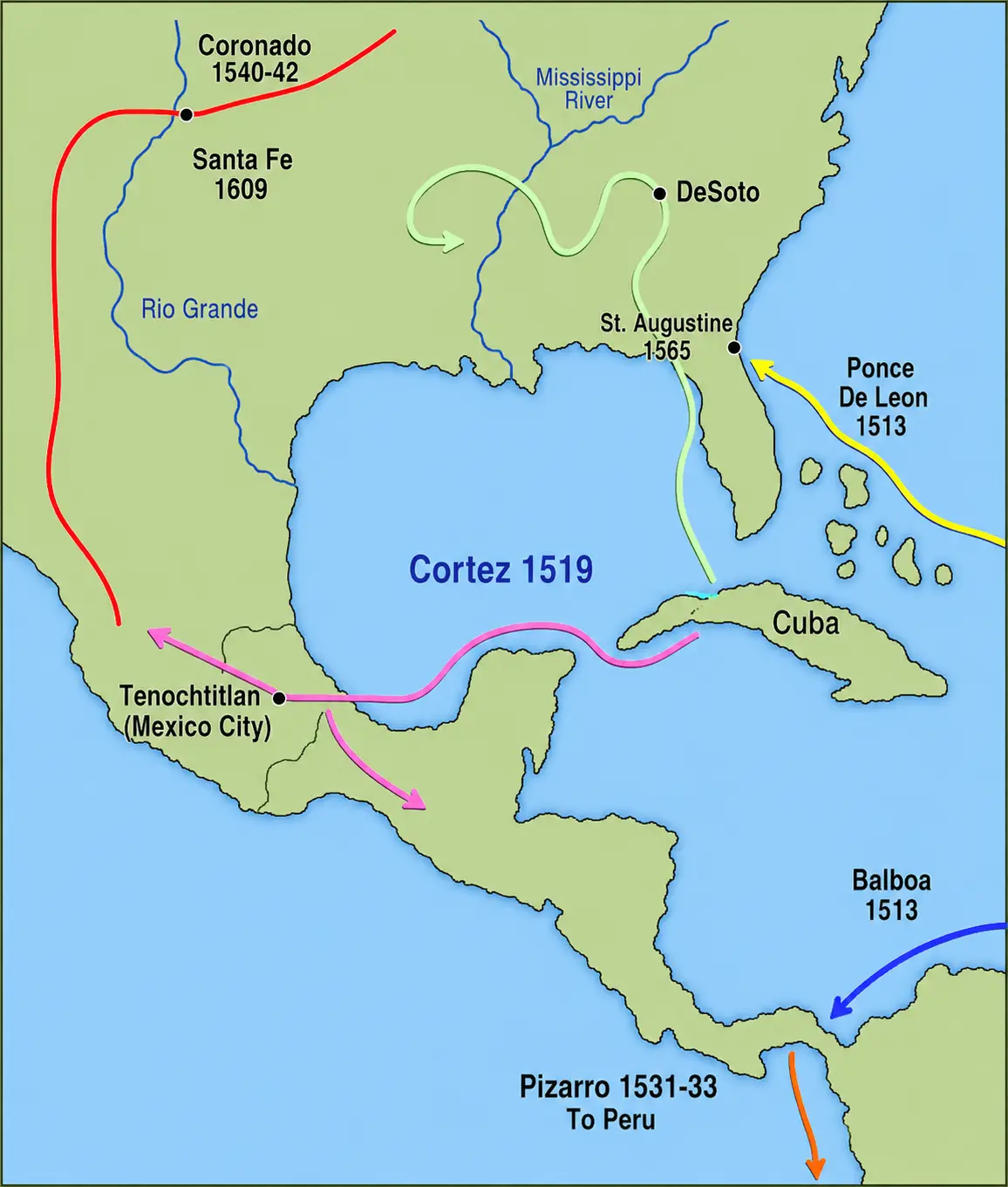
Spanish Explorers at a Glance
- Ponce de León explored Florida while searching for riches.
- Balboa crossed Panama and reached the Pacific Ocean.
- Cortés conquered the Aztec Empire in Mexico.
- Coronado explored the American Southwest searching for golden cities.
- Pizarro conquered the Inca Empire in Peru.
- De Soto explored the Southeast and discovered the Mississippi River.
Spanish Explorers
During the 1500s, Spain sent many explorers to the Americas. These men hoped to find gold and silver, claim land for Spain, and spread Spanish power. Their journeys changed the Americas and helped Spain build a large empire.

Ponce de León
Ponce de León was the first Spanish explorer to land on the mainland of North America. He explored Florida while searching for riches and the legendary Fountain of Youth. He also helped govern Puerto Rico.

Balboa
In 1513, Vasco Núñez de Balboa crossed the Isthmus of Panama. After a difficult journey through thick jungle, he became the first European to reach the Pacific Ocean from the New World. His discovery showed that another vast ocean lay between the Americas and Asia.

Cortés
Hernando Cortés traveled to Mexico in 1519. He conquered the Aztec Empire, one of the most powerful civilizations in the Americas. Cortés captured the Aztec emperor, took control of the capital city, and sent large amounts of gold and silver back to Spain.

Coronado
Francisco Coronado explored the American Southwest while searching for the Seven Cities of Gold. Although he never found the golden cities, he explored areas that are now Arizona, New Mexico, Texas, and Kansas. His men also saw the Grand Canyon.

Pizarro
Francisco Pizarro conquered the Inca Empire in Peru. He captured the Inca emperor and took control of the empire’s wealth. Gold and silver from the Inca lands made Spain one of the richest countries in Europe.

De Soto
Hernando de Soto explored the southeastern United States. He traveled through Florida, Georgia, Alabama, and Mississippi while searching for gold. De Soto became the first European to reach the Mississippi River.
A Lasting Impact
These explorers greatly expanded Spain’s power, but their arrival brought major changes for Native peoples, including disease, conflict, and loss of land.
Word Match
Drag the vocabulary words to their correct definitions!
Vocabulary Words
Definitions
Lesson 5 — Spanish Explorers Quiz
Activities & Extensions

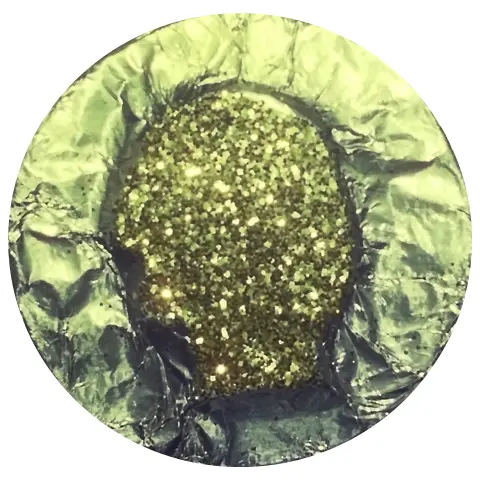
Students design a glitter medallion inspired by the gold and treasures sought by Spanish conquistadors. This hands-on craft helps students visualize why explorers like Cortés and Pizarro were motivated by wealth.
How to Do It: Students place waxed paper on a flat surface and draw a thick glue outline of a design related to explorers or Native peoples. They cover the glue with gold or silver glitter and let it dry completely. Once dry, they gently peel the medallion from the waxed paper.
Materials:
- Waxed paper
- White glue
- Gold or silver glitter
- Optional: ribbon or yarn
Optional Extension: Students write a short explanation of how the search for gold influenced Spanish exploration and conquest.
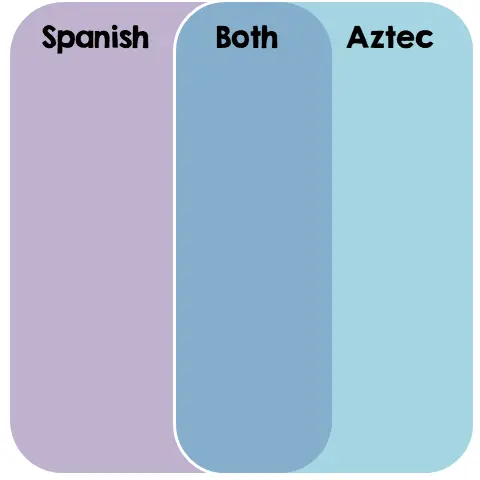
Students compare the armor, clothing, and weapons of Spanish conquistadors with those of the Aztec Empire. This activity helps students understand why the Spanish had such a military advantage.
How to Do It: Students examine images of Spanish armor and Aztec weapons, then complete a comparison chart showing differences in materials, protection, and effectiveness.
Materials:
- Printed or digital images
- Comparison chart (T-chart or Venn diagram)
- Colored pencils
Optional Extension: Students write a paragraph explaining how Spanish technology helped Cortés conquer the Aztec Empire.
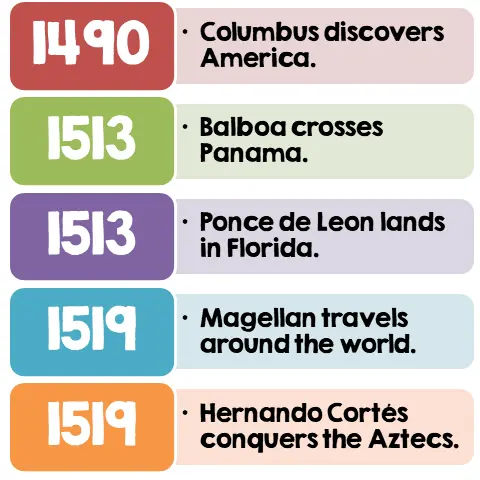
Students create a simple visual timeline showing the order of major Spanish explorers and their achievements.
How to Do It: Students draw a horizontal line and add labeled points for Ponce de León, Balboa, Cortés, Coronado, Pizarro, and De Soto. They add small drawings or symbols to represent each explorer’s accomplishment.
Materials:
- Paper or notebook
- Ruler
- Colored pencils
Optional Extension: Students add explorers from other countries to compare timelines.
Early European Explorers Navigation
Explore the Full Early European Explorers Unit
This complete history unit includes research passages, organizers, writing tasks, quizzes, activities, and website research — all in printable and digital formats. Everything you need to teach Early European Explorers with confidence.
View the Full Unit on TPT