The Treaty of Versailles
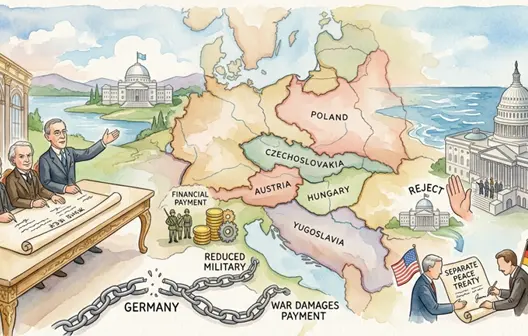
Fast Facts: The Treaty of Versailles
Peace After the War
- Peace Meeting: Leaders met in Versailles, France.
- Wilson’s Plan: The Fourteen Points
- New Nations: Poland and Yugoslavia were created.
- Germany’s Punishment: forced to pay war damages
- World Organization: The League of Nations was formed.
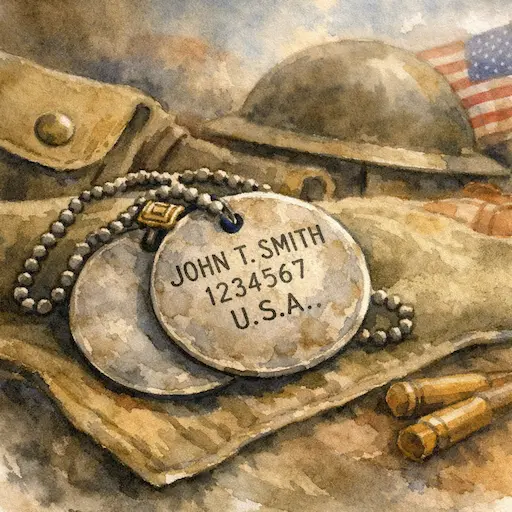
At a Glance
- More than 100,000 Americans died in the war.
- Allied leaders disagreed with Wilson’s ideas.
- Austria-Hungary was divided into several nations.
- Germany lost land, military strength, and money.
- The U.S. Congress refused to join the League of Nations.
Wilson’s Fourteen Points
When World War I ended, leaders from many nations met to create a peace agreement. President Woodrow Wilson traveled to Europe with a plan called the Fourteen Points. His ideas included ending secret alliances, allowing freedom of the seas, returning land taken by force, and forming a world group where countries could discuss problems peacefully.
Disagreements Among the Allies
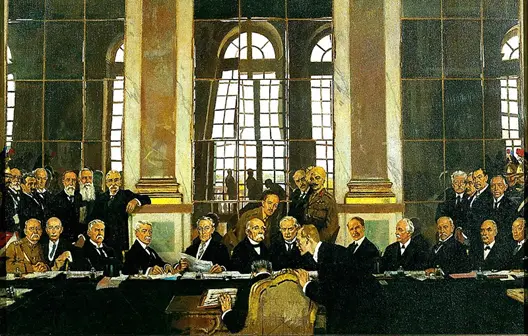
The other Allied leaders did not agree with Wilson’s ideas. France, England, and Italy wanted to punish Germany for the destruction caused during the war. They met for weeks in Versailles, France, to decide how to reshape Europe and deal with the defeated nations.
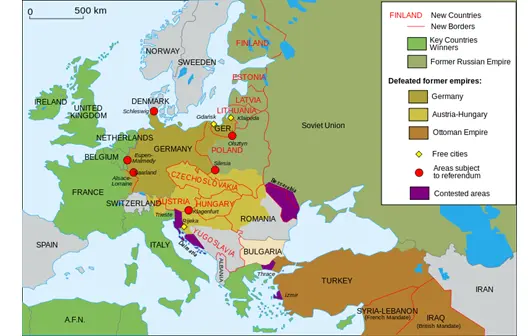
New Nations Are Formed
In the final treaty, several countries were changed or broken apart. Austria-Hungary was divided into Austria, Hungary, and Czechoslovakia. Poland was created from land taken from Germany, Austria-Hungary, and Russia. A new country called Yugoslavia was also formed.
Germany Faces Harsh Terms
Germany received the toughest punishments. It had to reduce its army and navy, break up parts of its industry, and pay large amounts of money for war damages. Even though Wilson disagreed with some of these decisions, one of his ideas was accepted—the creation of the League of Nations. This organization was meant to help countries settle arguments before they turned into war.
The United States Rejects the Treaty
When Wilson returned home, he faced a major problem. The United States Congress refused to approve the Treaty of Versailles. Many members believed the United States should stay out of foreign conflicts and did not want America to join the League of Nations. Because Congress rejected the treaty, the United States never joined the League and later signed a separate peace agreement with Germany.
Word Match
Drag the vocabulary words to their correct definitions!
Vocabulary Words
Definitions
Lesson 6: The Treaty of Versailles Quiz
Activities & Extensions
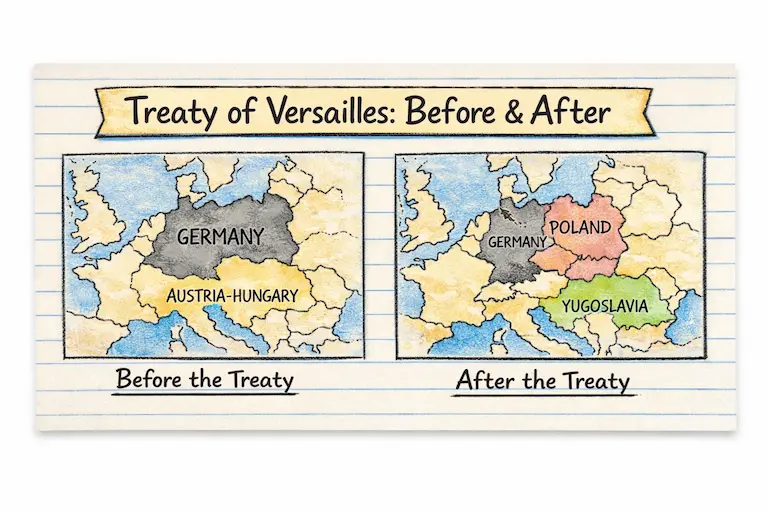
Students compare a simple “before and after” map of Europe to see how the Treaty of Versailles changed national borders and created new countries. This helps students visualize the impact of the treaty on Europe.
How to Do It: On the handout, include two small map outlines:
- Map 1: Europe before the Treaty of Versailles
- Map 2: Europe after the Treaty of Versailles
Students lightly color or label new nations such as Poland and Yugoslavia, and shade areas taken away from Germany.
Materials: handout, colored pencils, pencil
Optional Extension: Students write one sentence explaining why Germany was unhappy with the treaty.
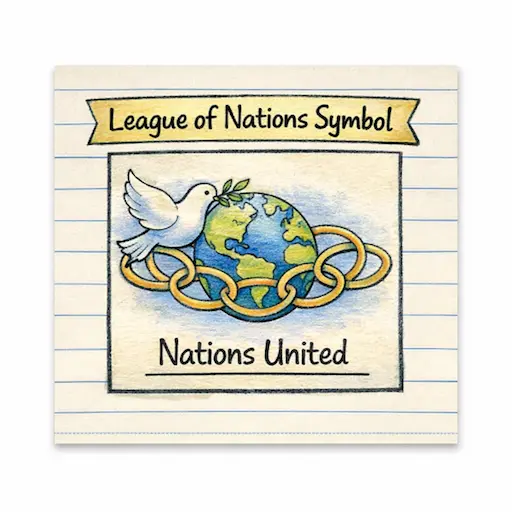
Students design a simple symbol or logo that represents the goals of the League of Nations. This helps them understand the League’s purpose and why some Americans opposed joining it.
How to Do It: On the handout, include a blank square labeled “League of Nations Symbol.” Students design a simple image such as:
- a globe
- a handshake
- a dove or olive branch
- linked circles representing cooperation
Students add a short motto such as “Working for Peace” or “Nations United.”
Materials: handout, pencil, colored pencils or markers
Optional Extension: Students write one sentence explaining why the U.S. Senate refused to join the League of Nations.
World War 1 Navigation
Explore the Full World War 1 and Roaring Twenties Unit
This complete history unit includes research passages, organizers, writing tasks, quizzes, activities, and website research — all in printable and digital formats. Everything you need to teach The Roaring Twenties with confidence.
View the Full Unit on TPT