Why the United States Entered World War I
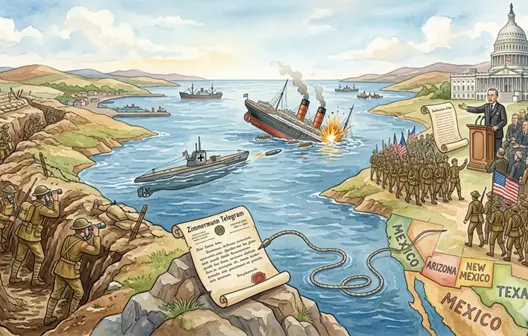
Fast Facts: Why the United States Entered World War I
Rising Threats at Sea
- Main Issue: Germany used U‑boats to attack ships.
- Key Event: The Lusitania was sunk in 1915.
- American Loss: 128 Americans died on the Lusitania.
- New Danger: Germany resumed unrestricted submarine warfare.
- Turning Point: The Zimmermann Telegram angered Americans.
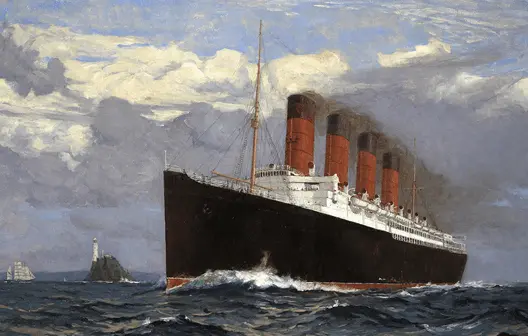
At a Glance
- England blockaded the Central Powers.
- Germany attacked merchant ships without warning.
- More than 250 Americans were killed at sea.
- The Zimmermann Telegram asked Mexico to join Germany.
- Wilson asked Congress to declare war in April 1917.
Life in the Trenches
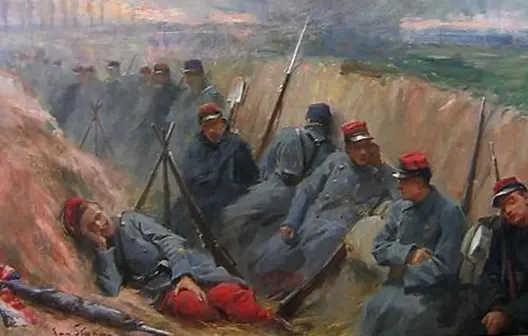
World War I introduced a new and difficult way of fighting called trench warfare. Soldiers lived in long ditches dug into the ground, facing mud, cold, and danger every day. While the fighting continued overseas, President Wilson hoped the United States could stay out of the conflict.
Germany’s U‑Boat Attacks
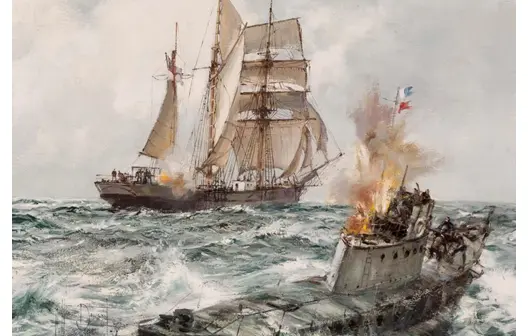
England set up a blockade to stop supplies from reaching the Central Powers. In response, Germany used powerful submarines called U‑boats to attack ships bringing goods to England. These submarines began sinking merchant ships without warning, killing more than 250 Americans between 1914 and 1917.
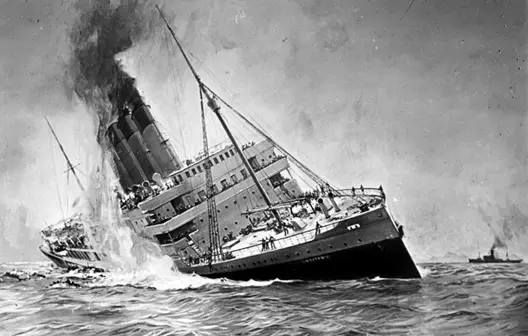
The Sinking of the Lusitania
One of the most shocking events occurred in 1915 when a German submarine fired a torpedo at the British passenger ship Lusitania. The ship sank quickly, killing 1,200 people, including 128 Americans. President Wilson warned Germany to stop attacking ships, and for a short time the attacks slowed.
The Zimmermann Telegram
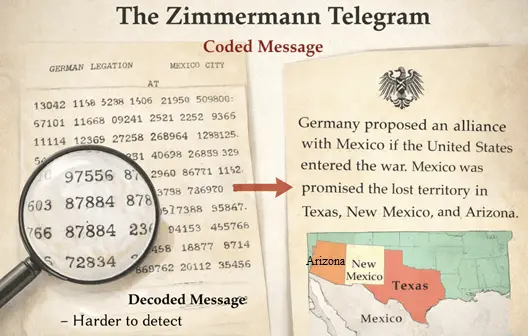
On January 31, 1917, Germany announced it would again sink any ship entering the war zone. Soon after, the British discovered a secret message called the Zimmermann Telegram. It was a telegram from Germany asking Mexico to join them if the United States entered the war. In return, Germany promised to help Mexico regain Texas, New Mexico, and Arizona.
America Declares War
These events convinced President Wilson that the United States could no longer remain neutral. On April 17, 1917, he asked Congress to declare war on Germany. The United States was now entering World War I to protect its people and defend its ships from further attacks.
World War I Photo Gallery
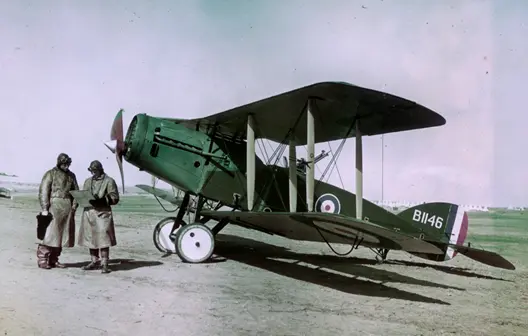
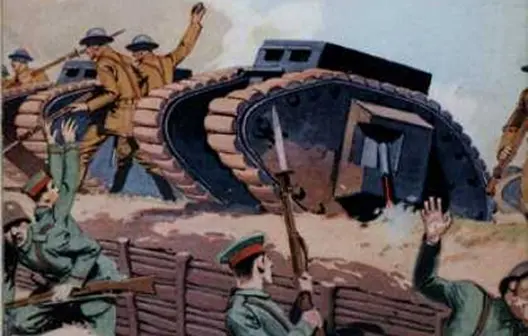
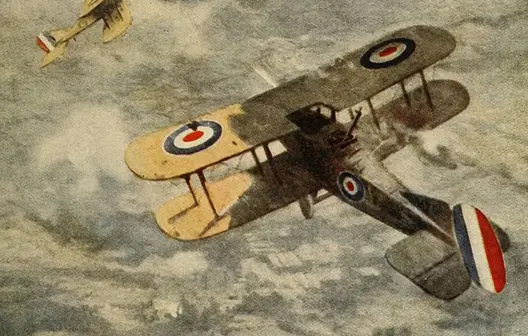
These images show the technology and conditions that shaped World War I as the United States entered the conflict.

Word Match
Drag the vocabulary words to their correct definitions!
Vocabulary Words
Definitions
Lesson 3: Why the United States Entered World War I Quiz
Activities & Extensions
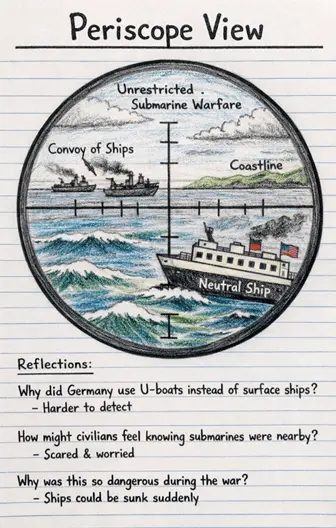
Students imagine they are looking through the periscope of a German U-boat in 1917. This activity helps them understand why submarine warfare was so dangerous and why it pushed the United States toward war.
How to Do It: On the handout, include a simple circle outline labeled “Periscope View.” Students draw what a U-boat captain might see, such as:
- a cargo ship or passenger liner
- rough waves or fog
- a distant coastline
- a convoy of ships
Under the drawing space, include 2–3 reflection questions, such as:
- Why did Germany use U-boats instead of surface ships?
- How might civilians feel knowing submarines were nearby?
Materials: handout, pencil, colored pencils (optional)
Optional Extension: Students label their sketch with terms like “unrestricted submarine warfare,” “convoy,” or “neutral ship.”
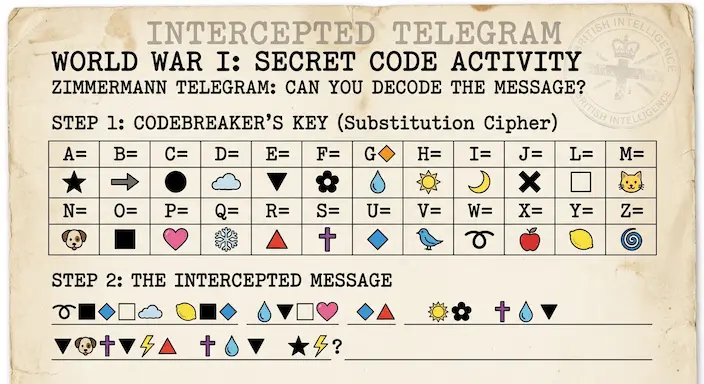
Students decode a short, kid-friendly message inspired by the Zimmermann Telegram. This activity reinforces why the telegram shocked Americans and pushed the U.S. toward war.
How to Do It: On the handout, create a simple substitution code such as:
- A = ★
- E = △
- I = ●
- O = □
- U = ♣
Then include a short coded message like:
“W□uld y□u help us if the U.S. enters the war?”
Students decode the message and answer a few questions about why the telegram angered Americans.
Materials: handout, pencil
Optional Extension: Students create their own short coded message for a partner to solve.
World War 1 Navigation
Explore the Full World War 1 and Roaring Twenties Unit
This complete history unit includes research passages, organizers, writing tasks, quizzes, activities, and website research — all in printable and digital formats. Everything you need to teach The Roaring Twenties with confidence.
View the Full Unit on TPT