The Assassination and the Start of World War I
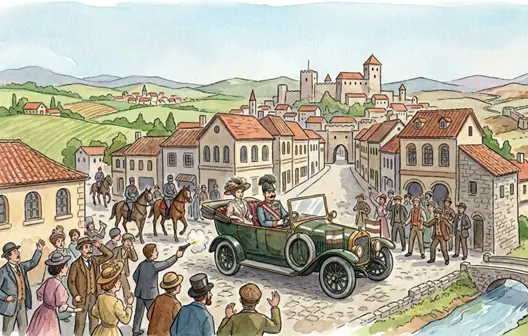
Fast Facts: The Assassination and the Start of World War I
A Spark in Sarajevo
- Key Event: Archduke Franz Ferdinand was assassinated.
- Location: Sarajevo, Bosnia
- Attacker: a Serb who opposed Austrian control
- Immediate Result: Austria-Hungary declared war on Serbia.
- Major Outcome: Alliances pulled many nations into war.
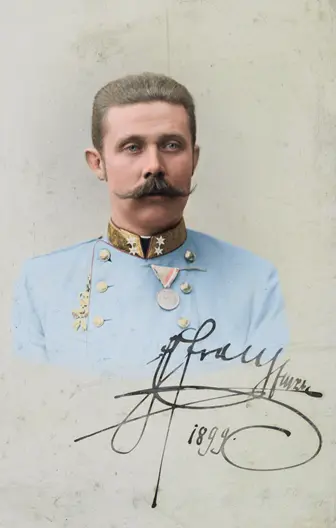
At a Glance
- Austria-Hungary blamed Serbia for the assassination.
- Russia supported Serbia; Germany supported Austria-Hungary.
- Germany declared war on Russia and France.
- Germany invaded neutral Belgium.
- England entered the war to defend Belgium.
The Assassination in Sarajevo
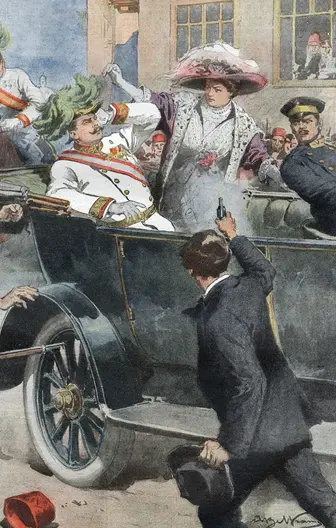
On June 28, 1914, Archduke Franz Ferdinand, the next ruler of Austria-Hungary, visited Sarajevo in Bosnia. While riding through the city with his wife, he was shot by a Serb who wanted Bosnia to break away from Austrian control. This single event set off a chain reaction across Europe.
War Begins
Austria-Hungary quickly declared war on Serbia. Because European nations had formed alliances, other countries were pulled into the conflict. Russia moved to help Serbia. Germany supported Austria-Hungary and declared war on Russia and France.
Germany Invades Belgium
To reach France quickly, German troops marched through Belgium, a country that had chosen to stay neutral. England entered the war because Germany attacked Belgium, violating its neutrality.
Two Sides Take Shape
Europe soon split into two major groups. The Allies included Belgium, England, Russia, France, Italy, and several smaller nations. The Central Powers included Germany, Austria-Hungary, Bulgaria, and Turkey. What began as a local conflict quickly grew into a world war.
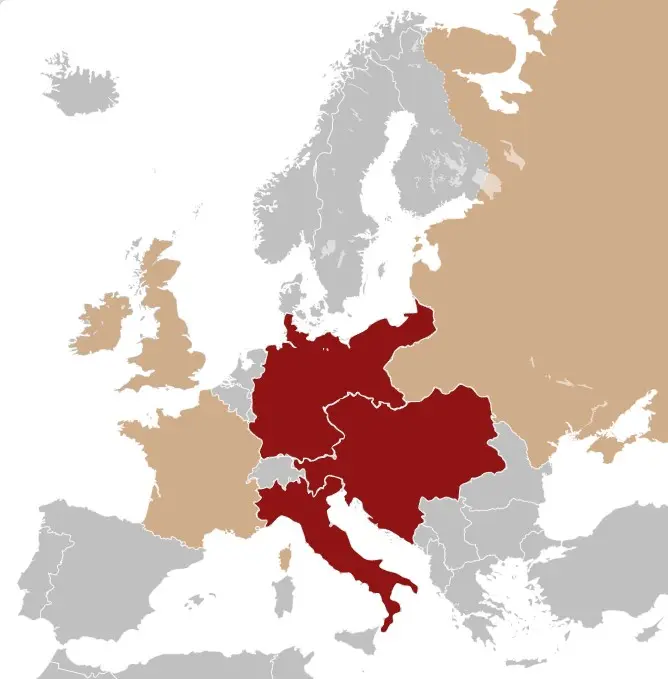
A World at War
The alliances that were meant to protect nations instead helped spread the conflict. Within weeks, much of Europe was at war, and the world was entering one of the most destructive conflicts in history.
Word Match
Drag the vocabulary words to their correct definitions!
Vocabulary Words
Definitions
Lesson 2: The Assassination and the Start of World War I Quiz
Activities & Extensions
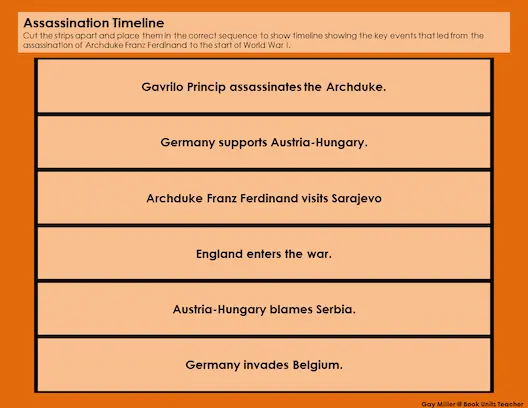
Students assemble a simple cut-apart timeline showing the key events that led from the assassination of Archduke Franz Ferdinand to the start of World War I. This helps students visualize how quickly alliances pulled nations into conflict.
How to Do It: On the handout, include 6–8 timeline strips such as:
- Archduke Franz Ferdinand visits Sarajevo.
- Gavrilo Princip assassinates the Archduke.
- Austria-Hungary blames Serbia.
- Russia supports Serbia.
- Germany supports Austria-Hungary.
- Germany invades Belgium.
- England enters the war.
Students cut out the strips and arrange them in the correct order. They can glue the finished timeline into their notebooks.
Materials: handout, scissors, glue (optional), pencil
Optional Extension: Students add a small symbol to each event (for example, a crown for royalty, a map pin for locations, or a handshake for alliances).
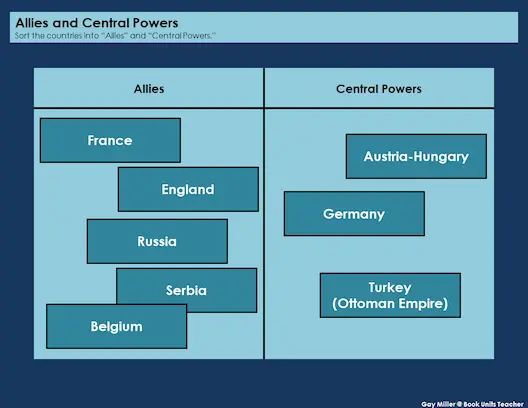
Students sort country cards into two groups—Allies and Central Powers—to reinforce which nations fought on each side at the start of World War I.
How to Do It: On the handout, include:
- A simple two-column sorting mat labeled “Allies” and “Central Powers”
- Country cards: Germany, Austria-Hungary, Turkey, Russia, France, England, Serbia, Belgium
Students cut out the cards and place them in the correct column. They may glue them down or reuse the cards for review games.
Materials: handout, scissors, glue (optional), pencil
Optional Extension: Students draw a tiny flag or symbol on each card to help remember the countries.
World War 1 Navigation
Explore the Full World War 1 and Roaring Twenties Unit
This complete history unit includes research passages, organizers, writing tasks, quizzes, activities, and website research — all in printable and digital formats. Everything you need to teach The Roaring Twenties with confidence.
View the Full Unit on TPT