American Heroes of World War I
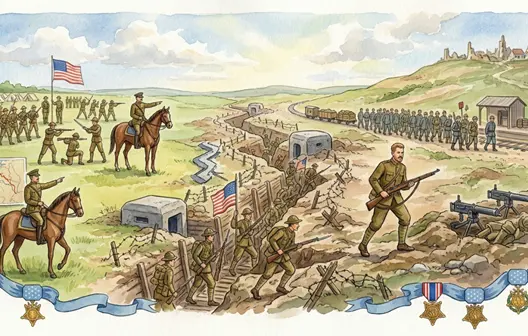
Fast Facts: American Heroes of World War I
Leaders and Legends
- Main Commander: General John J. Pershing led U.S. forces.
- Training Rule: Pershing insisted troops be fully trained.
- Brigade Leader: Lawrence Tyson commanded the 59th Brigade.
- Major Victory: The 59th Brigade broke the Hindenburg Line.
- Famous Soldier: Alvin C. York captured 132 German prisoners.
At a Glance
- Pershing kept American troops together under U.S. leadership.
- The 59th Brigade earned nine Medals of Honor.
- York overcame doubts about fighting due to his faith.
- York stopped machine guns and forced a German surrender.
- York received the Medal of Honor for his bravery.
General John J. Pershing
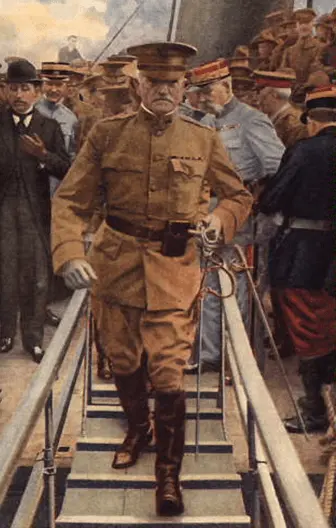
One of the most important American leaders during World War I was General John J. Pershing. He commanded nearly two million American soldiers in Europe. When other Allied leaders wanted to divide American troops among their own armies, Pershing refused. He believed American forces should fight together under American leadership. He also insisted that U.S. troops should not go into battle until they were fully trained, a decision that saved many lives.
Lawrence Tyson and the 59th Brigade
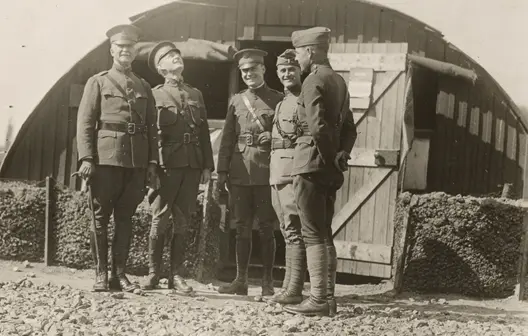
Another important figure was Lawrence Tyson, a brigadier general from Tennessee. He led the 59th Brigade, part of the 30th Infantry Division. His troops were among the first Americans to arrive in France and later among the first to enter Belgium. The 59th Brigade became famous for breaking through the Hindenburg Line, one of Germany’s strongest defenses. For their courage, the brigade earned nine Medals of Honor.
Alvin C. York’s Heroic Actions
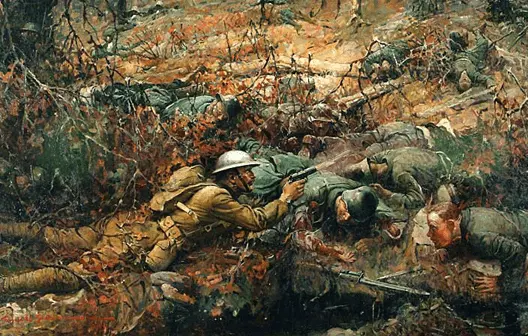
One of the most famous American heroes was Alvin C. York, also from Tennessee. York was drafted into the army, but at first he struggled with the idea of fighting because of his religious beliefs. After taking time to think, he decided he would serve and do his duty. During a mission behind German lines, York and his group came under heavy machine-gun fire. When several Americans were killed or wounded, York found himself in charge of the remaining soldiers.
York Captures 132 Prisoners
York ordered his men to guard the prisoners they had captured while he moved forward alone to stop the machine guns. Six German soldiers charged at him, but York fought them off and continued up the ridge. His bravery caused a German officer to surrender, and York ended up capturing 132 German prisoners. His actions helped the Americans take control of an important railroad and weakened the German position.
Honors and Recognition
For his heroism, York was promoted and awarded the Medal of Honor, the highest award a soldier can receive. He later earned many other decorations and often said that a higher power had guided and protected him during the battle.
Word Match
Drag the vocabulary words to their correct definitions!
Vocabulary Words
Definitions
Lesson 5: American Heroes of World War I Quiz
Activities & Extensions
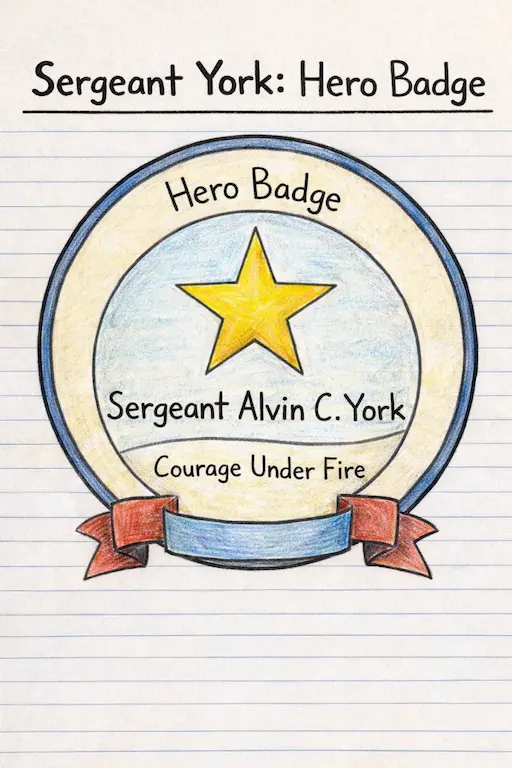
Students design a simple “hero badge” to honor Sergeant Alvin C. York. This activity helps students summarize York’s bravery in a visual, kid-friendly way.
How to Do It: On the handout, include a blank circle labeled “Hero Badge.” Students add:
- York’s name
- a symbol of bravery (star, shield, eagle, etc.)
- a short phrase such as “Courage Under Fire” or “132 Prisoners Captured”
Students lightly color the badge and may add a ribbon or border.
Materials: handout, pencil, colored pencils
Optional Extension: Students write one sentence explaining why York is remembered as an American hero.
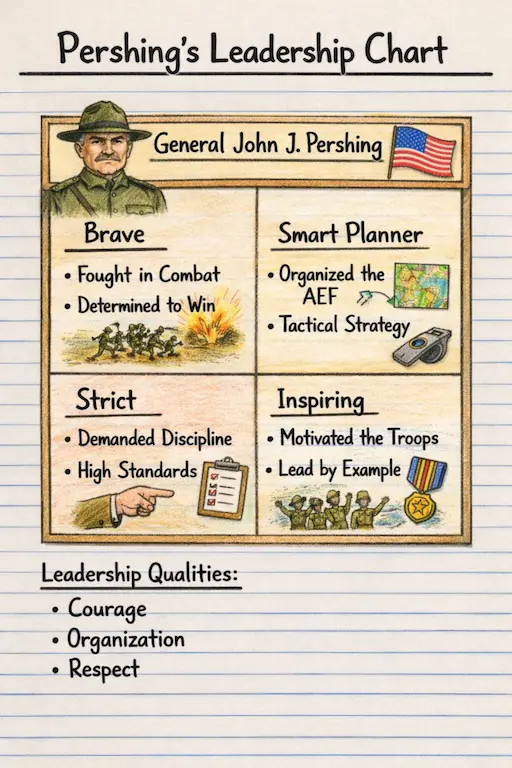
Students create a small three-box chart highlighting General John J. Pershing’s leadership qualities. This reinforces why Pershing was chosen to command the American Expeditionary Forces.
How to Do It: On the handout, include a simple chart with three labeled boxes:
- Training: What Pershing required before soldiers entered battle
- Strategy: How he organized American forces
- Impact: How his leadership helped win the war
Students fill in each box with a short phrase or drawing.
Materials: handout, pencil
Optional Extension: Students add a small sketch of Pershing or a symbol such as a helmet or flag.
World War 1 Navigation
Explore the Full World War 1 and Roaring Twenties Unit
This complete history unit includes research passages, organizers, writing tasks, quizzes, activities, and website research — all in printable and digital formats. Everything you need to teach The Roaring Twenties with confidence.
View the Full Unit on TPT