How the United States Prepared for World War I
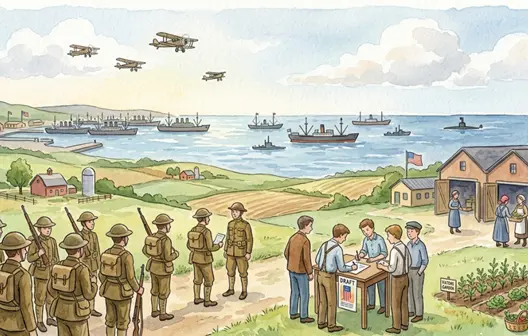
Fast Facts: How the United States Prepared for World War I
Building an Army and Navy
- Army Size: fewer than 200,000 soldiers in 1917
- Air Power: only 55 airplanes and about 100 pilots
- Draft: Men ages 18–30 were required to register.
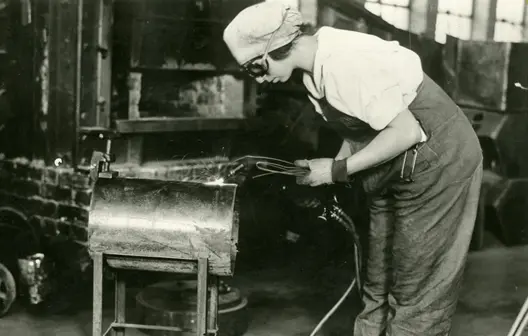
- Home Front: Women worked in factories to support the war.
- Food Effort: Herbert Hoover encouraged Americans to conserve food.
At a Glance
- The U.S. military was small and lacked supplies.
- Factories began producing rifles and equipment.
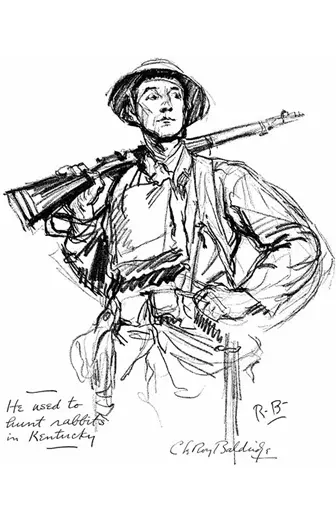
- American soldiers were nicknamed “Doughboys.”
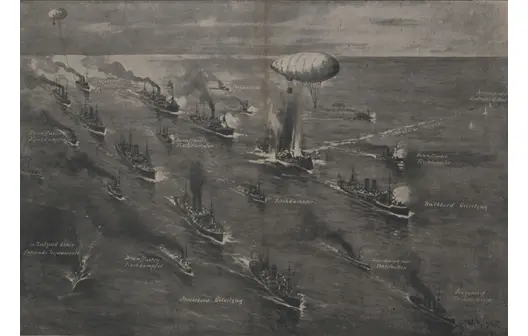
- The Navy used the convoy system to protect ships.
- Russia left the war in 1917; Germany fought alone.
A Small Army and Limited Supplies
When the United States entered World War I in 1917, the country was not fully prepared for a major conflict. The army had fewer than 200,000 soldiers and lacked many of the supplies needed for modern fighting. The nation had only 55 airplanes and about 100 trained pilots because the airplane was still a new invention.
The Draft and New Soldiers
To quickly build a stronger military, President Wilson created a draft for men ages 18 to 30. Millions of men registered, and American factories began producing rifles and other equipment. When American soldiers arrived in Europe, they became known as “Doughboys,” a nickname inspired by their round steel helmets.
Supporting the War at Home
Back home, women stepped into new roles by working in factories and helping produce war supplies. President Wilson asked Herbert Hoover to lead the Food Administration. Hoover encouraged Americans to conserve food so more could be sent to soldiers. People followed slogans like “Wheatless Wednesdays” and “Meatless Mondays.”
The Convoy System
The U.S. Navy was better prepared than the army. An American admiral created the convoy system, where groups of transport ships traveled together while being protected by fast warships. This made it safer to send American troops across the Atlantic Ocean.
The War Nears Its End
By 1918, the United States had helped strengthen the Allied forces. Germany’s partners had already quit the war, leaving Germany to fight alone. Russia left the war in 1917 because of the Russian Revolution. Finally, on November 11, 1918, an armistice was signed, bringing the fighting to an end.
Word Match
Drag the vocabulary words to their correct definitions!
Vocabulary Words
Definitions
Lesson 4: How the United States Prepared for World War I Quiz
Activities & Extensions
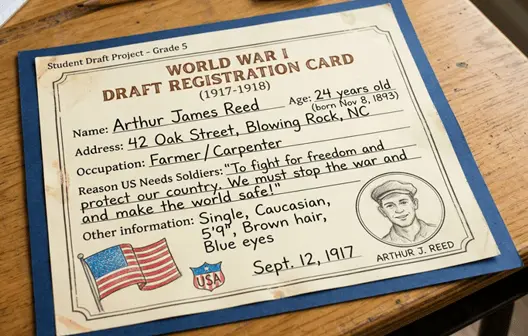
Students learn how the United States built a larger army by completing a simple, kid-friendly version of a World War I draft registration card. This helps them understand how ordinary Americans were called into service.
How to Do It: On the handout, include a simplified registration card with fields such as:
- Name
- Age
- Town / State
- Occupation
- Reason you think the U.S. needs soldiers
Students fill out the card as if they were living in 1917. They may add a small sketch of themselves or a patriotic symbol in the corner.
Materials: handout, pencil, colored pencils (optional)
Optional Extension: Students compare their card to a real WWI draft card and note similarities.
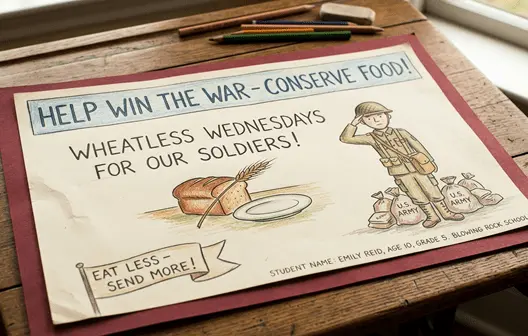
Students create a small poster encouraging Americans to conserve food during World War I. This reinforces Herbert Hoover’s message and the idea that everyone contributed to the war effort.
How to Do It: On the handout, provide a blank mini‑poster box with a title line. Students design a simple conservation message such as:
- “Save Wheat for the Soldiers!”
- “Wheatless Wednesdays Help Win the War!”
- “Eat Less Sugar — Send More to the Troops!”
Students add a small drawing (bread loaf, wheat stalk, dinner plate, etc.) and color it lightly.
Materials: handout, pencil, colored pencils or markers
Optional Extension: Students write one sentence explaining how conserving food helped the war effort.
World War 1 Navigation
Explore the Full World War 1 and Roaring Twenties Unit
This complete history unit includes research passages, organizers, writing tasks, quizzes, activities, and website research — all in printable and digital formats. Everything you need to teach The Roaring Twenties with confidence.
View the Full Unit on TPT