The Southern Colonies

Focus Colonies: The Southern Settlements
Students can copy this information into their Colonial America organizer before beginning the lesson.
Maryland Colony
- Colony: Maryland
- Founder: Lord Baltimore
- Date: 1634
- Reason: Religious freedom for Catholics
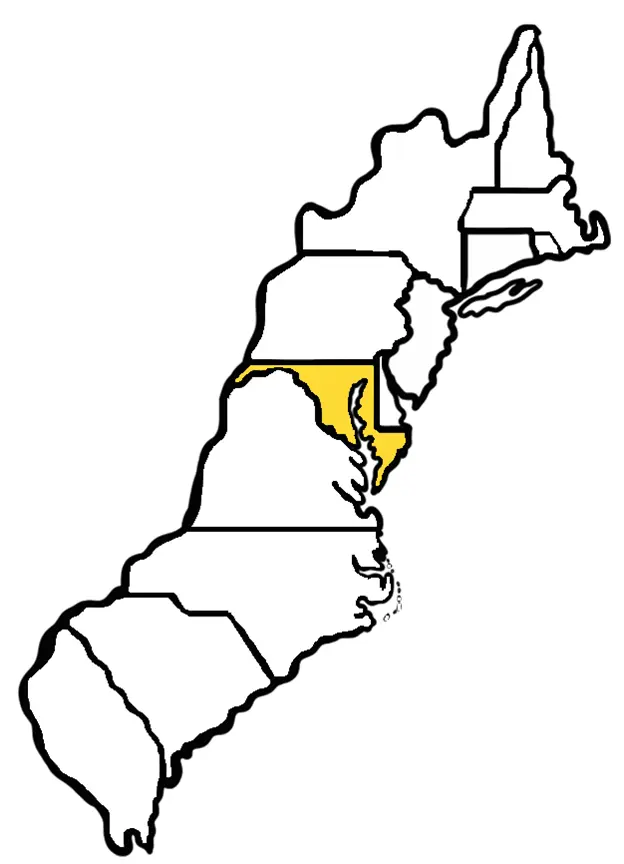
Maryland at a Glance
- Founded as a safe place for English Catholics.
- Led by Lord Baltimore.
- First settlement was St. Mary’s.
- The port city of Baltimore was later named for him.
North Carolina Colony
- Colony: North Carolina
- Founder: Eight Lords Proprietors
- Date: 1663 (separate colony in 1712)
- Reason: Farming & trade
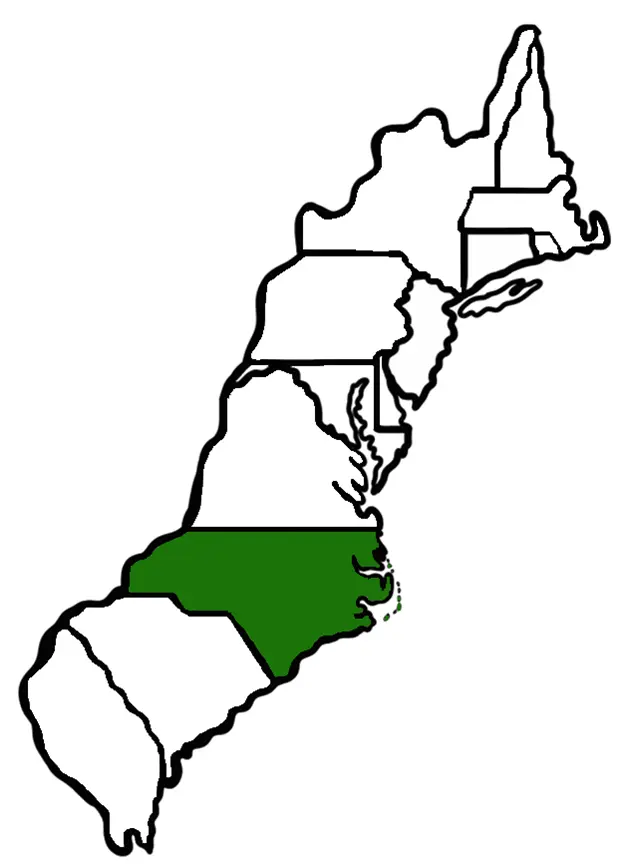
North Carolina at a Glance
- Originally part of the Carolina colony.
- Split from South Carolina due to disagreements.
- Settlers farmed tobacco and traded goods.
South Carolina Colony
- Colony: South Carolina
- Founder: Eight Lords Proprietors
- Date: 1663 (separate colony in 1712)
- Reason: Plantations & trade
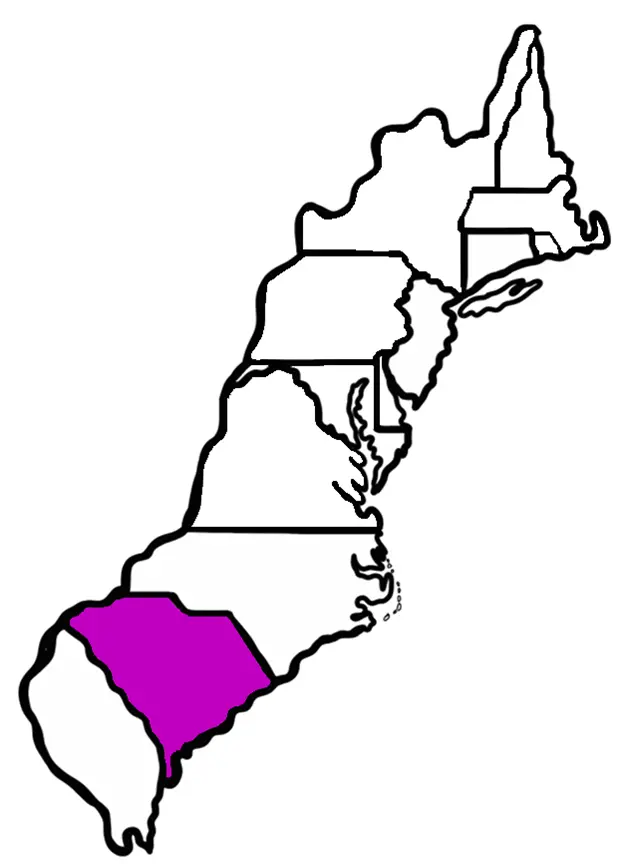
South Carolina at a Glance
- Charleston became a major port city.
- Plantations grew rice and indigo.
- Split from North Carolina due to leadership conflicts.
Georgia Colony
- Colony: Georgia
- Founder: James Oglethorpe
- Date: 1732 (charter); 1733 (Savannah)
- Reason: Fresh start for debtors & defense buffer
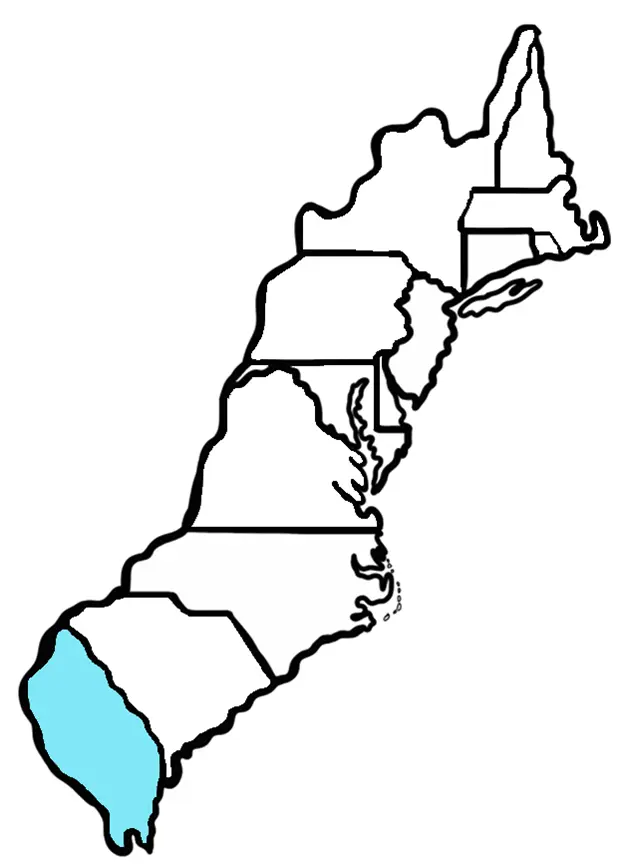
Georgia at a Glance
- Planned as a fresh start for debtors and the poor.
- Protected other colonies from Spanish and French threats.
- First settlement was Savannah.
Georgia: The Last Colony
The final colony to be founded was Georgia. In 1732, King George II granted a charter for Georgia to James Oglethorpe and others. By then, England was part of Great Britain. Oglethorpe hoped Georgia would give poor people and debtors in England a fresh start. Georgia also acted as a protective barrier, helping shield the British colonies from the French and Spanish to the south and west. In 1733, Oglethorpe and the first settlers founded Savannah, and the colony was named in honor of the king.
The Carolinas
Several decades earlier, in 1663, King Charles II granted a large area of land south of Virginia to a group of his friends. They named the colony Carolina in his honor. The first major settlement was Charleston. When the new leaders arrived, they discovered that many settlers from Virginia were already living there. Arguments soon broke out between the groups. The colony was large and hard to govern, and in 1712 it was divided into North Carolina and South Carolina.
Maryland: A Place for Catholics
The colony of Maryland was founded even earlier, in 1634. A group of English Catholics, led by Lord Baltimore, wanted a place where they could practice their religion freely. Their first settlement was called St. Mary’s. Years later, the port city of Baltimore was named in his honor.
Geography, Crops, and Work
Life in the Southern Colonies was shaped by a warm, humid climate, fertile soil, and a long growing season. Low, wet land near the coast, called the tidewater, was good for growing rice, and wide, slow rivers let planters ship crops straight to England. Tobacco was the main cash crop in Maryland, Virginia, and North Carolina and brought large profits. Indigo was used to make blue dye. North Carolina’s pine forests also produced tar and turpentine. Life could be hard: heat, mosquitoes, and disease made many settlers sick, and farms were spread far apart, with few large towns.
Most plantation work was done by enslaved Africans, who were forced to work without pay and had no freedom. Some indentured servants also worked for several years to pay for their trip to America.
Word Match
Drag each word to its definition, or tap a word and then tap its definition.
Vocabulary Words
Definitions
The Southern Colonies Quiz
Activities & Extensions
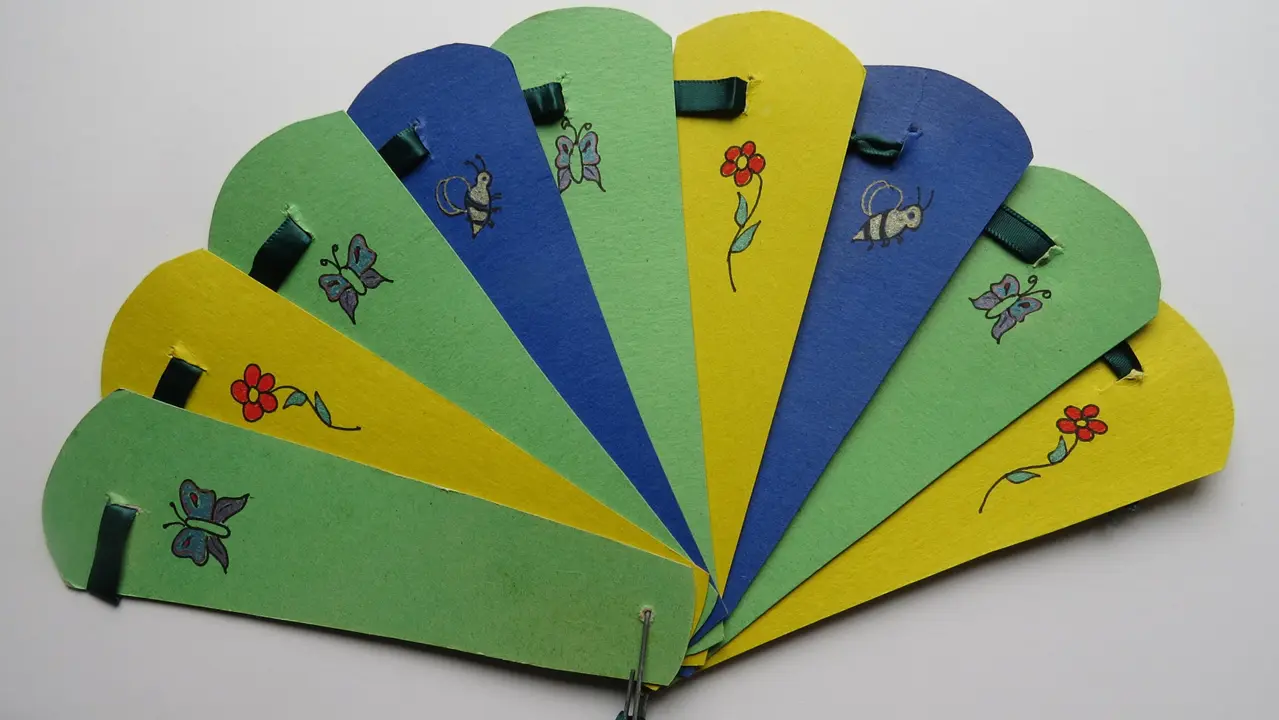
Southern girls often carried decorative fans that matched their dresses. Students can create their own fan inspired by colonial designs.
Directions:
- Cut nine strips of poster board to form the fan blades.
- Weave a ribbon through the tops of the blades to connect them.
- Fasten the bottoms together with a brad or paper clip.
- Decorate the blades with painted flowers, butterflies, or bees.
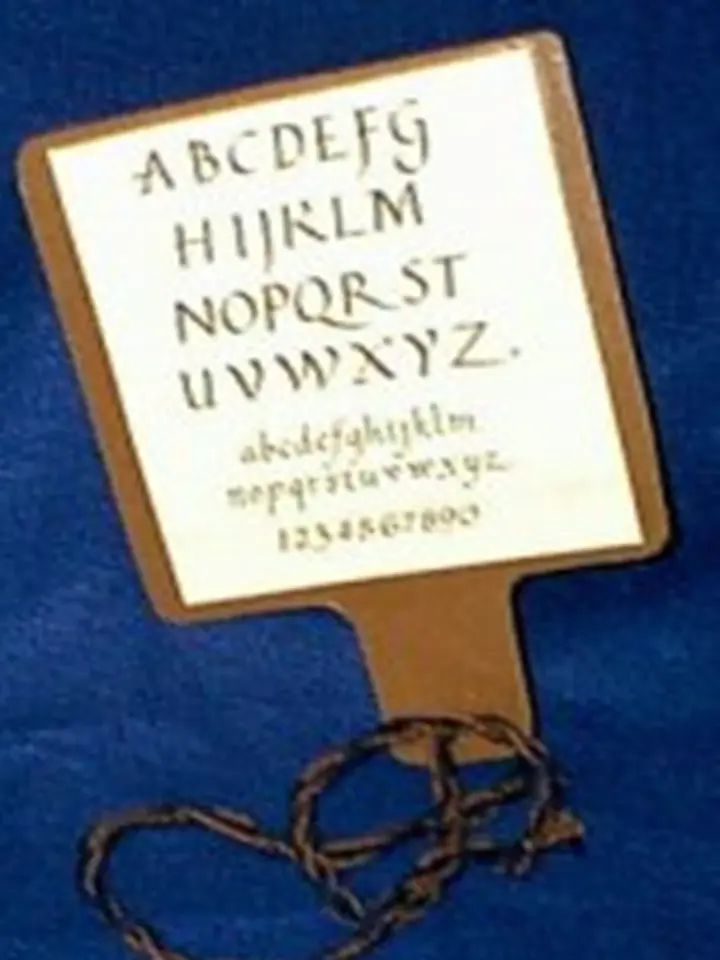
A hornbook was one of the earliest tools used to teach children to read. It consisted of a wooden paddle with a sheet of writing covered by a thin, transparent layer of animal horn. Students can create a modern version using simple classroom materials.
Directions:
- Cut a hornbook shape from brown poster board, including a handle.
- Punch a hole in the handle and thread yarn through it to make a loop.
- Write the alphabet or a short lesson using berry ink on paper.
- Glue the paper to the hornbook.
- Cover the writing with a clear piece of plastic to mimic the horn layer.
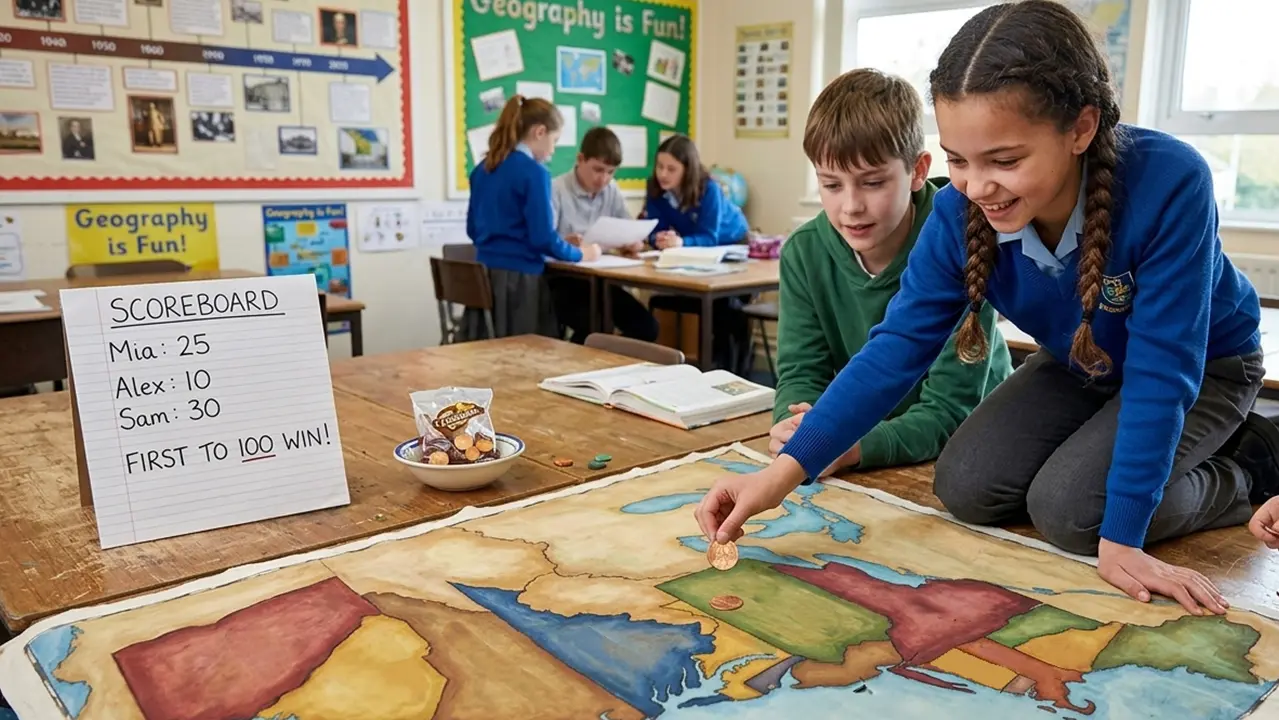
Students practice identifying the thirteen colonies with a fun, active game. This activity reinforces geography skills and helps students remember the location of each colony.
Directions:
- Place a large map of the thirteen colonies on the floor. Make sure the colony names are not labeled.
- Students take turns dropping a penny onto the map.
- The student must name the colony where the penny lands.
- Large colonies are worth 10 points; small colonies are worth 5 points.
- The first player to reach 100 points wins.
Colonial America Navigation
Explore the Full 13 Colonies Unit

This complete history unit includes research passages, organizers, writing tasks, quizzes, activities, and website research — all in printable and digital formats. Everything you need to teach the 13 Colonies with confidence.
View the Full Unit on TPT