Jamestown: A New Beginning in the New World
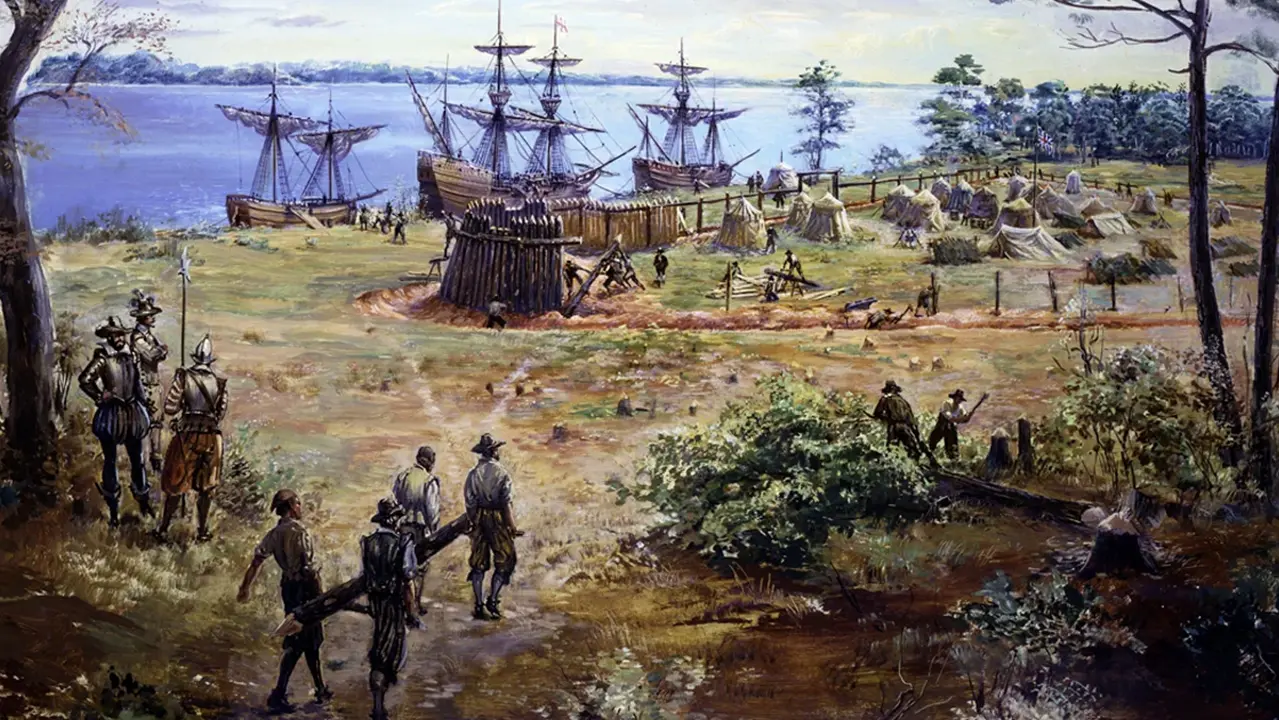
Focus Colony: Jamestown, Virginia
Jamestown Colony
- Colony: Virginia
- Settlement: Jamestown
- Leader: Captain John Smith
- Date: 1607
- Reason: Trade & profit
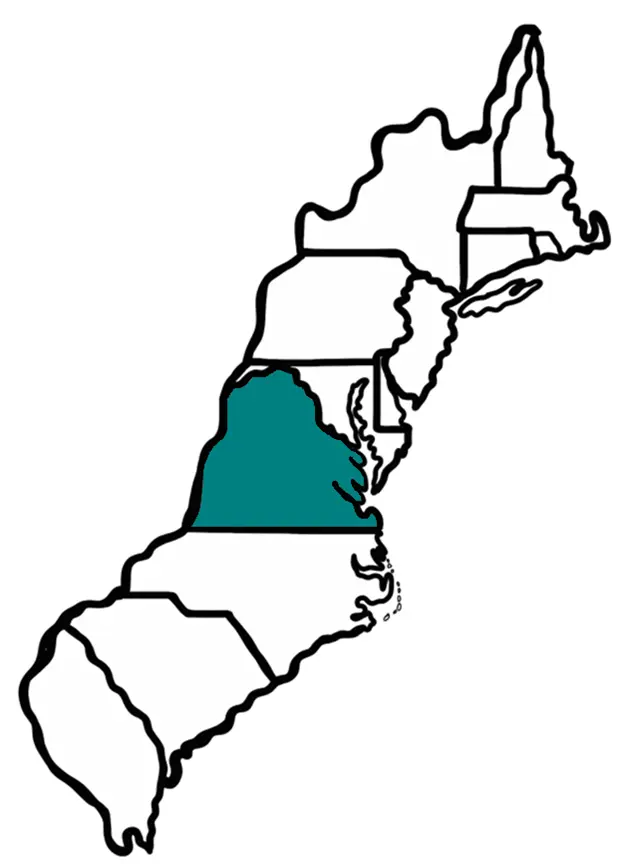
Jamestown at a Glance
- The Virginia Company sent settlers to build a profitable colony.
- Jamestown was built on a swamp, causing disease and hardship.
- John Smith’s leadership helped the colony survive.
- The Powhatan people played a major role in early survival.
- Tobacco farming later made Virginia successful.
Students can copy this information into their Colonial America organizer before beginning the lesson.
The Voyage and the Virginia Company
In December 1606, the Virginia Company sent three ships — the Susan Constant, Godspeed, and Discovery — across the Atlantic Ocean. Their goal was to create a profitable colony and establish trade between England and the New World. After months at sea, the settlers arrived in April 1607 and chose a site along a river they named the James River, in honor of King James I. Their new settlement became Jamestown, the first permanent English colony in America.
A Difficult Beginning
The settlers built their fort on a swampy peninsula. The land was wet, and mosquitoes carried malaria, a deadly disease. At high tide the river water turned salty, and drinking it caused salt poisoning and dysentery. Many of the men were gentlemen, not hunters or farmers, and they spent more time searching for gold than building houses or planting crops. By the end of the first year, 67 of the original 105 settlers had died. Only 38 were still alive.

The Powhatan People
The Jamestown settlers were not alone. More than 14,000 Algonquian-speaking people lived in the Chesapeake Bay region. About 30 tribes, including the Pamunkey, belonged to the Powhatan Confederacy, led by Chief Powhatan. At first, Powhatan worried that the English might be dangerous because they carried “fire-sticks” (guns).
In December 1607, while exploring, John Smith was taken prisoner by Pamunkey warriors and brought to Powhatan’s village, where a great feast was held. According to Smith’s later writings, warriors then prepared to kill him with stone clubs, but Pocahontas, the chief’s daughter, asked for Smith’s life to be spared. Whether this was a true rescue or a cultural ceremony, the event helped create a period of peace. Afterward, Powhatan’s people brought food to the starving colonists — help that likely saved the colony.
John Smith’s Leadership
By 1608, the colony was struggling. The settlers were weak, hungry, and unprepared for life in the New World. John Smith was elected president of the colony’s council and created a new rule:
“He that will not work, shall not eat.”
Smith ordered the men to build houses, plant crops, and prepare for winter. He also explored the Chesapeake Bay and drew a detailed map of the region. His leadership helped stabilize the colony.
The Starving Time
In 1609, Smith was badly burned in a gunpowder accident and returned to England. Without his leadership, Jamestown fell into chaos. The winter of 1609–1610 became known as the Starving Time. Disease, cold, attacks, and lack of food killed most of the settlers. Out of 500–600 colonists, only 60 survived.
A New Beginning
In May 1610, two small ships arrived at Jamestown. The colony was in such bad shape that everyone decided to abandon it. As they sailed away in June, they met ships carrying the new governor, Lord De La Warr, with food, supplies, and new settlers. Everyone turned back, and De La Warr gave strict orders to rebuild the colony.
Starting in 1618, the Virginia Company offered 50 acres of free land to anyone willing to come to Virginia. This brought new hope — and new conflict with the Powhatan people.
Pocahontas and Peace
In 1613, Pocahontas was captured by the English and held at Henricus, a newer English settlement up the river. While in captivity, she converted to Christianity and later married John Rolfe, a tobacco farmer. Their marriage brought eight years of peace between the English and the Powhatan.
Pocahontas traveled to London with Rolfe, where she was treated like royalty. She died in England in 1617 before she could return home.
Word Match
Drag each word to its definition, or tap a word and then tap its definition.
Vocabulary Words
Definitions
Jamestown Quiz
Activities & Extensions
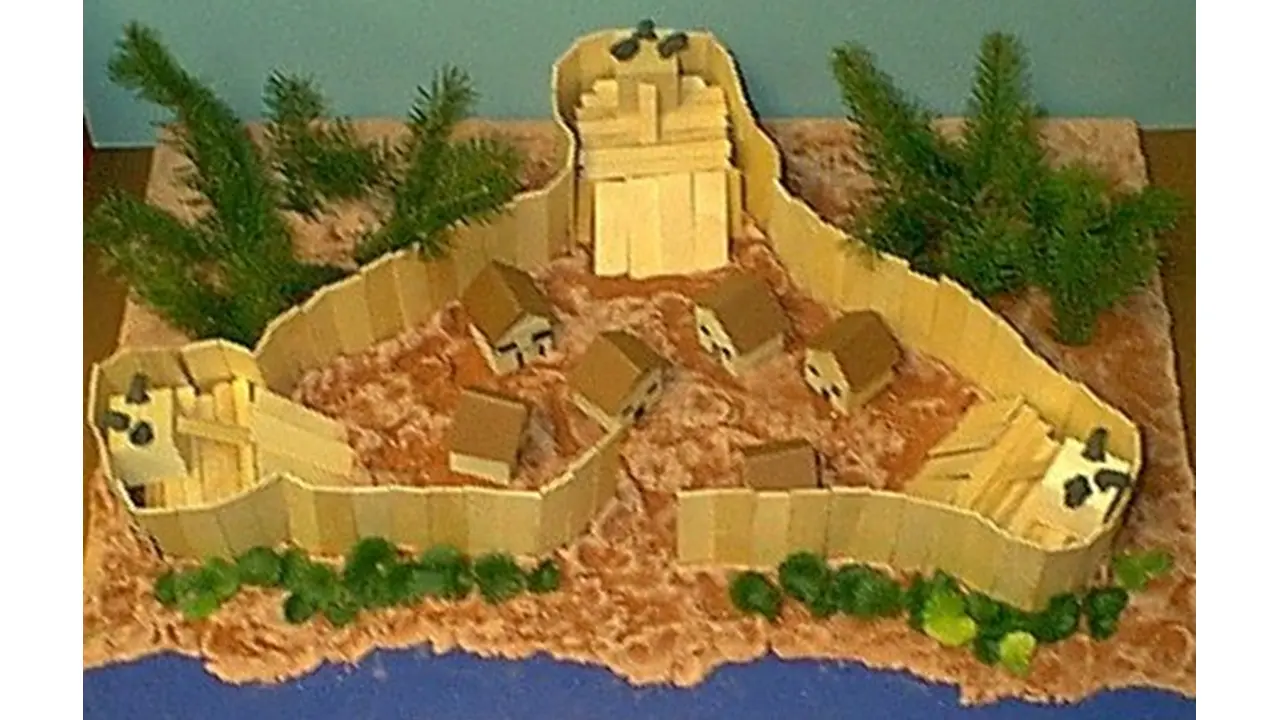
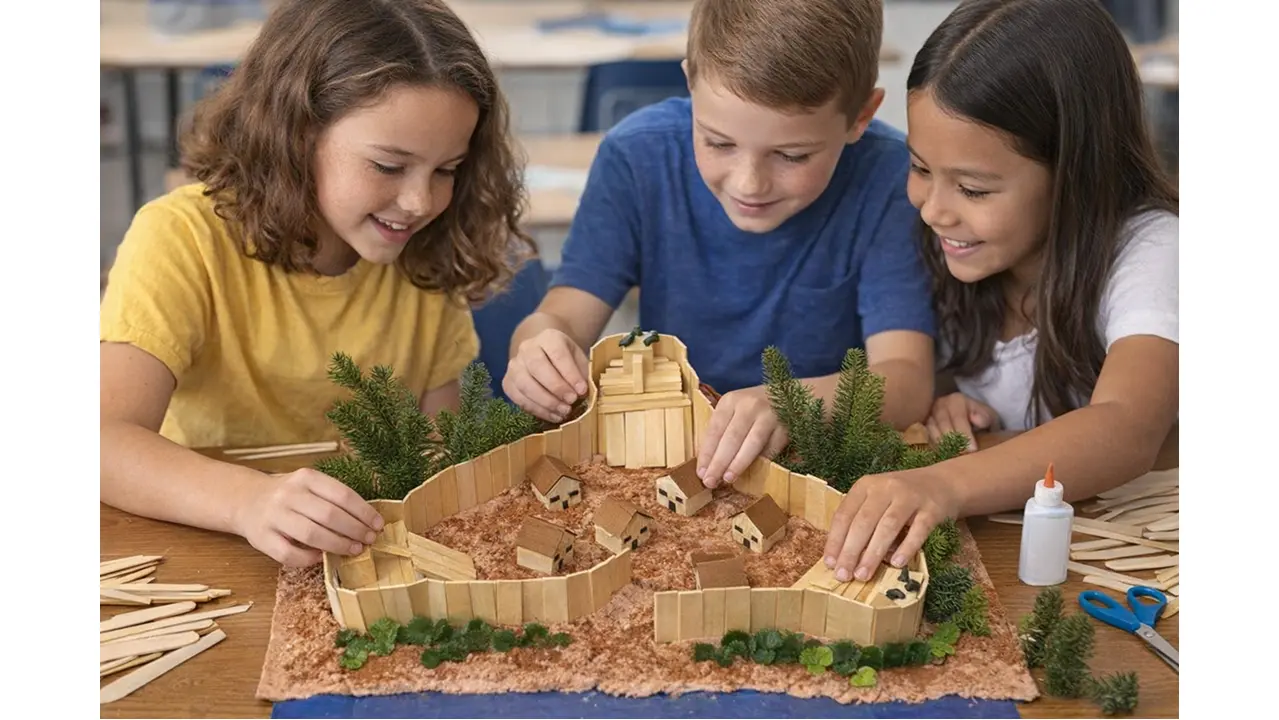
Students create a model of the Jamestown fort using simple craft materials. The walls can be made from tongue depressors with the rounded ends trimmed. Houses may be built from wooden blocks with construction paper roofs. Cannons can be shaped from wood and salt dough. Greenery can be added using real plant cuttings.
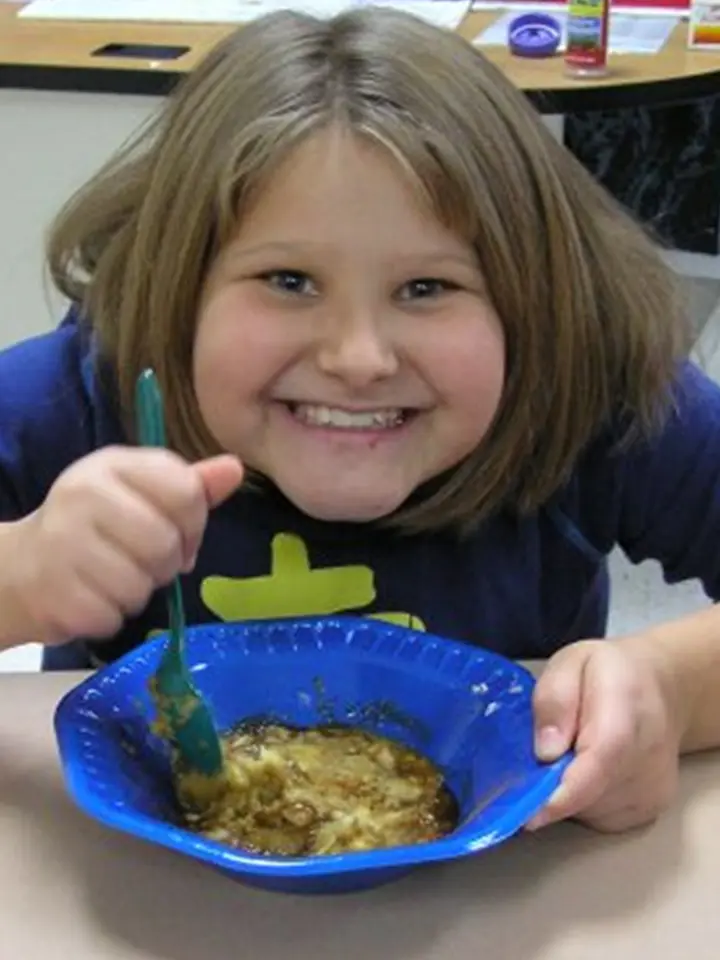
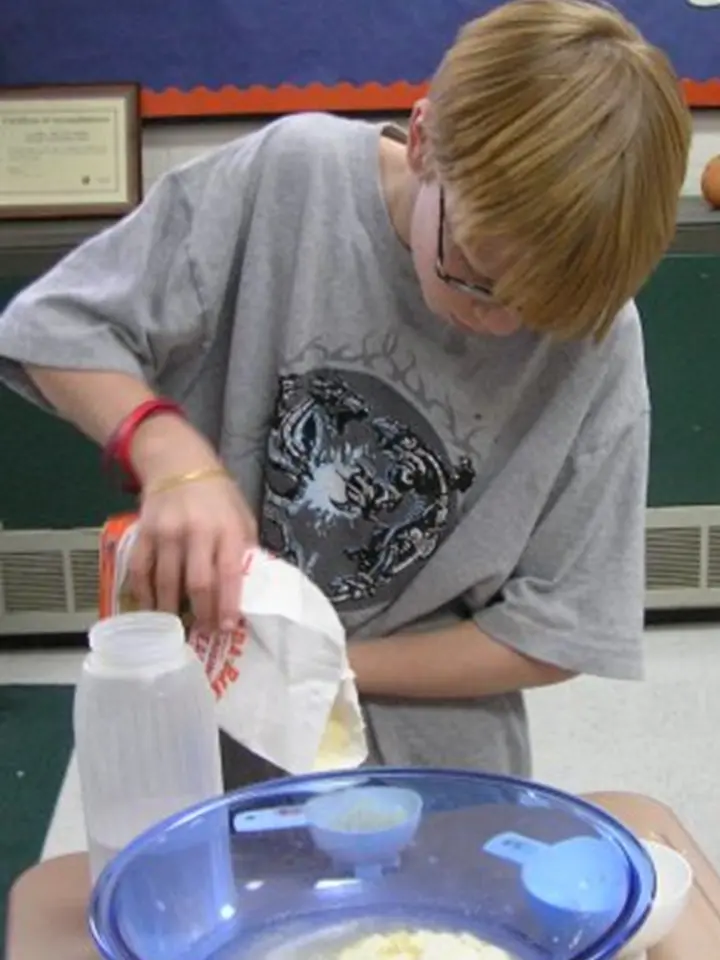
Indian Corn Pudding
Ingredients:
- 3 cups milk
- ½ cup molasses
- 1 cup yellow cornmeal
- ½ teaspoon ground ginger
- ½ teaspoon ground cinnamon
- ¼ teaspoon salt
- 1 tablespoon butter
- Optional: nutmeg, extra molasses
Instructions:
- Heat milk and molasses in a saucepan.
- Slowly stir in cornmeal, ginger, cinnamon, and salt.
- Cook 10 minutes, stirring often, until thickened.
- Stir in butter.
- Pour into an ungreased baking dish.
- Bake at 300° for about 1 hour.
- Serve warm with butter, nutmeg, and molasses.
Colonial America Navigation
Explore the Full 13 Colonies Unit

This complete history unit includes research passages, organizers, writing tasks, quizzes, activities, and website research — all in printable and digital formats. Everything you need to teach the 13 Colonies with confidence.
View the Full Unit on TPT