Writing Descriptive Settings Lessons

Writing Descriptive Settings with a Winter Theme

Most students will be able to say that the setting of a story is where and when the story takes place; however, writing a setting is a whole new story (pun intended). This lesson includes five activities that help students write descriptive settings for their narratives.

The handout for this blog post is now available in the Winter Vault. It  includes links to three story videos. Printable handouts, answer keys, and links to the Google Slides versions are included. 

To access this handout and other winter-themed resources, click the button below. Sign up using your email, and we’ll send you the username and password immediately.
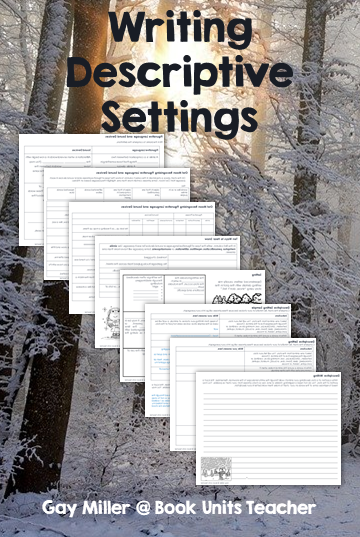
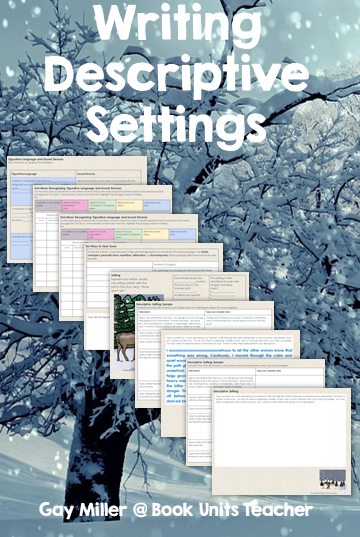
 

Activity #1 – Figurative Phrases and Sound Devices Definitions

Writing Descriptive Setting including Figurative Language

Students begin with a quick review activity where they fill in missing words from definitions for three types of figurative language and three types of sound devices. This warm-up prepares students for deeper analysis in the next task.

Activity #2 – Identifying Figurative Language in Owl Moon

Google Slides for Writing Descriptive Settings

Using an excerpt from Owl Moon, students identify and color-code figurative language and sound devices. For example:

“...a train whistle blew, long and low, like a sad, sad song.”

  • long and low = alliteration (yellow)
  • like = simile (purple)
  • sad, sad = repetition (blue)

This visual approach reinforces understanding and encourages close reading.

Activity #3: Exploring Language in Ten Ways to Hear Snow

Writing Descriptive Settings - Learning Figurative Language with Owl Moon and Ten Ways to Hear Snow

Students read Ten Ways to Hear Snow and continue identifying literary devices, but this time they also reflect on how figurative language enhances the mood and tone of the story.

Activity #4: What Makes a Vivid Setting?

Writing Descriptive Settings

In this cloze activity, students review what makes a setting come alive. Then, they write their own descriptive paragraph, focusing on blending setting details into the story using the “show, don’t tell” technique.
“Experienced writers usually mix setting details with the plot.”

Activity #5: Setting Through an Animal’s Eyes

Inspired by Stranger in the Woods, students choose an animal and describe a winter setting through that animal’s perspective. They complete a sensory chart including sounds, sights, smells, and feelings—then use this data to write a vivid, figurative paragraph.

Writing Descriptive Settings Sample

Select one animal from the story. You will tell your story through the perspective of this animal. Choose between…bird [blue jay, owl, morning dove, cardinal, or chickadee], deer [fawn, doe, or buck], muskrat, squirrel, porcupine, rabbit, or mouse.

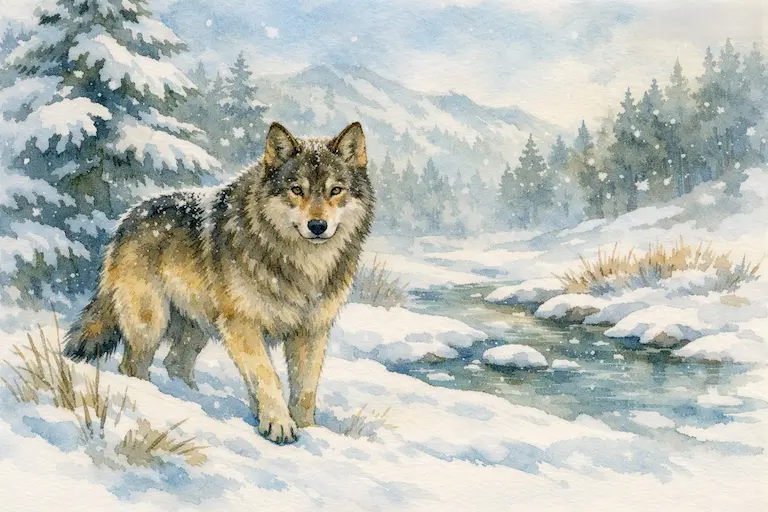
To keep from limiting your choices of animals, a wolf will be used as the sample since wolves where not part of the story.

wolf

Write in words a sound this animal makes when it communicates with the other animals.

howl – Oooooooooooooooooooooowhooo!

Write a sound this animal makes as it moves through the forest.

tail swishing

crunch of snow under foot

Write two phrases each that describe what the animal sees, hears, smells, and feels as it goes through the woods. Include a few figurative phrases or sound devices.

see – glistening sparkle of light on the snow – sagging branches leaden with snow

hear – snapping of limbs – whistling wind – calm and quiet as if nature has gone to sleep

smell – sharp, sweet smell of the spruce tree – clean, fresh air

feel – bitter wind, scratching and scrapping twigs against my side

Write a simile that describes how this animal feels when it sees the snowman.

stopped in my tracks as if a switch had been turned off

Write a personification describing eating the part of the snowman your animal would eat.

Acorns and berries danced before my eyes.

Writing Descriptive Settings

The Sample Paragraph Written from the Chart Information

I ooooooooooooooooooooowhooo to let the other wolves know that something was wrong. Cautiously, I moved through the calm and quiet woods that seemed as if it had gone to sleep. Treading lightly on the path glistening with snow so not to snap any limbs or crunch snow underfoot, I traveled toward the enemy. Scratching and scrapping twigs grazed by sides as I walked by branches sagging under the heavy weight of snow. The smell of the sharp, sweet spruce trees on the bitter wind tickled my nose. Slowly, slowly I crept toward the danger. Then, I stopped in my tracks as if a switch had been turned off. Before me stood a man made out of food. Acorns and berries danced before my eyes. 


A Little More About Writing Descriptive Settings

To build on this unit, have students write settings based on real-life experiences or local geography. For example, in the North Carolina mountains, students can describe how winter storms transform the landscape.
“Here in the mountains, winter arrived with a vengeance. A foot of snow covered the ground, and deer ventured out to forage as the ice began to melt.”
Use these personal connections to make writing even more meaningful.


Writing Descriptive Settings

Didn’t catch the link for the handouts earlier? No worries! Click the button below to access the handout and other winter-themed resources. By signing up for our newsletter, you’ll get instant access to these materials and stay updated with our latest educational content.

Gay Miller

Permanent link to this article: https://bookunitsteacher.com/wp/?p=7491