Who said teaching vocabulary had to be boring? Not me! If your students groan every time they see a vocab list, it’s time to pull out a strategy that feels more like a puzzle than a worksheet: word wheels.
Word wheels are versatile little gems that get students looking at words from different angles, literally. They’re part puzzle, part brainteaser, part vocabulary workout. Best of all, they keep visual learners, puzzle fans, and even your “reluctant readers” engaged.
Think of them as fidget spinners with an educational twist, except no one will try to sneak them into math class.
In this post, you’ll find a bunch of fun ways to use word wheels (and yes, there’s a free handout so you can try them right away). Let’s roll!
Word Wheel Activity #1 – Classic Word Wheel Puzzle
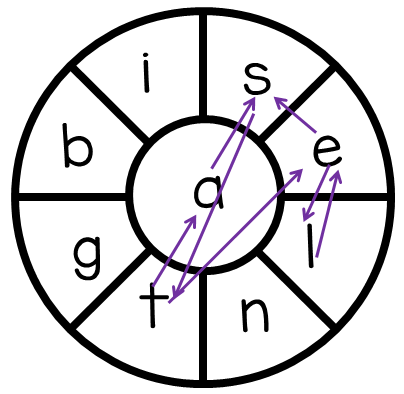
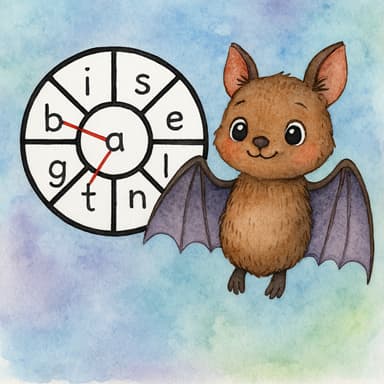
This is the most common type of word wheel puzzle. You’ve probably seen it in puzzle books or online.
bat
tasteless
How to Solve a Word Wheel Puzzle
Look at the center letter. Every word you make must include this letter.
Start small. Make as many 3- or 4-letter words as you can.
Build up. Try to find longer words by adding more letters.
Find the big one. Letters may be repeated or doubled.
Check your spelling. Only real words count!
👉 Make it fun:
- Set a two-minute timer and see who can rack up the most words.
- Award bonus points for words over six letters.
- Work in pairs for some friendly teamwork (and a little bit of healthy arguing).
Your free handout includes two ready-to-play wheels to get you started.
Would you like to try the JavaScript self-checking version of this fun activity right here on Book Units Teacher website? This link will take you there.
Word Wheel Activity #2 – Missing Letter Puzzle
The wheel contains an eight-letter word. Students must fill in the missing letter to complete it. The catch? The word could go clockwise or counterclockwise.
These puzzles are quick wins—perfect for a warm-up or bell-ringer activity. Ten examples are included in the free printable.
Word Wheel Activity #3 – Five-Letter Builder
In this puzzle, students start with the center letter. All the words must begin with it. But there’s a twist; every word must also be exactly five letters long, and the outside letters of the spokes provide the other starting/ending letters.
Think of it as Scrabble meets geometry. Your high-flyers will love the challenge, and your puzzlers will beg for “just one more round.”
Word Wheel Activity #4 – Spinning Vocabulary Wheel
Now we’re adding a hands-on, 3D twist!
Print the five circles provided in the handout. Line them up using the center dots, fasten with a brad, and let students spin the circles to create five-letter words.
👉 Classroom tip:
- Use a timer and turn it into a competition—who can build the most real words in two minutes?
- Or, have pairs of students spin and then use their new words in sentences. (Watch the creativity unfold!)
Word Wheel Activity #5 – Vocabulary Deep Dive Wheel
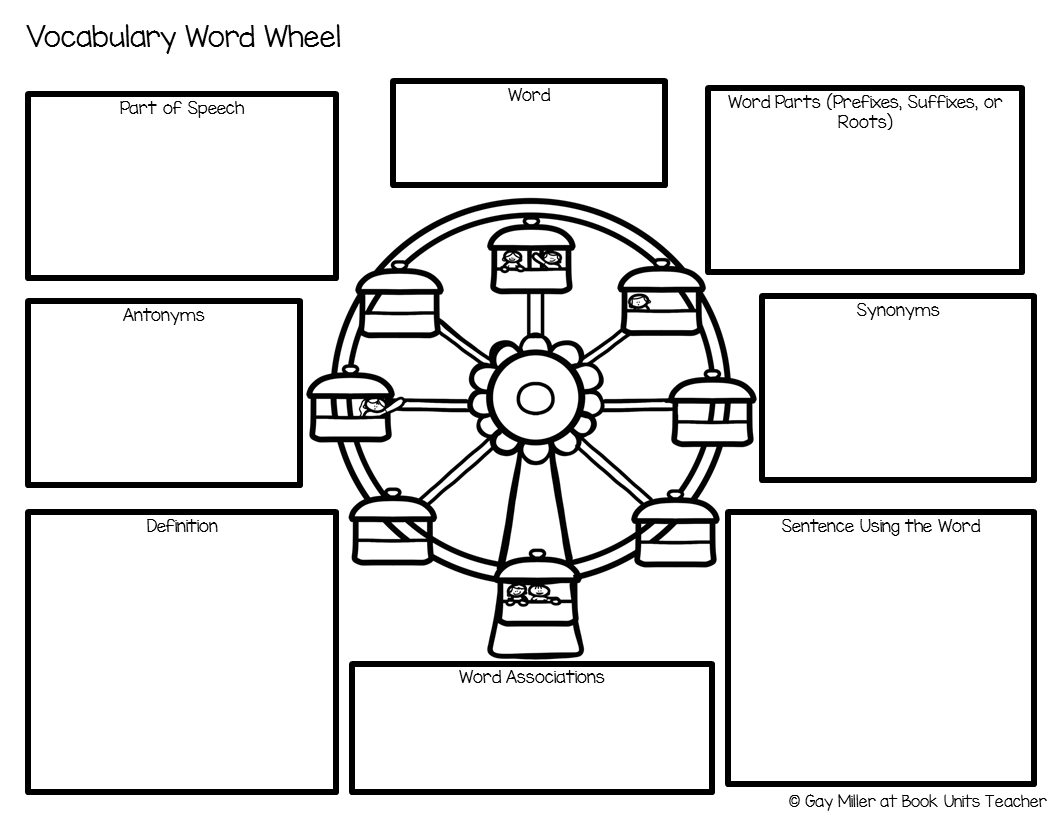
This is where the wheels really start working overtime for word study. Students select a word and then spin through seven different properties:
- part of speech
- word parts (roots, prefixes, suffixes)
- synonyms
- antonyms
- definition (in their own words)
- a sentence using the word
- word associations or connections
By the end, students don’t just know the word—they own it.
Here are a few more creative ways to use word wheels in your classroom:
Bonus Word Wheel Activities to Try
Because why stop at five? Here are a few extra ways to make word wheels a classroom favorite:
- Character Trait Wheel – Place character names in the center and traits around the outside. Students spin and defend whether the trait applies. Great for novel studies.
- Theme or Topic Wheel – For nonfiction, put a broad topic (like “Weather”) in the center and related subtopics (hurricanes, tornadoes, droughts, etc.) on the outside. Students add details or facts as they spin.
- Spelling Wheel – Give students a word list and a blank wheel. They write the target word in the center and use the spokes to work on tricky spelling patterns, word families, or rhyming words.
- Sentence Challenge Wheel – Spin to land on two words from the outside, then use them both in a sentence. The sillier the better. (Prepare for belly laughs when someone pairs “platypus” with “pickle.”)
Why Teachers Love Word Wheels
Word wheels are easy to prep, fun to play, and sneak in a ton of literacy practice without students realizing they’re working. You can use them for:
- Vocabulary development
- Word attack skills
- Spelling practice
- Comparing/contrasting words
- Prewriting and brainstorming
In other words: more engagement, less yawning.
Grab the Free Handout
This freebie includes puzzles for each of the activities above—ready for you to copy, project, or use in centers. Print them once, laminate them if you like, and you’ve got a year’s worth of low-prep literacy fun.
Your students will be spinning their way to stronger vocab in no time. If you try any of these activities, I’d love to hear how they go! Drop a comment or tag me on social media so I can see your students’ creativity in action.
Did you miss one of the links in the post? Be sure to grab the handout, enjoy the interactive practice, and look for additional teaching ideas at these links.
See the product that inspired this post.
If you are looking to add some high interest activities to your lessons, try using animated shorts to teach reading and writing skills. This packet contains graphic organizers covering many Common Core skills. $Save$ when you purchase this mega bundle which includes all 12 units.