Christmas Truce of 1914 Writing Project

Last updated: September 4, 2026
Using Evidence in Informative Writing

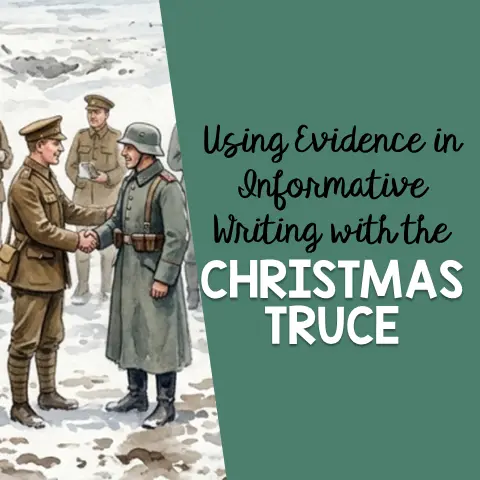
The Christmas Truce of 1914 is one of the most remarkable moments in World War I. For a few hours on Christmas Eve and Christmas Day, soldiers on both sides of the Western Front paused the fighting, stepped out of their trenches, and met peacefully in No Man’s Land.

This powerful historical event is more than just a story. It’s an ideal anchor for teaching students how to find evidence, evaluate sources, and use factual details to support a claim in informative writing. This lesson gives students a meaningful way to practice evidence‑based explanation.

⭐ The Christmas Truce: A Quick Overview

By December 1914, World War I had already become a brutal trench conflict. Soldiers lived in cold, muddy conditions with constant danger and little comfort. But on Christmas Eve, something unexpected happened.

Carols drifted across the trenches. Soldiers cautiously climbed out and met in No Man’s Land. They exchanged small gifts, shared food, lit candles, and even played soccer.

The truce didn’t end the war, but it revealed something important: even in the middle of conflict, people can choose peace.

This brief retelling sets the stage for the writing skill students will learn next.


📥 Be sure to download the handout that includes an organizer with rules and examples, as well as a practice page to use with the events of The Christmas Truce of 1914.
The Christmas Truce of 1914 Activities

Activity #1: Video Lesson & Companion Organizer

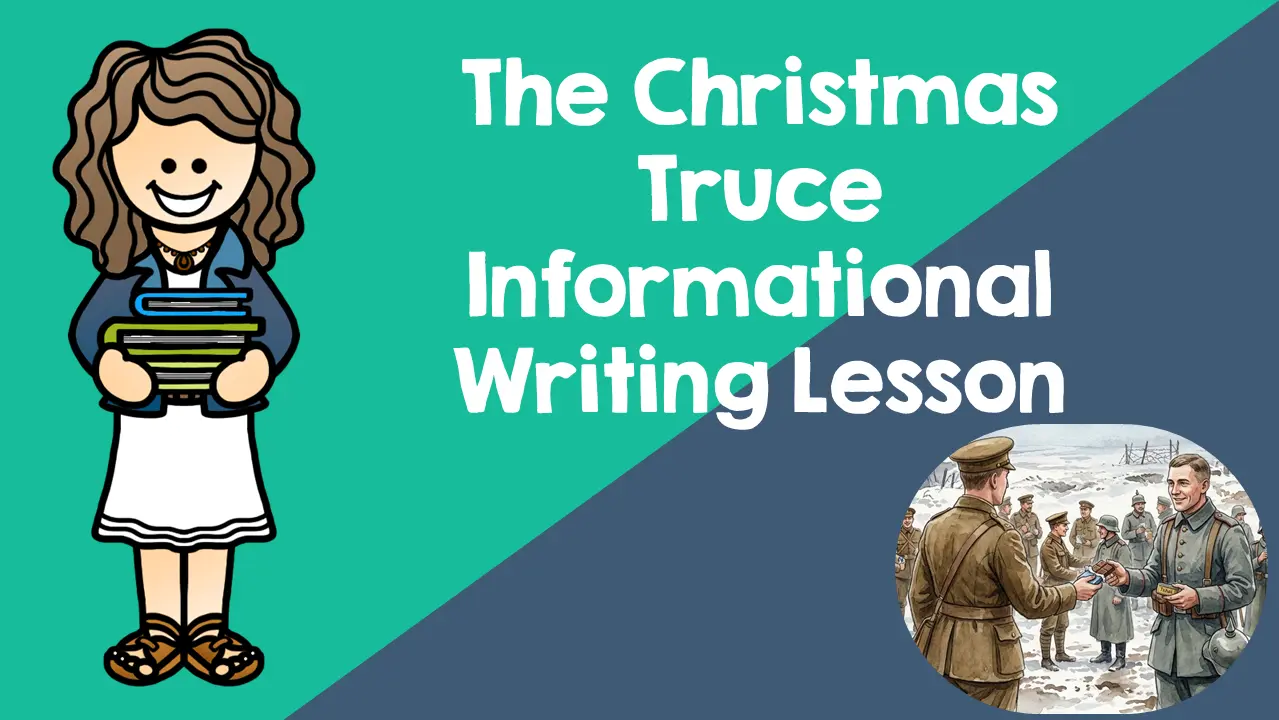
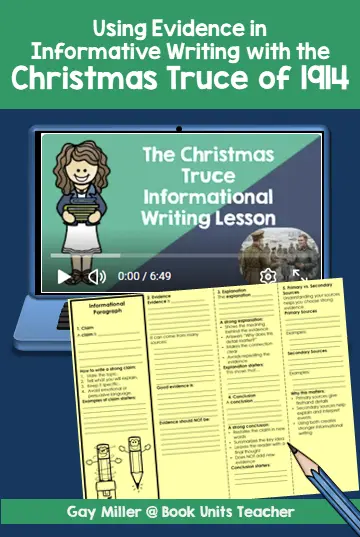
The video lesson provides a short overview of the Christmas Truce of 1914. Students then watch a guided practice using the provided information to write an evidence-based informational paragraph.

⭐ Evidence from the Christmas Truce

The following details are provided in the practice.

  • Soldiers came out of the trenches peacefully
  • Exchanged small gifts (chocolate, tobacco, souvenirs)
  • Played a soccer game together in No Man’s Land

These details support a larger idea:

The soldiers wanted peace, even though the war told them to fight.

Students use these notes to build their own sentences and explanations.

The Christmas Truce of 1914 Video Writing Lesson for Upper Elementary
Play Video about The Christmas Truce of 1914 Video Writing Lesson for Upper Elementary

📘 Video Companion Organizer

The Christmas Truce of 1914 Writing Lesson Video for Upper Elementary Students

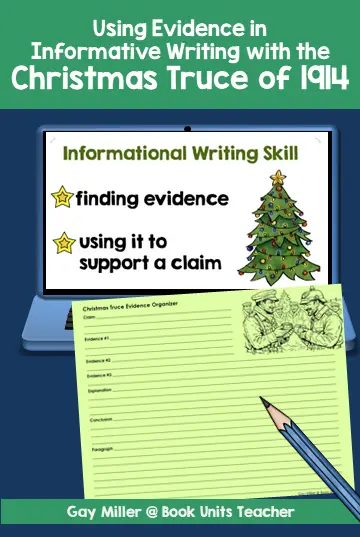
Students learn a simple structure that works for any informative paragraph:

1. claim – the main point the writer wants to explain

2. evidence – factual details that support the claim

3. explanation – a sentence or two that tells why the evidence matters

4. conclusion – a final sentence that clearly restates the idea

Primary vs. Secondary Sources

The Christmas Truce of 1914 Writing Lesson Video for Upper Elementary Students

To deepen understanding, the lesson also includes a short explanation of source types:

Primary Sources

Created by someone who witnessed the event

(letters, diaries, photographs, interviews)

Secondary Sources

Created later by someone explaining the event

(videos, textbooks, websites)

Students learn that using both strengthens their writing.

Activity #2: Christmas Truce Evidence Organizer

The Christmas Truce of 1914 Writing Lesson Video for Upper Elementary Students

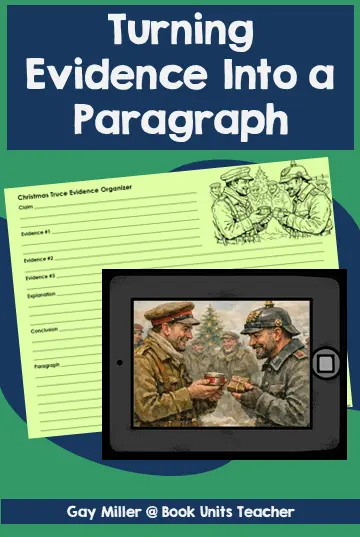
Students also receive a task‑specific organizer for this assignment. This organizer guides them through the writing process step-by-step using this writing prompt.

Explain how the Christmas Truce helps us understand the human side of World War I. Use evidence from the video and the text.

  • Claim
  • Evidence #1
  • Evidence #2
  • Evidence #3
  • Explanation
  • Conclusion

The Christmas Truce provides a meaningful, emotional context that helps students understand how evidence supports a claim and how writers use factual details to explain ideas.

Be sure to get the organizer for a print-and-go activity.

Do you need a full step-by-step informative writing unit? Check out One Crazy Summer.

One Crazy Summer Novel Study

One Crazy Summer Novel Study includes vocabulary practice, comprehension questions, constructed response writing, and skill practice. 

Gay Miller

Permanent link to this article: https://bookunitsteacher.com/wp/?p=33715

Leave a Reply

Your email address will not be published.