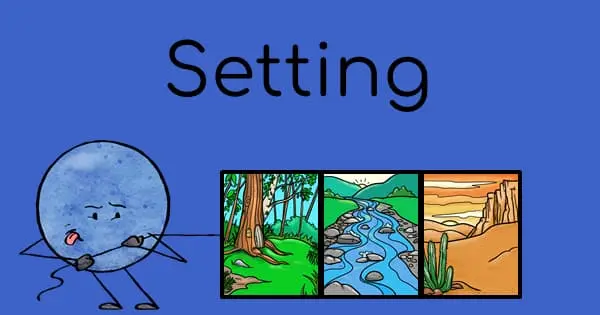
Understanding story elements is the foundation of strong reading comprehension and narrative writing. When students learn how characters, setting, plot, theme, point of view, and tone work together, they begin to see how stories are built and why authors make certain choices. This hub brings all of your story-element lessons together in one place so you can explore, teach, and revisit these skills with ease.

Story elements are the essential parts of a narrative — the who, where, what, why, and how. They help readers understand the structure of a story and its deeper meaning.
Story elements are the backbone of literary understanding from elementary through middle school. Teaching them helps students:
Eight lessons, building from foundational skills to a culminating story map activity that ties everything together.
Once students understand the individual story elements, story maps help them see how everything connects — combining character, setting, plot, theme, point of view, and conflict into one visual organizer. It's the perfect culminating activity for any literature unit.
Once students understand the basic story elements, they're ready to explore how authors organize stories and compare texts across genres.
Once students understand exposition, rising action, climax, falling action, and resolution, they're ready to look at stories from a broader perspective. Many novels, myths, and fairy tales follow recurring story patterns that appear across cultures and time periods. These lessons introduce Christopher Booker's classic plot structures through engaging sorting activities and familiar stories — rather than memorizing seven plot types, students learn to recognize the common patterns authors use to build memorable narratives. They work well as enrichment, literature circles, or extension lessons for readers ready to think beyond the traditional plot diagram.
RL.4.9 – RL.6.9
As students grow as readers, they're ready to compare themes, genres, and craft across multiple texts — a skill that deepens comprehension and builds toward literary analysis.
Every story is driven by conflict. These lessons break down the different types of conflict authors use to create tension and drive their characters forward.
Animated short films are a powerful way to teach literary skills in just a few minutes — perfect for introducing a concept or reviewing it before a novel study.
Two more ways to bring story elements to life using formats students already love.
Story elements are the foundation of every great story. Whether students are reading a classic novel or writing their own narrative, understanding how characters, setting, plot, theme, and tone work together helps them become thoughtful readers and writers. Explore each lesson above to build a complete unit on story elements, and grab the free resources to make planning easier.