Teaching Plot Patterns in Literature

Basic Plot Patterns in Literature

Let’s face it, plot patterns can sometimes feel like the grammar of storytelling: essential, but not exactly thrilling on their own. But what if you could introduce plot development in a way that grabs your students’ attention before the rising action even begins?

Cue the commercials.

From Gatorade ads about bouncing back from failure to Allstate’s Mayhem teaching “overcoming the monster” with a side of chaos, commercials are one of the quickest ways to help students see plot patterns in action. They’re short, memorable, and packed with story structure.

Today’s lesson combines two hands‑on activities with a 26‑page printable handout that includes pockets, summaries, charts, and optional commercial lists. Whether you’re introducing plot patterns or reinforcing them, this lesson makes story structure visible, relatable, and fun.

How Many Plot Patterns Are There in Literature?

Depends on whom you ask.

Some scholars say three. Others list twenty. Georges Polti charted thirty‑six dramatic situations. Kurt Vonnegut famously sketched a single narrative “shape” on a chalkboard. Christopher Booker organized stories into seven timeless categories.

While we won’t settle the debate here, seven universal plot patterns work beautifully in the classroom. They’re simple enough for students to grasp, but flexible enough to apply across genres, cultures, and grade levels.

📚 The Seven Universal Plot Patterns

Below is the student‑friendly chart included in your handout. These categories give students a clear way to identify how a story is structured and why that structure matters.

Plot Type Description Examples
Overcoming the Monster a hero faces and defeats a powerful threat Hatchet by Gary Paulsen, Harry Potter by J.K. Rowling, Shrek by William Steig
Rags to Riches a poor protagonist rises—then faces a loss and transformation Cinderella by Charles Perrault, Aladdin by Antoine Galland (adapted), Matilda by Roald Dahl, Bud, Not Buddy by Christopher Paul Curtis
The Quest a journey toward a goal with trials along the way Percy Jackson and the Olympians (The Lightning Thief) by Rick Riordan, The Giver by Lois Lowry, Holes by Louis Sachar
Voyage and Return a character ventures out, grows, and returns changed The Wild Robot by Peter Brown, The Wizard of Oz by L. Frank Baum, The Miraculous Journey of Edward Tulane by Kate DiCamillo
Comedy misunderstandings and obstacles resolved in a happy ending Ella Enchanted by Gail Carson Levine, Toy Story by John Lasseter (film)
Tragedy the downfall of the protagonist due to flaws or fate Number the Stars by Lois Lowry, The War That Saved My Life by Kimberly Brubaker Bradley, Bridge to Terabithia by Katherine Paterson, The Outsiders by S.E. Hinton
Rebirth a dark moment transforms a character into someone new A Christmas Carol by Charles Dickens, The Tale of Despereaux by Kate DiCamillo, Auggie & Me by R.J. Palacio, The One and Only Ivan by Katherine Applegate

The Handout

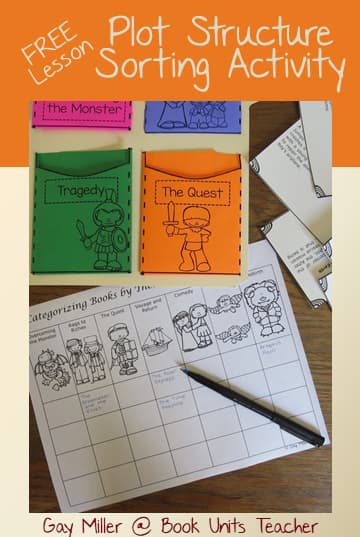
Plot Structure Sorting Activity

The handout for this lesson includes:

  • seven pockets for sorting plot summaries
  • twenty‑eight summary cards
  • a chart for recording answers
  • a list of commercials you can use to go deeper
  • a booklet‑style cover
  • a student organizer for mapping plot patterns
  • links to all seven extended posts (optional deeper‑study material)

These deeper‑study posts are available if you want to explore each plot pattern individually, but they are not required for this lesson.

👉 Grab the free handout here.

Teaching Plot Patterns in Literature Activities

Activity #1 — Teaching Plot Patterns with Commercials

Commercials are short, engaging, and packed with story structure. As students watch each clip, ask them to identify which plot pattern it follows. Use the chart in the handout to help them sort examples under the correct category.

You can use the commercials listed below or swap in others that better fit your class.

Teaching Plot Patterns with Commercials - Gatorade Ad

Gatorade — “The Secret to Victory”

Athletes explain that the essential ingredient to success is overcoming defeat.

🌀 Plot Pattern: rags to riches

Teaching Plot Patterns with Commercials - Prudential Ad

Prudential Documentaries

Mini‑documentaries showing retirees on their first day after a lifetime of work.

🌀 Plot Pattern: rebirth

Teaching Plot Patterns with Commercials - Empty Seat Ad

Public Service Announcement — “The Empty Seat”

Raises awareness for teen suicide.

🌀 Plot Pattern: tragedy

Teaching Plot Patterns with Commercials - Chanel Ad

Chanel No. 5 – “The One That I Want”

A woman escapes the spotlight and reconnects with someone from her past.

🌀 Plot Pattern: transformation and rediscovery 

Teaching Plot Patterns with Commercials - Chrysler Ad

Chrysler “Imported from Detroit”

scenes of Detroit as Eminem drives through the city

🌀 Plot Pattern: voyage and return

Teaching Plot Patterns with Commercials - Intel Ad

Intel’s “Look Inside”

stories of individuals accomplishing remarkable feats with the help of technology

🌀 Plot Pattern: quest

Teaching Plot Patterns with Commercials - Allstate Mayhem Ad

Allstate Mayhem Compilation (2013–2019)

Mayhem causes chaos, including grills exploding, raccoons in attics, distracted drivers, and more.

🌀 Plot Pattern: overcoming the monster

Activity #2 – Sorting Text by Plot Structures

This hands‑on sorting activity helps students apply plot patterns to books and movies they already know.

Plot Structure Sorting Activity

Preparation

  • Assemble the seven pockets from the handout.
  • Print and laminate the twenty‑eight summary cards.
  • Cut the cards apart for repeated use.

Sorting

Students read each summary and decide which plot pattern it best fits. They sort the cards into pockets and record their answers on the chart.

This activity works beautifully for:

  • Morning work
  • Centers
  • Small groups
  • Early finishers

This activity works well for individual morning reviews, centers, or small-group activities.

Why Plot Patterns Matter

Teaching plot patterns isn’t just about checking a standard—it’s about helping students become stronger readers and writers.

Understanding plot structure helps students:

  • Follow the flow of events
  • Analyze characters and conflicts
  • Build stronger narratives in their own writing
  • Deepen comprehension of theme and author’s purpose

And yes—it supports key Common Core standards: RL.4.2, RL.4.3, RL.4.5, RL.5.2, RL.5.3, RL.5.5, RL.6.2, RL.6.3, RL.6.5

📚 A Literary Spark

“A story helps us remember what we didn’t know we had forgotten.” —E. L. Konigsburg, The View from Saturday

Gay Miller

Dig Deeper (Optional)

If you want to explore each plot pattern individually, here are the extended posts:

These are enrichment resources—not required for the lesson.

Permanent link to this article: https://bookunitsteacher.com/wp/?p=6360

Leave a Reply

Your email address will not be published.