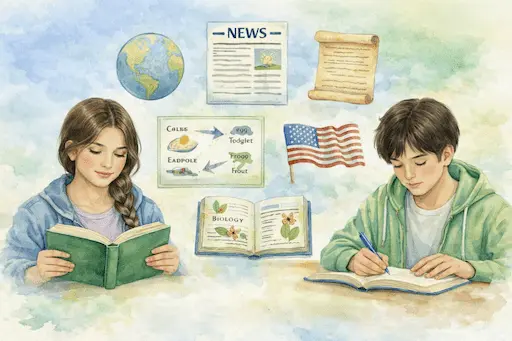
Informational reading asks something different of students than a story does. Instead of following characters through a plot, readers have to navigate headings and diagrams, sort fact from opinion, notice why an author is writing, and recognize how a piece of nonfiction is organized. This hub brings together classroom-tested lessons for each of these skills, plus a growing library of seasonal and topical nonfiction to put them into practice.
After completing this workshop, you'll be equipped to teach students to:
Nine lessons, building from foundational nonfiction skills through organizer literacy and individual text structures, to a culminating activity that ties them all together.
Find anchor chart ideas, a staggered flip organizer, and classroom‑ready tips — an ideal match for the four text structure lessons above.
Once students know the core skills, these seasonal and topical nonfiction pieces give them real texts to apply what they've learned.
These posts pair a nonfiction article with comprehension activities tied to a specific time of year. Most handouts are stored in the newsletter Seasonal Vaults — if you're following along through the newsletter workshops, you'll already have the username and password. Otherwise, sign up for the newsletter to unlock them.
Standalone nonfiction topics that don't tie to a specific date on the calendar.
Each of these pairs a video lesson with a matching article and comprehension activities — great for a warm-up, a sub day, or independent review.
Strong readers treat nonfiction differently than fiction — scanning for structure, questioning the author's purpose, and using text features to guide their thinking. Explore each lesson above to build a complete unit on informational text, and check back as more seasonal and topical practice pieces are added throughout the year.
Sign up to get free resources and fresh teaching ideas delivered to your inbox.