Last updated: September 3, 2026
 Mini‑Lesson: What Is Author’s Purpose?
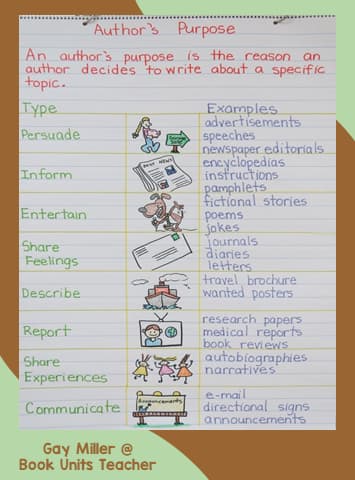
Authors write with a specific purpose in mind. Understanding that purpose helps students read more critically, evaluate information, and recognize how the author wants them to think or feel. In upper‑elementary grades, author’s purpose typically falls into one of four categories:
Persuade – The author wants the reader to believe or do something.
Inform – The author wants to teach or explain information.
Entertain – The author wants the reader to enjoy a story or experience.
Share Feelings / Express – The author wants to communicate personal thoughts or emotions.
To introduce the concept, model how you examine a text and ask:
Why did the author write this?
What does the author want me to think, learn, or feel?
Which clues help me determine the purpose? (tone, word choice, text type, structure)
Use quick examples to demonstrate the difference:
Persuade: “Everyone should visit the Empire State Building—it’s the best view in New York.”
Inform: “The Empire State Building opened in 1931 and has 102 floors.”
Entertain: “As the elevator shot upward, Mia imagined she was blasting off into space.”
Share Feelings: “Standing on the observation deck made me feel small and amazed.”
These short models help students see how purpose shapes the way information is presented.
Get the Lesson Handout
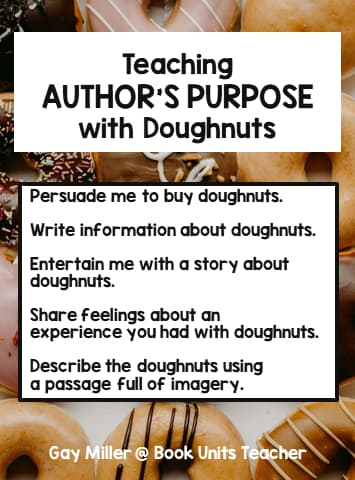
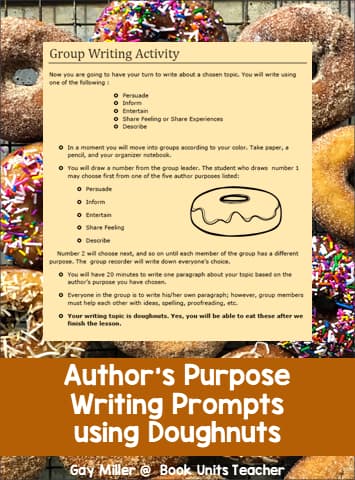
 Download the foldables, matching cards, PowerPoint links, Boom Learning activity, and doughnut‑themed writing prompts used throughout this lesson.
Four Authors’ Purpose Activities
 Activity #1 — Build Understanding with Foldable Organizers
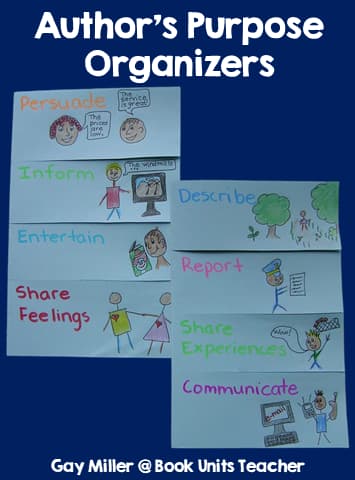
Once students understand the basics, it’s time to apply the skill. That’s where the matching game comes in.
Students pair up purpose, definition, and example cards. Then, we move to whole-group practice with Part 2 of the PowerPoint that displays a passage and asks: What was the author’s purpose here?
We start with oral responses, then move to short written responses for reinforcement. It’s a great way to transition from sorting definitions to analyzing real text.
 Note: The PowerPoint still contains Tennessee standards. Feel free to delete the slides or swap in your own state’s standards or Common Core references.
Teacher Information
Standards Covered
This author’s purpose unit aligns with a range of standards including:
- W.4.1.a, W.4.4, W.4.10
- W.5.1.a, W.5.4, W.5.10
- W.6.4, W.6.10
These activities help students write with intent, reflect on tone, and understand the difference between entertaining and informing—plus they’ll have a lot of fun in the process.
Classroom Tip

Differentiation for Author’s Purpose
Emerging Readers: Provide short, simple passages with one clear purpose and ask students to choose between inform, entertain, or persuade.
On‑Level Readers: Use mixed‑purpose texts (ads, flyers, short articles) and have students justify their choice with evidence from the text.
Advanced Readers: Introduce texts with blended purposes and ask students to explain how the author balances informing, entertaining, or persuading.
English Learners: Teach purpose signal words (buy, learn, enjoy, imagine) and pair them with sentence frames like “The author wants me to…”.
Extra Support: Offer a laminated reference card with icons for each purpose and sample sentences.
Common Misconceptions Students Have
Students often:
- think “entertain” only means funny
- confuse author’s purpose with main idea
- assume every nonfiction text is meant to inform
- believe persuasive writing must include strong opinions
- think describing something automatically means “entertain”
Addressing these early helps students make clearer, more confident choices.
Teacher Tip
Students understand author’s purpose best when they see it in real‑world texts. Bring in menus, ads, brochures, and short articles and ask:
- “Why did someone write this?”
- “What do they want the reader to do or feel?”
Authentic examples make the skill click instantly.
Final Thoughts for Teachers
When students recognize why an author wrote a text, they become more thoughtful readers. Instead of simply gathering information, they begin asking important questions:
Is the author trying to inform me? Persuade me? Entertain me? Share feelings?
Learning to answer these questions prepares students to evaluate nonfiction articles, advertisements, websites, and multimedia sources with confidence.
If you’ve ever wanted to see your students write passionately about doughnuts, this is your sign. Whether you’re teaching author’s purpose for the first time or looking to refresh your unit, these activities hit the sweet spot—engaging, standards‑based, and classroom‑tested.
Happy teaching (and snacking)!
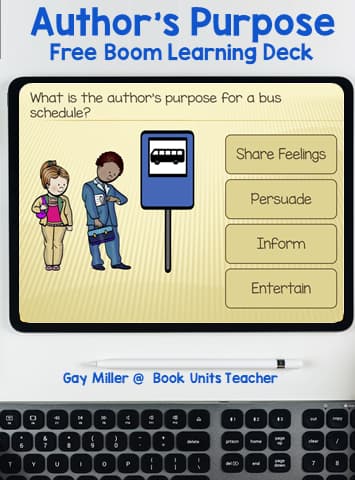
 Get the links to make all these activities happen. This handout includes links to the lesson PowerPoint that accompanies the TPT resource, the free Teachers Pay Teachers product (including the organizer, matching cards, and doughnut writing prompts), and a free practice exercise on Boom Learning.


1 comment
Every one of your resources are stimulating, challenging and well presented. Many thanks for your dedication.