Water is one of the most unusual substances on Earth — it exists naturally in all three states, absorbs and releases heat more slowly than almost any other material, and behaves differently depending on whether it freezes from ocean water or breaks off a glacier.
Water's unique properties — especially its high heat capacity — are what make Earth's climate livable. Oceans absorb enormous amounts of heat in summer and release it slowly in winter, moderating temperatures far more than land surfaces do.
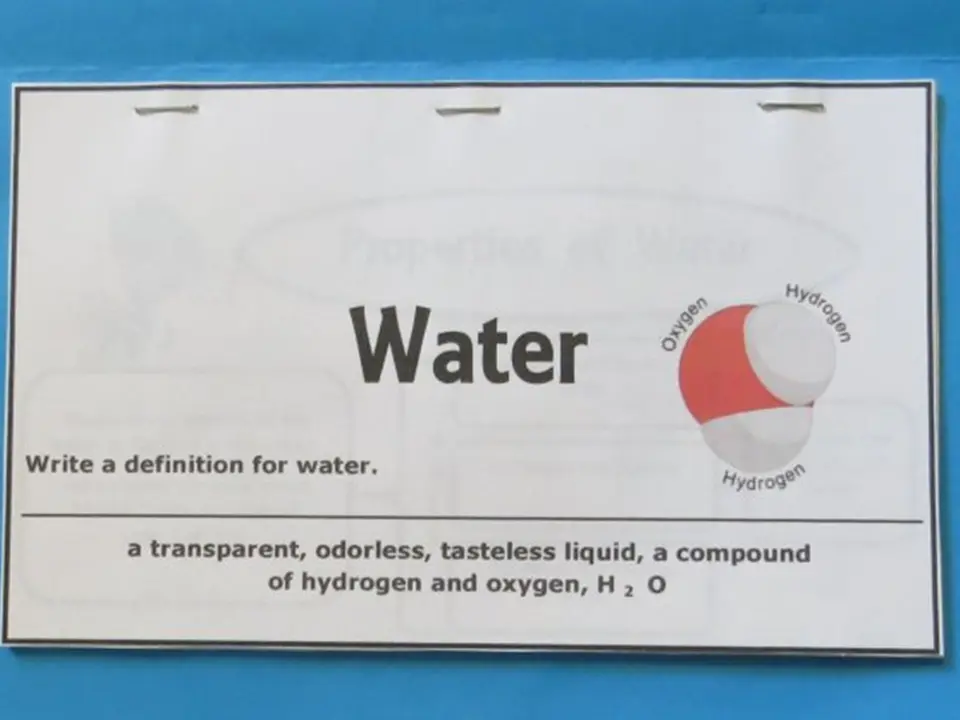
A student booklet covers key water properties including chemical formula, states of matter, density, and surface tension.
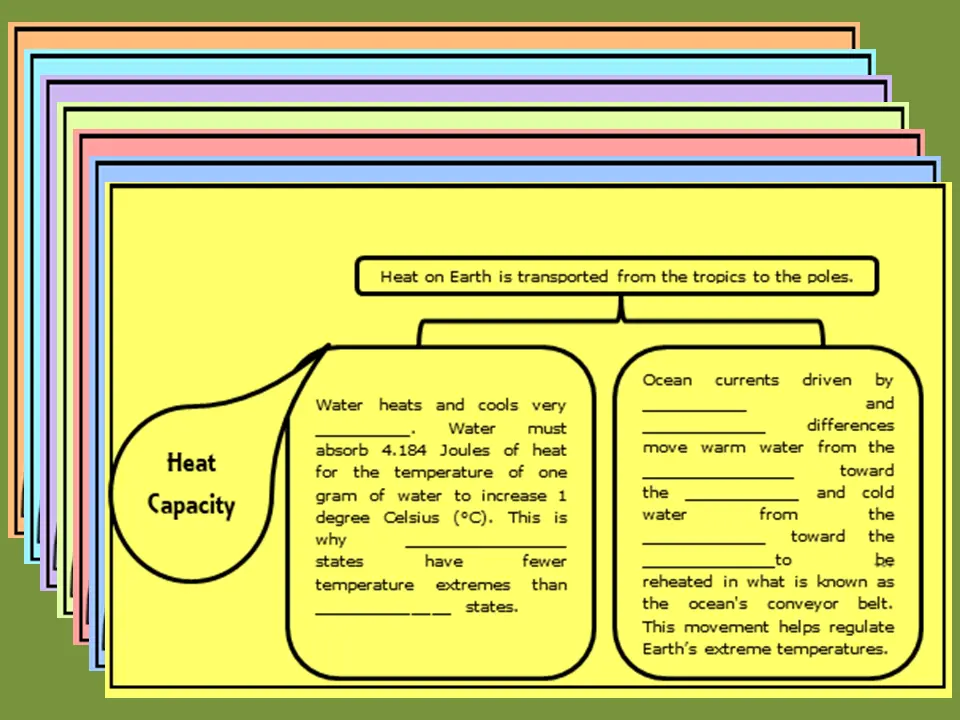
One booklet page focuses on heat capacity — why oceans warm and cool more slowly than land, and how this drives coastal climates.
Water absorbs about four times more heat per degree than most land surfaces. This is why coastal cities have milder, more stable temperatures than inland cities at the same latitude — the ocean is constantly absorbing and releasing heat, smoothing out the extremes. Ocean currents driven by this heat difference are one of the primary forces that distribute warmth around the planet.
Water is the only substance found naturally in all three states on Earth's surface. Understanding the transitions between states — and the energy required for each — is essential for understanding both the water cycle and weather processes.
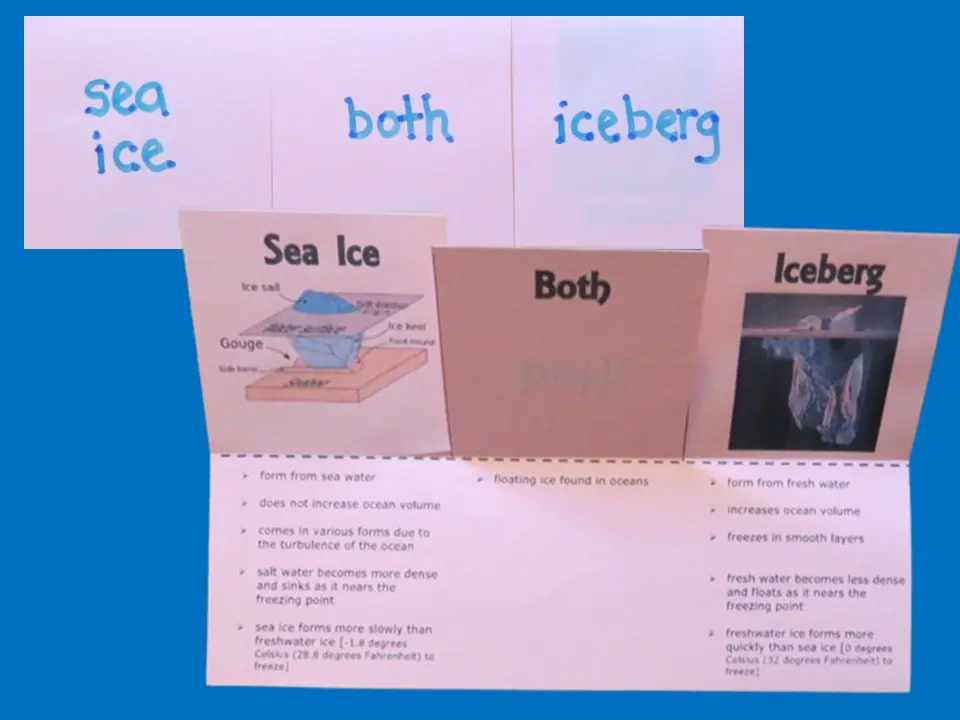
Sea ice and icebergs are both frozen water — but they form differently, consist of different types of water, and play different roles in Earth's climate system.
A three-flap Venn organizer gives students a structured way to compare sea ice and icebergs — recording what is unique to each and what they share in the overlapping center section.
This page is one part of a full NGSS-aligned unit covering the hydrologic cycle, atmospheric layers, air pressure, fronts, storms, humidity, temperature, climate patterns, and more — with hands-on experiments, foldable organizers, vocabulary tools, and Check for Understanding pages throughout.
View the Full Unit on TPT