MS-ESS2-4 • Grades 6–8

Hydrologic Cycle & Precipitation

Water is constantly moving through Earth's systems — evaporating from oceans, condensing into clouds, falling as precipitation, and returning through runoff and groundwater. The type of precipitation that reaches the ground depends entirely on the temperature layers the water passes through on the way down.

The Hydrologic Cycle

The hydrologic cycle has no beginning or end — water continuously moves between the ocean, atmosphere, land surface, and groundwater. Evaporation and transpiration return water vapor to the atmosphere, where it condenses and eventually falls again as precipitation.

The hydrologic cycle A diagram showing the main processes of the water cycle including evaporation, transpiration, condensation, precipitation, surface runoff, and groundwater movement. Ocean Land surface Cloud Evaporation Transpiration Condensation forms clouds Precipitation Surface runoff Groundwater

Hydrologic Cycle Organizers & Posters

A set of teaching posters and a multi-panel organizer cover the full hydrologic cycle — including evaporation, transpiration, sublimation, condensation, precipitation, surface runoff, and groundwater movement.
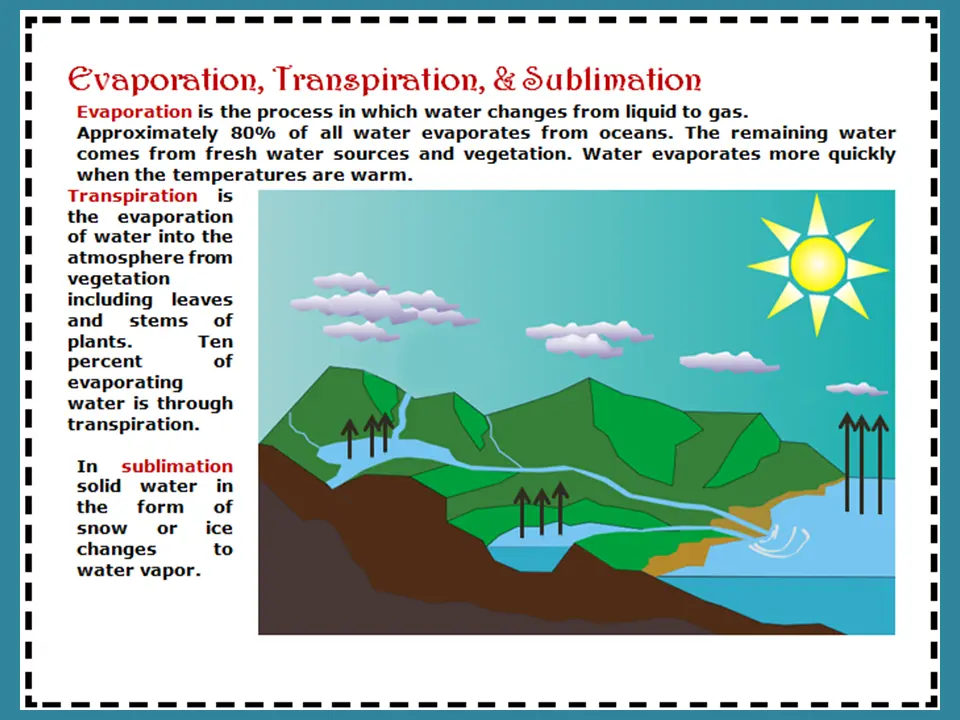
Example hydrologic cycle teaching poster

Hydrologic Cycle Poster

An illustrated teaching poster shows the full water cycle with labeled processes including evaporation, transpiration, sublimation, condensation, and groundwater flow.
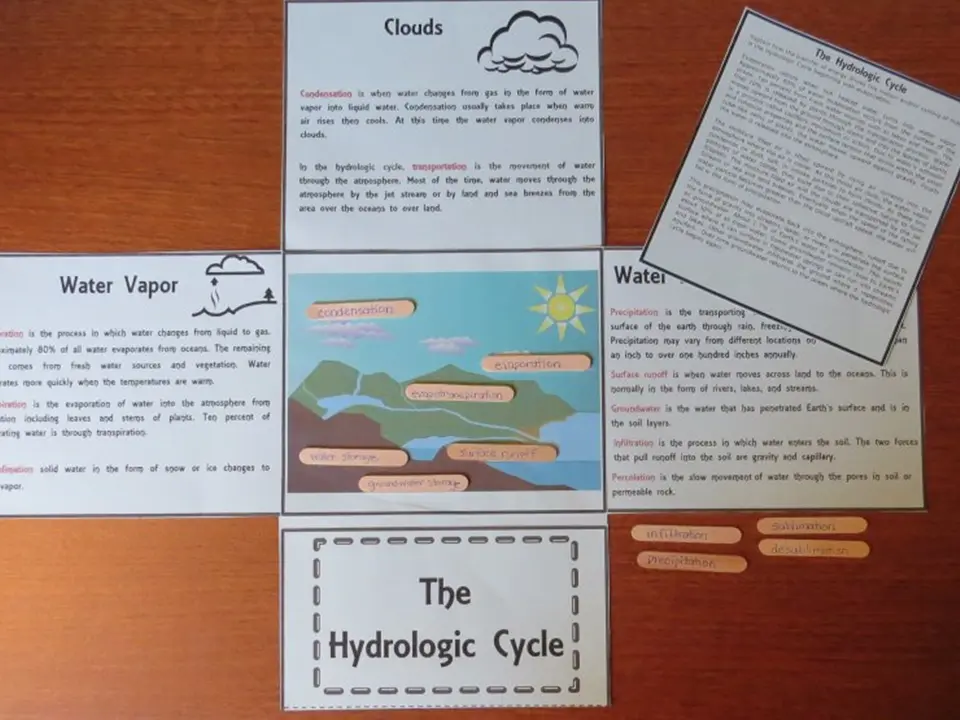
Hydrologic cycle interactive organizer

Hydrologic Cycle Organizer

A multi-panel foldable organizer guides students through each stage of the water cycle with labeled diagrams and space to record definitions and explanations.
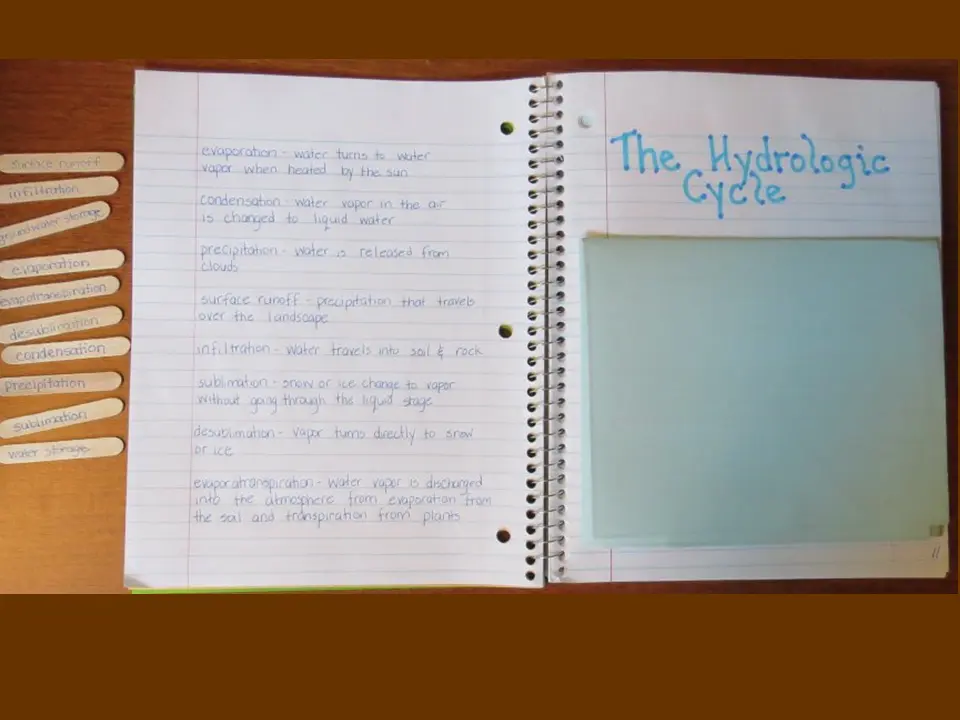
Hydrologic cycle vocabulary list organizer

Vocabulary List

A structured vocabulary reference pairs key hydrologic cycle terms with student-written definitions, serving as an ongoing reference throughout the unit.
Six Types of Precipitation

All precipitation starts as water droplets or ice crystals in clouds. What it becomes by the time it reaches the ground depends entirely on the temperature of the air layers it passes through — which is why multiple precipitation types can occur in the same storm.

Six types of precipitation Six labeled boxes showing rain, freezing rain, sleet, snow, hail, and graupel with brief descriptions of how each forms. Rain Water droplets stay liquid all the way down Freezing rain Rain that freezes on contact with cold surfaces Sleet Rain refreezes into ice pellets before landing Snow Ice crystals form when air stays below freezing Hail Ice builds up in layers inside thunderstorms Graupel Snow coated in supercooled water droplets The type of precipitation that reaches the ground depends on the temperature of the air layers between the cloud and the surface.

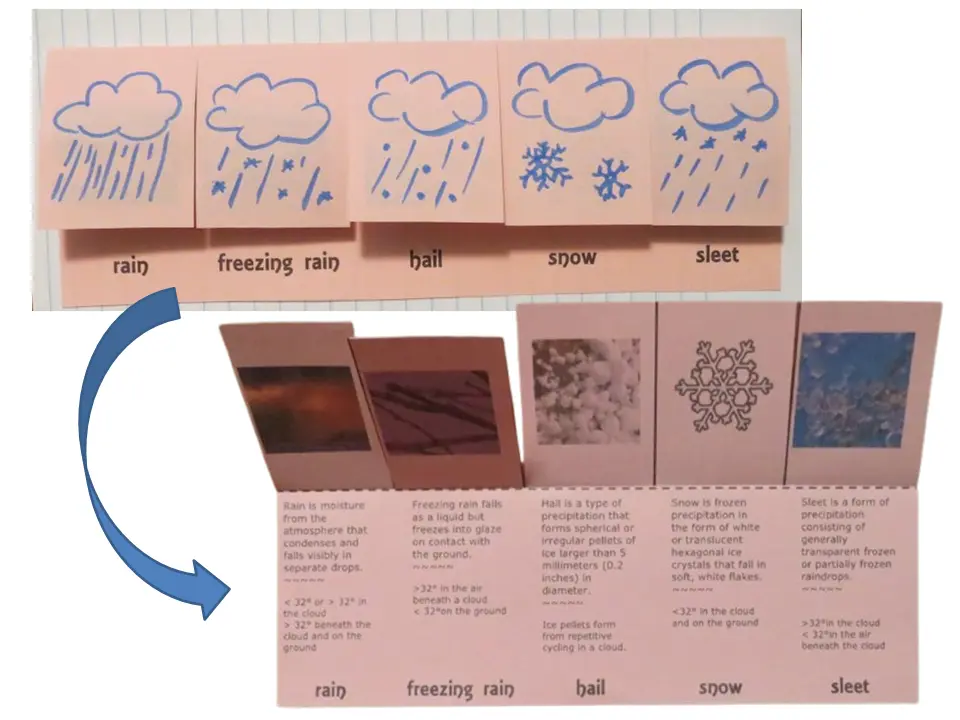
Precipitation Types Organizer

A five-flap flip organizer covers the major precipitation types with illustrations, formation explanations, and temperature conditions — giving students a complete reference for comparing all six types side by side.

Five-flap precipitation types flip organizer

Why precipitation type matters

A single winter storm can produce rain, freezing rain, sleet, and snow at the same time — in different locations just miles apart. The difference comes down to a thin layer of warmer or colder air the precipitation passes through. Understanding this helps students interpret weather forecasts and radar maps in later activities.

MS-ESS2-4 • MS-ESS2-5 • MS-ESS2-6 • Grades 6–8

Want the Complete Weather & Climate Unit?

This page is one part of a full NGSS-aligned unit covering the hydrologic cycle, atmospheric layers, air pressure, fronts, storms, humidity, temperature, climate patterns, and more — with hands-on experiments, foldable organizers, vocabulary tools, and Check for Understanding pages throughout.

View the Full Unit on TPT