MS-ESS2-1 • Develop a model to describe the cycling of Earth's materials
Rocks are constantly being made, broken down, and remade through a continuous cycle driven by heat from Earth's interior and energy from the sun. This page covers the three rock types, how they transform into one another, and how rocks differ from minerals — with a diagram, mini posters, and an interactive notebook organizer your students can build by hand.
Every rock on Earth is one of three types — igneous, sedimentary, or metamorphic — and every type can eventually become either of the other two. Follow the arrows below to see the paths rock material can take.
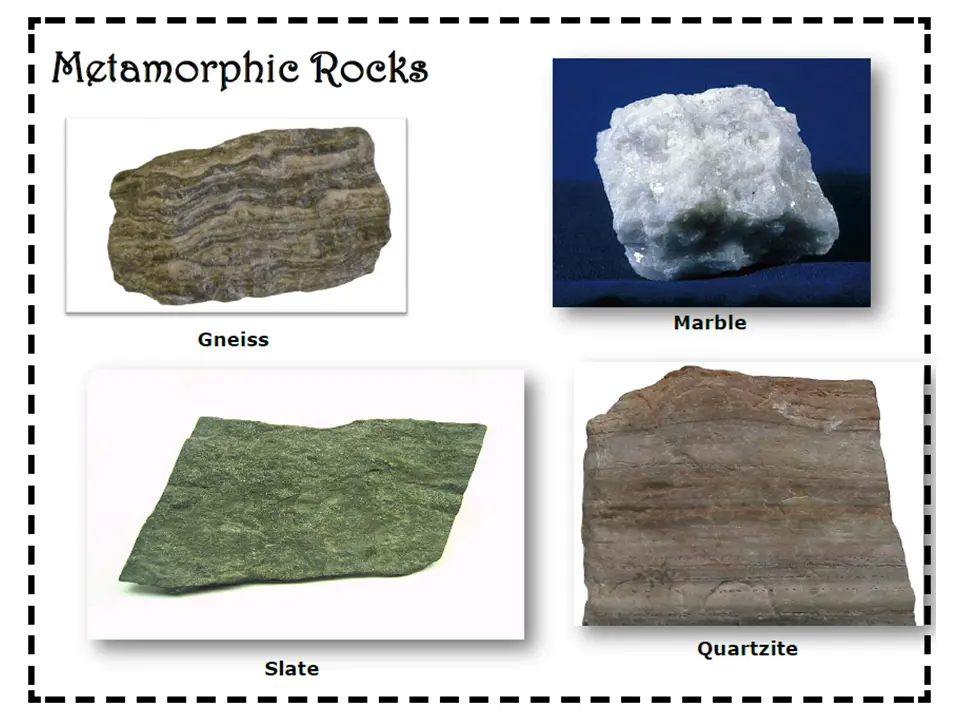
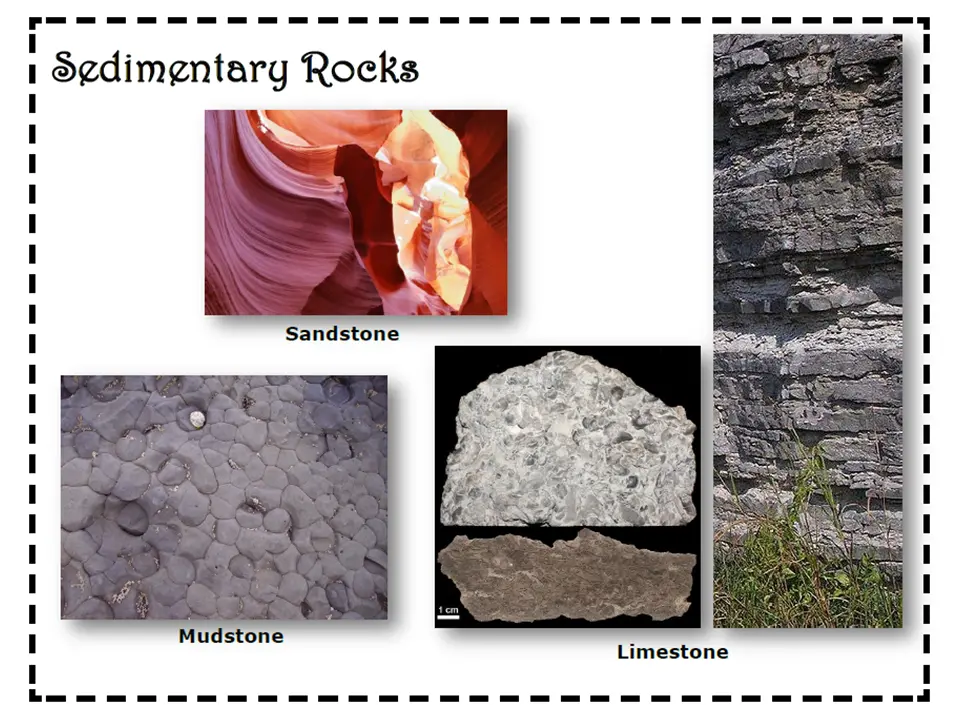
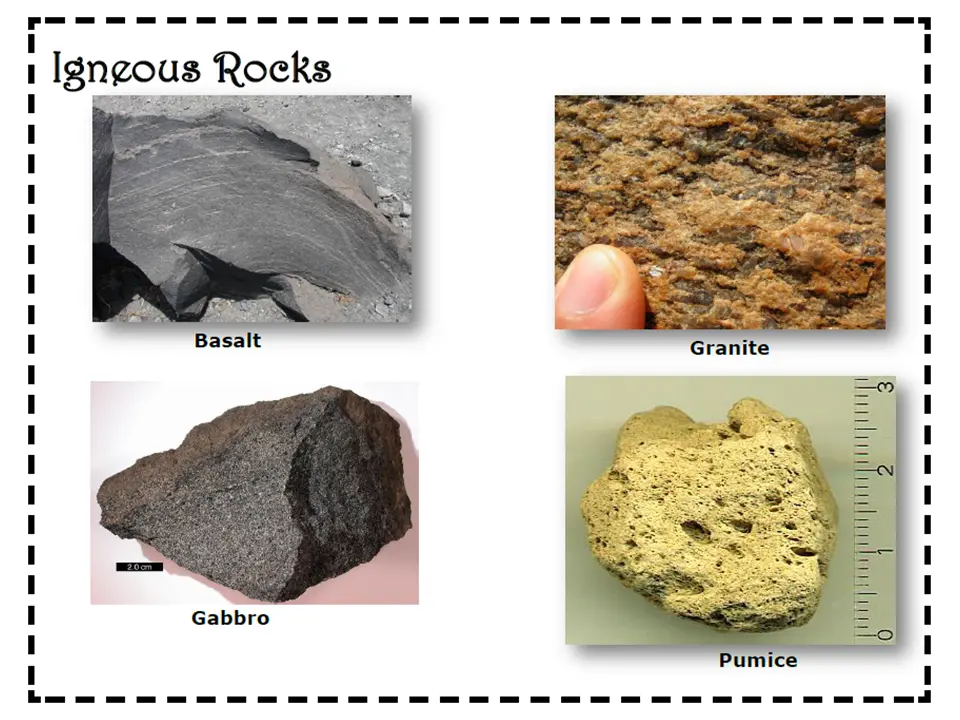
Each mini poster gives students a visual reference for identifying rock samples and remembering how each type forms. Print a set for student notebooks or display them as a classroom reference wall.
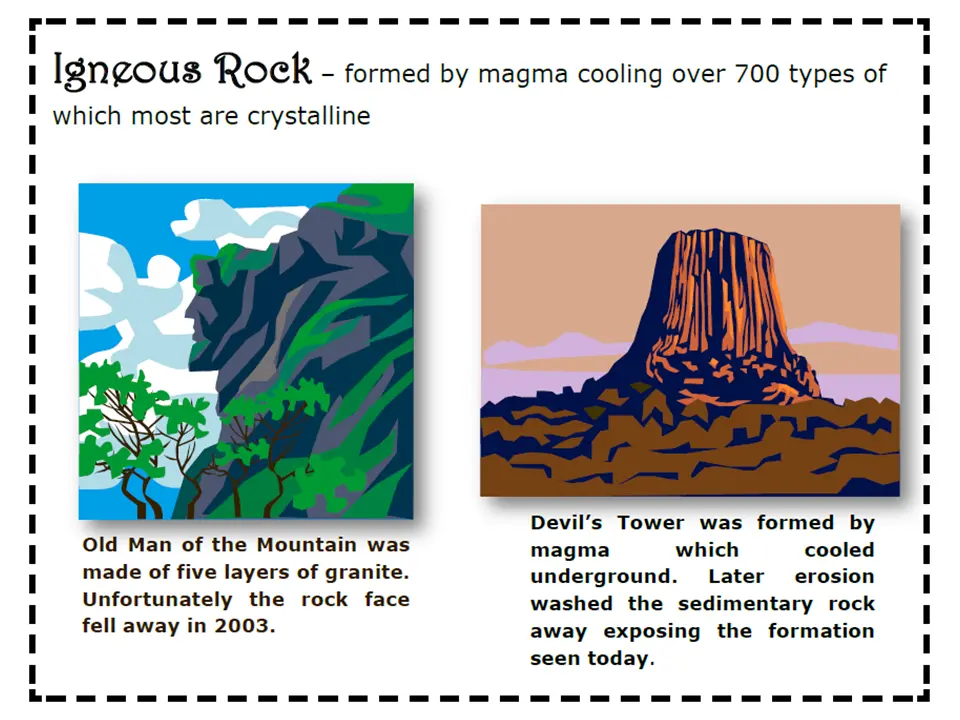
Forms when magma or lava cools and hardens into crystals. Can form slowly underground (large crystals) or quickly at the surface (small or no crystals).
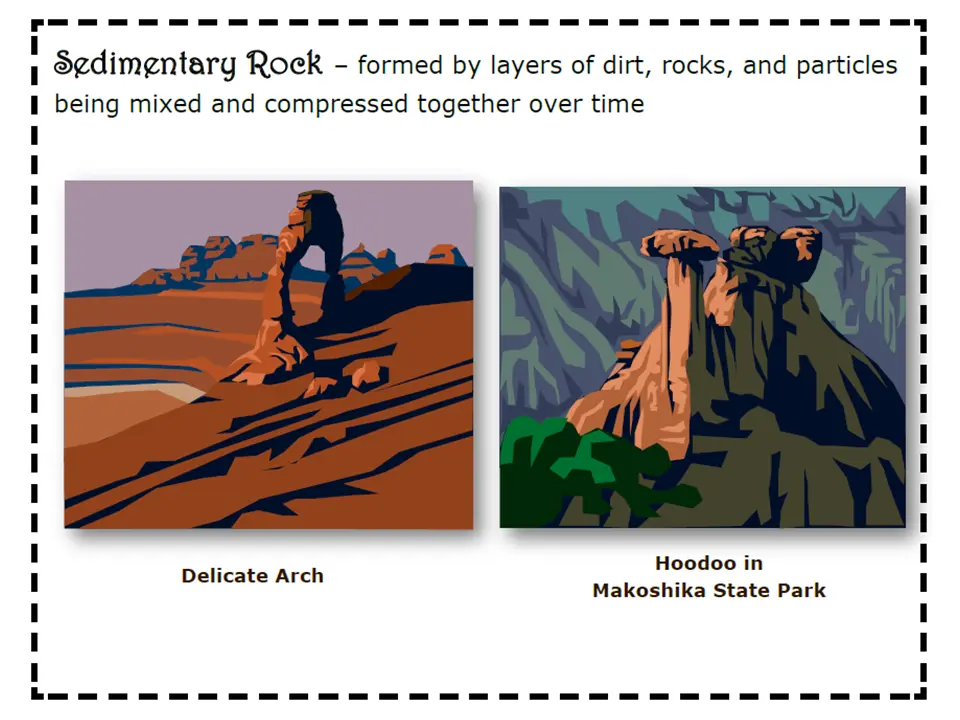
Forms when layers of sediment are compressed and cemented together over time. Often contains visible layers and can preserve fossils.
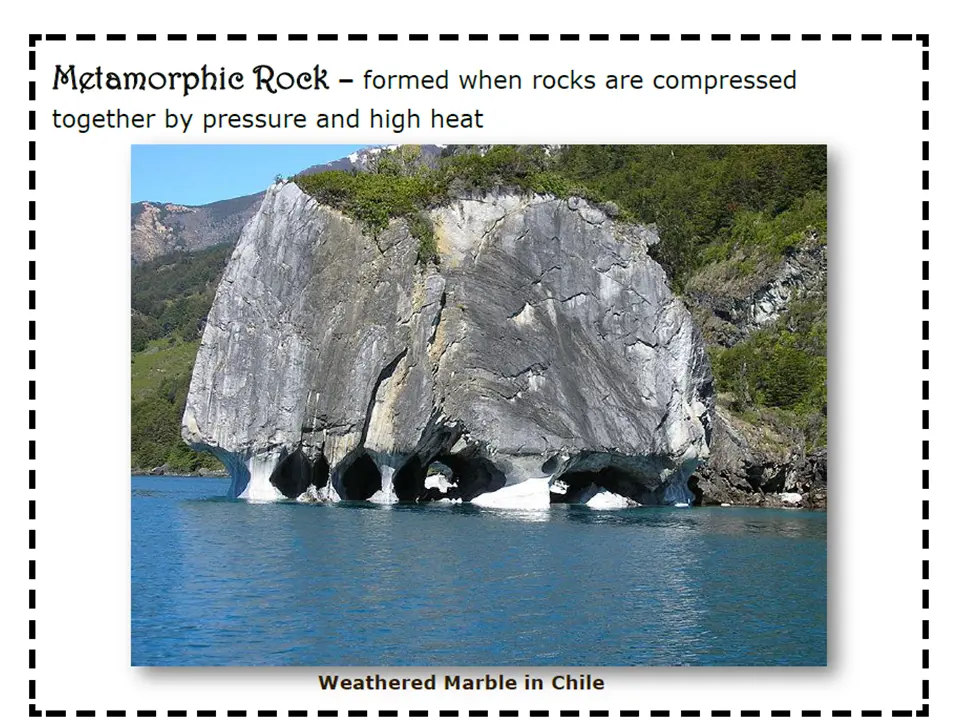
Forms when existing rock is changed by intense heat and pressure without melting completely. Often has banded or foliated patterns.
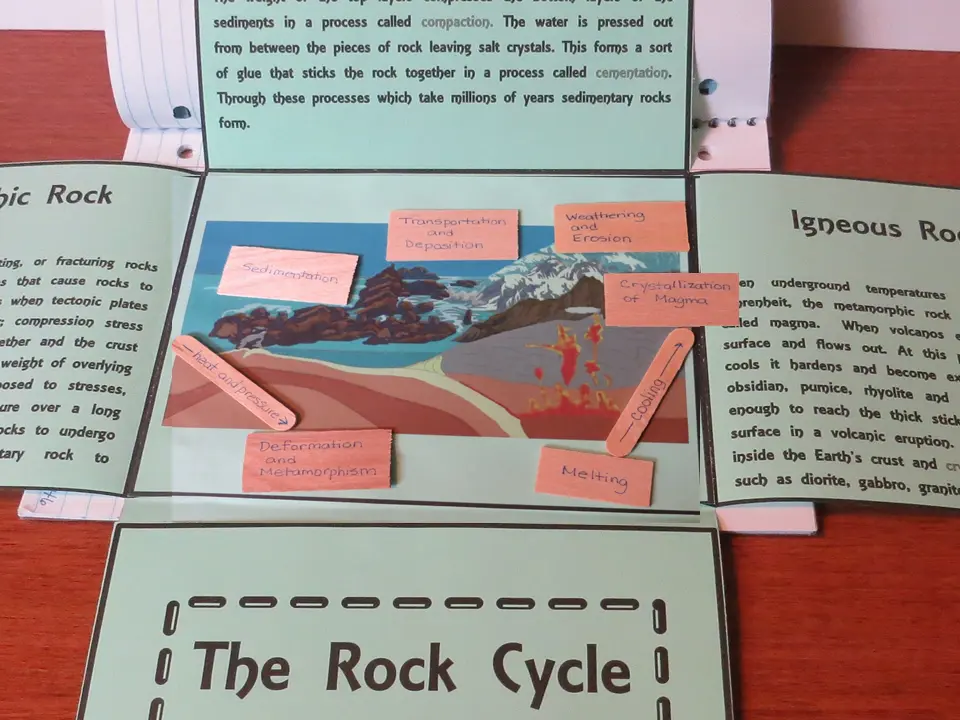
This hands-on organizer lets students physically move wooden craft sticks labeled with rock cycle processes along a printed landscape, reinforcing the cyclical nature of rock formation in a way a worksheet alone cannot.
Students often use "rock" and "mineral" interchangeably, but the two are scientifically distinct. This comparison organizer helps students sort the differences before moving on to mineral identification.
Just like the rock posters above, these give students a quick visual reference for common minerals and their identifying characteristics — color, luster, hardness, and crystal structure.

One of the most common minerals in Earth's crust, identifiable by its glassy luster and hexagonal crystal structure.

Known for splitting into thin, flexible sheets due to its layered crystal structure.

The most abundant mineral group in the crust, often pink or white with a distinct cleavage.
This page covers just one piece of a full NGSS-aligned Earth's Systems: Geology unit — over 370 pages of interactive notebook activities, mini posters, organizers, mini research projects, and Check for Understanding pages covering the rock cycle, plate tectonics, volcanoes, earthquakes, weathering, erosion, and the evidence for plate tectonics.
View the Full Unit on TPT