Weathering, Erosion & Deposition

MS-ESS2-2 • How geoscience processes have changed Earth's surface

Rock at Earth's surface is constantly being broken down, carried away, and dropped somewhere new — a slow but relentless cycle that has carved canyons, built deltas, and shaped entire coastlines. This page covers all three processes, the major causes of erosion, and hands-on experiments and organizers for the classroom.

Three Connected Processes

Weathering, erosion, and deposition work together in sequence — though the cycle can repeat many times as the same material is broken down, moved, and redeposited again and again.

Weathering, erosion, and deposition A flowchart showing how rock is broken down by weathering, moved by erosion, and dropped in a new location by deposition. Weathering Breaks rock into smaller pieces Erosion Carries sediment away Deposition Drops sediment in a new spot Wind, water, ice, and gravity all drive this cycle — and the same sediment can be weathered, eroded, and deposited many times over millions of years.

Acid Rain Experiments

Two simple hands-on experiments let students observe chemical weathering directly — one shows the reaction between acid and rock in real time, the other tests how acidic water affects plant growth over several weeks.

  1. Experiment 1: Drop vinegar onto a piece of chalk and observe the fizzing reaction, modeling how acid rain dissolves rock.
  2. Experiment 2: Plant seeds in small group planters and water each with a different acidity level over several weeks, recording growth differences.
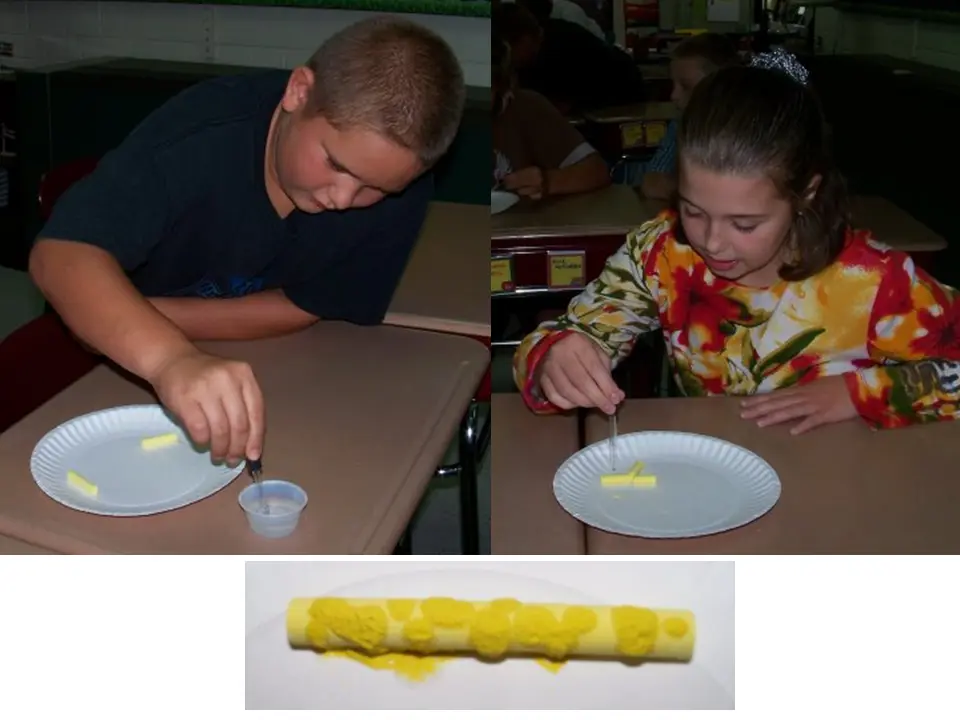
Photo: Earthquakes trifold organizer, open flat Photo: Acid rain chalk experiment in progress
Causes of Erosion

Four forces drive most erosion on Earth's surface, and each leaves behind a distinct type of landform that geologists use as evidence of how that landscape formed.

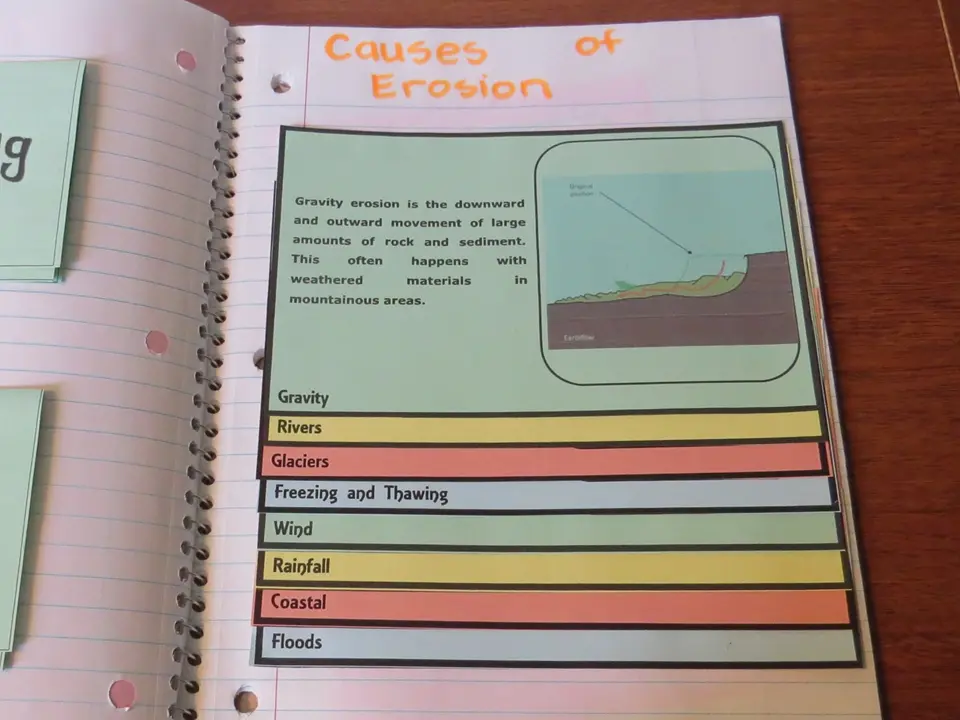
Four causes of erosion A structural diagram showing four causes of erosion — running water, wind, waves, and glaciers — each with example landforms they create. Running water Carves valleys, carries sediment downstream over long distances Example: river valleys, deltas Wind Lifts and carries fine particles, most active in dry, open areas Example: sand dunes Waves Repeated wave action wears away coastal rock over time Example: sea cliffs, arches Glaciers Massive moving ice grinds and scrapes the landscape beneath it Example: U-shaped valleys

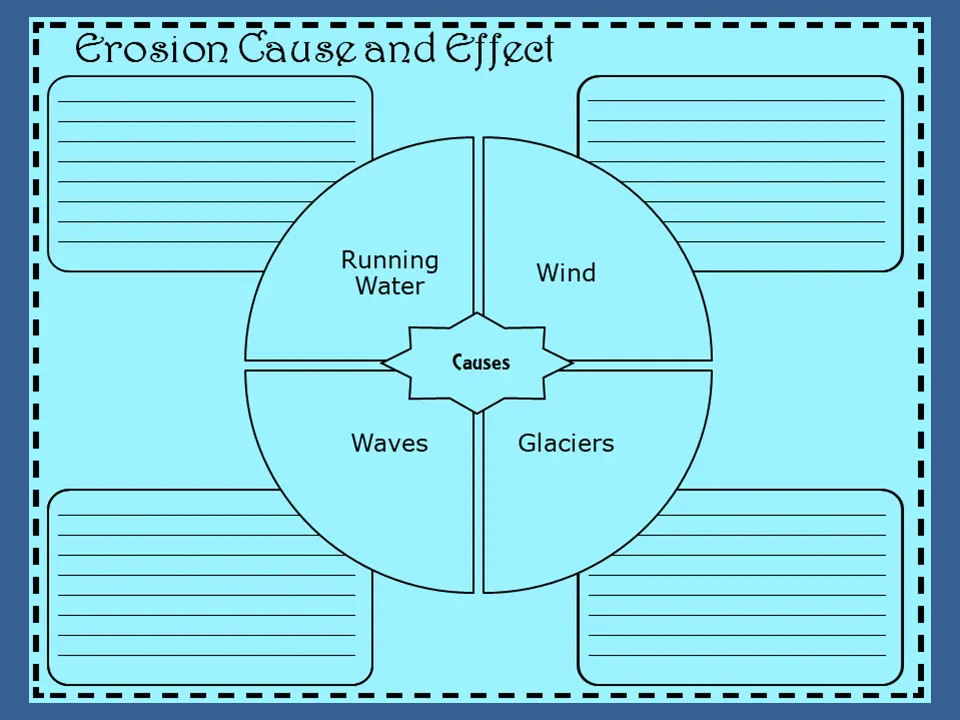
Erosion Cause & Effect Organizer

A four-quadrant wheel organizer lets students sort specific landforms and erosional features under the cause that created them — running water, wind, waves, or glaciers.

Photo: Erosion cause and effect wheel organizer
Photo: Causes of erosion strip organizer

Caverns & Glacial Landforms

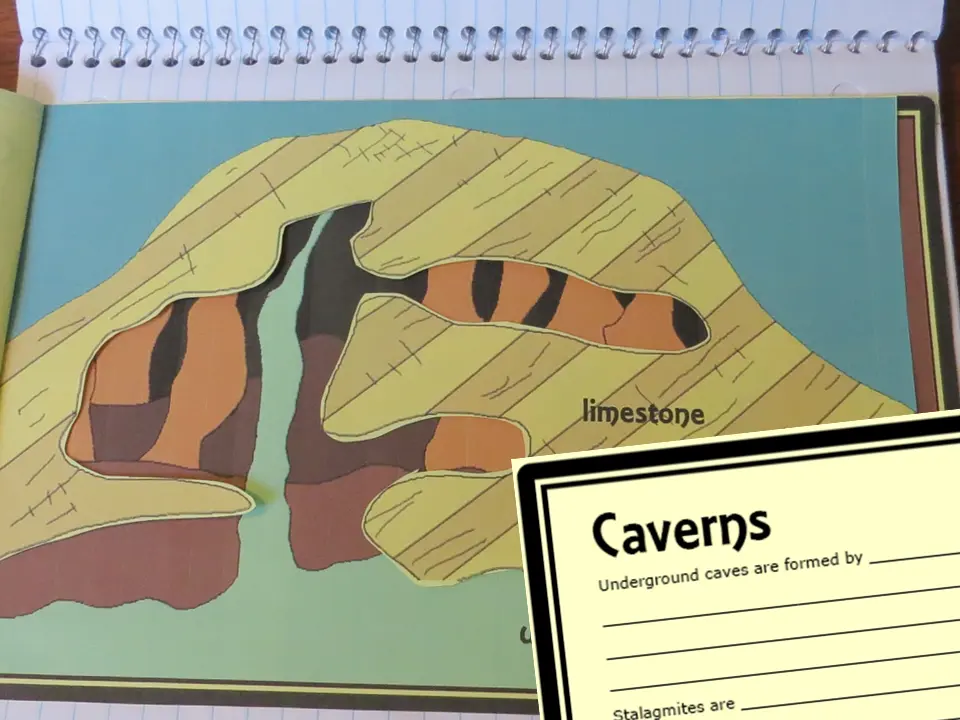
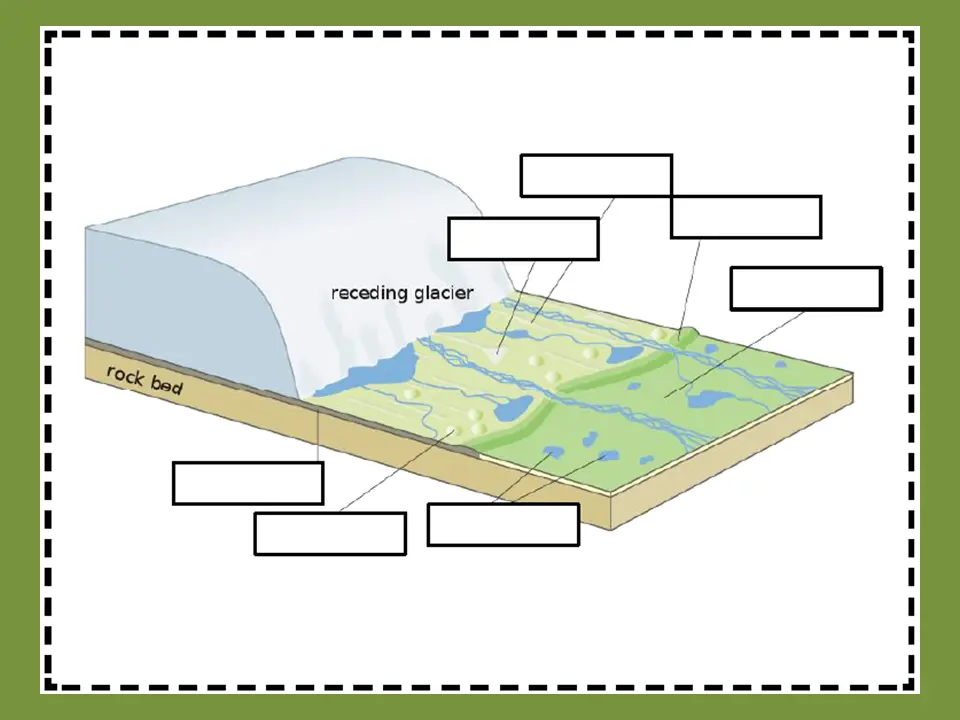
Two flip-book organizers go deeper into specific erosional landforms: how caverns form underground through dissolving limestone, and the distinct landforms a retreating glacier leaves behind.

Photo: Caverns flip book, stalactites & stalagmites

Caverns

When rain picks up carbon dioxide, it forms a weak acid that dissolves limestone over time, creating caves with stalactites and stalagmites.

Photo: Glacial landforms diagram, eskers & kettles

Glacial Landforms

A retreating glacier leaves behind a distinct set of landforms, including eskers, kettles, kames, and outwash plains.

MS-ESS2-1 • MS-ESS2-2 • MS-ESS2-3

Want the Complete Geology Unit?

This page covers just one piece of a full NGSS-aligned Earth's Systems: Geology unit — over 370 pages of interactive notebook activities, mini posters, organizers, mini research projects, and Check for Understanding pages covering the rock cycle, plate tectonics, volcanoes, earthquakes, weathering, erosion, and the evidence for plate tectonics.

View the Full Unit on TPT