MS-ESS2-6 • Grades 6–8

Breezes & Rain Shadow

Local wind patterns — sea breezes, land breezes, mountain breezes, valley breezes — are the small-scale version of the same pressure-driven airflow that drives global weather. Mountains add another layer, creating dramatic wet-dry contrasts on opposite sides of the same ridge.

Sea Breeze & Land Breeze

Land and water heat and cool at very different rates. Land heats quickly during the day and cools quickly at night — water changes temperature slowly. This daily temperature difference drives a wind cycle that reverses direction between day and night.

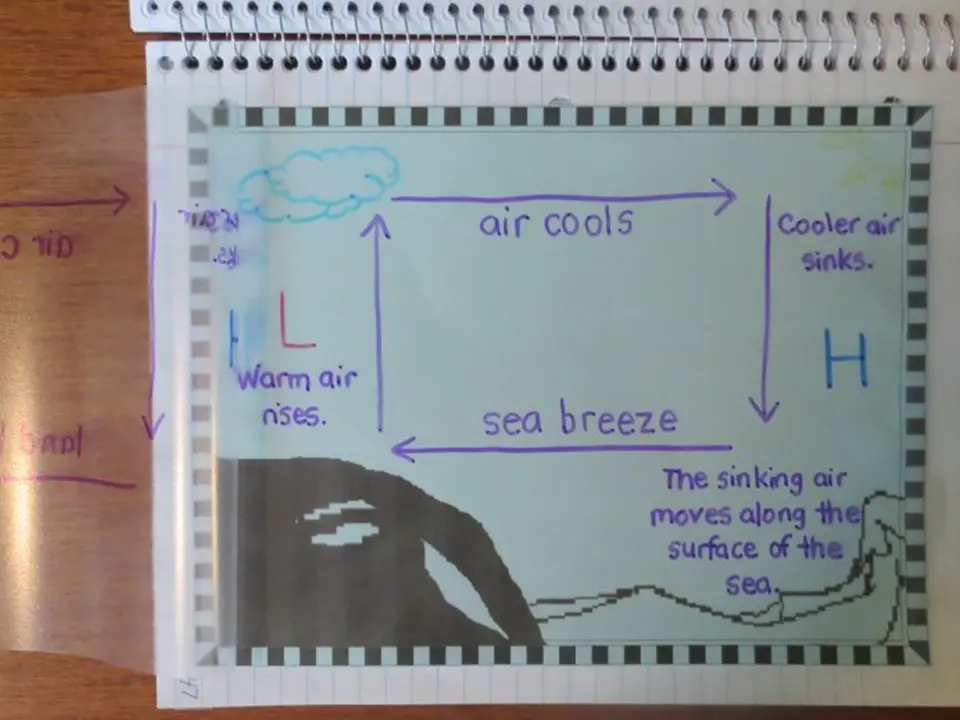
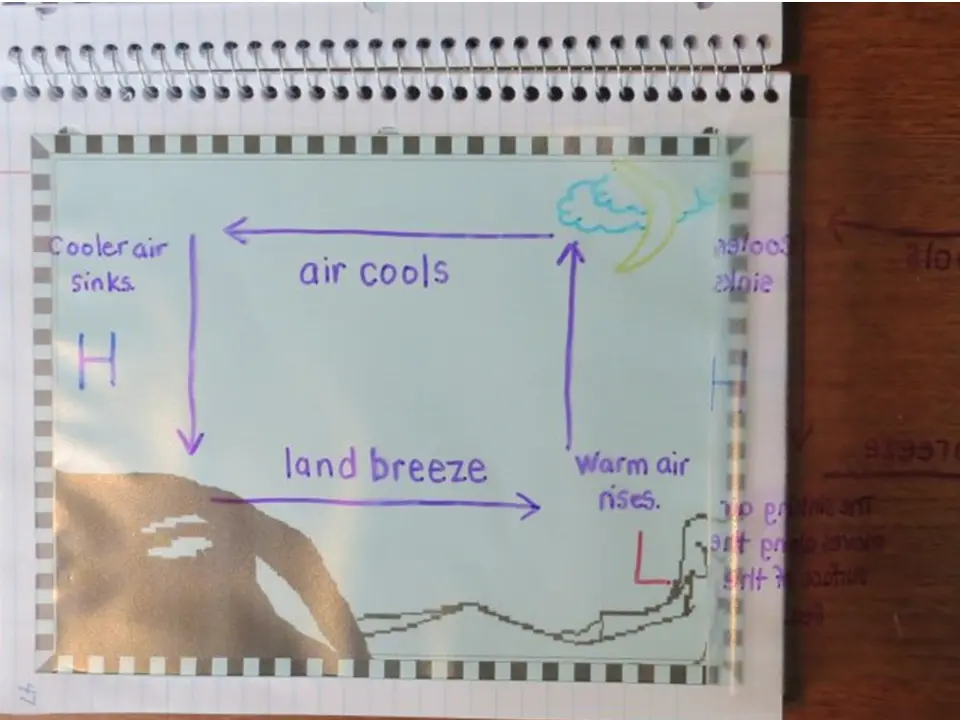
Sea breeze and land breeze cycle Two diagrams showing air flowing from sea to land during the day as a sea breeze, then reversing from land to sea at night as a land breeze. Daytime — Sea Breeze Land heats faster than water Land (hot) Sea (cool) Warm air rises Sea breeze → cool air flows inland H pressure over sea, L over land Nighttime — Land Breeze Land cools faster than water Land (cool) Sea (warm) Warm air rises ← Land breeze cool air flows out to sea H pressure over land, L over sea

Sea & Land Breeze Plastic Overlay Organizer

This organizer uses a unique construction technique — students trace arrow patterns onto clear page protectors, then staple one panel on each side of a printed background. Lifting each panel independently shows the airflow for each breeze type without the confusion of overlapping arrows.
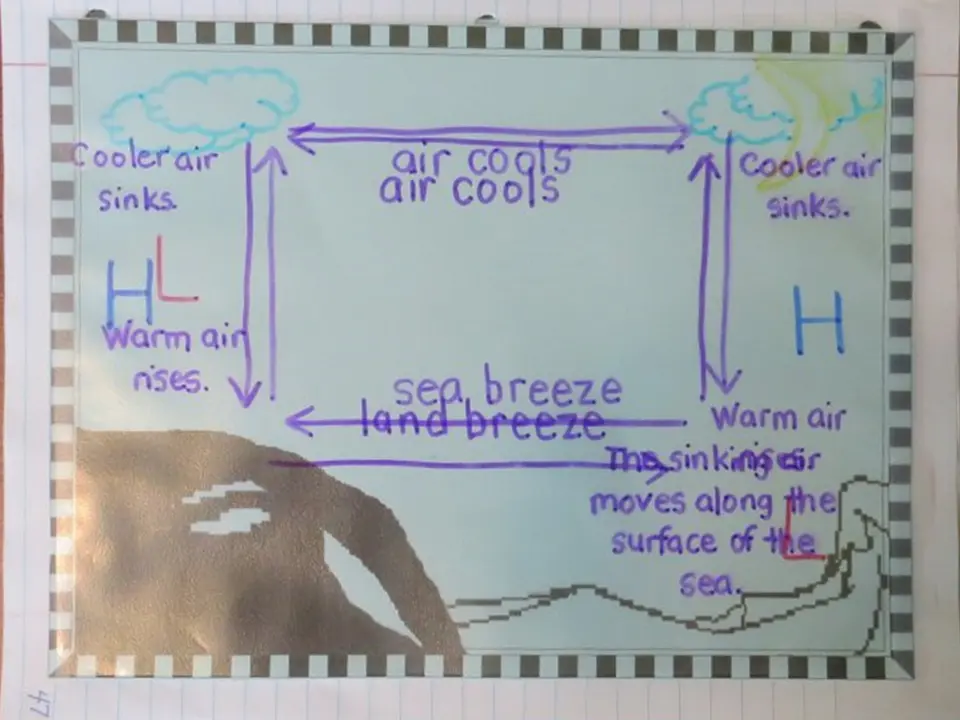
How the plastic overlay organizer works

How the plastic overlay organizer works Three-panel diagram showing the construction process: a printed background page, then the sea breeze plastic overlay stapled on the left, then the land breeze overlay stapled on the right. Step 1 — Background Printed background glued to notebook Step 2 — Left overlay Sea breeze stapled left side Lift left panel to see sea breeze Step 3 — Right overlay Land breeze stapled right side Lift right panel to see land breeze Students trace arrow patterns onto clear page protectors, then staple one on each side of a printed background. Each panel lifts independently — compare both breezes, or study one at a time without confusing overlapping arrows.
Sea and land breeze plastic overlay organizer, both panels
Land breeze overlay panel lifted
Sea breeze overlay panel lifted

Mountain & Valley Breezes

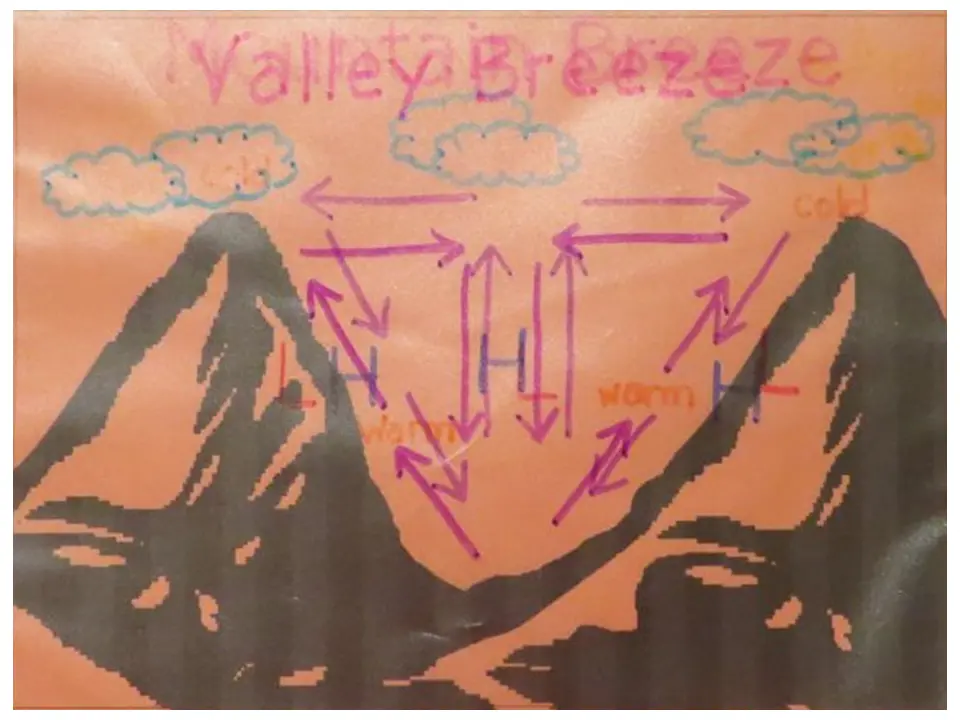
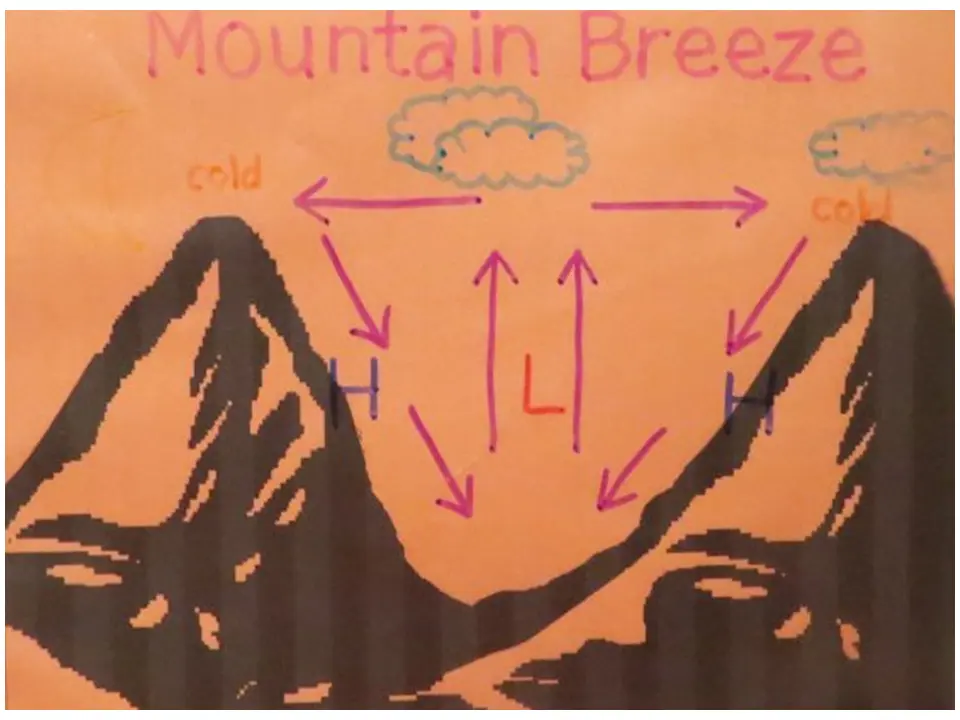
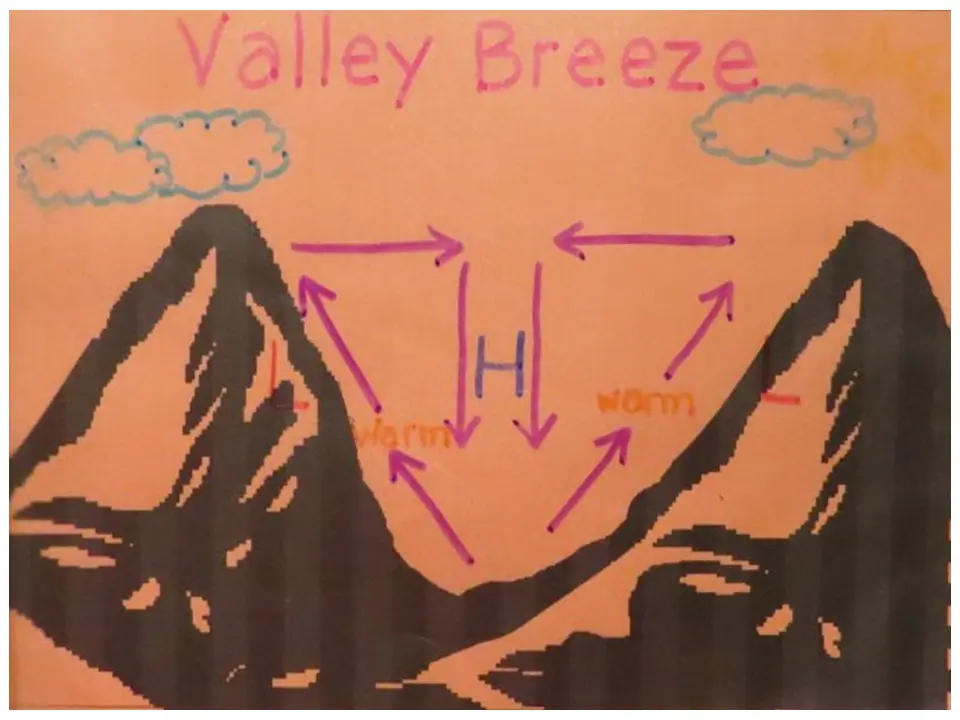
Mountain and valley breezes follow the same logic as sea and land breezes — just applied to elevation instead of water. Valley air heats during the day and rises up the mountain slope; at night the mountain air cools and sinks back into the valley.

Valley breeze plastic overlay organizer
Mountain breeze plastic overlay organizer
Valley breeze single panel view

The same organizer technique — applied to mountains

The valley and mountain breeze organizer uses the same page protector overlay construction as the sea and land breeze organizer. One plastic panel shows valley breeze airflow (day), the other shows mountain breeze airflow (night). Students lift each panel over the shared mountain background to compare the two patterns — the reversal of direction is immediately visible without any overlapping arrows to confuse the picture.

Atmospheric Lifting & the Rain Shadow

When air is forced upward — by a mountain, a front, or a convergence zone — it cools and its moisture condenses into precipitation. The type of lifting determines the type of storm. On the far side of a mountain, the now-dry air descends and warms, creating a rain shadow.

Rain shadow effect A mountain cross-section showing moist air rising on the windward side with precipitation, then descending dry on the leeward rain shadow side. Moist air Air rises & cools 💧💧💧 Rain & snow Air descends warms & dries Windward side Lush, wet vegetation Rain shadow Dry, desert-like Dry air Sea level Mountain peak Prevailing winds

Rain Shadow Organizer & 3D Model

The rain shadow unit closes with three activities — an example atmospheric lifting poster, a written organizer, and a 3D physical model that brings the entire concept off the page and into students' hands.

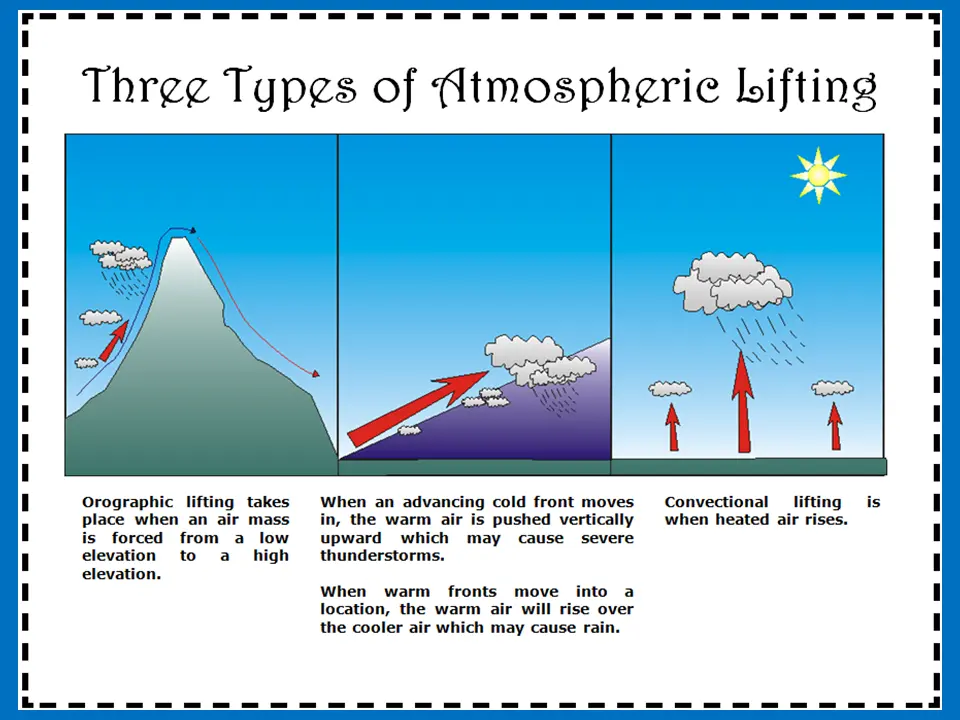
Three types of atmospheric lifting poster

Atmospheric Lifting Poster

Covers the three types of atmospheric lifting — geographic, frontal, and convectional — with diagrams showing how each forces air upward and triggers precipitation.

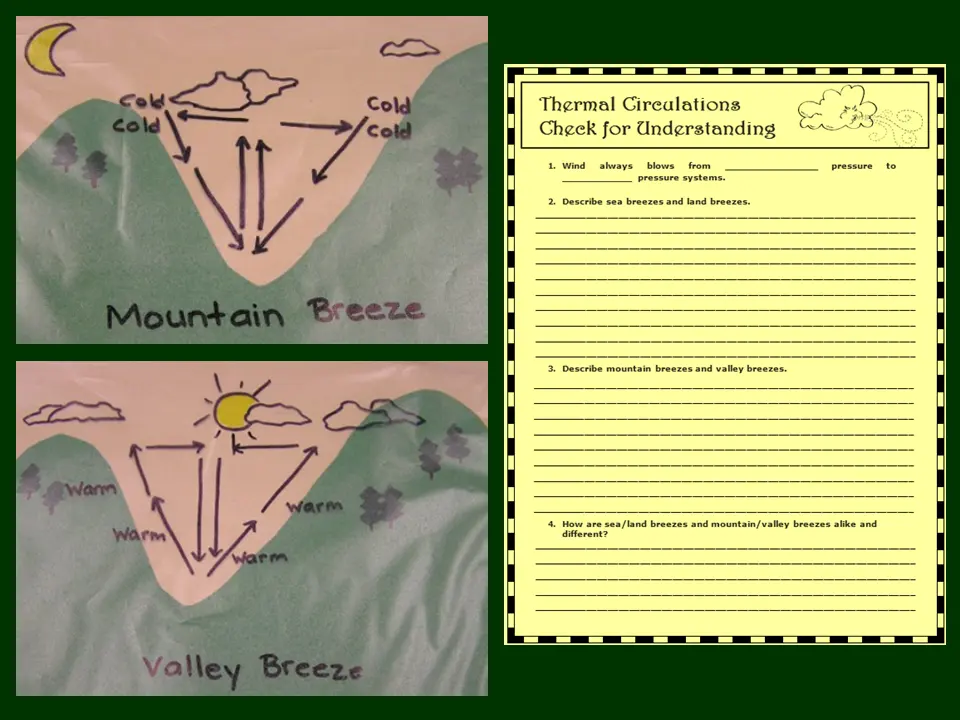
Mountain valley breezes check for understanding with thermal circulations

Thermal Circulations Check for Understanding

A culminating Check for Understanding page covers sea/land breezes and mountain/valley breezes together — asking students to explain both cycles and compare their causes.

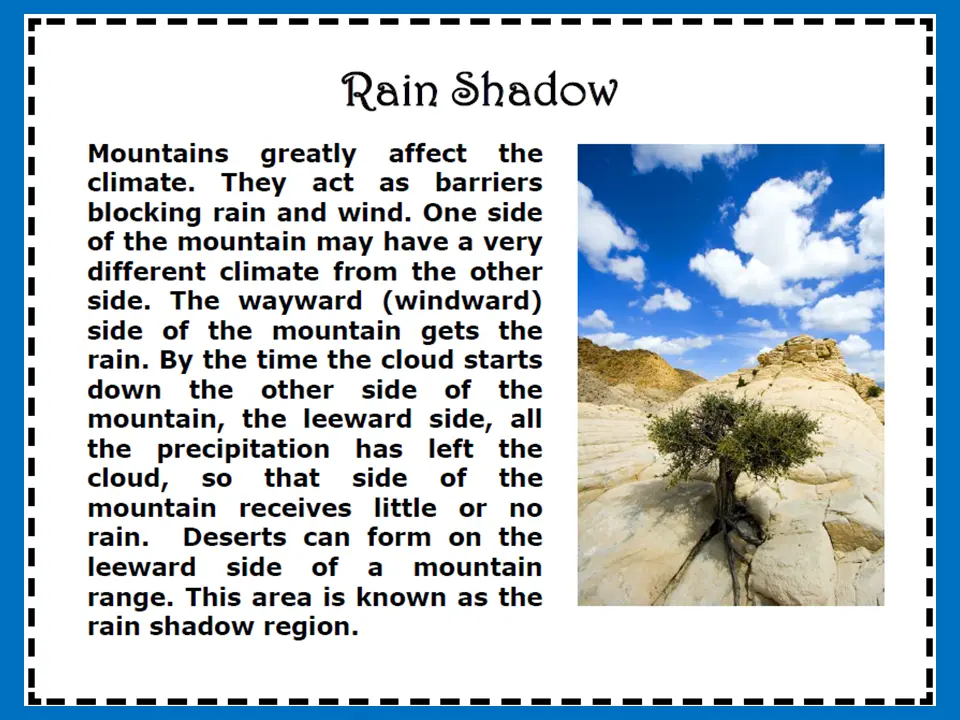
Rain shadow effect poster

Rain Shadow Poster

Explains how mountains create dramatically different climates on each side — the wet windward slope and the dry leeward rain shadow — with a real-world example.

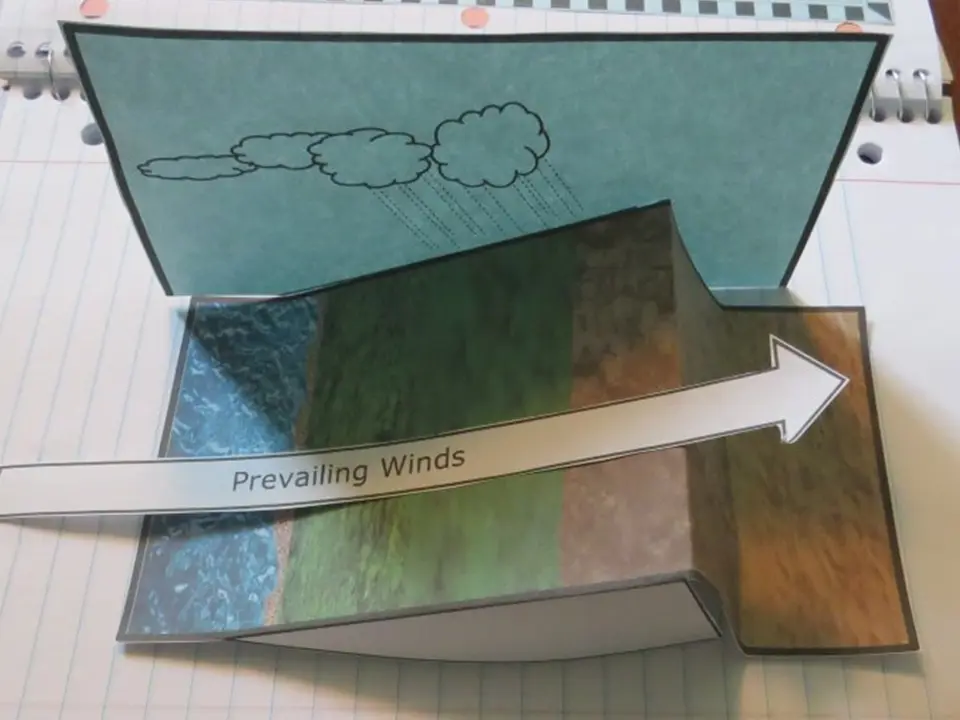
3D rain shadow physical model with layered plastic overlays

3D Rain Shadow Model

Students build a physical three-dimensional model of the rain shadow effect — the centerpiece of the unit and a natural culminating activity that connects atmospheric lifting, precipitation, and climate patterns in one hands-on project.

MS-ESS2-4 • MS-ESS2-5 • MS-ESS2-6 • Grades 6–8

Want the Complete Weather & Climate Unit?

This page is one part of a full NGSS-aligned unit covering the hydrologic cycle, atmospheric layers, air pressure, fronts, storms, humidity, temperature, climate patterns, and more — with hands-on experiments, foldable organizers, vocabulary tools, and Check for Understanding pages throughout.

View the Full Unit on TPT