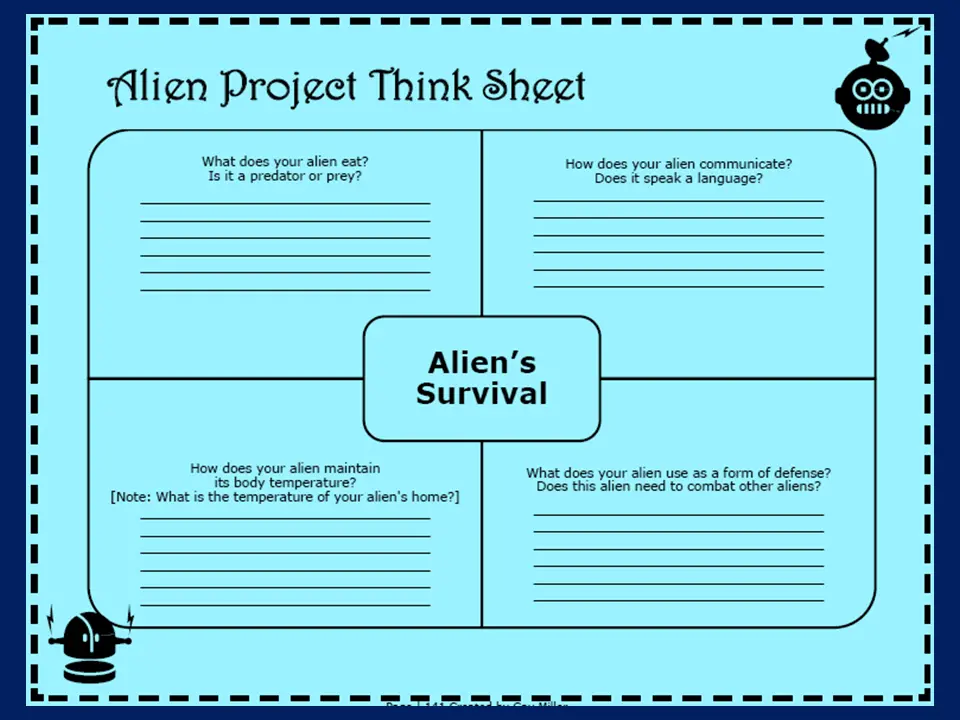
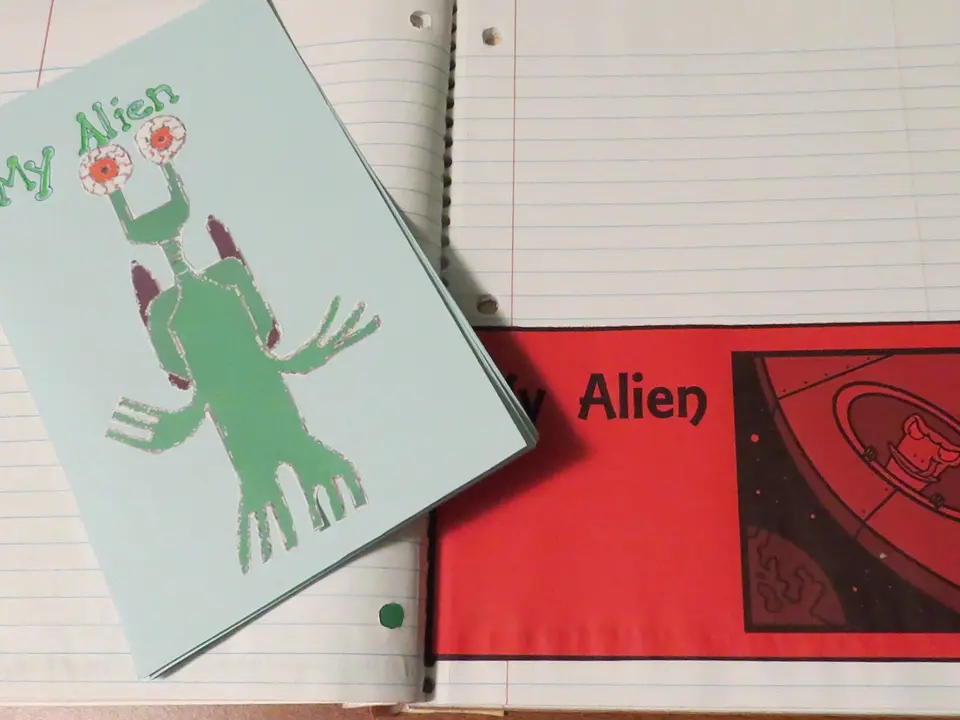
Students move from reading planet data to interpreting it, comparing it, and finally applying it creatively — designing a scientifically grounded alien life form that could actually survive on another world.
The eight planets fall into two clearly different groups separated by the asteroid belt. Understanding what distinguishes rocky inner planets from gas giant outer planets is the foundation for making sense of all the data that follows.
Activities 1–3
Three sequential activities build from reading a table to creating one to organizing information into a foldable — scaffolding data literacy skills alongside planet content.
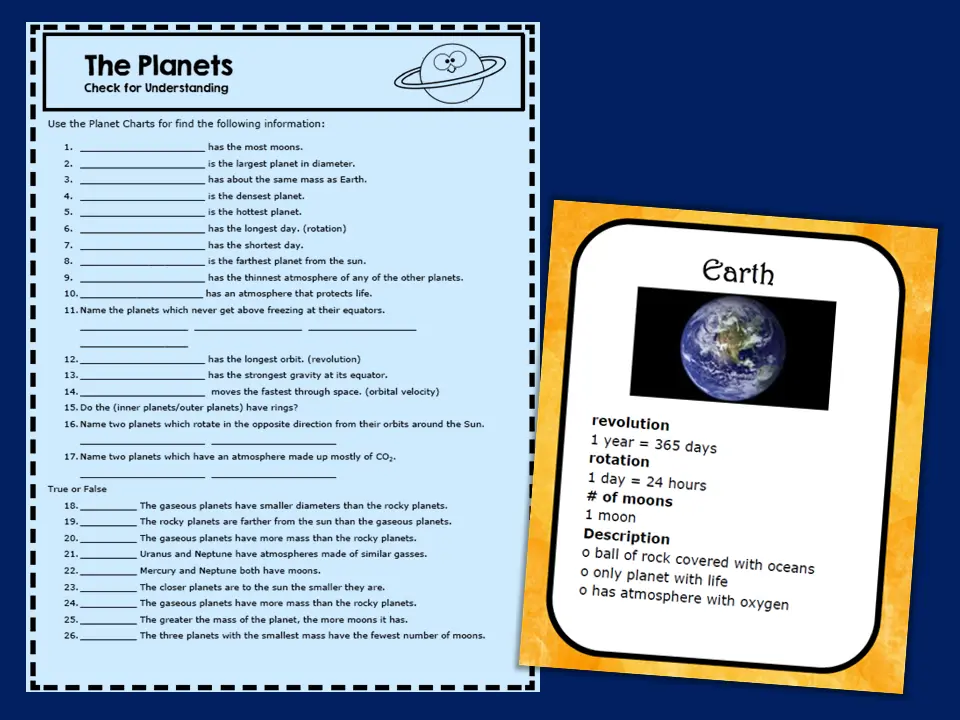
A reference card with key planet data pairs with structured comprehension questions — students practice reading scientific tables and drawing conclusions from the data.
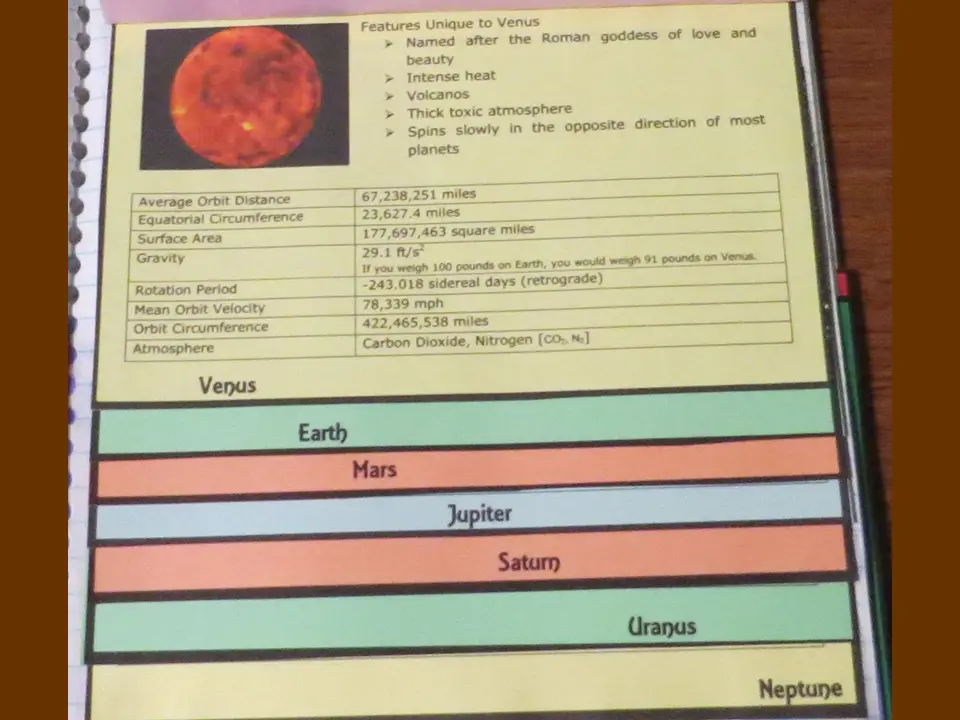
A layered flip organizer lists all eight planets with key facts on each flap — students build the organizer themselves, reinforcing the data through the act of writing and assembling it.
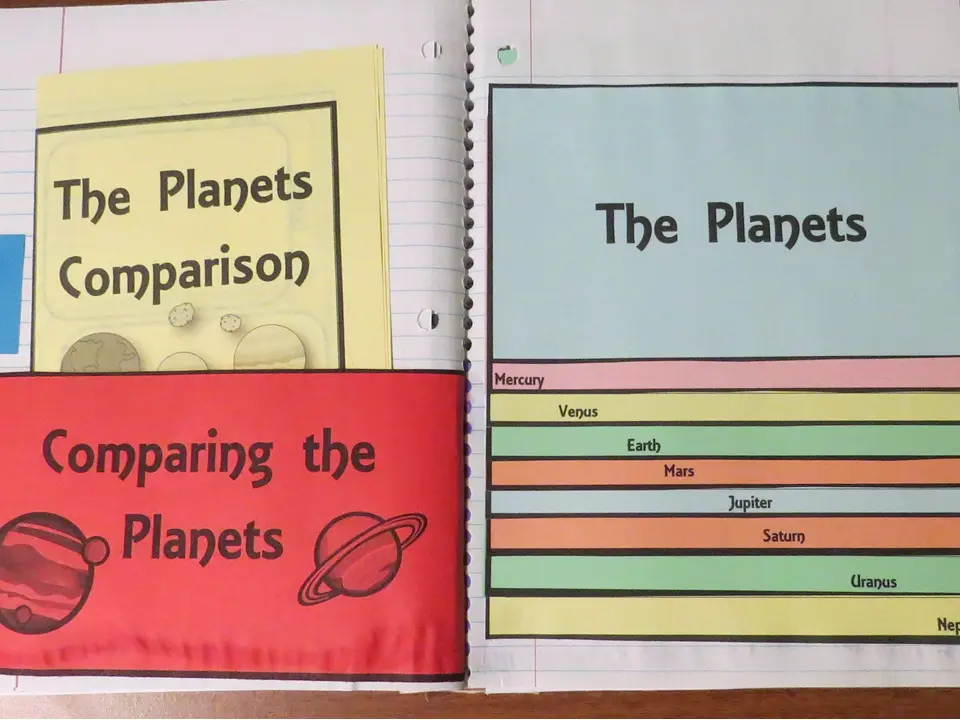
Students analyze multiple data points across all eight planets and use the results to identify patterns — which planets are densest, which have the longest years, which are coldest.
Universe Tables
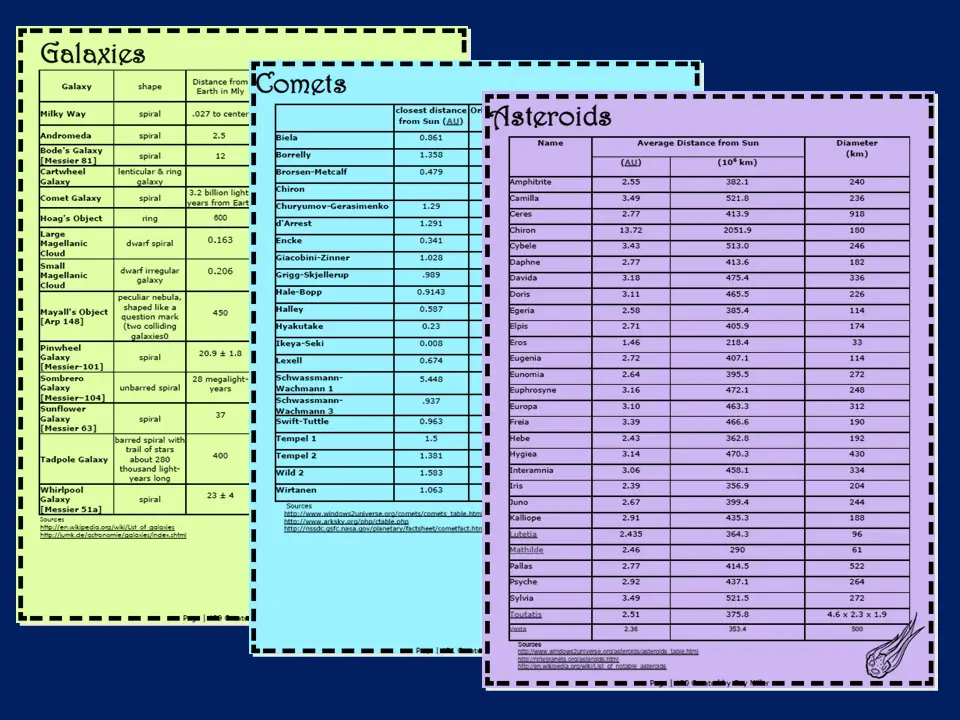
Beyond the eight planets, the solar system is home to millions of asteroids, comets, and other celestial bodies. These reference charts extend student data literacy to the wider universe, including galaxy and asteroid belt data.
The unit includes three data tables students use to find and interpret information about objects beyond our solar system:
Students practice Activities 1 and 2 (reading tables and creating their own) using this extended dataset, applying the same skills used with planet data to a broader set of celestial objects.
Creative Research Project
The culminating project asks students to design an alien life form that could realistically survive on a planet of their choosing. Every design decision must be supported by actual planet data — atmospheric composition, temperature, gravity, and more.
Students can't just draw a fun alien — they have to justify every choice with science. If they choose Mars, they need to account for the thin atmosphere, extreme cold, and low gravity. Their alien's survival mechanisms, body structure, diet, and defense all flow from the data. It's genuine scientific reasoning disguised as a creative project.
This page is one part of a full NGSS-aligned unit covering lunar phases, tides, eclipses, seasons, the Big Bang, gravity, galaxies, the solar system, planets, the geologic time scale, and more — with hands-on models, projects, and Check for Understanding pages throughout.
View the Full Unit on TPT