MS-ESS1-1 • Grades 6–8

Eclipses & Seasons

Two phenomena — eclipses and seasons — both depend on the same Earth-Sun-Moon system, yet each involves a different combination of alignment, tilt, and shadow geometry that students often confuse until they build a model.

Solar Eclipse vs. Lunar Eclipse

The key difference is whose shadow falls on what. In a solar eclipse the Moon blocks sunlight from reaching part of Earth. In a lunar eclipse Earth's shadow falls on the Moon. In both cases, the shadow has a dark inner zone — the umbra — and a lighter outer zone — the penumbra.

Solar and lunar eclipses Two diagrams comparing a solar eclipse and a lunar eclipse, showing umbra and penumbra shadow zones. Solar Eclipse Moon's shadow falls on Earth Sun Moon Earth umbra penumbra Lunar Eclipse Earth's shadow falls on Moon Sun Earth Moon umbra penumbra Only viewers in the umbra see a total eclipse. Penumbra viewers see a partial eclipse. Visible from the entire night side of Earth. Moon appears red-orange during totality.

Solar vs. Lunar — Key Differences

  Solar Eclipse

  • Occurs during a new moon
  • Moon passes between Earth and the Sun
  • Only visible from a narrow path on Earth's surface
  • Total solar eclipse lasts only minutes
  • Never safe to look at without proper filters

  Lunar Eclipse

  • Occurs during a full moon
  • Earth passes between the Sun and Moon
  • Visible from anywhere on the night side of Earth
  • Total lunar eclipse can last over an hour
  • Safe to view with the naked eye

Eclipse Activities & Organizers
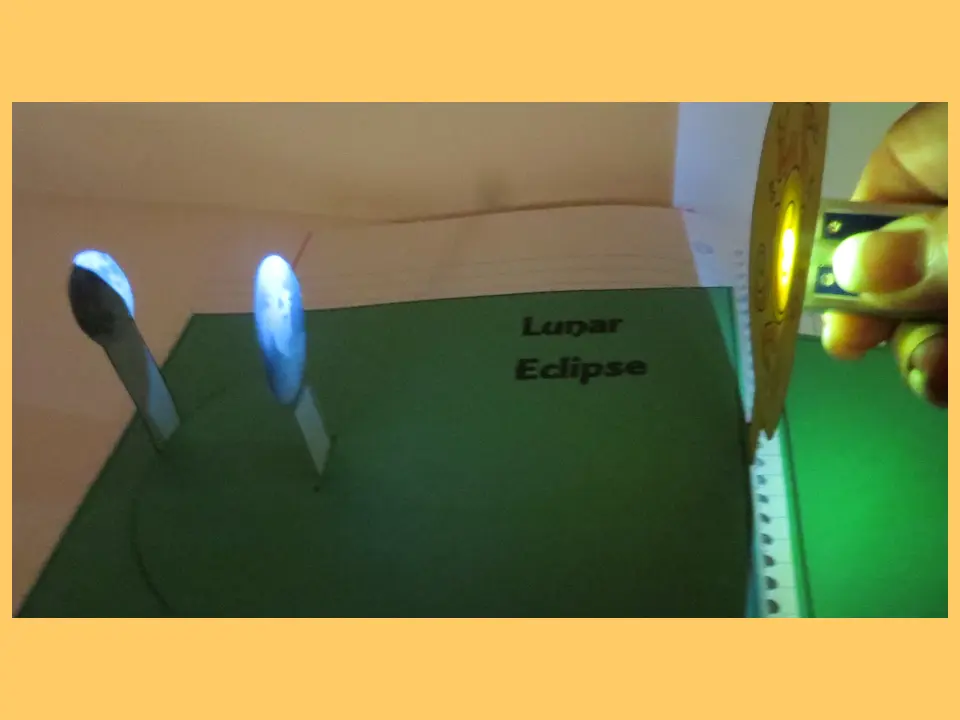
Hands-on lunar eclipse model

Lunar Eclipse Model

Students use a flashlight, ball, and globe to model how Earth's shadow creates a lunar eclipse, observing both the umbra and penumbra firsthand.
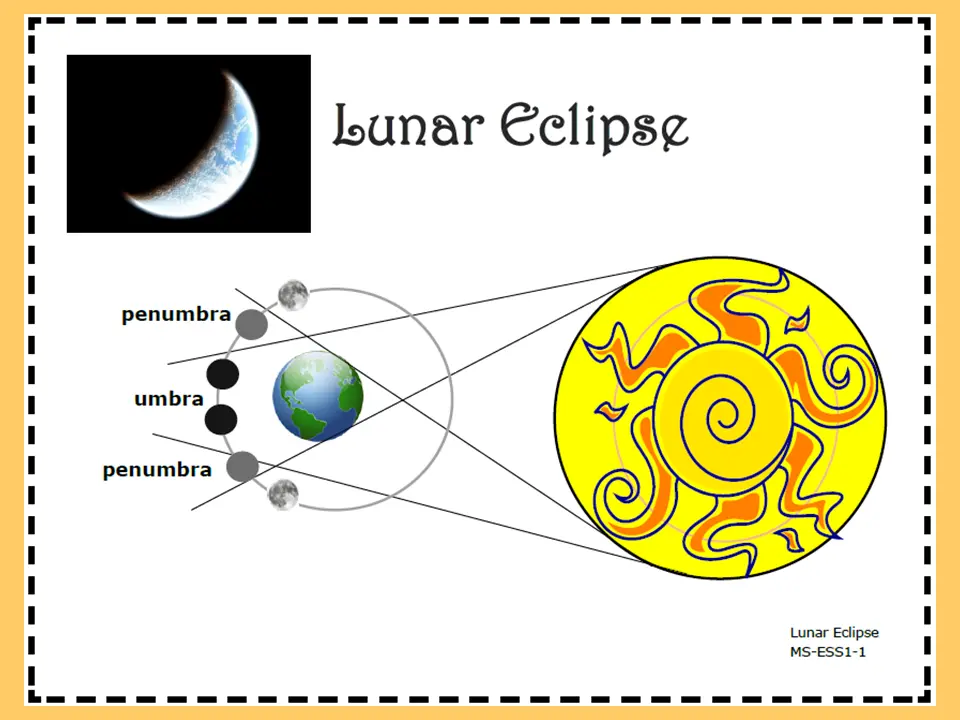
Lunar eclipse poster showing umbra and penumbra

Lunar Eclipse Poster

A reference poster labels the umbra and penumbra zones for a lunar eclipse, with a real photograph of the moon during totality.
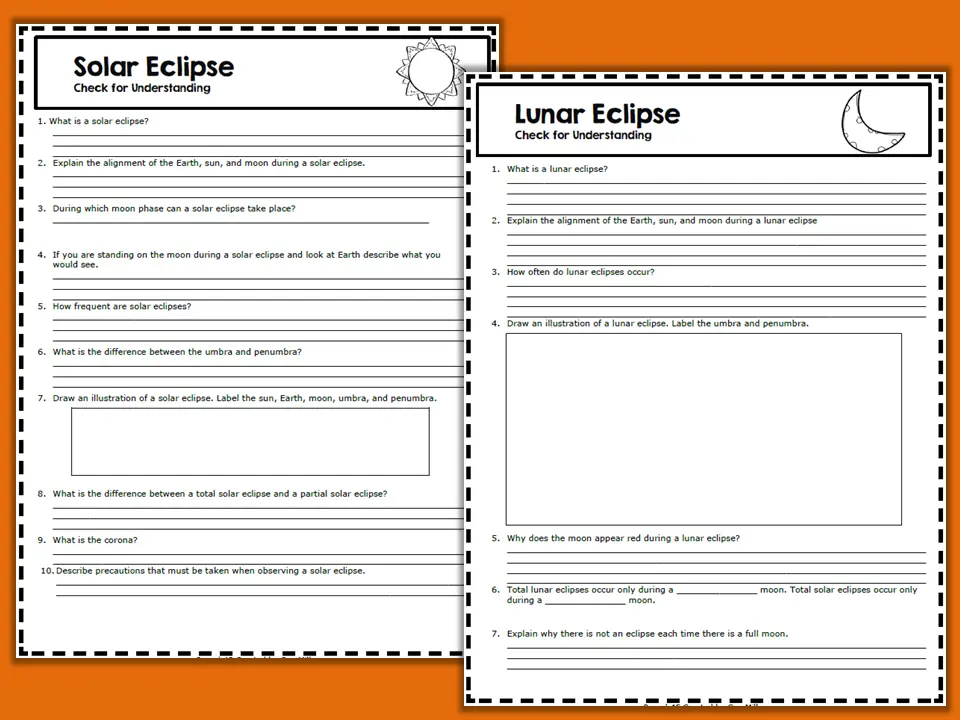
Eclipse check for understanding page

Eclipse — Check for Understanding

Structured writing questions cover both solar and lunar eclipses, asking students to compare and explain using evidence from the model and readings.
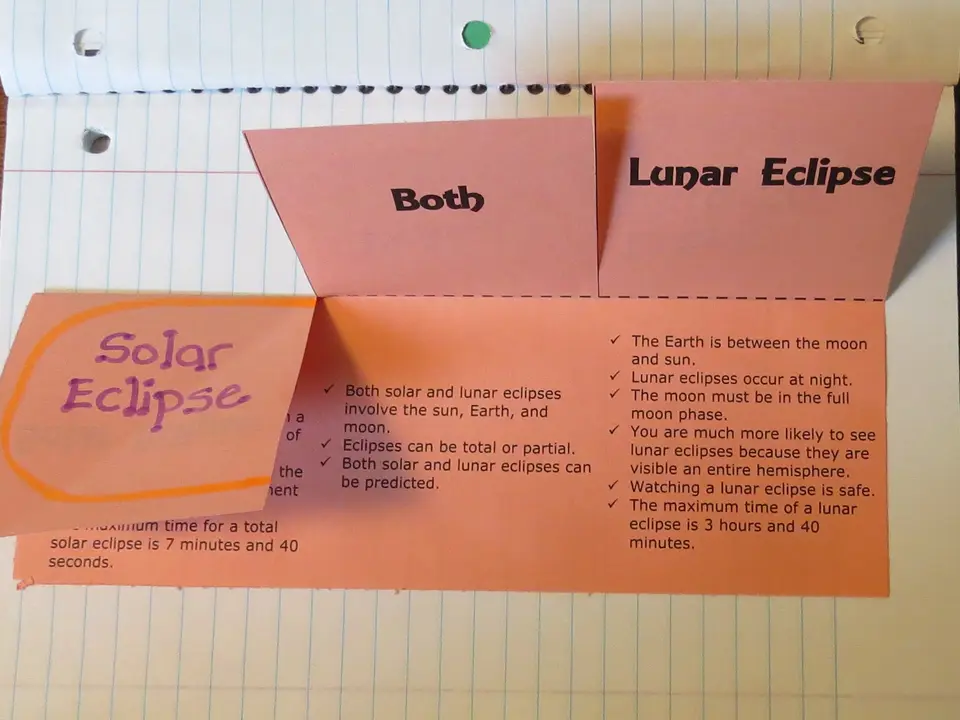
Solar and lunar eclipse comparison foldable

Eclipse Comparison Foldable

A three-section foldable lets students organize what is unique to solar eclipses, what is unique to lunar eclipses, and what both types share.
Why Do Seasons Occur?

Seasons are caused by Earth's axial tilt of 23.5°, not by distance from the Sun. As Earth orbits, the Northern and Southern Hemispheres take turns being tilted toward the Sun, receiving more direct sunlight and experiencing longer days.

Earth's seasons caused by axial tilt Earth shown at four orbital positions with axial tilt illustrated, labeling the June solstice, December solstice, March equinox, and September equinox. Sun June Solstice N. Hemisphere Summer Sept. Equinox Equal day & night Dec. Solstice N. Hemisphere Winter March Equinox Equal day & night

Seasons Activities & Organizers

Hands-on seasons model with tilted Earth

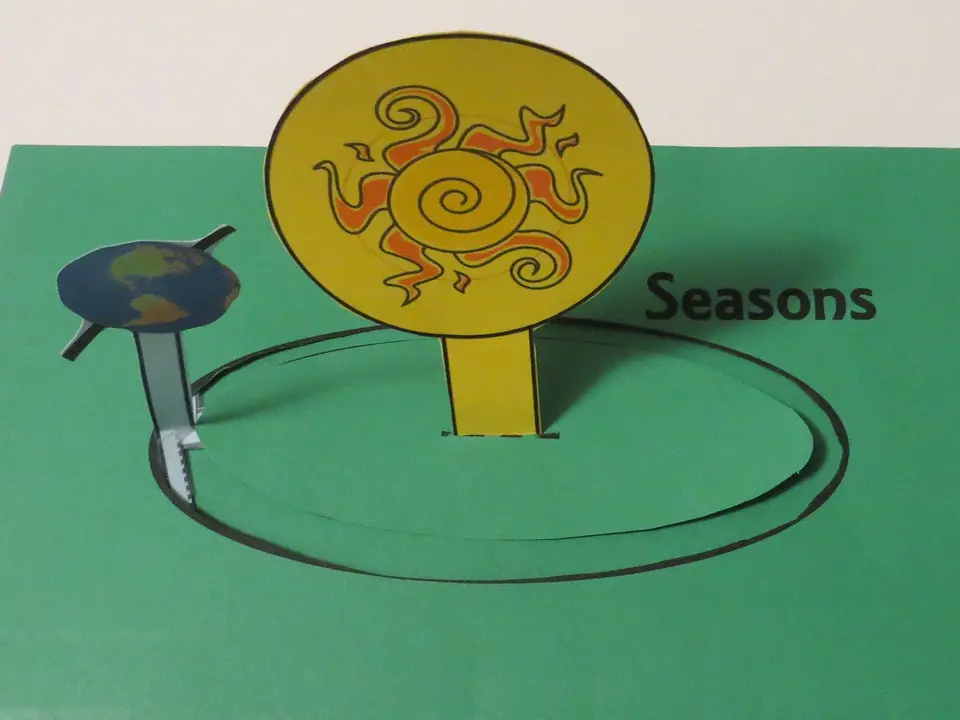
Seasons Physical Model

A table-top model shows Earth tilted on its axis orbiting a light source, making the connection between axial tilt and seasonal sunlight angles visible and tangible.

Seasons poster showing Earth's four orbital positions

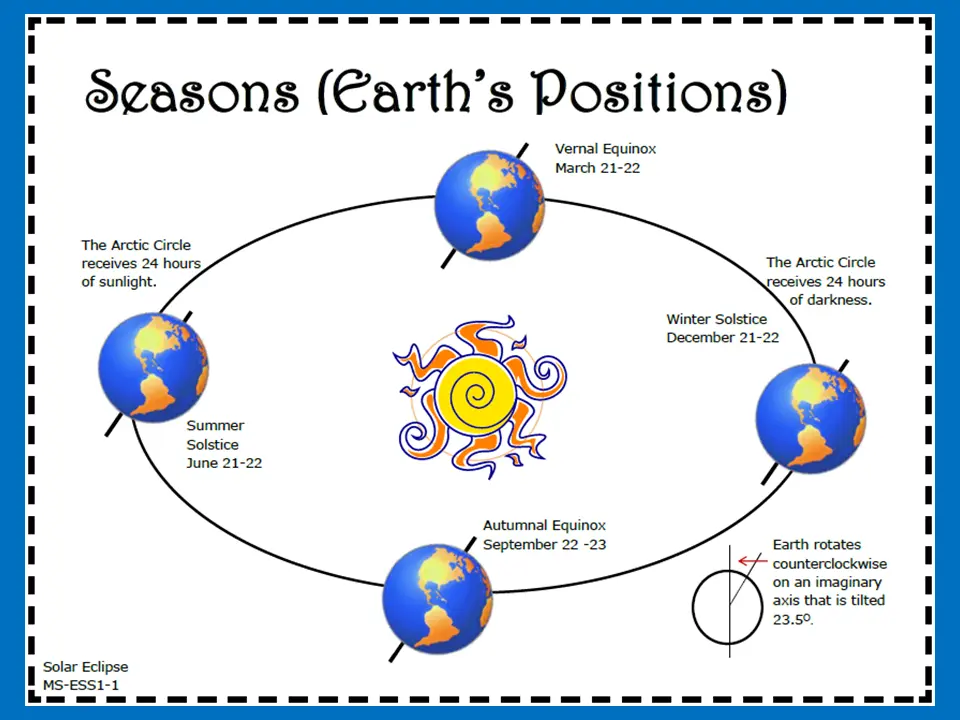
Seasons Positions Poster

A labeled diagram shows Earth at each solstice and equinox, with details on hours of sunlight, Arctic Circle conditions, and the dates for each position.

MS-ESS1-1 • MS-ESS1-2 • MS-ESS1-3 • MS-ESS1-4 • Grades 6–8

Want the Complete Earth's Place in the Universe Unit?

This page is one part of a full NGSS-aligned unit covering lunar phases, tides, eclipses, seasons, the Big Bang, gravity, galaxies, the solar system, planets, the geologic time scale, and more — with hands-on models, projects, and Check for Understanding pages throughout.

View the Full Unit on TPT