Earth is 4.6 billion years old — a span of time so vast that the entire history of humans occupies only the last sliver. The geologic time scale, dating methods, and fossil evidence are the tools scientists use to make sense of that immensity.
Geologists divide Earth's 4.6-billion-year history into a nested hierarchy of time units — eons, eras, periods, and epochs — based on major events in Earth's rock record and the appearance and disappearance of life forms. The four eons form the broadest divisions.
Two activities take students from reading the geologic time scale to building their own organized version — reinforcing the sequence of eons, eras, and key events through active work.
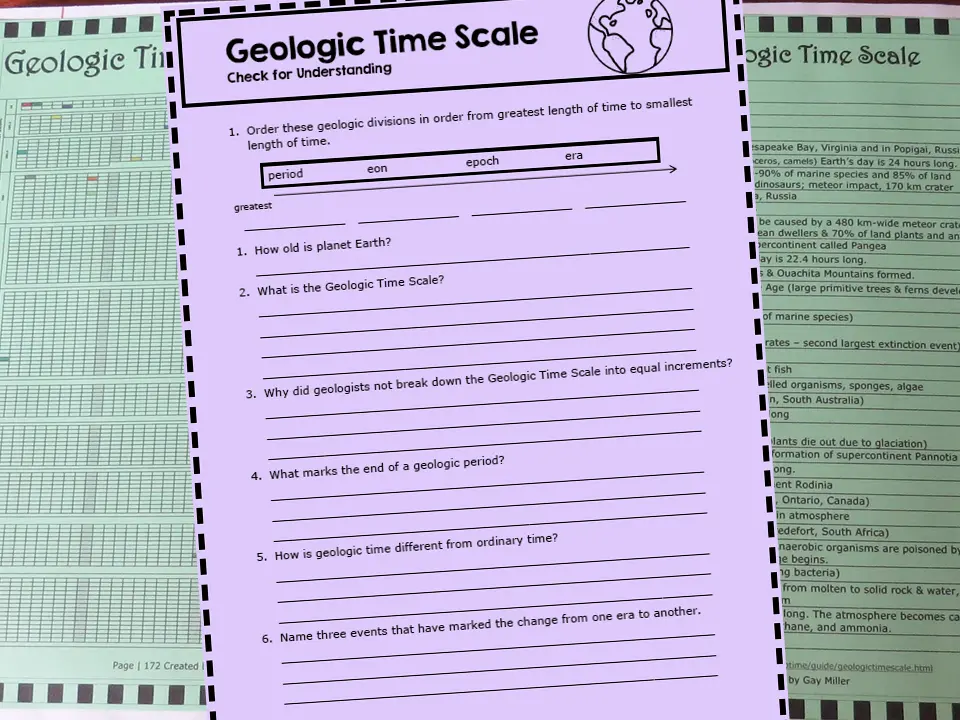
Structured reading and response questions require students to locate information within the geologic time scale, interpret sequences, and explain how different time periods relate to one another.
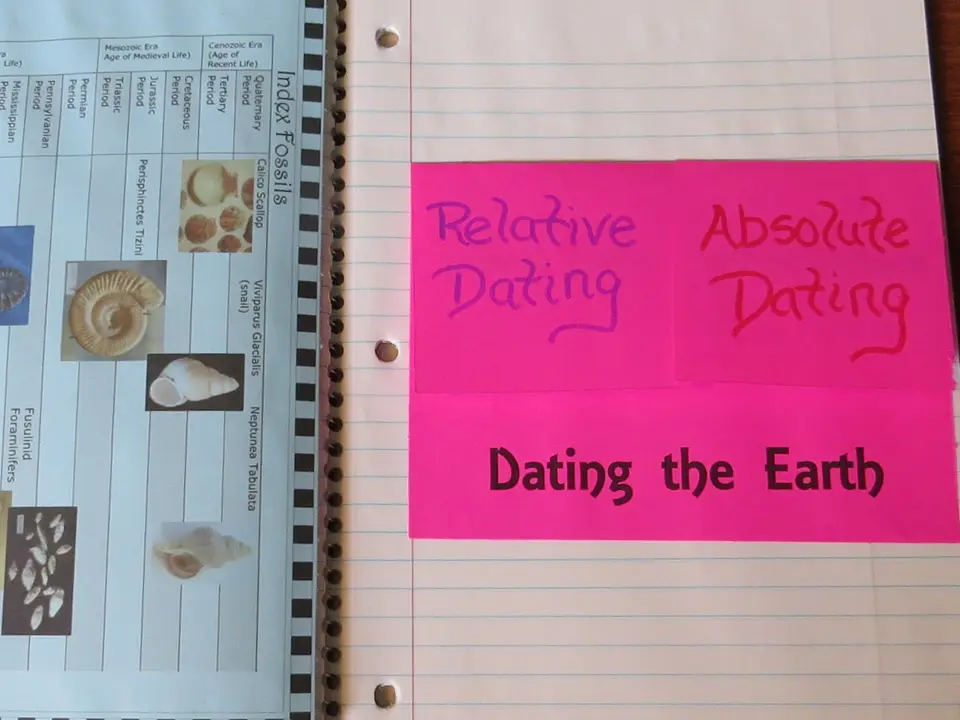
A flip foldable separates the two dating methods with clear visual organization — students record how each method works, what evidence it uses, and what type of answer it provides.
Geologists use two complementary methods to determine the age of rocks and fossils. Relative dating tells you the order — which came first. Absolute dating tells you the actual age in years. Together they build a complete picture of Earth's timeline.
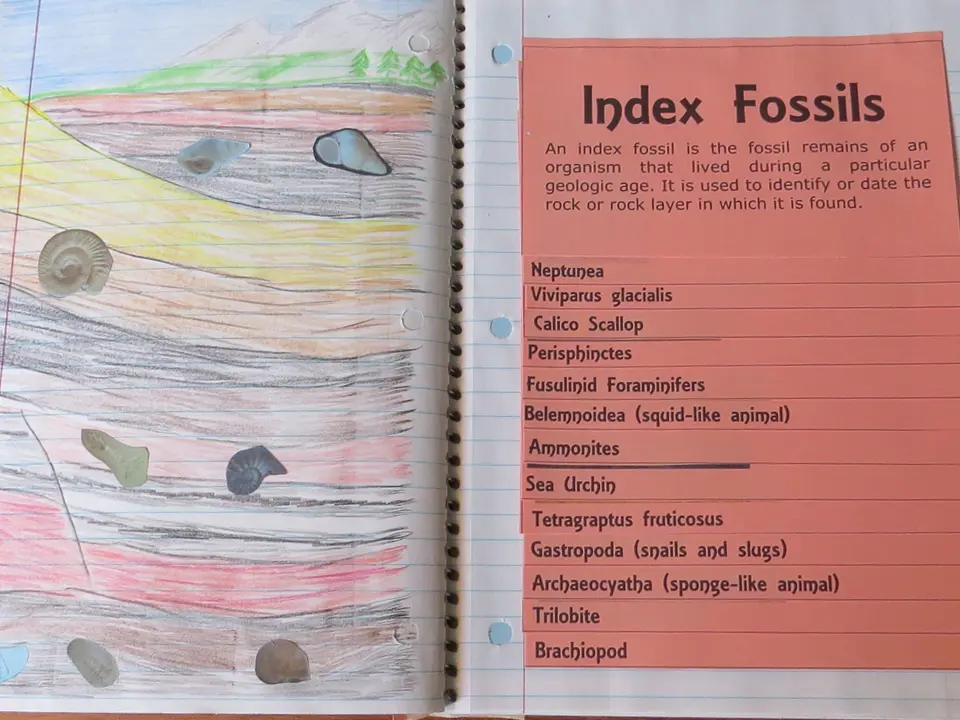
Index fossils are the remains of organisms that lived for a short, well-defined time period and were widely distributed across the planet. Finding one in a rock layer tells a geologist exactly when that layer was deposited — no radiometric dating required.
To be useful as an index fossil, an organism must have existed for a relatively short time geologically, lived in many different environments worldwide, and left fossils that are easily recognized. Trilobites, ammonites, and certain species of foraminifera are classic examples — find one, and you know the approximate age of the layer it came from.
A flip organizer covers the major types of fossils — mold, cast, trace, petrified, and amber — alongside index fossil examples, giving students a complete reference for both kinds of fossil evidence used in dating rock strata.
This page is one part of a full NGSS-aligned unit covering lunar phases, tides, eclipses, seasons, the Big Bang, gravity, galaxies, the solar system, planets, the geologic time scale, and more — with hands-on models, projects, and Check for Understanding pages throughout.
View the Full Unit on TPT