The Moon's position relative to Earth and the Sun drives two of the most observable patterns in our sky — the changing shape of the Moon each night and the rise and fall of ocean tides every day.
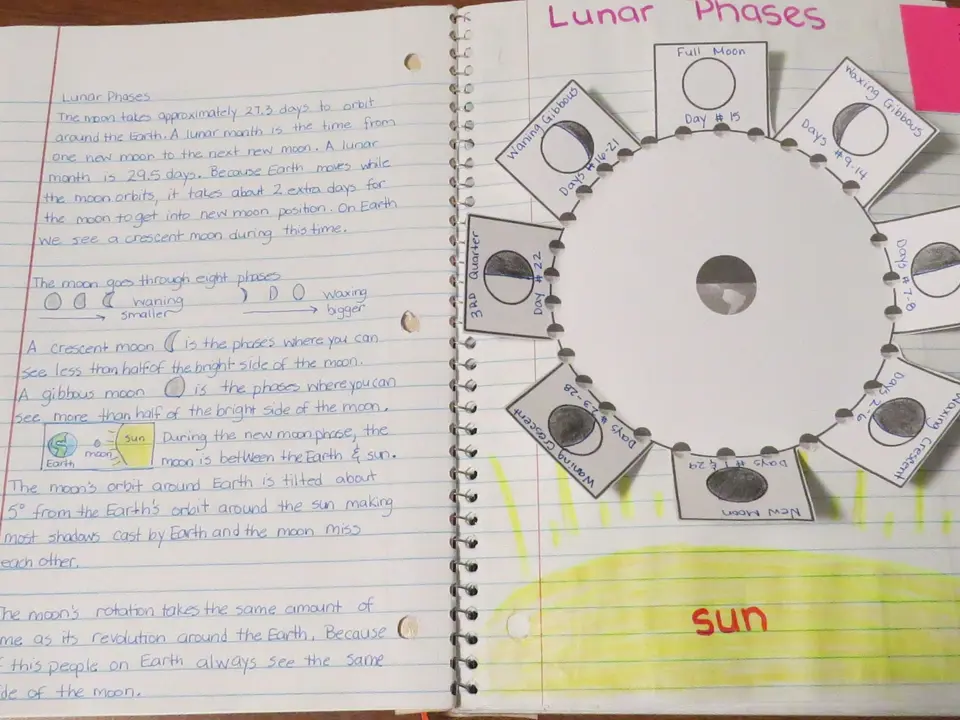
The Moon doesn't change shape — what changes is how much of the sunlit side we can see from Earth as the Moon orbits over about 29.5 days. Understanding the Moon's position is the key to understanding its phase.
A rotating wheel model lets students physically turn the Moon's position around Earth and observe how the lit and dark portions change — making the abstract cycle of phases concrete and hands-on.
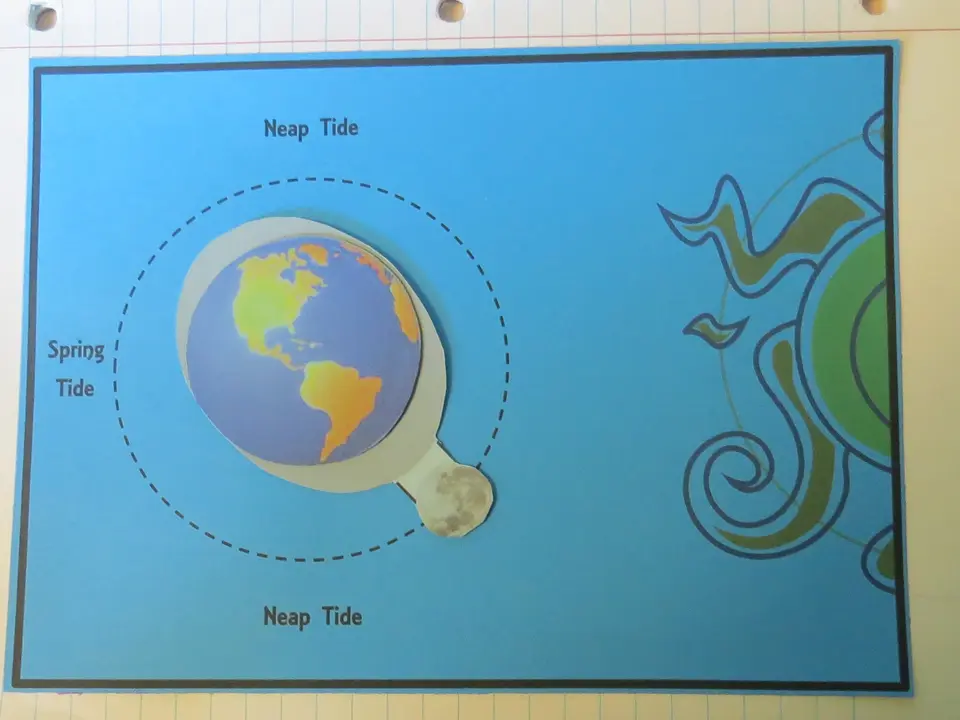
Tides are caused by the gravitational pull of the Moon — and to a lesser extent, the Sun. When the Sun, Earth, and Moon align, their combined pull creates the strongest tides. When they form a right angle, the weaker neap tides result.
Three connected activities take students from the physical model of tides to understanding the ebb and flood current cycle and checking their comprehension with structured questions.
A visual model shows the Earth-Moon-Sun relationship during spring and neap tides, helping students connect the diagram to the real ocean phenomenon.
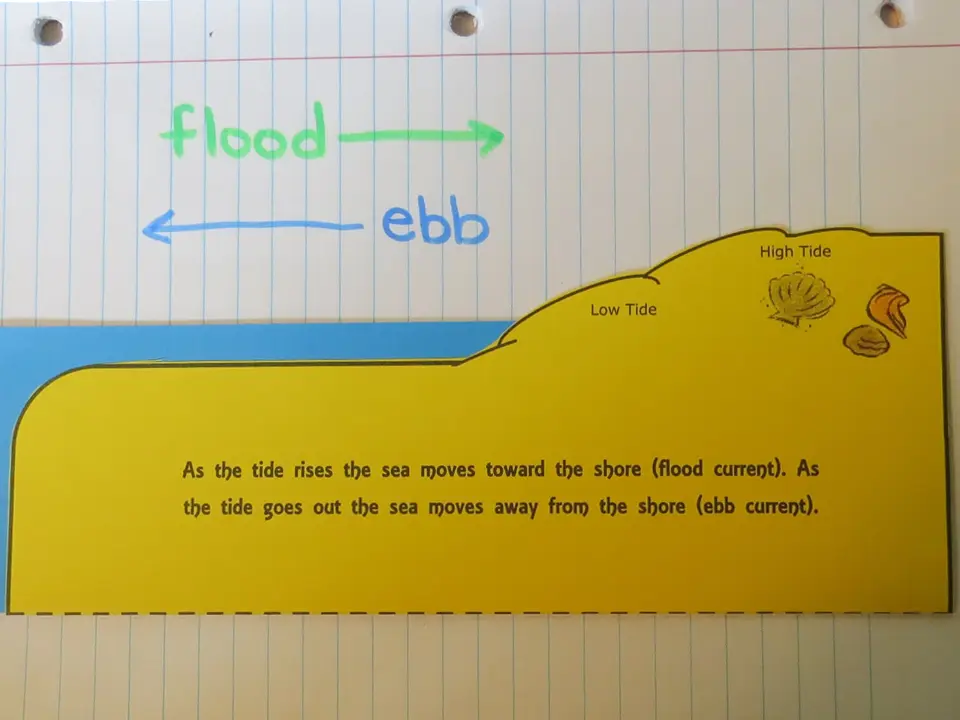
As the tide rises toward shore it creates a flood current; as it falls away it creates an ebb current. Students model both directions in their notebook.
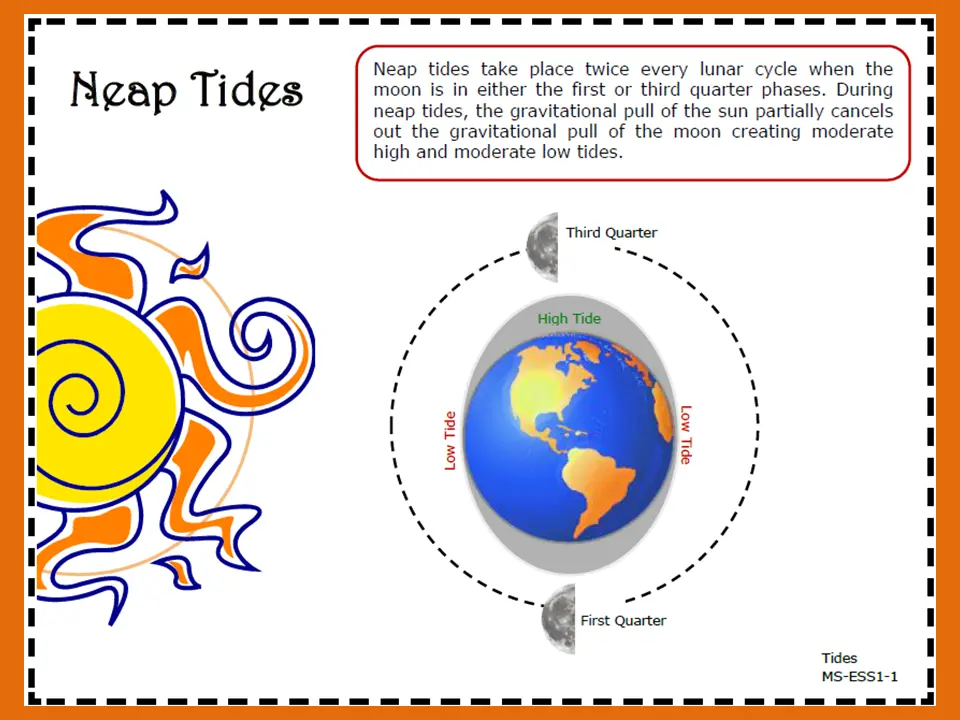
A reference poster covers neap tide formation in detail, showing how the first and third quarter moon positions result in moderate tidal ranges.
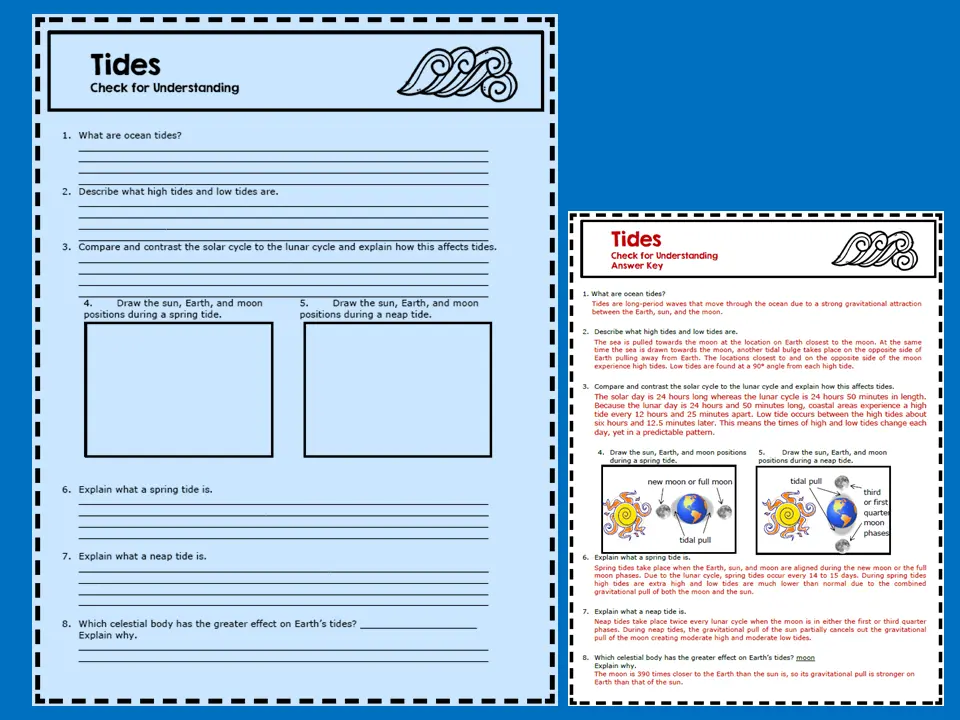
A structured writing page asks students to explain tide formation, compare spring and neap tides, and respond to a short reading passage.
This page is one part of a full NGSS-aligned unit covering lunar phases, tides, eclipses, seasons, the Big Bang, gravity, galaxies, the solar system, planets, the geologic time scale, and more — with hands-on models, projects, and Check for Understanding pages throughout.
View the Full Unit on TPT