Martin Luther King Jr.
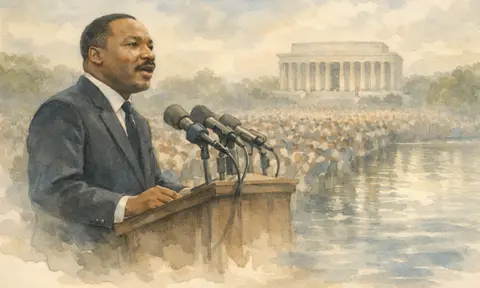
Fast Facts: Martin Luther King Jr.
Martin Luther King Jr.
- Born: Atlanta, Georgia (1929)
- Belief: Nonviolent protest
- Major Role: Leader of the Civil Rights Movement
- Famous Speech: “I Have a Dream” (1963)
- Legacy: Nobel Peace Prize & national holiday
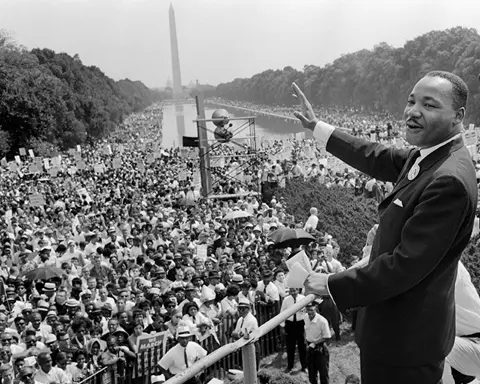
Martin Luther King Jr. at a Glance
- Born in Atlanta and became a pastor like his father.
- Believed in peaceful protest to create change.
- Became a national leader during the Montgomery Bus Boycott.
- Helped form the Southern Christian Leadership Conference.
- Assassinated in 1968, but his message continues to inspire.
Early Life
Martin Luther King Jr. was born in Atlanta, Georgia, in 1929. His father was a pastor, and King grew up learning about fairness and equality. He later became a minister himself and used his voice to speak out against injustice.
Belief in Nonviolence
King believed that peaceful protest was the best way to create change. He encouraged people to use marches, speeches, and boycotts instead of violence. His ideas were inspired by the teachings of Mahatma Gandhi.
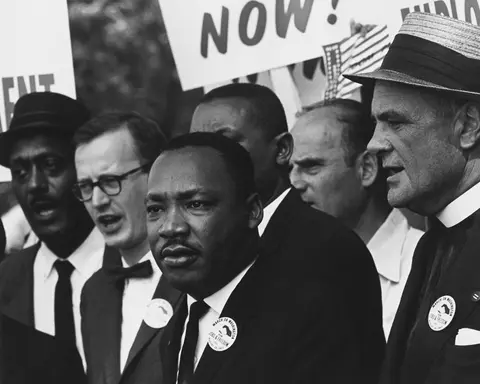
A National Leader
King became a national figure during the Montgomery Bus Boycott. His powerful speeches and leadership helped unite people across the country. He later helped form the Southern Christian Leadership Conference, which organized peaceful protests throughout the South.
The March on Washington
In 1963, King delivered his famous “I Have a Dream” speech during the March on Washington. More than 200,000 people gathered to hear him speak about equality, justice, and his dream for a better America.
A Life Cut Short
In 1968, King traveled to Memphis, Tennessee, to support striking sanitation workers. While there, he was assassinated. His death shocked the world, but his message of nonviolence and equality continues to inspire people today.
A Lasting Legacy
Martin Luther King Jr. received the Nobel Peace Prize in 1964 for his work toward equality. Today, the United States honors him with a national holiday each January. His speeches, leadership, and peaceful actions remain a powerful part of American history.
Word Match
Drag the vocabulary words to their correct definitions!
Vocabulary Words
Definitions
Lesson 6 — Martin Luther King Jr. Quiz
Activities & Extensions
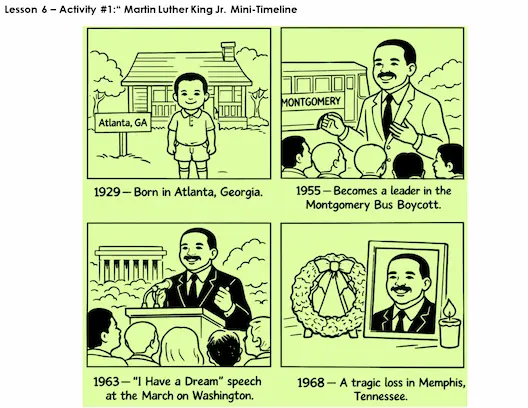
Students create a four‑event timeline showing key moments in Martin Luther King Jr.’s life. This activity helps students understand how his leadership and actions shaped the Civil Rights Movement.
How to Do It: Students draw a simple four‑box timeline in their notebooks. Using the article, they choose four major events to include. Suggested events:
- Born in Atlanta (1929)
- Montgomery Bus Boycott leadership
- March on Washington (1963)
- Assassination in Memphis (1968)
Discussion: After completing the timeline, students reflect:
- Which event shows King becoming a national leader?
- How did each event build toward the next?
- What does the timeline show about his lasting impact?
Optional Extension: Students add a fifth box titled “Legacy” and write one way King’s message continues today.
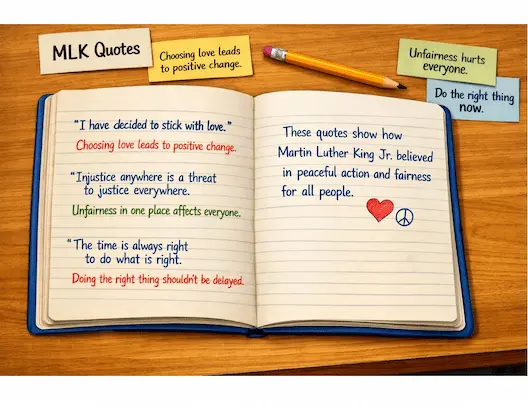
Students explore the meaning behind several short, well‑known ideas from Martin Luther King Jr. They match each quote to a simple explanation, helping them understand his message of peace, justice, and equality.
How to Do It: Provide students with a set of short MLK quotes and a set of meanings. Students match each quote to the explanation that best fits the idea. You may display the quotes on the board or create small cards.
Sample Quotes:
- “I have decided to stick with love.”
- “Injustice anywhere is a threat to justice everywhere.”
- “The time is always right to do what is right.”
Sample Meanings:
- Choosing love leads to positive change.
- Unfairness in one place affects everyone.
- Doing the right thing shouldn’t be delayed.
Discussion: After matching, students explain:
- Which quote feels most powerful to you?
- How does this quote connect to King’s actions?
- How could this idea apply to our school or community?
Optional Extension: Students choose one quote and create a small poster or notebook page illustrating its meaning.
Civil Rights Navigation
Explore the Full Civil Rights Unit
This complete history unit includes research passages, organizers, writing tasks, quizzes, activities, and website research — all in printable and digital formats. Everything you need to teach the Civil Rights with confidence.
View the Full Unit on TPT