Early Struggles for Equality
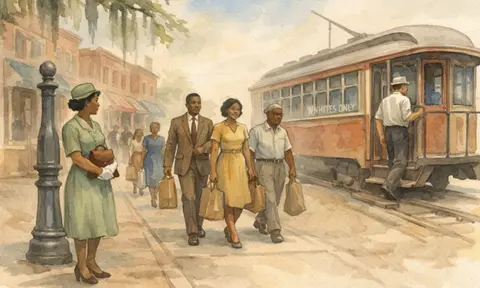
Fast Facts: Early Civil Rights Challenges
Early Civil Rights Challenges
- Dred Scott Decision: Enslaved people ruled as property (1857)
- Plessy v. Ferguson: “Separate but equal” (1896)
- Jim Crow Laws: Segregation in public places
- NAACP Founded: 1910
- Presidential Actions: Truman & Eisenhower push for integration
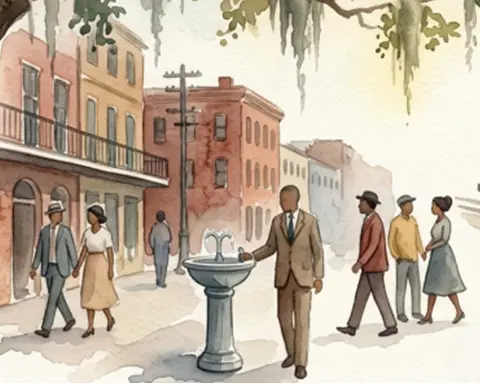
Early Civil Rights Challenges at a Glance
- Native Americans, Japanese Americans, and African Americans all faced unfair treatment.
- The Dred Scott ruling declared enslaved people were not citizens.
- Plessy v. Ferguson allowed segregation under “separate but equal.”
- Jim Crow laws created unequal schools and public facilities.
- The NAACP used the courts to fight unfair laws and segregation.
Groups Facing Unfair Treatment
Throughout American history, many groups faced discrimination. Native Americans were forced onto reservations. Japanese Americans were placed in camps during World War II. Africans were brought to America as enslaved people. Among these groups, African Americans experienced some of the longest and most difficult struggles for equal rights.
The Dred Scott Decision
In 1857, the Supreme Court ruled against Dred Scott, an enslaved man who argued he should be free because he had lived in areas where slavery was illegal. The Court said enslaved people were property, not citizens, and had no rights under the Constitution.
Plessy v. Ferguson
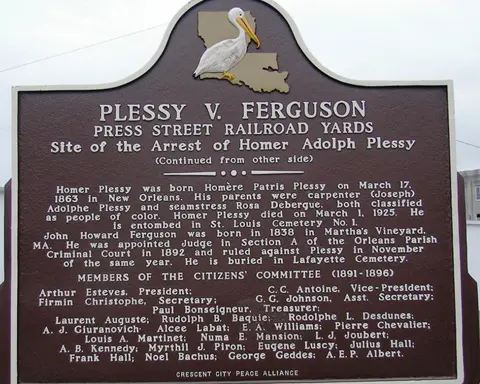
In 1896, Homer Plessy challenged segregation on a train. The Supreme Court ruled that segregation was legal as long as facilities were “separate but equal.” This decision allowed states to pass more laws keeping African Americans and whites apart in schools, transportation, and public places.
Jim Crow Laws
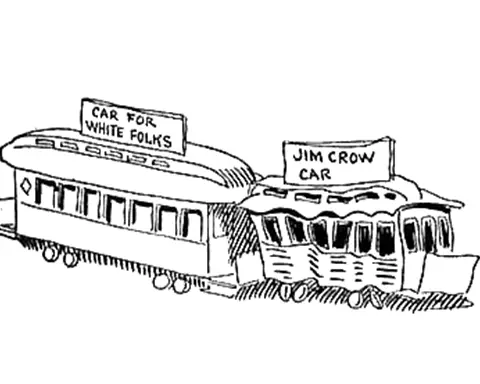
After the Plessy ruling, Southern states created Jim Crow laws. These laws forced African Americans to use separate schools, restrooms, drinking fountains, hotels, and even cemeteries. Although the facilities were supposed to be equal, they rarely were.
The NAACP Takes Action
In 1910, African American and white leaders formed the NAACP. Their goal was to fight unfair laws and help African Americans gain equal rights. The NAACP used the court system to challenge segregation and discrimination.
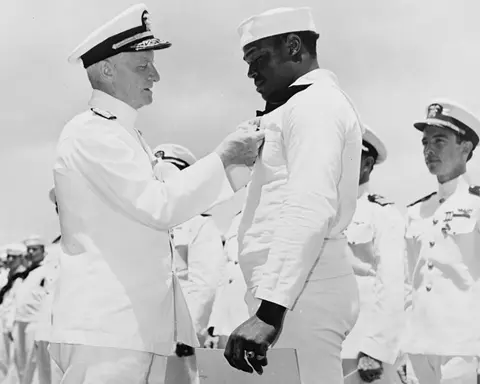
Doris “Dorie” Miller was the first Black sailor to be awarded the Navy Cross for his bravery during the attack on Pearl Harbor. His actions inspired many African Americans to serve and demand equal treatment in the military.
Changes After World War II
After World War II, African American soldiers returned home expecting the same freedoms they had fought for overseas. More African Americans gained access to better jobs and education, but discrimination and segregation continued in many places.
Presidents Truman and Eisenhower
In the 1950s, President Truman ordered the military to integrate. President Eisenhower ordered public places to begin integrating as well. Some states resisted, but these actions helped set the stage for the modern Civil Rights Movement.
Word Match
Drag the vocabulary words to their correct definitions!
Vocabulary Words
Definitions
Lesson 1 — Early Struggles for Equality Quiz
Activities & Extensions
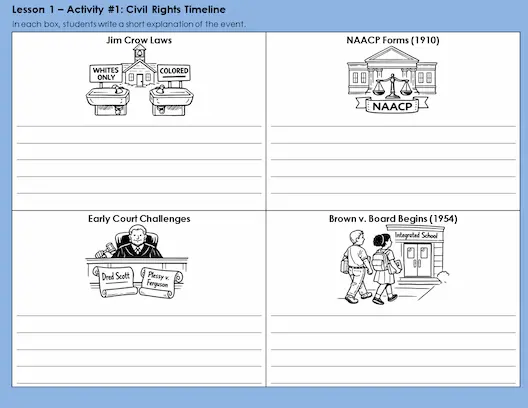
Students create a simple timeline to understand the early events that shaped the Civil Rights Movement. This helps them see how laws, court cases, and activism built momentum for change.
How to Do It: Students complete a four‑step timeline labeled: Jim Crow Laws, NAACP Forms, Early Court Challenges, and Brown v. Board Begins. They add a short explanation and a small sketch for each step.
Optional Extension: Students add a final box titled “Why Did Change Take So Long?” using evidence from the article.
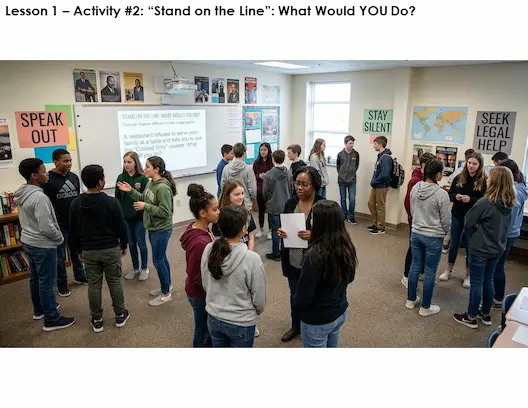
Students explore the difficult choices African Americans faced during segregation by taking a stand — literally. This movement‑based activity requires no handouts and encourages thoughtful discussion.
How to Do It: Label three corners of the room: Speak Out, Stay Silent, and Seek Legal Help. Read short scenarios aloud (you can display them on the board). Students move to the corner that matches the choice they would make.
Discussion: Students explain their reasoning, listen to others, and consider how these choices reflect the challenges of the era.
Optional Extension: Students create a quick‑sketch “courage badge” in their notebooks representing someone who stood up for equal rights.
Civil Rights Navigation
Explore the Full Civil Rights Unit
This complete history unit includes research passages, organizers, writing tasks, quizzes, activities, and website research — all in printable and digital formats. Everything you need to teach the Civil Rights with confidence.
View the Full Unit on TPT