Sit-Ins
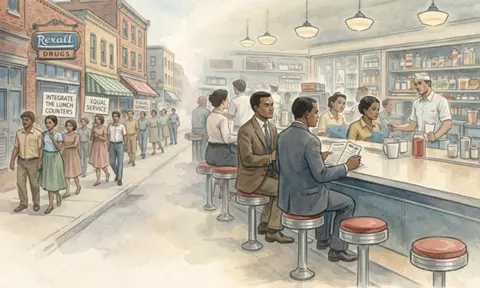
Fast Facts: Sit-Ins
Sit-Ins
- First Major Sit-In: Greensboro, NC (1960)
- Key Group: The Greensboro Four
- Strategy: Peaceful, nonviolent protest
- Spread: More than 100 cities
- Outcome: Many lunch counters desegregated
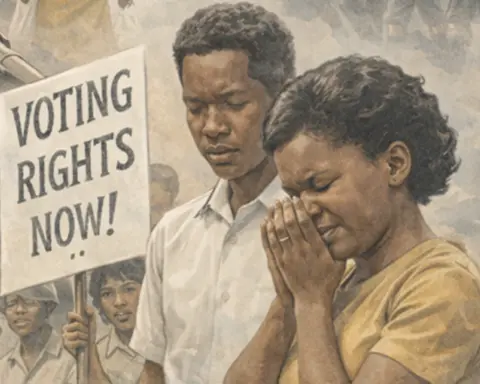
Sit-Ins at a Glance
- Four college students began a sit-in at a Woolworth’s lunch counter in Greensboro.
- Protestors remained peaceful even when threatened or attacked.
- The movement spread quickly to cities across the South.
- Nashville became known for its organized, disciplined sit-ins.
- Public pressure led many businesses to end segregation.
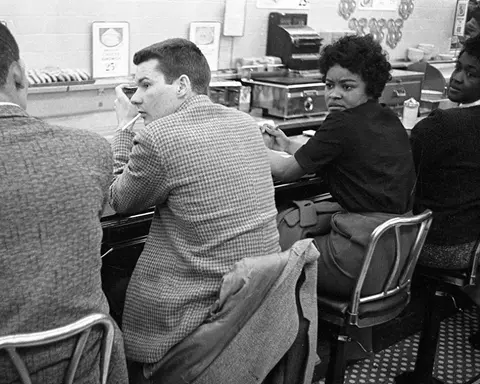
The Greensboro Four
On February 1, 1960, four African American college students sat down at a Woolworth’s lunch counter in Greensboro, North Carolina. The counter was for white customers only, but the students politely asked to be served. When they were refused, they stayed in their seats.
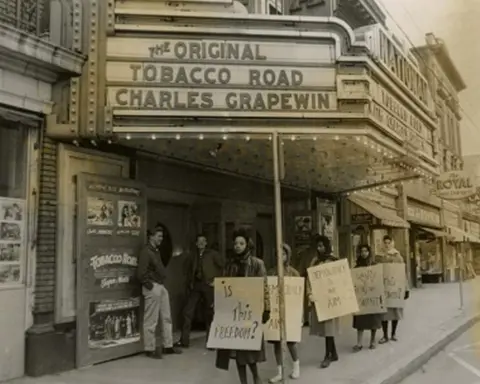
A Peaceful Strategy
The students did not shout or fight. They simply remained seated. Their peaceful protest inspired other students to join them. Soon, sit-ins were happening in cities across the South.
Facing Violence
Not everyone supported the sit-ins. Some white teenagers yelled at the protestors, poured food on them, or threatened them. Even when attacked, the protestors stayed calm and refused to fight back.
Nashville’s Organized Movement
Nashville became known for its well-organized sit-ins. Students practiced how to stay calm during harassment. Their discipline helped gain support from people across the country.
Businesses Begin to Change
As the sit-ins continued, many businesses lost customers and faced public pressure. To avoid losing more money, some stores decided to end segregation at their lunch counters.
A Growing Movement
The sit-in movement spread to more than 100 cities. It showed that peaceful protest could bring real change. The courage of these young protestors helped push the Civil Rights Movement forward.
Word Match
Drag the vocabulary words to their correct definitions!
Vocabulary Words
Definitions
Lesson 4 — Sit‑Ins Quiz
Activities & Extensions
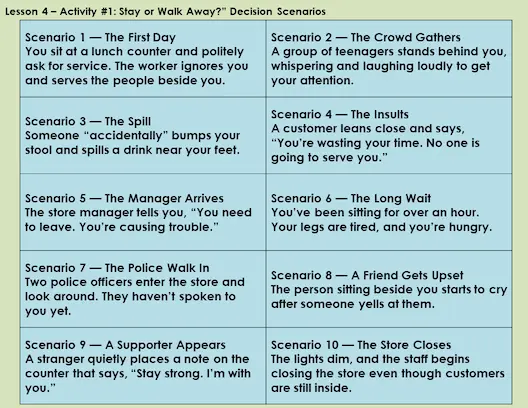
Students step into the shoes of sit-in protestors by reading short, realistic scenarios and deciding how they would respond. This activity builds empathy for the courage and calm required during peaceful protests.
How to Do It: Provide students with scenario cards or display the scenarios on the board. For each situation, students decide whether they would stay seated, walk away, or ask for help, and explain their reasoning in writing or discussion.
Discussion: After several scenarios, bring the class together to reflect:
- What made some choices harder than others?
- Why was staying calm such an important strategy?
- How did peaceful behavior help the movement gain support?
Optional Extension: Students choose one scenario and write a short journal entry from the perspective of a sit-in protestor, describing their thoughts and feelings in that moment.
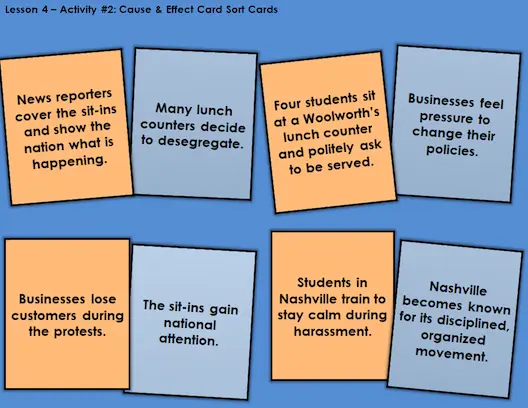
Students analyze how actions during the sit-ins led to real change by matching cause and effect cards. This activity reinforces comprehension of the article and highlights the impact of organized, nonviolent protest.
How to Do It: Give students a mixed set of cause and effect cards or display them on the board. Students work individually or in pairs to match each cause with its correct effect, then record the pairs in their notebooks using arrows or a T-chart.
Discussion: Review the matches as a class and discuss:
- How did peaceful actions lead to national attention?
- Why did businesses begin to change their policies?
- What does this activity show about the power of nonviolent protest?
Optional Extension: Students choose one cause-and-effect pair and create a simple sketch or symbol that represents the connection.
Civil Rights Navigation
Explore the Full Civil Rights Unit

This complete history unit includes research passages, organizers, writing tasks, quizzes, activities, and website research — all in printable and digital formats. Everything you need to teach the Civil Rights with confidence.
View the Full Unit on TPT